Jason A. Mahn
Conrad Bergendoff Chair in the Humanities; Director of the Presidential Center for Faith and Learning
Augustana College
-
 Article
Vocation at Full Stretch: Reflections on Follow Your Bliss and Other Lies about Calling and its Use among College Students
Jason A. Mahn
No. 61 · Spring 2025
43 min audio
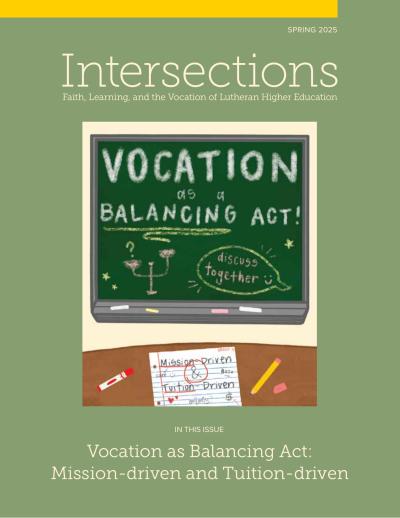
Mahn engages Bonnie Miller-McLemore’s Follow Your Bliss and Other Lies about Calling as required reading in a sophomore religion course, showing how her categories of missed, blocked, conflicted, fractured, unexpected, and relinquished callings empower young adults to perceive embodied, unplanned, and often painful dimensions of life as essential parts of vocation — and help close the gap between mission-driven and tuition-driven realities.
-
 Article
On Recruiting Diverse Students, Rooted in Mission
Eric Rowell, Jason A. Mahn
No. 59 · Spring 2024
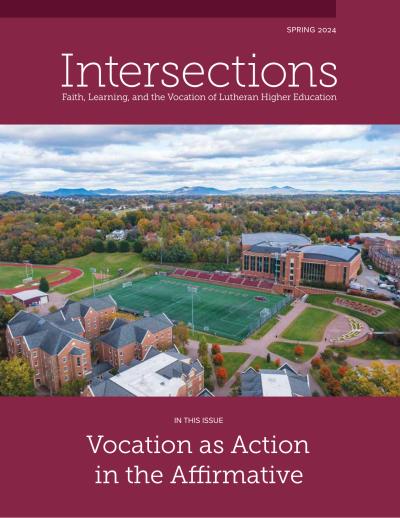
Jason Mahn interviews Eric Rowell, Assistant Director of Admissions and Diversity Outreach at Augustana College, about how recruiting students from a wide variety of backgrounds — rooted in Augustana’s Lutheran commitment to vocation and educating across difference — remains essentially unchanged in the wake of the Supreme Court’s 2023 decisions on affirmative action.
-
 Editorial
From the Outgoing Editor
Jason A. Mahn
No. 55 · Spring 2022
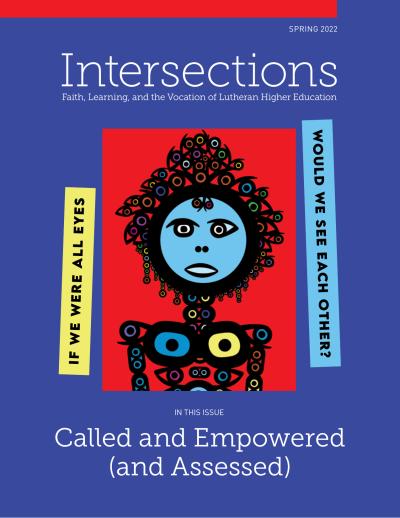
Mahn closes out a decade of editing Intersections, passes the duties to Colleen Windham-Hughes, gives thanks to Mark Wilhelm and Augustana College, and introduces an issue largely drawn from comments by Lutheran faculty, staff, and administrators at the 2022 NetVUE national gathering.
-
 Editorial
From the Editor
Jason A. Mahn
No. 54 · Fall 2021
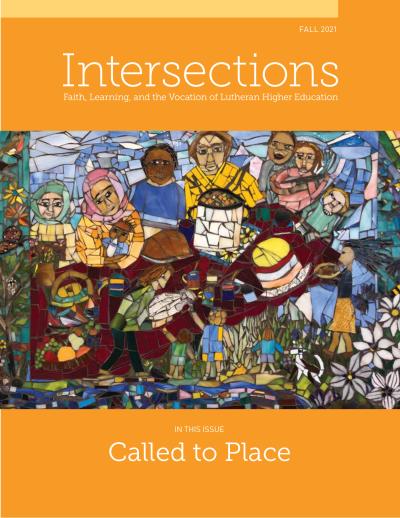
Mahn introduces the “Called to Place” theme of the 2021 VLHE Conference, arguing that Lutheran higher education’s emphasis on vocation must be grounded in particular geographies and embodied communities — for, as Wallace Stegner put it, “If you don’t know where you are, you don’t know who you are.”
-
 Reflection
Shelter in Place: Reflections from March 22, 2020
Jason A. Mahn
No. 53 · Spring 2021
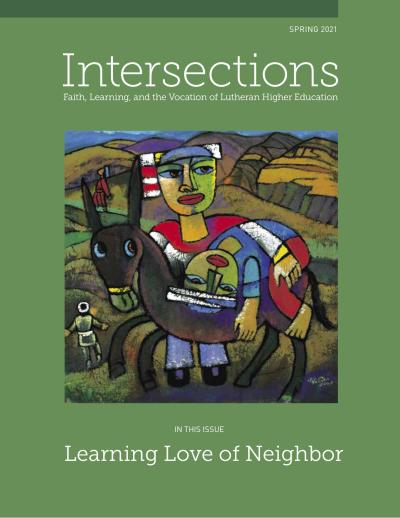
On the fourth Sunday of Lent in 2020, Mahn meditates on the etymology of “shelter” (from shield) and on an email from a former student in Boston whose mutual-aid organizing models a Lutheran understanding of vocation: the upending of ego by divine love that frees us, finally, to see and serve the neighbor.
-
 Editorial
From the Editor
Jason A. Mahn
No. 52 · Fall 2020
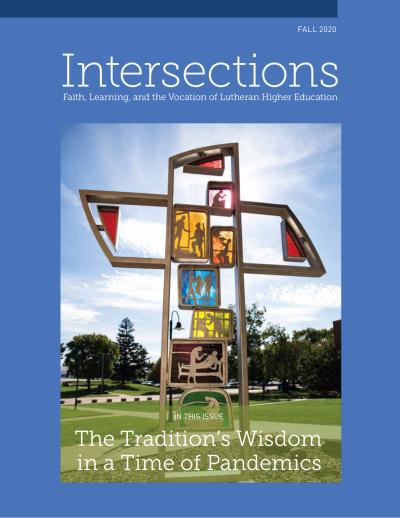
Mahn narrates a year of crisscrossing pandemics — Covid-19, economic collapse, partisan politics, and the long pandemic of white supremacy revealed anew by the murder of George Floyd — and argues that Lutheran liberal arts schools, by educating for vocation, are uniquely poised to help students respond with character and capable callings.
-
 Editorial
From the Editor
Jason A. Mahn
No. 50 · Fall 2019
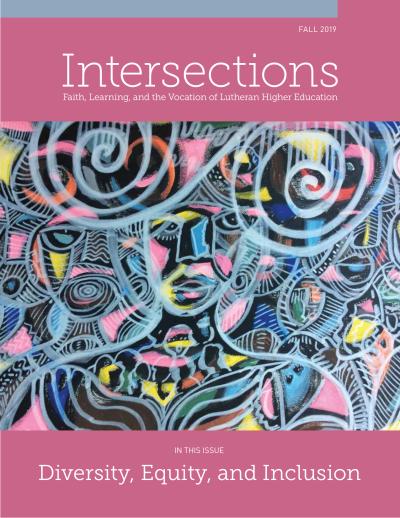
Mahn opens with Lenny Duncan’s observation that the ELCA is 96 percent white — the whitest denomination in the U.S. — and asks how teachers and administrators at historically, predominantly, and persistently white institutions can turn from white privilege and white supremacy toward spaces where people of color thrive and white people are re-formed into antiracist allies.
-
 Article
Roots and Shoots: Tending to Lutheran Higher Education
Jason A. Mahn
No. 49 · Spring 2019
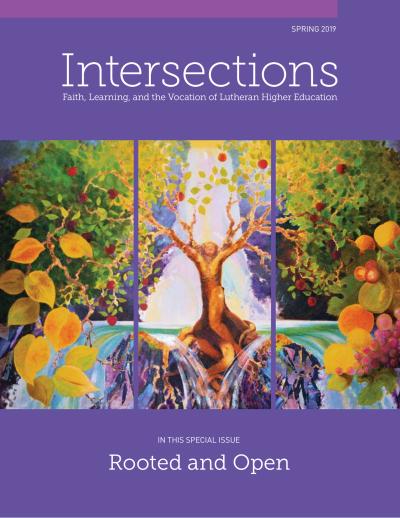
Mahn revisits why “education-for-vocation” has become a leitmotif for the 27 NECU schools, distinguishes institutional vocation from individuals’ religious identities and educational priorities from their theological grounding, and offers a friendly critique of Jodock’s bridge metaphor: Lutheran colleges grow in two directions like plants — deep roots and wide branches alike require constant tending.
-
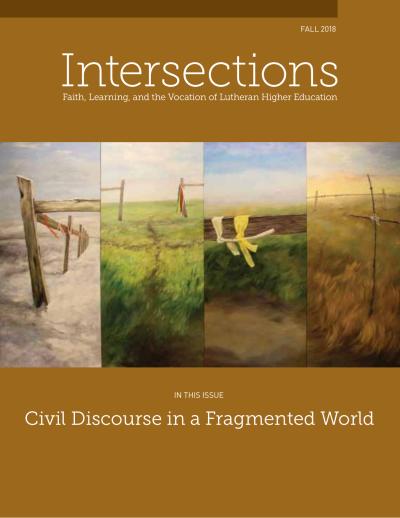 Editorial
From the Editor
Jason A. Mahn
No. 48 · Fall 2018
Mahn recounts how a participant’s probing questions at the 2018 Vocation of a Lutheran College Conference turned “civil discourse” from an innocuous theme into a contested one — and previews essays that variously urge listening and common ground, or speaking truthfully even when those words sound angry.
-
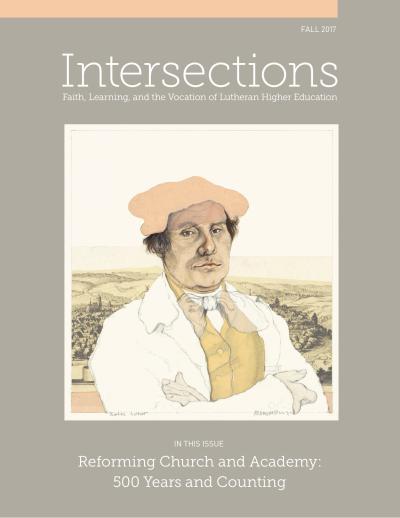 Editorial
From the Editor
Jason A. Mahn
No. 46 · Fall 2017
Mahn returns to Luther’s opening thesis on whole-life repentance to argue that the deepest critique of the indulgence economy — and of our own American meritocracy — is the very assumption that grace and human striving can be measured, exchanged, and earned.
-
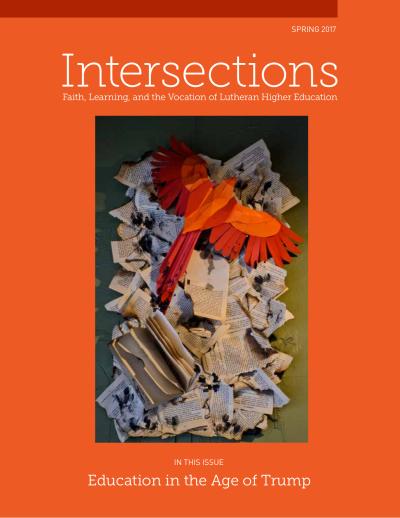 Editorial
From the Editor
Jason A. Mahn
No. 45 · Spring 2017
Mahn introduces “Education in the Age of Trump” by recounting a difficult academic year on his own campus — the Augustana “chalking” incident, a Latinx Unidos rally, and post-election conversations with marginalized students and quietly conservative Trump supporters alike — and frames the issue’s essays as careful (re)imaginings of the vocation of Lutheran higher education in an anxious political climate.
-
Article
Resistance in the Age of Trump: An Interview with Ivonne Wallace Fuentes
Jason A. Mahn, M. Ivonne Wallace Fuentes
No. 45 · Spring 2017
In conversation with Jason Mahn, Roanoke College historian Ivonne Wallace Fuentes describes how she launched a local chapter of Indivisible after the 2016 election, how the skills of teaching and historical research carry over into grassroots advocacy, and how her sense of vocation (vocare) has become intertwined with the work of advocacy (advocare).
-
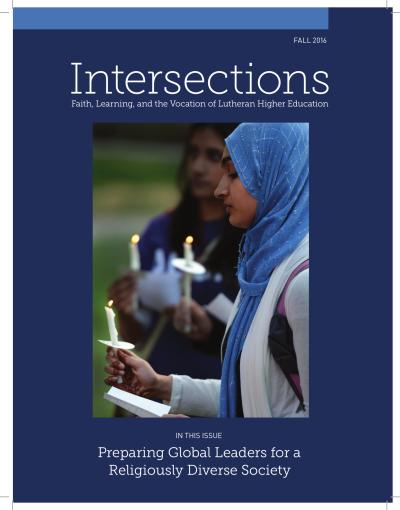 Editorial
From the Publisher and Editor
Jason A. Mahn, Mark Wilhelm
No. 44 · Fall 2016
Writing weeks after the 2016 presidential election, Wilhelm and Mahn frame interfaith engagement as the urgent and ongoing work of ELCA colleges and universities, recap NECU’s growing commitments to inter-religious leadership, and introduce essays first delivered at the summer 2016 Vocation of a Lutheran College Conference under the theme “Preparing Global Leaders for a Religiously Diverse Society.”
-
 Article
The Vocation of Intersections on its Twentieth Birthday
Jason A. Mahn, Robert D. Haak, Tom Christenson
No. 43 · Spring 2016
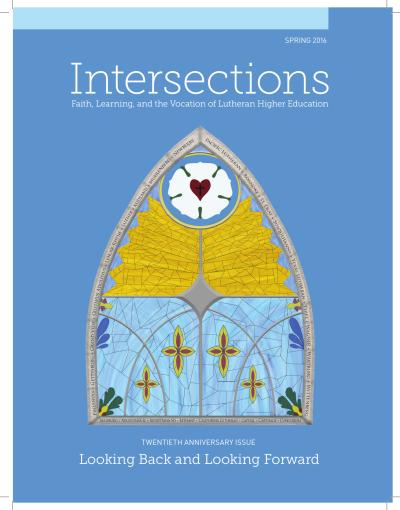
The three editors of Intersections — Bob Haak, Jason Mahn, and Tom Christenson (in spirit, following his death in 2013) — trace the twenty-year vocation of the journal itself: its 1996 birth at Capital University; its coming-of-age years of debate over institutional markers, two-kingdoms theology, and Lutheran identity; the ascendancy of “education for vocation” as the central marker of Lutheran higher education; and its ongoing identity in relation to a changing ELCA and to the broader cultural conversation about purpose, wholeness, and the vocation of higher education.
-
Editorial
From the Editor
Jason A. Mahn
No. 43 · Spring 2016
Mahn introduces the twentieth anniversary issue of Intersections, recalling its 1996 birth at Capital University “in the twinkle of an idea” in the mind of founding editor Tom Christenson, and previewing essays by Wilhelm, Amamoto, Kleinhans, Glass Perez, and Simmons that together look back at twenty years of the journal and forward to its work in the decades to come.
-
 Editorial
From the Editor
Jason A. Mahn
No. 42 · Fall 2015
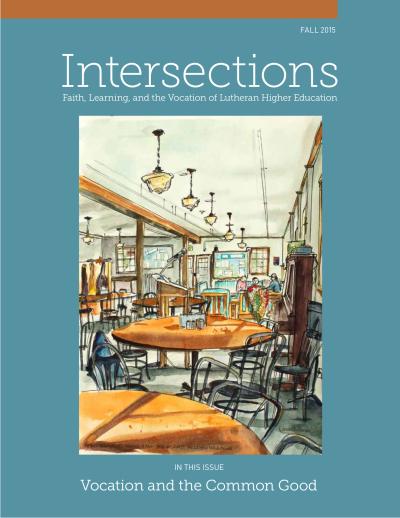
Mahn introduces the “Vocation and the Common Good” issue by asking what is left of “the commons” in an age of privatized goods and education-as-commodity, and frames church-related colleges — with their stubborn vocabulary of “liberal arts,” “collegiate,” and “calling” — as among the least fully-privatized resources left in American life.
-
 Editorial
From the Editor
Jason A. Mahn
No. 41 · Spring 2015
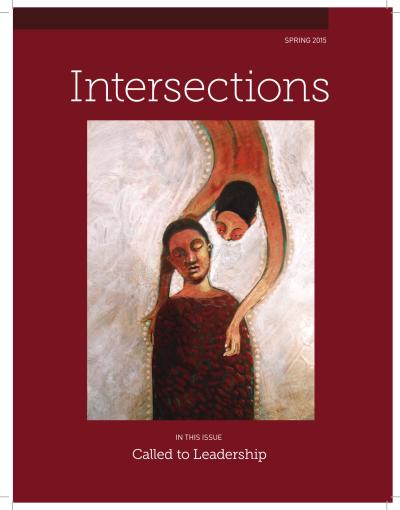
Mahn introduces the “Called to Leadership” issue by worrying that training for leadership has become so ubiquitous in higher education as to be nearly meaningless, and recovers Luther’s sense of leadership as service — a calling to be a “slave” whose learning, power, and wisdom belong to the unlearned, the oppressed, and the foolish — as the shared mission of Lutheran colleges to train servant-leaders.
-
 Article
Why Interfaith Understanding is Integral to the Lutheran Tradition
Jason A. Mahn
No. 40 · Fall 2014
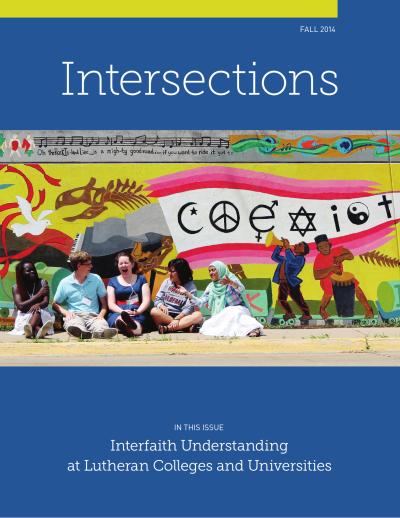
Mahn returns to the root of the Lutheran tradition — church, theology, and pedagogy — to argue that interfaith encounter is not the vanishing point of Lutheran identity but central to it, beginning with confession of Luther’s anti-Judaic legacy, working through the typology of exclusivism / inclusivism / pluralism, and showing how the kenotic Christ and the theologian of the cross open Lutherans to authentic encounter with religious others.
-
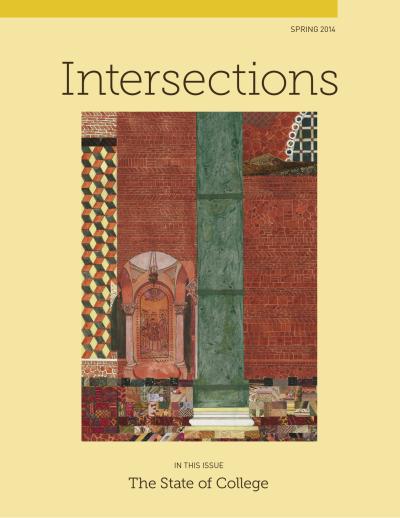 Editorial
From the Editor
Jason A. Mahn
No. 39 · Spring 2014
Mahn reports on the working group “People of Wondrous Ability: Introducing Faculty and Staff to Lutheran Higher Education,” shares creative ways campuses are introducing colleagues to the charisms of the Lutheran tradition, and frames the issue as a set of reflective reviews that move from national trends to homegrown conversations about the state of college.
-
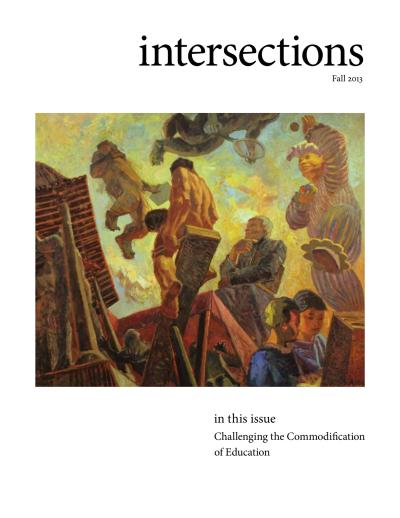 Editorial
From the Editor
Jason A. Mahn
No. 38 · Fall 2013
Mahn reads Michael Sandel’s What Money Can’t Buy alongside Larry Rasmussen and Martha Nussbaum to ask how Lutheran schools can articulate the “value added” of vocation without commodifying it, and previews the 2013 Vocation of a Lutheran College conference papers, Patricia Lull’s sermon, and Ann Hill Duin and Eric Childers’ Project DAVID essay that make up the issue.
-
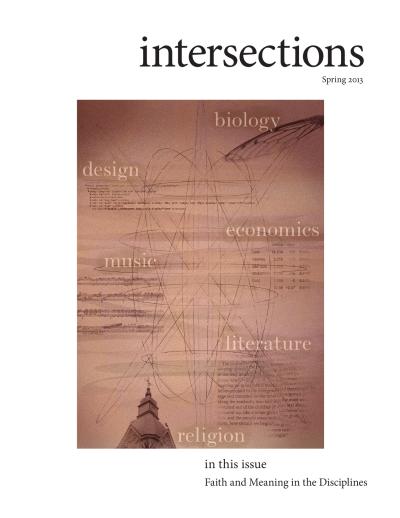 Editorial
From the Editor
Jason A. Mahn
No. 37 · Spring 2013
Mahn introduces the issue’s six essays as parallel attempts—from poetry, economics, choral music, biology, religion, and Lutheran higher education—to resist our culture’s fact-value split, and uses Augustana’s Fritiof Fryxell, a 1922 biology and English graduate who began teaching just as the Scopes Trial ignited, to illustrate how church-related colleges have long held faith and disciplinary inquiry together.
-
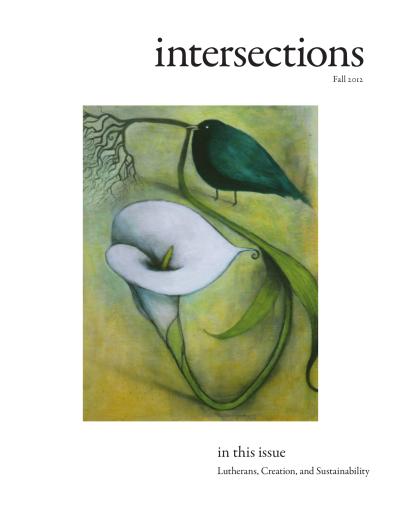 Editorial
From the Editor
Jason A. Mahn
No. 36 · Fall 2012
Mahn introduces the issue through Norman Wirzba’s The Paradise of God and the Genesis 2 vocation given to Adam to care for adamah—arguing that “vocation” is the Lutheran name for an incarnational, creation-centric theology of kenosis and that Lutherans bring distinctive theological gifts to environmental work even if no absolutely unique perspective on caring for creation.
-
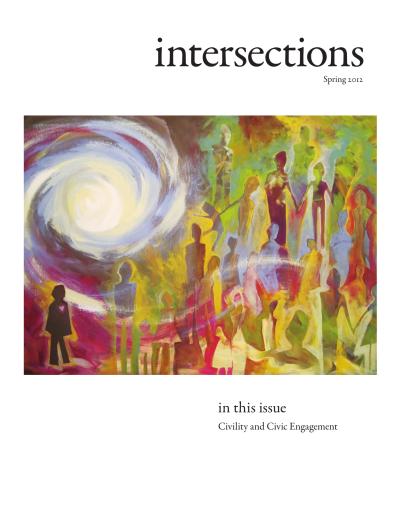 Editorial
From the Editor
Jason A. Mahn
No. 35 · Spring 2012
Mahn introduces five essays from the 2011 Vocation of a Lutheran College Conference at Augsburg, framing how Torvend, Anderson, Svennungsen, Tunheim, and Pribbenow press Lutheran colleges to turn outward—recovering the public character of Luther’s gospel, forming students for moral deliberation, investing in the infrastructure of civic renewal, and pursuing justice and education “off the main road.”
-
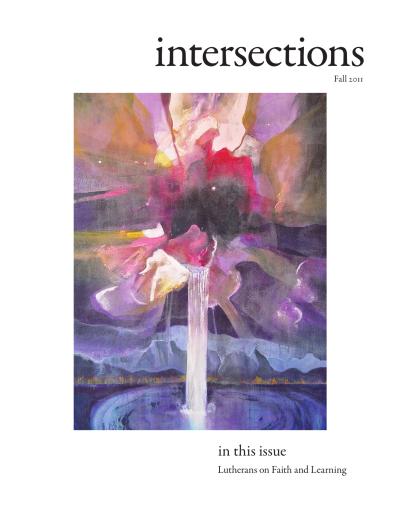 Editorial
From the Outgoing and Incoming Editors
Jason A. Mahn, Robert D. Haak
No. 34 · Fall 2011
Outgoing editor Robert D. Haak reflects on a six-year run inheriting Intersections from founder Tom Christenson, the “powerful voices” that have driven the conversation (Dovre, Jodock, Christenson, Simmons, Morgan, Olsen, Wilhelm) and the newer ones now entering (Mahn, Bussie); incoming editor Jason A. Mahn, picked up from the airport in Bob’s pickup truck five years ago, names central issues that “Lutherans on Faith and Learning” engages and previews essays by Dovre, Jodock, McDonald, Hill, Turnbull, and Jodock again.
-
Called and Empowered; Learning Love of Neighbor (and Assessed)
No. 55 · Spring 2022
A transition issue of Intersections, marking the editorial handoff from Jason Mahn to Colleen Windham-Hughes and looking ahead to Mark Wilhelm’s retirement as the founding executive director of NECU. The essays gathered here, most adapted from comments at the 2022 NetVUE national gathering, ask “What is the worth of our work?” through institutional practices of assessment and imagination: developmental frameworks for vocational reflection, self-assessment instruments, pandemic-era programming, the long arc of serving the neighbor, and a review of Richard A. Detweiler’s The Evidence Liberal Arts Needs.
-
Called to Place: Learning to Love of Neighbor
No. 54 · Fall 2021
The theme of the 2021 Vocation of Lutheran Higher Education Conference, hosted by Augsburg University, was “Called to Place: Community-Responsive Education.” Presentations and conversations over four days took stock of the importance of particular settings — including the physical and cultural geographies of campuses and the surrounding communities — for the deep learning of our students, and for us as educators.This issue showcases how NECU institutions are engaging surrounding places and communities and educating students for a sense of rootedness and belonging.
-
Learning Love of Neighbor
No. 53 · Spring 2021
Published in the second spring of the COVID-19 pandemic, this issue gathers reflections from across the NECU on what it means to live out the ethic of love of neighbor in a year of shelter-in-place orders, racial reckoning, and remote campuses. Contributors examine teaching as a love ethic, library work without a library, preaching in Christ Chapel on Yom HaShoah, first-year theology in the “COVID class,” vocation beyond gladness and beyond career, pastoral leadership in a long crisis, and what it might mean for Lutheran higher education to start talking about God again.
-
The Tradition’s Wisdom in a Time of Pandemics
No. 52 · Fall 2020
Published in fall 2020 amid the intertwined pandemics of Covid-19, systemic racism, and economic upheaval, this issue gathers reflections from NECU educators, presidents, alumni, and theologians who turn to the Lutheran tradition for guidance in a season of crisis. Contributors draw on Luther’s 1527 letter “Whether One May Flee from a Deadly Plague,” Matthew 25’s acts of mercy, trauma theology, and the everyday vocations of teaching, leading, and caring for neighbor — asking how Lutheran higher education’s ancient commitments to hospitality, neighbor-love, reconciliation, and care speak with renewed urgency today.
-
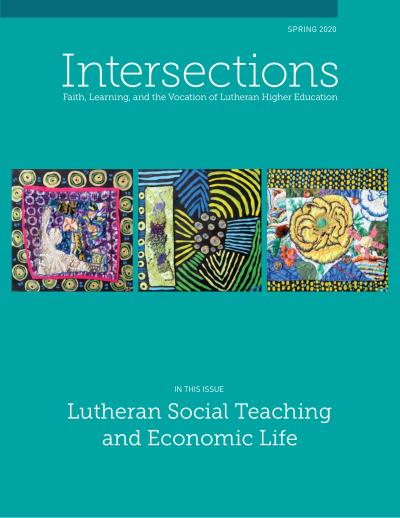
Lutheran Social Teaching and Economic Life
No. 51 · Spring 2020
The Spring 2020 issue gathers writings from a NECU initiative to reclaim the Lutheran intellectual tradition as a resource for academic mission. A July 2019 Augsburg consultation asked whether ELCA social teaching — especially the 1999 statement Sufficient, Sustainable Livelihood for All — could serve as a classroom resource for business ethics. Essays explore moral deliberation, responsibility ethics, the challenge of inclusion, the theology of marketing and branding, student food insecurity, and how Generation Z’s defining traits align with Lutheran higher education.
-
Diversity, Equity, and Inclusion
No. 50 · Fall 2019
This Fall 2019 issue gathers essays from the 2019 Vocation of a Lutheran College conference at Augsburg, themed “Beyond Privilege: Engaging Diversity, Inclusion and Equity.” Essays explore the work of the Chief Diversity Officer; the perils and promise of privilege; the vocation of white people in a racist society; inclusive pedagogy as a foreign language; vocation across a religiously diverse classroom; the American myth of white supremacy; a meditation on seeing in a new way; and the radical love — conciliatory and queer — of Lutheran higher education.
-
Rooted and Open
No. 49 · Spring 2019
A special issue of Intersections dedicated to Rooted and Open: The Common Calling of the Network of ELCA Colleges and Universities, the statement on Lutheran identity in higher education unanimously adopted by NECU presidents in January 2018. Writing-team members Mark Wilhelm, Darrell Jodock, Jason A. Mahn, and Martha E. Stortz offer the “third path” rationale and account for how the “marks” inscribe both institutions and people. Further essays by Colleen Windham-Hughes, Marcia J. Bunge, Kathi Tunheim, John Eggen, and Emily S. Kahm bring Rooted and Open to life on campus.
-
Civil Discourse in a Fragmented World
No. 48 · Fall 2018
Most of the essays in this issue were first presented at the 2018 Vocation of a Lutheran College conference. Some emphasize the need to emphatically listen and find common ground in a polarized culture, complete with partisan politics, social media echo-chambers, and the propaganda of “alternative facts.” Others remind us that calls for civility can also become “the sleep-aid of a majority inclined to ignore the violence done in its name”; these authors urge educators to speak truthfully, even when those words sound angry. Together, the essays help us tune up for frank and honest conversations while resisting hateful discourse about divisive issues.
-
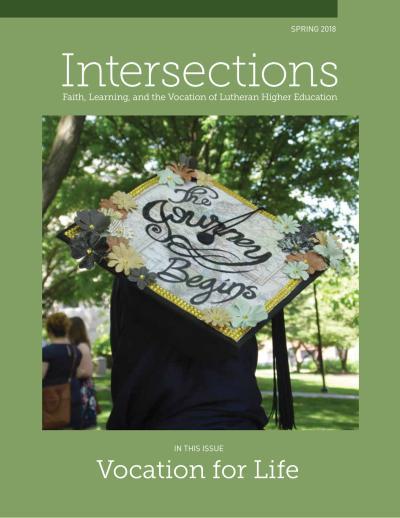
Vocation for Life
No. 47 · Spring 2018
The Spring 2018 “Vocation for Life” issue, drawn from the 2017 Vocation of a Lutheran College Conference, gathers essays on vocational reflection as a lifelong journey — how Lutheran colleges can educate students for the many callings they will hear and heed. Essays explore vocation across the lifespan, the experience of emerging adulthood, vocation from Buddhist and Hindu perspectives, a reading of Tranvik’s Martin Luther and the Called Life, Luther’s catechisms as a resource for a theology of intellectual disability, and Lutheran higher education in a campus culture of pervasive anxiety.
-
Reforming Church and Academy: 500 Years and Counting
No. 46 · Fall 2017
An issue of Intersections marking the five-hundredth anniversary of the Lutheran Reformation. Essays gathered here move beyond celebration to careful assessment and creative re-appropriation of the Reformation tradition — engaging vocation, education, social service, the “Book of Nature,” Luther among the poor, the centrality of the Word, a Dalit reading of Luther’s sutra, and the call for ecclesiological reflection in Lutheran higher education.
-
Education in the Age of Trump
No. 45 · Spring 2017
Published in the wake of the November 2016 U.S. presidential election, the Spring 2017 “Education in the Age of Trump” issue gathers reflections on educating, teaching religion, organizing, preaching, and writing poetry in the early months of the Trump presidency. Contributors examine federal higher education policy, sanctuary campus debates, the religious story behind evangelical politics, the place of a Muslim professor at an ELCA institution, the prophet Jonah as anti-hero of public vocation, and the liminal experience of students caught between worlds—inviting readers to search for truth amid “alternative facts” and remain hopeful.
-
Preparing Global Leaders for a Religiously Diverse Society
No. 44 · Fall 2016
The Fall 2016 issue, drawn from the 2016 Vocation of a Lutheran College Conference, explores why interfaith engagement is integral to the mission of ELCA colleges. From Bishop Elizabeth Eaton’s call for Lutheran colleges to be “laboratories for living in a diverse world” to a conversation between Mark Hanson, Eboo Patel, and Katie Baxter on negotiating conflicting values, contributors examine theological foundations for inter-religious work, the promise and peril of the interfaith classroom, pastoral care across faith traditions, and the everyday tensions where legitimate religious values come into conflict.
-
Twentieth Anniversary Issue: Looking Back and Looking Forward
No. 43 · Spring 2016
This Spring 2016 anniversary issue marks twenty years since Intersections was first printed at Capital University in 1996. The publisher introduces the newly-established Network of ELCA Colleges and Universities, and the editors trace the vocation of Intersections across its twenty-year life. Essays consider the vocation movement in Lutheran higher education, the long dance between Lutheran identity and racial and religious diversity at Gustavus, Lutheran contributions to scholarship on vocation, Lutheran vocation as a foundation for interfaith ministry, and educating students as “sustainability leaders” in the Anthropocene.
-
Vocation and the Common Good
No. 42 · Fall 2015
The Fall 2015 “Vocation and the Common Good” issue draws on the 2015 Vocation of a Lutheran College Conference at Augsburg, asking what is left of “the commons” in an age of privatization. Essays move from the Lutheran sense of a common walk of life and “little bits of good,” through Luther’s “greed is an unbelieving scoundrel” and interfaith cooperation, to a critique of the attentional commons in a wired classroom, a presidential call to “say something theological,” and a study of how women college presidents experience their calling.
-
Called to Leadership
No. 41 · Spring 2015
The Spring 2015 “Called to Leadership” issue of Intersections draws from the 2014 Vocation of a Lutheran College Conference at Augsburg, framing leadership not as command-and-control or charisma but as service to the neighbor rooted in vocation. Essays move from Jodock’s “vocational leadership” through Neilson on shared leadership, Ngunjiri on mentoring as gurus, coaches, and sponsors, Hughes on conflating vocation with career, Hasseler on women in leadership, Warren on superhero origin stories, and Johnson on peer-learning consultations—closing with Crowe and Hanson’s review of Claiming Our Callings.
-
Interfaith Understanding at Lutheran Colleges and Universities
No. 40 · Fall 2014
The Fall 2014 issue gathers presentations from the first Interfaith Understanding Conference for ELCA Colleges and Universities at Augustana College in June 2014, asking “What does it mean to be Interfaith at a Lutheran College?” Keynotes by Presiding Bishop Elizabeth Eaton, Jason A. Mahn, and Interfaith Youth Core founder Eboo Patel anchor the issue, with essays by Kathryn M. Lohre, Rabbi Belle Michael, Jacqueline Bussie, Matthew J. Marohl, Amy Zalik Larson and Sheila Radford-Hill, and Ann Boaden, interwoven with student reflections from Augustana, Luther, Muhlenberg, and Susquehanna.
-
The State of College
No. 39 · Spring 2014
The Spring 2014 “State of College” book-review issue gathers eight reflective reviews by ELCA faculty and staff. Reviewers engage Delbanco’s College, Selingo’s College (Un)Bound, Childers’s College Identity Sagas, Jacobsen and Jacobsen’s No Longer Invisible, Farrell’s The Nature of College, Palmer and Zajonc’s The Heart of Higher Education, Bok’s Our Underachieving Colleges, and a cluster on the digital information deluge—asking what Lutheran liberal arts might mean against the pull toward careerism.
-
Challenging the Commodification of Education
No. 38 · Fall 2013
The Fall 2013 “Challenging the Commodification of Education” issue draws on the 2013 Vocation of a Lutheran College Conference, asking what a Lutheran sense of vocation adds when colleges are priced and sold as commodities. DeAne Lagerquist recovers Luther’s “gift economy” as a counter to market logic; Mark Schwehn defends the “value added” of Lutheran liberal arts through the “local genius”; Tom Crady and Karl Stumo report from Gustavus and Pacific Lutheran recruitment; Patricia J. Lull preaches on Matthew 10; Duin and Childers introduce Project DAVID as a reinvention framework.
-
Faith and Meaning in the Disciplines
No. 37 · Spring 2013
The Spring 2013 “Faith and Meaning in the Disciplines” issue gathers six essays from ELCA faculty thinking through value, vocation, faith, and meaning from their own disciplines. The first five—on poetry, economics, choral music, biology, and religious studies—share parallel titles (Valuing Poetry, Calling Economists, Singing Faith, Living Biology, Professing Religion) and invite readers past the fact-value split between “hard” knowledge and “softer” meaning. Ernest Simmons closes with a Lutheran dialectical model in which faith and learning are kept in dynamic relationship at the intersection where vocation takes root.
-
Lutherans, Creation, and Sustainability
No. 36 · Fall 2012
The Fall 2012 “Lutherans, Creation, and Sustainability” issue pairs four feature essays on environmental theology with four interviews on ELCA campus sustainability. Ann Pederson argues for a cosmic, ecological reading of imago Dei; Jim Martin-Schramm sketches a Lutheran ethic of environmental stewardship; Cynthia Moe-Lobeda develops a three-fold moral vision on climate justice; Baird Tipson tells three stories from Washington College on funding a sustainability agenda. Interviews with Jim Dontje, Kenneth Foster, Garry Griffith, and Brian Noy profile programs at Gustavus, Concordia, Augustana, and Augsburg.
-
Civility and Civic Engagement
No. 35 · Spring 2012
The Spring 2012 “Civility and Civic Engagement” issue draws on the 2011 Vocation of a Lutheran College Conference at Augsburg. Samuel Torvend reads Luther’s reforms as a turn from privatized spirituality to public engagement among the hungry poor; Per Anderson proposes ELCA colleges become incubators of moral deliberation; Ann M. Svennungsen argues colleges must invest in civic renewal; Kathi Tunheim offers four examples of Lutheran colleges “dancing with their neighbors”; Paul Pribbenow argues hospitality is not enough—justice calls colleges to take students “off the main road.”
-
Lutherans on Faith and Learning
No. 34 · Fall 2011
The Fall 2011 “Lutherans on Faith and Learning” issue marks the editorial transition from Robert D. Haak to Jason A. Mahn. Paul J. Dovre sketches a Lutheran learning paradigm organized around four narratives—biblical, confessional, theological, and vocational. Darrell Jodock’s “Gift and Calling” grounds Lutheran higher education in human giftedness, calling forth a “third path” both rooted and inclusive. Joseph McDonald argues the Lutheran capacity for paradox equips colleges to recover service-learning’s socio-political vision. Sermons by Turnbull and Jodock and Dave Hill’s “Endtimes” round out the issue.
-
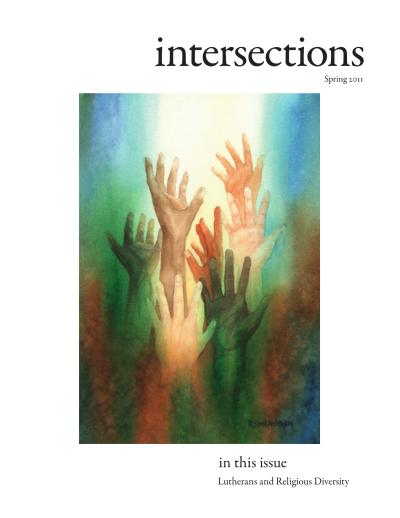
Lutherans and Religious Diversity
No. 33 · Spring 2011
The Spring 2011 issue of Intersections, drawn from the 2010 Vocation of a Lutheran College Conference, asks how Lutheran campuses respond to religious diversity. Essays by Darrell Jodock, Terence S. Morrow, Karla R. Suomala, Mark N. Swanson, and Jacqueline Aileen Bussie chart a “third path” between sectarian and non-sectarian models, examine civil discourse on campus, trace new contexts for Jewish-Christian engagement, explore Christian-Muslim relations at ELCA institutions, and offer practical recommendations for embracing reconciled religious diversity.