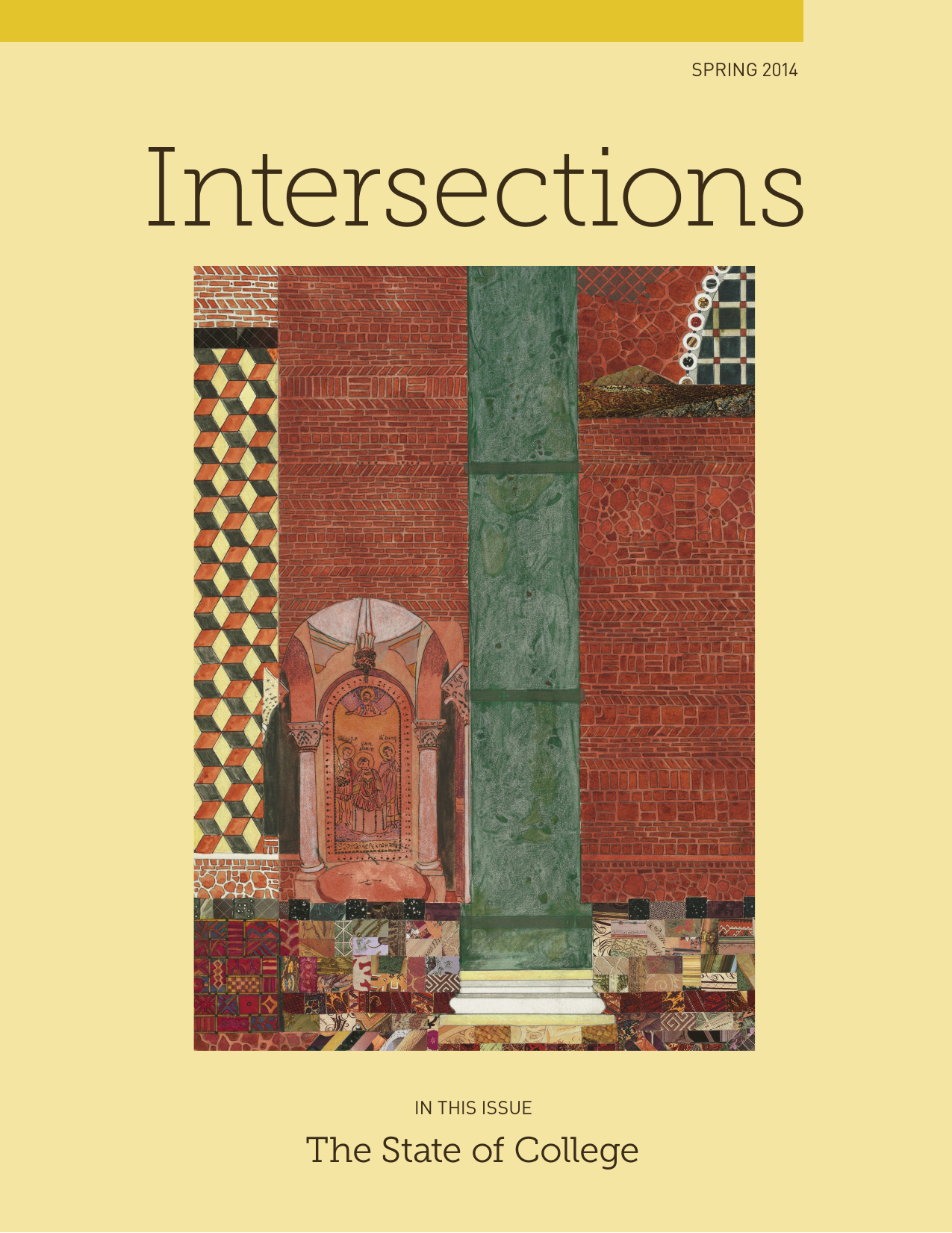
The State of College
The Spring 2014 “State of College” book-review issue gathers eight reflective reviews by ELCA faculty and staff. Reviewers engage Delbanco’s College, Selingo’s College (Un)Bound, Childers’s College Identity Sagas, Jacobsen and Jacobsen’s No Longer Invisible, Farrell’s The Nature of College, Palmer and Zajonc’s The Heart of Higher Education, Bok’s Our Underachieving Colleges, and a cluster on the digital information deluge—asking what Lutheran liberal arts might mean against the pull toward careerism.
Editors
Articles in this Issue
-
 Editorial
From the Publisher
Mark Wilhelm
Wilhelm interrogates the widely used phrase “the model is broken,” arguing that it blames the victim, masks the demographic and public-funding pressures actually facing ELCA higher education, and distracts from the work of modifying—rather than discarding—a model of educating the whole person that has successfully adjusted across the centuries.
-
Editorial
From the Editor
Jason A. Mahn
Mahn reports on the working group “People of Wondrous Ability: Introducing Faculty and Staff to Lutheran Higher Education,” shares creative ways campuses are introducing colleagues to the charisms of the Lutheran tradition, and frames the issue as a set of reflective reviews that move from national trends to homegrown conversations about the state of college.
-
Book Review
The Religious Genealogy of College: Interrogating the Ambivalence of Delbanco's College
George Connell
Connell reads Andrew Delbanco’s College: What It Was, Is, and Should Be alongside Concordia’s Vision Statement for the Humanities and Martha Nussbaum’s Not for Profit, tracing Delbanco’s ambivalent engagement with the religious origins of American college. He asks whether Delbanco’s “college idea” can survive cut off from the religious rootstock that nourished it, and proposes that church-related colleges may serve best not as a “usable past” but as a “usable present.”
-
Book Review
A College Degree or a College Experience? Reflecting on Selingo's College (Un)Bound
Laurie Brill
Brill reads Jeff Selingo’s College (Un)Bound from inside the Lutheran Educational Conference of North America, drawing on LECNA’s alumni research with Hardwick-Day and on Brandon Busteed’s Gallup data to argue that, in an age of competency-based degrees and college-as-commodity, Lutheran colleges must speak more clearly about the transformational, vocational impact of a college experience that develops the whole person.
-
Book Review
Types, Methods, and Sagas in Lutheran Higher Education: Learning from Childers
Lake Lambert
Lambert situates Eric Childers’ College Identity Sagas within the older tradition of the 1977 Association of Lutheran College Faculties volume The Church-Related College in an Age of Pluralism, working through Burton Clark’s “saga” and Robert Benne’s typology of church-related colleges. He commends Childers’ socio-scientific approach while questioning whether a typology can do justice to institutions that resist easy classification.
-
Book Review
Post-Secular Religion on Campus: Conversing with Jacobsen and Jacobsen
L. DeAne Lagerquist
Lagerquist guides readers through Douglas and Rhonda Hustedt Jacobsen’s No Longer Invisible: Religion in University Education and its companion volumes, unpacking the authors’ three-act story of campus religion (Protestant, Privatized, Pluriform), their three-by-two framework of historic/public/personal religion in belief and behavior, and the six questions they pose for campus conversations. She lifts up interfaith etiquette and vocation as especially fruitful zones for Lutheran campuses.
-
Book Review
The Prophetic Vocation and the Nature(s) of College: Reimagining College with Jim Farrell
Peder Jothen
Jothen reads the late Jim Farrell’s The Nature of College as a prophetic critique of the dual nature(s) of college—its socio-cultural “normal” and its ecological habitat—and argues that Farrell’s call to model an “Anthropocene Responsibility” resonates with the prophetic dimension of Lutheran higher education. He proposes a re-imagined “About St. Olaf” that names vocation, ecological dependence, and personal involvement as the operative goods of college.
-
Book Review
The Courage to Change: Creating New Hearts with Palmer and Zajonc
Martha E. Stortz
Stortz reads Parker Palmer and Arthur Zajonc’s The Heart of Higher Education from the landscape of Lent and notes that the book’s strategies all target students, not their professors. Drawing on her own Faculty Formation Group at Pacific Lutheran Theological Seminary and the Ignatian Colleagues Program at Jesuit institutions, she asks what a Lutheran analogue might look like that would form the educators who teach for transformation.
-
Book Review
Learning Across Campus: Hearing Bok's Call to Conversation
David Ratke
Ratke reads Derek Bok’s Our Underachieving Colleges from Lenoir-Rhyne and argues that Bok’s call to think holistically about undergraduate education and to dialogue across disciplinary boundaries names the work already underway at ELCA colleges. He weighs faculty attitudes, the role of skills in the core curriculum and the major, and the importance of the extracurriculum for student formation.
-
Book Review
The Information Deluge: Navigating the Digital Age with Recent Scholars
Virginia Connell
From the reference desk at Concordia’s Carl B. Ylvisaker Library, Connell navigates Ann Blair’s Too Much to Know, Nicholas Carr’s The Shallows, Viktor Mayer-Schönberger’s Delete, and Howard Gardner and Katie Davis’ The App Generation, then describes information-literacy work at Concordia—primary-source assignments, Omeka and TimelineJS exhibits—that helps students move from app-dependent to app-enabled in the Lutheran tradition of reform.