As the traditional academic year begins, colleges and universities are in the news. The news is not good, full of dire warnings about student behavior, online learning, unhappy faculty and staff. In fact, the news and public opinion about higher education seems to foretell failure in the midst of this pandemic.
As a long-time university president, I am not naive about the unprecedented challenges we face on our campuses this fall. I give thanks for the tireless work of our students, faculty, and staff, along with the public health experts who are helping us keep each other safe and healthy. I wonder, though, if we might upend this failure narrative with a reminder of the unique role that higher education is called to play in historic moments just like this.
As we conclude our year-long celebration of Augsburg University’s 150th anniversary, in the midst of these uncharted times, I have been reflecting on Augsburg’s motto, “Through truth to freedom.” I wonder whether and how we might recover its power for our academic and public missions, especially in a time when the relevance of higher education is being scrutinized. These words from Christian scripture were adopted as our motto in 1969, on the occasion of Augsburg’s 100th anniversary, That was also a moment when campuses and the country were reeling from similar forms of anxiety and unrest.
“Through truth to freedom” strikes me as a compelling response to a moment when we find ourselves living at the intersection of three pandemics. The Covid-19 pandemic has disrupted all aspects of how we live and work, and has pointedly illustrated the tension between public health and economic well-being. Following in the wake of the Covid-19 pandemic, an economic pandemic threatens our social fabric with massive unemployment and business closures worldwide. And, most recently, the racial inequities exacerbated by the senseless murder of George Floyd by Minneapolis police officers has created a third pandemic, which threatens to tear our country apart. Surely, this uncharted terrain presents unique challenges for all of us as citizens. We are trying to imagine how we will navigate to some as-yet-unknown future.
“I wonder, though, if we might upend this failure narrative with a reminder of the unique role that higher education is called to play in historic moments just like this.”
In a recent public presentation, Mary Lowe from Augsburg’s religion department offered a provocative challenge when she asked us what it might mean to educate our students for freedom. What a countercultural notion! Educated for freedom from ignorance, from oppression, from division and hatred and violence. Educated for freedom to make the world fairer and more just and healthier, to be good neighbors, to take care of creation. Educated for freedom for the sake of the world, for the good of others, for the promise of wonder and creativity.
But is this path through truth to freedom as linear as the motto seems to claim? Often, the search for truth uncovers separations and sins that demand reconciliation before there is freedom. This, in fact, may be the most important work for our colleges and universities: to educate for truth and freedom—but by way of reconciliation.
In his recent book, Begin Again: James Baldwin’s America and Its Urgent Lessons For Our Own, Princeton Professor Eddie S. Glaude, Jr. describes the lie that persists in the United States—the lie of white supremacy and its insidious implications, America’s own original sin that must be confessed so that there might be reconciliation and finally, freedom, true freedom.
In our Cedar-Riverside neighborhood in Minneapolis, our remarkably diverse Augsburg students and faculty engage every day with our immigrant neighbors—primarily Somali-Americans, devout Muslims—and we witness to their struggles with Islamophobia, racist behavior, with poverty. It is only when we face and confess the lies, that we find common ground, reconciliation, the genuine opportunity to live as neighbors aspiring for freedom. This, I would argue, is the authentic work of democracy, an ethic of living with each other.
Through truth to freedom by way of reconciliation is a fitting motto for all higher education in these times. The questions we will ask at Augsburg are at the heart of our academic mission and our commitment to social justice. They are questions I believe all of higher education is poised to pursue. They include this one at the core: Where is the truth in the midst of these pandemics?
“It is only when we face and confess the lies, that we find common ground, reconciliation, the genuine opportunity to live as neighbors aspiring for freedom.”
Further, what is the truth about keeping each other healthy in the face of a novel coronavirus? What is the truth in an economy that more and more creates remarkable inequities? What is the truth in centuries of systemic racism and oppression?
In pursuing the truths, we will find the sins and lies that we tell each other about knowledge and privilege and justice. Only when we face the truth, will we confess our complicity in the sin and lies we tell, and humbly seek to be reconciled with each other and with the creation. Only then will we be freed for the work we are called to do as “informed citizens, thoughtful stewards, critical thinkers, and responsible leaders” (Augsburg’s mission).
That, it seems to me, is a much more compelling story of higher education in these pandemic times. I can’t wait to see all that we will do together to strengthen our democracy.
-
 Editorial
From the Publisher
Mark Wilhelm
Wilhelm argues that the “hackneyed” expressions of higher education — “you are not just a number,” “the college experience,” “risen to the challenge” — tell the simple truth about NECU institutions even as the Covid-19 pandemic has pushed budgets, employees, and campus life to the breaking point.
-
Editorial
From the Editor
Jason A. Mahn
Mahn narrates a year of crisscrossing pandemics — Covid-19, economic collapse, partisan politics, and the long pandemic of white supremacy revealed anew by the murder of George Floyd — and argues that Lutheran liberal arts schools, by educating for vocation, are uniquely poised to help students respond with character and capable callings.
-
Article
A New Image for an Ancient Call: Lutheran Higher Education Amidst Pandemics Today
Caryn Riswold
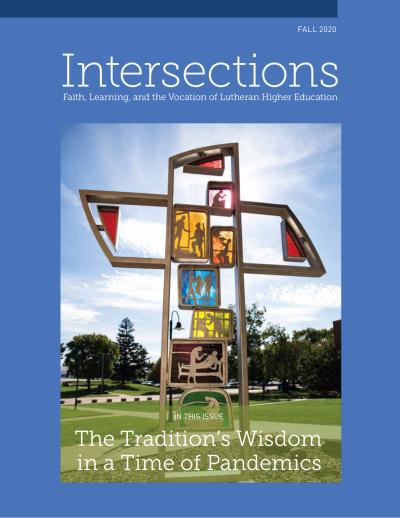
Pairing Wartburg’s Lebenskreuz sculpture with the Matthew 25 acts of mercy and the commitments of Rooted and Open, Riswold reads the calls to feed the hungry, welcome the stranger, and care for the sick as urgent summons for Lutheran higher education in a year of overlapping pandemics — and as a call to dismantle the structures that produced them.
-
Article
Learning from Luther on Covid-19
Carl Hughes
Reading Martin Luther’s 1527 treatise “Whether One May Flee from a Deadly Plague,” Hughes finds practical and spiritual guidance for a pandemic age: serve the neighbor, follow medical experts, honor those whose vocations put them at risk, and trust that even when we fail, God will not abandon the community.
-
Article
Radical Hospitality on Haunted Grounds: Anti-Racism in Lutheran Higher Education
Krista E. Hughes
Writing from Newberry College’s campus on land once home to the Cherokee and within a day’s drive of Mother Emanuel A.M.E., Hughes argues that NECU’s call to “practice radical hospitality” demands that predominately white institutions open themselves to the hauntings of racism — pursuing belonging rather than mere welcome, and risking kenotic transformation of institutional identity itself.
-
Article
Activism, Justice, and the Danger of Silence
Dezi Gillon
In conversation with Jason Mahn, Augustana College alumnux Dezi Gillon traces the call to action they felt as a Black student organizing for Black Lives Matter on a predominately white campus — through seminary, art, spirituality, and restorative justice work — and warns white professors that staying silent “actually speaks volumes.”
-
Article
Leadership in Lutheran Key at a Time of Pandemics
Deanna Thompson
Thompson draws on Luther’s theology of the cross and Shelly Rambo’s theology of trauma to sketch a Lutheran model of leadership for a season of pandemics — one that is attentive to pain, responsive to need, and intentionally nourished by food, friends, and deep conversation.
-
Article
Finding Purpose in Chaos: Reflection In and Beyond the Public Health Classroom
Lena R. Hann
When the pandemic hit her new public health professionalism course, Hann recalibrated her teaching from the “how” of professional preparation to the “why” of vocational reflection — and recounts how Augustana public health students and alumni found purpose in the chaos through food banks, disaster response, palliative care, and research on health inequities.
-
Reflection
The Long Pilgrimage of 2020-21
Kara Baylor
Drawing on Martha Stortz’s definition of pilgrimage as “intentional dislocation, for the sake of transformation, where the body teaches the soul,” Baylor invites students and educators worn out by the 2020-21 academic year to ask what is essential, to listen to what their bodies are telling their souls, and to be more open to the transformations the dislocation might still yield.
-
Article
Called to Flourish: An Ethic of Care
Mindy Makant
Drawing on Lenoir-Rhyne’s core value of Care, Glennon Doyle’s Untamed, Darrel Jodock’s “Gift and Calling,” and Luther’s plague-era practice of opening his home to the sick, Makant argues that flourishing is interdependent — that self-care is a means to extending care, and that an ethic of care is the meaningful, transformative work to which Lutheran liberal arts education is called.
-
Article
Called to the Moment: A New Vocation for Lutheran Colleges
W. Kent Barnds
After a derecho ravaged Iowa in August 2020 and Pastor Katy Warren preached on 1 Peter 4, Barnds watched line workers, neighbors, and Augustana colleagues simply show up where they were needed — and proposes that the true vocation of a Lutheran college may be making the case for “meeting immediate need with a deep willingness” alongside the longer work of vocational discernment.
-
 Article
What is Required of You?: Higher Education Leadership in a Moral Key
Paul C. Pribbenow
No. 62 · Fall 2025
15 min audio
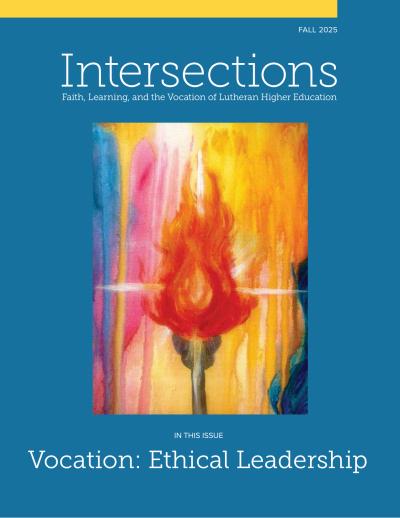
Drawing on Micah 6:8 and Stephen Carter’s “etiquette of democracy,” Pribbenow describes the three things Augsburg requires of every incoming student — show up, pay attention, and do the work — as a democratic social ethic that prepares students for engaged citizenship in a fractured public life.
-
 Response
Response to Mark Wilhelm: Adopting the Framework of ‘Because’ and ‘Therefore’
Paul C. Pribbenow
No. 56 · Fall 2022
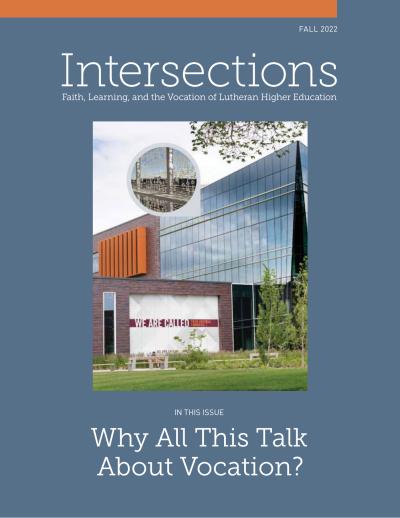
Pribbenow describes how Augsburg University responded to its dramatic demographic transformation (from 18% to nearly 70% BIPOC entering students over sixteen years) by adopting an institutional vocational statement and a simple “because/therefore” framework for translating particular Lutheran theological convictions into institutional programs, policies, and practices.
-
 Institutional Focus
Sharing the Gift of Vocation at (and beyond) Augsburg University
Paul C. Pribbenow
No. 55 · Spring 2022
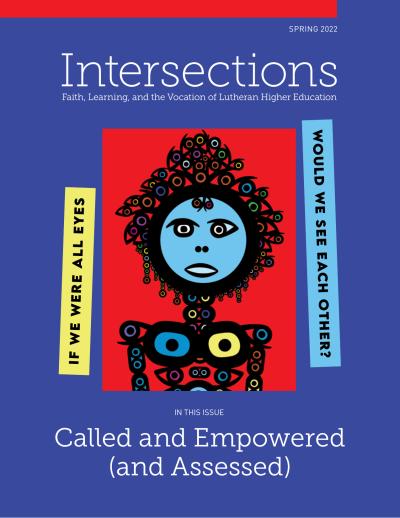
Pribbenow, drawing on a 2022 NetVUE panel with Dorothy Bass and Jodi Porter, considers how the gift of vocation forged with undergraduates can be extended — beyond undergraduate campuses to graduate students, faculty, and staff; across the vocational lifespan from high schoolers to alumni navigating the “gig economy”; and into accompaniment of faith communities through Augsburg’s Riverside Innovation Hub.
-
 Article
Say Something Theological: A Meditation on the Vocation of Lutheran Colleges and Universities to Serve the Common Good
Paul C. Pribbenow
No. 42 · Fall 2015
Pribbenow expands Luther’s “priesthood of all believers” into a meditation on doing theology with the Bible in one hand and the New York Times in the other — reading Luke 14 alongside walls, immigration, and hunger in his Minneapolis neighborhood — and argues that the leadership of Lutheran colleges demands a willingness to engage the theological issues at the heart of their public vocation.
-
 Article
Hospitality is Not Enough: Claims of Justice in the Work of Colleges and Universities
Paul C. Pribbenow
No. 35 · Spring 2012
Pribbenow argues that Augsburg’s incarnational motto — “And the Word became flesh” — grounds a calling beyond hospitality to justice. Drawing on Stephen Carter on civility, Letty Russell on just hospitality, Henri Nouwen, Parker Palmer, Michael Sandel, Bonhoeffer, Niebuhr, and Teresa of Avila, he describes four components of Augsburg’s practice: education “off the main road,” co-created common life, abundance over entitlement, and the anchor-institution model in which colleges become economic and civic partners with their neighborhoods.
-
 Article
Dual Citizenship: Reflections on Educating Citizens at Augsburg College
Paul C. Pribbenow
No. 29 · Spring 2009
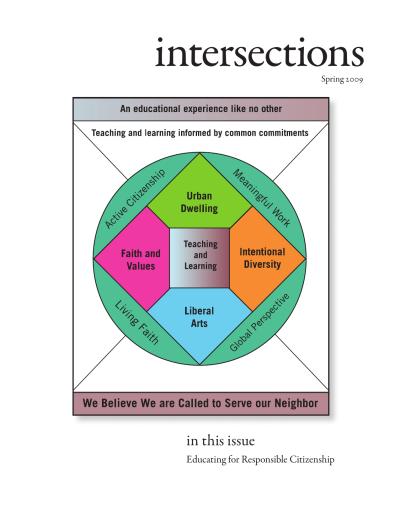
Pribbenow argues that the vocation of Augsburg College is to educate “dual citizens”—those able to live within the messiness of common work rather than resolve every tension once and for all. Drawing on John Courtney Murray on democracy as “the intersection of conspiracies,” Bill Moyers, Jean Bethke Elshtain, Stephen Carter, and the Augsburg vision statement “We believe we are called to serve our neighbor,” he names four common commitments and five principles of civic education that ground Augsburg’s incarnational mission in its city neighborhood.
-
 Editorial
From the Publisher
Arne Selbyg
No. 11 · Spring 2001
Selbyg admits that promoting Lutheran colleges and universities can feel Sisyphean—clueless faculty or staff, fundraising treadmills, students and parents treated poorly by admissions, pastors with no sense of the colleges’ mission—but reports that alumni satisfaction surveys, ELCA-college faculty seminars, an engaging bishop, Ernie Simmons’s Lutheran Higher Education: An Introduction, and renewed reader interest in Intersections all show the stone is not at the bottom of the hill.
-
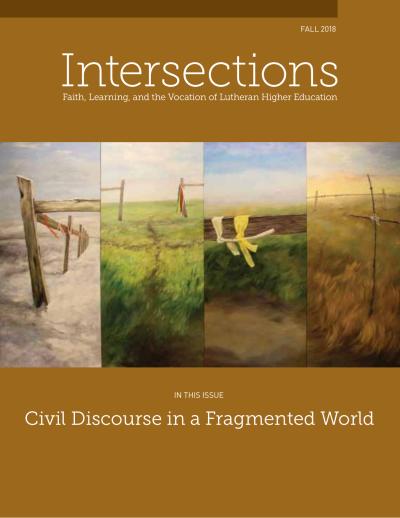 Article
Vocation and Civil Discourse: Discerning and Defining
Lynn Hunnicutt
No. 48 · Fall 2018
Hunnicutt draws on Rabbi Amy Eilberg’s reading of Moses’ calling to identify four features of vocational discernment — attention, wonder, communal consciousness, and humility — and argues that these same qualities are also key aspects of civil discourse, so that forming students for vocational discernment is simultaneously forming them for civility.
-
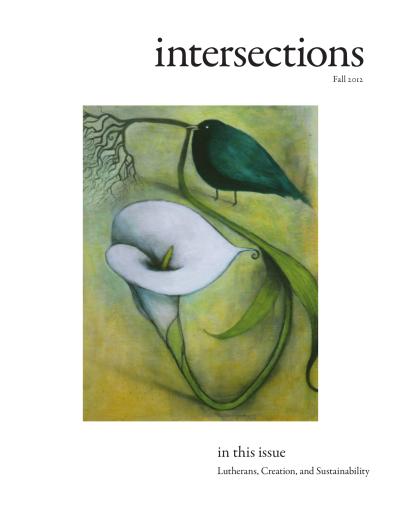 Institutional Focus
Farming and Eating Locally: An Interview with Garry Griffith about Augustana's Farm2Fork Program
Garry Griffith
No. 36 · Fall 2012
Griffith, Director of Dining at Augustana College (Rock Island), describes the Farm2Fork program’s shift from pre-packaged food to fresh produce sourced from local farms (beginning with Jim Johansen of Wesley Acres in Moline), the Augie Acres campus garden tended by students in learning-community courses, the bio-diesel conversion of used fryer oil for greenhouse heat and farm equipment, and the stewardship calling that grounds these efforts in Augustana’s Lutheran identity.
-
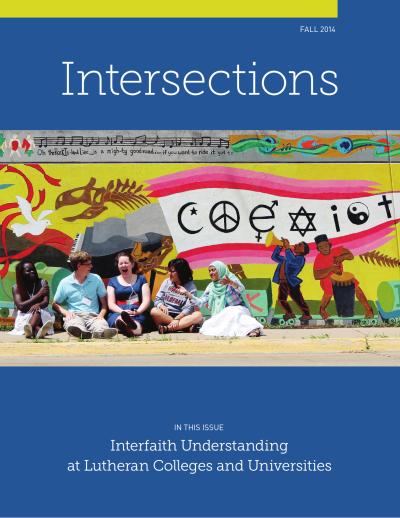 Article
Well, Well…Plumbing Our Depths, Telling Our Stories
Ann Boaden
No. 40 · Fall 2014
Beginning with a college visit that turned into a grieving mother’s confidence about her daughter’s last moments, Boaden uses John 4’s well of living water to argue that an interfaith education worthy of the name requires Lutherans to plumb the depths of their own tradition’s wells — with rituals, stories, and seasons intact — before they can see, respectfully, into the wells from which others drink.
-
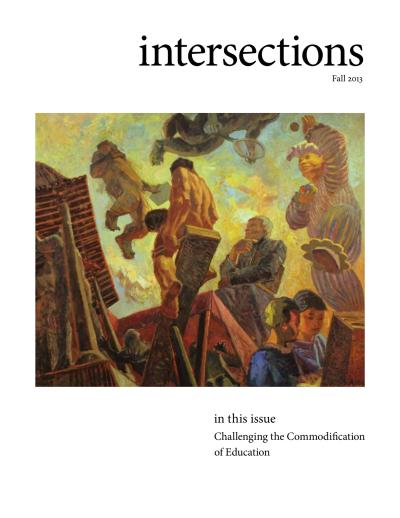 Editorial
From the Publisher: Staying Connected
Mark Wilhelm
No. 38 · Fall 2013
Wilhelm frames Intersections as a tool for maintaining relationships among leaders in ELCA higher education, welcomes the journal’s new editorial advisory board, and points readers toward the 2014 Vocation of a Lutheran College conference at Augsburg and a special interfaith understanding conference at Augustana with Eboo Patel and Presiding Bishop Elizabeth Eaton.
-
 Response
A Call for Creative Education
Wendy McCredie
No. 3 · Summer 1997
McCredie of Texas Lutheran responds to Reichenbach by reframing the four ideas embedded in his claim that “the entire college community should be knowledgeably committed to the college’s mission”—community, knowledge, commitment, mission—and argues that the Lutheran tradition’s unwillingness to be separate from the world should lead us to educate the public about the Lutheran tradition rather than interrogate prospective employees about their faith. She questions whether agreement on “Christian values” is possible (or even Lutheran), and reads Reichenbach’s “creative education” as the dialectical tension between gospel and law, God’s love and our human limits, that members of communities related to the Lutheran church are uniquely positioned to inhabit.