Hospitality is Not Enough: Claims of Justice in the Work of Colleges and Universities
Intersections No. 35 · Spring 2012
Augsburg College educates students to be informed citizens, thoughtful stewards, critical thinkers, and responsible leaders. The Augsburg experience is supported by an engaged community, committed to intentional diversity in its life and work. An Augsburg education is defined by excellence in the liberal arts and professional studies, guided by the faith and values of the Lutheran Church, and shaped by its urban and global settings.
The Augsburg College mission statement
Augsburg College’s founders chose as the college’s original motto these words from the gospel of John: “And the Word became flesh” (John 1:14). Today the motto is more relevant than ever as it provides a theological framework for the college’s deep commitment to access and hospitality while also challenging the Augsburg community to explore and respond to the ways in which the world is marked by systems and practices that are unfair and unjust. We believe that the claim of hospitality demands that we work for justice. I want to explore with you what this theological claim means for our mission and work as a college. How does Augsburg College imagine its distinctive work as an expression of faith in our particular location and context?
From the time of its founding, Augsburg has been a place of great hospitality, which plays itself out in many ways because of our character and our location. In particular, we have become a place that is hospitable to students who have joined us from communities of color, from first-generation families, and from the city. That has changed the nature of our day-to-day life in fundamental ways over the past three or four years as we have lived into our mission commitment to intentional diversity and the hospitality that enriches our life together. More recently, we have been wrestling with the question: Is hospitality enough? Is just the fact of welcoming enough, or, is there a reason why the need to be welcomed demands more of us? As I started to explore this question, I found that Augsburg is in fact a place that is both hospitable and also very much dedicated to sending and equipping our students to go into the world to fight for justice for those who are vulnerable and who do not have access.
Civility: The Etiquette of Democracy in Action
Let me begin with a claim—civility is democracy in action. The theme of our coming together for this conference is the role of civility in our common lives. For me, the concept of civility was critical as we rewrote and adopted the college’s new mission statement in 2010 (printed above). The new mission statement says that Augsburg College educates students to be informed citizens, thoughtful stewards, critical thinkers, and responsible leaders. The first outcome named is informed citizens, a deliberate choice made by the community and a part of our legacy of preparing and equipping students to go out into the world—yes, for professions and jobs and careers in a variety of areas, but also for their roles as citizens in a democracy. This claim of civility as democracy in action is especially vital in today’s society where civility is not one of our most highly regarded values.
Civility is not only democracy in action but also the etiquette of that democracy, as suggested by Stephen Carter, Yale Law School professor. Carter says: “Civility…is an attitude of respect, even love, for our fellow citizens.…Civility is the sum of sacrifices we are called to make for the sake of living together….Rules of civility are thus also rules of morality”(Carter xii). We shape citizens in many ways—we teach them to vote and get involved, and we also teach them the rules of living together and getting along with each other.
Carter has articulated several rules for democracy, and I lift up a few here:
- Our duty to be civil toward others does not depend on whether we like them or not.
- Civility requires that we sacrifice for strangers, not just for the people we know.
- Civility has two parts: generosity, even when it is costly; and trust, even when there is risk.
- Civility creates not merely a negative duty not to do harm, but an affirmative duty to do good.
- We must come into the presence of our fellow human beings with a sense of awe and gratitude.
- Civility requires that we listen to others with knowledge of the possibility that they are right and we are wrong. [Wouldn’t that be significant!]
- Civility requires resistance to the dominance of social life by the values of the marketplace. (Carter 277-86)
These are just seven out of his dozen rules, but you get a sense of how the power of these “rules” integrates with the liberal arts, with our spiritual and faith foundations, and with the moral underpinnings for our work. Civility calls us to hospitality, yes, to welcome people in; but civility also calls us to the work of justice, because the fact is that we are not following these rules. We are not being courteous to each other in this broad sense, and we need to hold each other accountable for both hospitality and justice.
The late Letty Russell, a theologian and teacher at Yale, writes in her Just Hospitality about bringing the two concepts of hospitality and justice together: “Just hospitality is the practice of God’s welcome by reaching out across difference to participate in God’s actions bringing justice and healing into our world of fear and crisis of the ones we call ‘other’” (Russell 101). There is a theological underpinning for civility, for this connection between hospitality and justice.
Hospitality and Justice in our Lutheran Colleges
I want to argue that the above claim about how civility exceeds hospitality to include justice is important to all of our Lutheran colleges, but especially to Augsburg. Our College seal illustrates this. It points to the fact that Augsburg links together three important commitments—the lamp of learning and wisdom, the city skyline reflecting our location, and, of course, the cross as an overarching guide. Even in this visual mark, you see the connection between hospitality and learning and their link to our faith. This integration happens in our academic programs, common life, and outreach—all of the forms in which this commitment to hospitality and justice are played out.
As mentioned above, Augsburg’s new mission statement has been important for us to continually see how this commitment to hospitality and justice is grounded in our mission. We educate students in a community that is engaged and committed to intentional diversity in its life and work. We educate students with commitments to excellence in the liberal arts and professional studies, to the faith and values of the Lutheran Church, and to the nature of our place in urban settings as well as globally. Important conversations led to this mission statement, and it is critical that we keep returning to the mission statement as the foundation for our commitment to both hospitality and justice.
God’s Hospitality
I began by stating that Augsburg’s founding motto was John 1:14, “And the Word became flesh,” which is printed on the wall plaque outside our chapel. This founding idea is more relevant than ever, both theologically—the Word did and does become flesh here in this college and in this neighborhood—and practically, because it leads us to think about the various forms in which we carry the Word into the midst of our neighborhood and work. Many of us would see that this is God’s ultimate act of hospitality: the Word came into the world and became flesh. At the same time, we learn from another part of the first chapter of John’s Gospel that God’s hospitality was rejected. Thus, we are grounded in our call to hospitality and to justice. This incarnational thinking is critical as the basis for the work of colleges. Our work is on the ground, in the classroom, in the residence halls, on the athletic fields, out in the neighborhood. But, it is also God’s work and we are called to God’s work. We are called because the Word did become flesh, and as a result we are freed to be neighbor to others, a critical part of the Lutheran heritage that we all share.
“We are called because the Word did become flesh, and as a result we are freed to be neighbor to others, a critical part of the Lutheran heritage that we all share.”
Incarnation at Augsburg
Historically, this incarnational claim has been a very important part of the conversation at Augsburg. Augsburg grew out of the Lutheran Free Church, a denomination that blended Lutheran pietism and social responsibility. We embrace that history, know that it is messy, and see the good in it, as well as the places where it led us down paths that were not particularly fruitful. It is important that we claim that history and know it has shaped us and our culture. Over the past 10 or 15 years the Augsburg community has done a fine job of thinking through this history; from it, we renew our commitment to the important concepts of caritas, civitas, and civility. Naming our place, naming how this place in the city shapes the way that we love each other and the world, and considering the ways in which we live out the practices of citizenship—all of this serves as a foundation for our calling as a college that embraces hospitality and justice at the intersections of faith, learning, and service.
In 1938, Augsburg President Bernhard Christensen’s inaugural address was titled “The Word Became Flesh.” In that speech, he wrote, “Yet for those who have caught its spirit, Christianity does uphold the highest ideals for service and sacrifice on behalf of [humans] in the world.” The commitment to the city was lived out in the 1940s under President Christensen. He served on (then mayor) Hubert Humphrey’s Human Rights Commission in Minneapolis. Later in the sixties when Oscar Anderson was president, sociology professor Joel Torstenson and some of his colleagues defined our role in the city and founded many signature programs like metro-urban studies, social work, and sociology. More recently, faculty like Garry Hesser, and now Lars Christianson and Nancy Fischer, continue this tradition in meaningful ways.
A couple of years ago, I wrote something a bit more flippant about hospitality and justice: “Genuine hospitality offers mercy so that it might know the mercy that comes from engagement with others. If it was just about welcoming people … well, then, we might as well be a hotel” (Pribbenow 24). Hospitality is good—we care deeply about it— but there has to be something more, and that is the claim of justice that serves as a foundation for our work. At Augsburg, we have a statement of our vocation, “We believe we are called to serve our neighbor.” Faith, learning, and service, linked in those eight words, represent our institutional calling.
The Forms That Hospitality Takes
Hospitality takes many different forms for us, and it is critical to get beyond the notion that hospitality is just how we greet people at the front door or serve the potluck supper in the basement. The much broader claim on us is our openness to the stranger. This is a critical part of our daily life and experience, especially in this neighborhood, as we are faced each day with otherness and differences of religion, culture, and background. This jarring passage from Laurel Dykstra, a Canadian theologian and educator, sums up some of the challenges of engaging strangers. In her commentary on Matthew’s Gospel, she writes:
Prophets have no subtlety, no appreciation for the daily compromises required for getting along. And while truly good people don’t trash the place, they can make you really look at your own life and upset your routine. Disciples and little ones are perhaps the worst of all. You know who they are: no money, no bag, no coat, bad-smelling, and talking about mercy. To get a cup of cold water, they have to come right into the kitchen. (Dykstra 48)
That’s what otherness does to us. To be challenged with otherness so that you look at your own life critically is at the heart of authentic education. I emphasize this claim because colleges, given the more transient nature of their communities, can be great lovers of random acts of service. But most essential is that we try to help students understand how this commitment to hospitality is a way of life; it’s not simply random acts of kindness, it is a way of life. We integrate this notion into our work with students, so that when they become an accountant or a teacher or preacher or social worker—whatever they choose to do with their lives as their vocational journey unfolds—included is this commitment to embracing otherness as a part of that calling.
Along the same lines, Father Daniel Homens, a Benedictine monk, and Lonni Collins Pratt describe what it was like for the monks of St. Benedict Monastery to open their worship lives to the public, when they had long seen themselves only as “professional pray-ers,” watching the world from afar:
It is easy to pray for “the world” and “God’s people” when you don’t have to look into their tear-reddened eyes or fetch more toilet paper after mass on Sunday. Something sacred and unexpected has happened since we opened our doors and our hearts … we have become a part of each other’s lives. (Homens and Collins Pratt 84)
Being truly hospitable opens us to a kind of messiness that becomes an integral part of life.
Hospitality Creates Free Space
Henri Nouwen extends this claim about hospitality when he writes:
Hospitality is the creation of free space where a stranger can enter and become a friend instead of an enemy. Hospitality is not to change people, but to offer space where change can take place….The paradox of hospitality is that it wants to create emptiness, not a fearful emptiness, but a friendly emptiness where strangers can enter and find themselves free; free to sing their own songs, speak their own languages, dance their own dances; free to leave and follow their own vocations. (Nouwen 71-72)
This is what Augsburg does. We create the space for our students to find and discern their vocations and then to leave and follow them wherever that may lead them.
This is God’s plan, and there is a long horizon to this work. Hospitality is the first step in the broader claim of what God’s plan or intentions are for the world. This has been a key part of our work over the past five years, particularly as we mourned the murder of our student three years ago this fall. It is the only time an Augsburg student, faculty, or staff member has been murdered in this neighborhood, and it happened while he was doing the good work of tutoring kids at a local community center. This was a critical issue for our community to struggle with, and it led us to think about what this tragedy means for who we are as God’s people and how we build community here.
The Arc of the Moral Universe
One of the ways we were able to change that conversation was to point to a wider arc, an arc of the moral universe in God’s plan for the world that is not necessarily focused on just what happens tomorrow or next week but what God intends for us and how we live into that. This became a powerful part of our experience in the aftermath of the murder, and we found guidance in these important words from the Reverend Martin Luther King Jr.’s speech popularly named, “How Long? Not Long”:
I know you’re asking today, “How long will it take?” Somebody’s asking how long will presidents blind the visions of men. I’ve come to say to you this afternoon I have a different goal of the moment. However frustrating the hour, it will not be long because truth across the Earth will rise again. How long? Not long, because no lie can live forever. How long? Not long, because you shall reap what you sow. How long? Not long, truth was ever on the scaffold, wrongs were ever on the throne. If that scaffold sways in the future behind that ever stands God within the shadow keeping watch of his own. How long? Not long, because the arc of the moral universe is long, but it bends toward justice.1
We remember people like Dr. King who inspire us to think this way about our lives of faith in the world.
The Work of Justice and Our Colleges
As to hospitality and justice in the context of the work of our colleges, four components will give you a sense of how Augsburg is thinking about this nexus.
(1) Education Off the Main Road
“Education off of the main road” is a phrase I first coined after a trip to one of our global sites in Africa last fall. I was sitting in a fancy restaurant on the top of a hill overlooking Windhoek, Namibia, where we have had study programs for 16 years. We had spent a whole day visiting several horrendous places around the city that were villages of people who had moved in from their kin villages. We had seen a lot of misery, disease, and poverty, yet we were in this fancy restaurant looking over the lights of the city. One of the folks who was joining us for dinner asked, “What did you do today?” I explained what we had seen and done, visiting AIDS clinics and tin-roofed temporary villages, and he said, “It’s good that you have been off of the main road, because in Namibia if you’d stayed on the main road, you wouldn’t know what we are challenged with.” That became for me a metaphor of the kind of education and curricular plan we offer—we take students off the main road.
Our education in the community begins with our curricular plan. This arch depicts the College’s curriculum, including the Focus on Engaging Minneapolis and the Augsburg Experience. We have two Search for Meaning courses on vocation; the liberal arts foundation across the curriculum; electives and major coursework; and Keystone course that ties it all together. This commitment to educating students and challenging them to think outside of the mainstream in various ways is embedded in this curricular plan. In this commitment to education off the main road there is a real experiential bias, for which this college has been recognized for at least 50 years.
We fit experience into the students’ coursework—internships, service learning, a whole variety of techniques—but it is all about learning. A persuasive statistic illustrates this: the power of knowledge retention soars to 75% when it is practiced by doing compared to retention of 20% when learning is simply by listening. That is why community engagement is among the most powerful learning experiences our students have.
Furthermore, our curriculum also contains a commitment to exposing our students to injustice that challenges the ways they see the world. What they see and how they experience unfairness in the world is then linked to learning through a critical pedagogy, which our Center for Global Education (CGE) does so well with its Circle of Praxis. Participants start with an experience, go to reflection and analysis, then gather new information, have new experiences, and continue to reflect. Ultimately they take action and evaluate, and then return to celebrate and prepare for other experiences. Anyone who has been on a CGE trip knows how they teach—they put participants into the midst of the community, they do homestays, they go to places that are very disturbing, especially compared to American experiences, and these experiences are all part of their ongoing educational experience.
We are also a teaching and learning community marked by what educator Parker Palmer calls the “grace of great things,” a notion signifying that when we come together:
- we invite diversity,
- we embrace ambiguity,
- we welcome creative conflict,
- we practice honesty,
- we experience humility, and
- we become free. (Palmer 106)
(2) Co-created Common Life
The second component of the work of justice in our colleges focuses on our common life. Most college communities in their daily life teach students how to treat each other, how to get along, how to solve their own problems. This is what we call co-creation and focuses on how our students, faculty, and staff are involved in creating the day-to-day life of the college. It is about sharing power and modeling democracy. Higher education has a long tradition of this, but I think Augsburg has a specific bias around this because of our Lutheran Free heritage.
Some compelling examples of co-creation have begun to unfold on our campus. Our entire Enrollment Center staff went through a process last year working with coaches who helped them explore ways they might change how they do their work—everything from how their space is organized and hours they keep to how they can build better team efforts. We asked them to solve their own problems, which is a concrete example of co-creation. We gave them back the privilege of doing their work and also the responsibility of coming up with solutions. These are very simple examples we are trying to model around campus.
This work is led by our Public Achievement program, which teaches the skills and habits that accompany and sustain a change in individuals from spectators to citizens. How in our day-to-day life can we help people move from being observers or spectators to being co-creators and engaged citizens?
(3) Abundance versus Entitlement
We also lift up the possibility of abundance in our lives together over-and-against the commodification of education and our culture’s sense of entitlement. When you put things together in ways that make better things happen than could be done individually, you bring your best resources to bear with a sense of imagination and creativity. Augsburg models this commitment to abundance in so many ways, e.g., in our partnerships with other organizations, and we recognize that when we come together, we accomplish more for both institutions than we could have done each on our own.
I also believe higher education needs to pursue openness to evolving social arrangements in order to thrive and respond to public criticism about costs and efficiencies. We owe it to the public to demonstrate that we are thinking through new ways of doing our work in partnership with each other and with other organizations. Colleges and universities are organized on outdated models. How do we imagine new ways of working together and creating more fluid boundaries, both within the campus and with other organizations outside the campus?
“Colleges and universities are organized on outdated models. How do we imagine new ways of working together and creating more fluid boundaries, both within the campus and with other organizations outside the campus?”
To fight for justice, we have to change not only the practices we have employed over decades, but also the perspectives of those who come to our institutions. I and my fellow private college colleagues recently met with both the new University of Minnesota president and the new chancellor of the Minnesota State Colleges and Universities system. One of the central themes of our discussions was how in this great state, with all of our progressive ideas about lots of different things, we have fallen into the trap of thinking about higher education as a private right instead of a public good. We have commodified education. We now have transactions with students. They come to us and enter into economic relationships as opposed to the original vision of colleges and universities that offer a public good in order to serve democracy, serve society, and serve our communities.
Michael Sandel’s recent book on justice points to four concepts about justice and the common good that he believes are critical for our 21st century. He focuses on citizenship, sacrifice, service, and the moral limits of markets. Markets are important, but in fact, if our whole life is defined by markets, that’s going to be a problem; the whole issue of inequality and how we work together, going back to the concept of civic virtue about how we are formed to be certain kinds of people; and then, what he calls a politics of moral engagement (Sandel 263-69). These are important concepts that are at the heart of how we think about our life together on campus.
(4) Colleges as “Anchors”
The last piece that relates to our vision for the college’s role in neighborhood wellbeing is a movement that has begun to emerge in urban areas such as Philadelphia, Cleveland, Boston, and other places where colleges serve as anchor institutions. These colleges have begun to think of themselves differently, not as places that have all of the answers for the community, but places that want to enter into mutual conversation and mutual benefit for each other for the sake of the city and the neighborhood. The fundamental challenge is overcoming academic hubris; we have to get beyond our own arrogance. As we work to change our mindset, we begin to engage our neighbors differently because we engage them as fellow citizens and as potential members of our teaching and learning community.
A woman on our staff recently took a group of our students into the neighborhood. They were wandering the streets when she happened to see Chester, a homeless man, whom she knows well. She asked him if he would talk with her students. She could see the fear in the students initially. Chester came over, took off his hat, and spent twenty minutes giving them a history lesson about the neighborhood. And all of those students learned something from a new member of our faculty. Think about that. This was an openness to being taught differently. Seeing the neighborhood as a classroom is critical.
The anchor institution model also helps us think about our college as an economic engine in this neighborhood alongside of the University of Minnesota, Fairview Hospital, and the businesses down the street. We must move away from a charity model of our relationships with the neighborhood, considering not simply what we can do for them, but what we can do together.
Some very practical strategies are part of the anchor movement concept—for instance, how we share people’s time and talents. We recently won the Presidential Award for Community Service, and one of the factors in our favor was that we offered 225,000 hours of community service last year. That is people on this campus—students faculty, and staff—giving to the community in varied ways. Additional strategies for anchor institutions include purchasing policies that support the local economy; claiming our place and how we take care of and have pride in it. We also focus on the partnerships and alliances that I’ve talked about. We are taking up these sorts of practical strategies in our work as an anchor institution, working for hospitality and justice.
Loving the World—God’s Plan instead of Our Own
I end with where I began—how we love the world that God so loves and so live into God’s intent for our lives. This gets back to that notion of our institutional vocation as a college and how we always are looking to discern what God calls us to be and do. There are four simple, little quotes that sum up for me our understanding of God’s plan.
The first is found in a wonderful passage from an oratorio written by Lawrence Siegel called Kaddish, the Jewish prayers for mourning. The words come from Rabbi Nachman of Breslov:
Nothing is as whole as a heart which has been broken.
All time is made up of healing of the world.
Return to your ships, which are your broken bodies.
Return to your ships, which have been rebuilt. (Siegel)
This is the text I used in my “9/11” tenth anniversary homily in chapel to remind our community again that this work of healing the world is God’s plan, and we have been called to it.
Another source of inspiration is from Dietrich Bonhoeffer:
[I]t is only by living completely in the world that one learns to have faith….By this worldliness I mean living unreservedly in life’s duties, problems, successes and failures, experiences and perplexities. In so doing we throw ourselves completely into the arms of God, taking seriously not our own sufferings, but those of God in the world—watching with Christ in Gethsemane. That, I think, is faith;…that is how one becomes a human and a Christian. (Bonhoeffer 369-70)
This commitment to the world is very real here at Augsburg. In the mission conversations with faculty, in particular, there was a real focus on how we educate—yes, it is educating informed citizens, critical thinkers, responsible leaders, and thoughtful stewards—but it is for the world that we educate students, and we have to keep that in mind.
Then there is this lovely, little passage attributed to Teresa of Avila, “Christ has no body now on earth but yours.”2 That gets to the point! If the Word became flesh, we’re it now, and we are living it out and we illustrate faith active in the world.
And, finally, the following passage from Reinhold Niebuhr challenges us to remember again the horizon of our work:
Nothing worth doing is completed in our lifetime; therefore we are saved by hope. Nothing true or beautiful or good makes complete sense in any immediate context of history, therefore we are saved by faith. Nothing we do however virtuous can be accomplished alone; therefore we are saved by love. No virtuous act is quite as virtuous from the standpoint of our friend or foe as from our own; therefore we are save by the final form of love, which is forgiveness. (Niebuhr 63)
Niebuhr’s words takes us back to our mission, the foundation upon which Augsburg educates, the community we are trying to create, and the impact we are hoping to have on the world. I am to be a partner in that work with faculty members, staff members, regents, and other leaders and alums of this college who care deeply about living into our mission to embrace hospitality and justice. I’m privileged to tell their story.
Endnotes
1. Martin Luther King Jr. speech’s “How Long, Not Long,” also referred to as “Our God is Marching On” was given March 25, 1965 at the State Capitol, Montgomery, Alabama. It can be found at: http://www.youtube.com/watch?v=TAYITODNvlM
2. This prayer, attributed to Teresa of Avila (1515-1582), is cited often, although its source remains unknown. See: http://www.journeywithjesus.net/PoemsAndPrayers/Teresa_Of_Avila_Christ_Has_No_Body.shtml
Works Cited
Bonhoeffer, Dietrich. Letters and Papers from Prison. Ed. Eberhard Bethge. New York: Simon & Schuster, 1997.
Carter, Stephen. Civility: Manners, Morals, and the Etiquette of Democracy. New York: Basic Books, 1998.
Christensen, Bernhard M. “‘The Word Became Flesh,’ Christensen’s Inaugural Address.” The Lutheran Messenger. 21. 21 (Nov. 1938): 8
Dykstra, Laurel. “Uncomfortable Words.” Sojourners Magazine 37.8 (June 2008): 48.
Homens, Rev. Daniel and Lonni Collins Pratt, Radical Hospitality: Benedict’s Way of Love. Brewster, MA: Paraclete Press, 2002.
Niebuhr, Reinhold. The Irony of American History. Chicago: University of Chicago Press, 1952.
Nouwen, Henri. Reaching Out: The Three Movements of the Spiritual Life. New York: Doubleday, 1975.
Palmer, Parker. The Courage to Teach. San Francisco: Jossey-Bass., 1998.
Pribbenow, Paul C. “To Give and Receive Mercy.” Till and Keep: A Journal on Vocation (Spring 2010): 23-25.
Russell, Letty. Just Hospitality: God’s Welcome in a World of Difference. Eds. J. Shannon Clarkson and Kate M. Ott. Louisville: Westminster John Knox, 2009.
Sandel, Michael. Justice: What’s the Right Thing to Do? New York: Farrar, Straus and Giroux, 2009.
Siegel, Lawrence. The Kaddish Project, Movement 14. Accessed 1 June 2012, http://www.kaddishproject.org/kaddish-project.htm
-
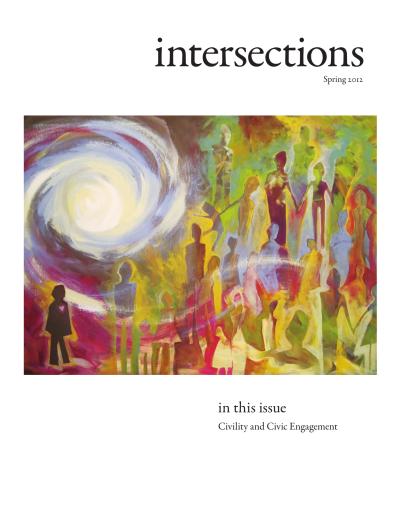 Editorial
From the Publisher
Mark Wilhelm
Wilhelm describes the “four-legged stool” supporting ELCA higher education—the annual Vocation of a Lutheran College Conference, the Lutheran Academy of Scholars, the Thrivent Fellows program, and Intersections—and argues that the conversation about Lutheran mission and identity must now be extended beyond college and university personnel to the larger church and community before the gains of a generation are lost.
-
Editorial
From the Editor
Jason A. Mahn
Mahn introduces five essays from the 2011 Vocation of a Lutheran College Conference at Augsburg, framing how Torvend, Anderson, Svennungsen, Tunheim, and Pribbenow press Lutheran colleges to turn outward—recovering the public character of Luther’s gospel, forming students for moral deliberation, investing in the infrastructure of civic renewal, and pursuing justice and education “off the main road.”
-
Article
Critical Engagement in Public Life: Listening to Luther's Troubling Questions
Samuel Torvend
Torvend narrates the medieval “spiritual/temporal” division and the neo-platonic devaluation of the body that shaped the world into which Luther was born, then traces the disruptive questions Paul’s letters provoked in Luther: about indulgences, the two estates, vocation, and the public reach of baptism. He argues that Luther’s reform — expressed in Kirchenordnungen, social welfare reform, public schools, and writings on lobbyists, usury, and monopolies — carries a “genetic encoding” of public engagement that Lutheran colleges should reclaim against the temptations of holy apathy and Christian nationalism.
-
Article
Cultivating Transformative Responsible Dialogue: Community of Moral Deliberation and Lutheran Higher Education
Per Anderson
Anderson proposes that ELCA colleges and universities embrace a project of “transformative responsible dialogue” that advances the ELCA’s commitment to be a “community of moral deliberation” and answers the LIFT Report’s call for a culture of faithful discernment. Drawing on Michael Meyer’s “liberal civility,” Martha Nussbaum, Hans Jonas’s responsibility ethic, Patrick Keifert’s ecclesiology of strangers, and Kathryn Tanner on culture, he argues that liberal education at our schools can form students whose dialogue knits together civility, responsibility, and Christian openness to the other.
-
Article
Why Lutheran Colleges Need to Engage Civil Society
Ann M. Svennungsen
Svennungsen makes the case that Lutheran colleges must engage the larger civil sphere, drawing on her work with The Presidents’ Pledge Against Global Poverty, Darrell Jodock’s seven fundamental experiences for vocational discernment, David Brooks on civility and modesty, and Michael Sandel’s argument that the affluent are seceding from public life. She urges Lutheran educators to invest in the infrastructure of civic renewal so that service-learning and civic engagement remain central to the Lutheran college curriculum.
-
Article
Practical Approaches for Lutheran Colleges to Engage Civil Society
Katherine A. Tunheim
Tunheim distinguishes a college’s mission from its vocation—a calling from the community—and offers four examples of Lutheran colleges “dancing with their neighbors”: Augsburg’s engagement with the Cedar Riverside Neighborhood, her Gustavus students’ work with the St. Peter Soccer Club, St. Olaf football players in the All-Star After-School Program in Northfield, and Concordia students filling sandbags during the 2009 Red River flood. She presses Lutheran educators to ask the troubling questions that prepare students to lead with ethics rather than merely with money.
-
 Article
What is Required of You?: Higher Education Leadership in a Moral Key
Paul C. Pribbenow
No. 62 · Fall 2025
15 min audio
Drawing on Micah 6:8 and Stephen Carter’s “etiquette of democracy,” Pribbenow describes the three things Augsburg requires of every incoming student — show up, pay attention, and do the work — as a democratic social ethic that prepares students for engaged citizenship in a fractured public life.
-
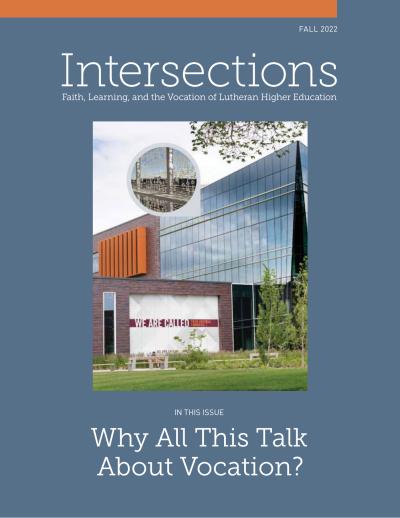 Response
Response to Mark Wilhelm: Adopting the Framework of ‘Because’ and ‘Therefore’
Paul C. Pribbenow
No. 56 · Fall 2022
Pribbenow describes how Augsburg University responded to its dramatic demographic transformation (from 18% to nearly 70% BIPOC entering students over sixteen years) by adopting an institutional vocational statement and a simple “because/therefore” framework for translating particular Lutheran theological convictions into institutional programs, policies, and practices.
-
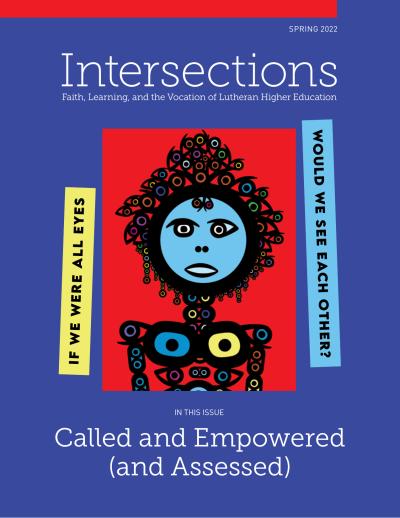 Institutional Focus
Sharing the Gift of Vocation at (and beyond) Augsburg University
Paul C. Pribbenow
No. 55 · Spring 2022
Pribbenow, drawing on a 2022 NetVUE panel with Dorothy Bass and Jodi Porter, considers how the gift of vocation forged with undergraduates can be extended — beyond undergraduate campuses to graduate students, faculty, and staff; across the vocational lifespan from high schoolers to alumni navigating the “gig economy”; and into accompaniment of faith communities through Augsburg’s Riverside Innovation Hub.
-
 Article
Through Truth to Freedom—by Way of Reconciliation
Paul C. Pribbenow
No. 52 · Fall 2020
Reflecting on Augsburg’s 150th-anniversary motto “Through truth to freedom,” Pribbenow argues that in a season of three pandemics — pandemic illness, economic collapse, and the racial sin laid bare by the murder of George Floyd — higher education’s most authentic work is to educate for truth and freedom by way of confession and reconciliation.
-
 Article
Say Something Theological: A Meditation on the Vocation of Lutheran Colleges and Universities to Serve the Common Good
Paul C. Pribbenow
No. 42 · Fall 2015
Pribbenow expands Luther’s “priesthood of all believers” into a meditation on doing theology with the Bible in one hand and the New York Times in the other — reading Luke 14 alongside walls, immigration, and hunger in his Minneapolis neighborhood — and argues that the leadership of Lutheran colleges demands a willingness to engage the theological issues at the heart of their public vocation.
-
 Article
Dual Citizenship: Reflections on Educating Citizens at Augsburg College
Paul C. Pribbenow
No. 29 · Spring 2009
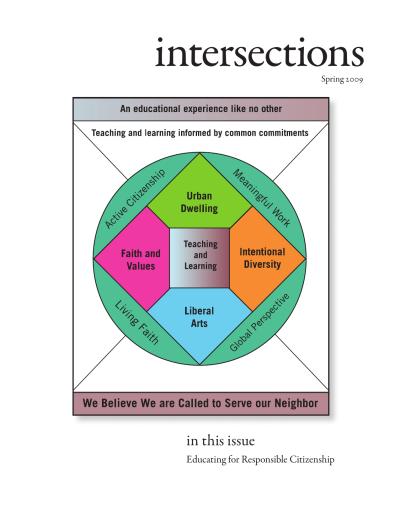
Pribbenow argues that the vocation of Augsburg College is to educate “dual citizens”—those able to live within the messiness of common work rather than resolve every tension once and for all. Drawing on John Courtney Murray on democracy as “the intersection of conspiracies,” Bill Moyers, Jean Bethke Elshtain, Stephen Carter, and the Augsburg vision statement “We believe we are called to serve our neighbor,” he names four common commitments and five principles of civic education that ground Augsburg’s incarnational mission in its city neighborhood.
-
Article
Leadership in Lutheran Key at a Time of Pandemics
Deanna Thompson
No. 52 · Fall 2020
Thompson draws on Luther’s theology of the cross and Shelly Rambo’s theology of trauma to sketch a Lutheran model of leadership for a season of pandemics — one that is attentive to pain, responsive to need, and intentionally nourished by food, friends, and deep conversation.
-
 Article
Welfare of the City and Why Lutherans Care about Education
L. DeAne Lagerquist
No. 38 · Fall 2013
Lagerquist takes readers on a historical tour from sixteenth-century Saxony through the founding decades of Lutheran higher education in the United States to the present day, recovering Luther’s “gift economy” alongside Lewis Hyde and Oswald Bayer as a counter to the market logic that increasingly governs American higher education. She offers four propositions on vocation and commodification and proposes that Lutheran institutional vocation is to accept and pass along the gifts that come to our schools for the well-being of students, neighbors, and the world.
-
 Article
Hope in the Face of Ecological Decline
Jason Peters
No. 32 · Spring 2010
Peters reads our ecological crisis—a campus “Birth Control Tree,” feminized fish, population, climate, water, and soil—through Alexander Pope, William Blake, Søren Kierkegaard, and C. S. Lewis’s The Abolition of Man, and argues that the modern project of mastering nature has made despair (the unconscious form Kierkegaard named) our condition. He calls for three reorientations: practical (assigning value to domestic arts and place over disciplinary specialization), philosophical (dismantling the Baconian/Machiavellian/Cartesian project of control), and theological (recovering the Church’s rejection of Gnosticism so that grace comes to us by means of nature, not in contempt of it).
-
 Editorial
From the Editor
Tom Christenson
No. 13 · Winter 2002
Christenson previews a varied issue—Darrell Jodock’s Bernhardson inaugural lecture, Ernie Simmons’ Valparaiso conference talk on student/parent attitudes, two South Africa travel pieces by Brian Wallace and Corin Wesner, and reviews of Richard Hughes’s and Robert Benne’s recent books—and tells the story of “the church lady from hell,” a mid-fifties returning student who condemned everyone in the class with “God and I think…,” to ask what a religious tradition without a sense of humor would look like.
-
 Article
Uneasy Partners? Religion and Academics
Storm Bailey
No. 11 · Spring 2001
Bailey, a philosopher at Luther College, takes up the reflex of describing church-related colleges as “pretty good in spite of the religion” and argues instead that religious commitment serves academic goals on three fronts: service as central academic purpose (Richard Hughes on Mennonite colleges in Models of Christian Higher Education), educational community (Plato’s dialogues, Parker Palmer, and Mark Schwehn’s Exiles from Eden), and integration of knowledge across disciplines against Nelson and Watt’s “entrepreneurial disciplinarity.” He then defends academic freedom on Christian grounds by drawing on Mill’s On Liberty argument from fallibilism, the centrality of epistemic weakness in the Christian tradition, and Wolterstorff’s claim that to infringe academic freedom is to desecrate an image of God—making personal and institutional religious commitment a foundation, not a foe, of the liberal academic ideal.
-
Article
From Alien to Citizen
Arne Selbyg
No. 29 · Spring 2009
Selbyg reflects on three experiences of being educated for citizenship—growing up in Norway under the legacy of Lutheran pastors and public school teachers who resisted the Nazi occupation, arriving in America as a resident alien, and becoming a naturalized American citizen—and proposes the jazz ensemble as a better metaphor for American society than the melting pot, one in which different citizens learn skills, study other instruments, and dialog with one another in service to the common music.