Response to Mark Wilhelm: Adopting the Framework of ‘Because’ and ‘Therefore’
Intersections No. 56 · Fall 2022
I am grateful to Mark Wilhelm for his valedictory remarks and for his challenge to all of us who care deeply about Lutheran higher education to address issues around the diversity of expressions of our Lutheran roots, as well as our urgent work around diversity, equity, inclusion, and justice.
My personal background is relevant to our efforts at Augsburg to embrace our Lutheran heritage: I am a cradle Lutheran, the eldest child of Lutheran pastor, a Luther College grad, and I wrote a dissertation with Martin Marty—and I am the only person at Augsburg who must be a Lutheran!
When I arrived at Augsburg in 2006 after more than 20 years working in non-sectarian institutions, I realized that my experience as someone who needed to translate my faith into concepts and practices that didn’t assume a common faith tradition would be valuable in an institution that too often assumed that everyone understood what it meant to be a Lutheran college. It came more and more to be about “translation.”
This was more urgently necessary because Augsburg’s student body was going through a remarkable transformation. In the fall of 2006, our student body included about 18% BIPOC students in the entering class. Over the next 16 years, that number has grown to where this fall’s entering class will be almost 70% BIPOC.
And given that Augsburg’s history was shaped by Northern European pioneers, Lutheran traditions, and a primarily Western liberal arts academic tradition—pretty much as “white” as it comes, we had work to do—and that is the work we have done as a community over these past several years.
Confessing our “white privilege,” we set off to seek to understand how the threads of our Lutheran Christian roots could respond to the lived experiences of our diverse student body. We adopted an institutional vocational statement: “We believe we are called to serve our neighbor,” capturing the links between faith, learning, and service that are at the heart of our Lutheran tradition (shaped as it was by a university professor named Martin Luther), but which also allows us to speak authentically to the diverse expressions of faith, learning, and service that characterize our diverse students, faculty, and neighbors.
We then adopted a simple framework for translating the tenets of our Lutheran theological and intellectual tradition into institutional programs, policies, and practices. We said that “because” of this particular faith claim, “therefore” this institutional response. Because and therefore became our guiding mantra. A few concrete examples:
- Because we believe that only God is all-knowing, therefore we are called to an epistemological humility that seeks to discern all of the ways in which God is at work in the world. The creation two years ago of our Critical Race and Ethnic Studies program was an effort to say that the liberal arts in the 21st century need to allow students to explore their own lived experiences and traditions (just as I did 45 years ago at Luther College, reading Rolvaag’s Giants in the Earth!)
- Because we believe that we have been saved and redeemed through Jesus Christ, therefore we are called to freely serve our neighbors. Our robust anchor institution and community engagement initiatives, prioritized in our strategic plan, allow us to engage in mutuality with our neighbors to build healthier, more just neighborhood and communities.
- Because we believe that all of God’s diverse creation is good, therefore we are called to embrace diversity and otherness, to learn from each other and to build healthy communities. This is the claim that undergirds (among other efforts) our interfaith initiatives, which are premised on the idea that religious pluralism is a force for good in the world. Our “Interfaith at Augsburg: An Institute to Promote Interfaith Learning and Leadership”, and the recent appointment of Najeeba Syeed to the El Hibri Chair and Executive Director of the Institute will only serve to amplify our campus efforts to ever broader audiences.
And so on…I hope you see the ways in which we at Augsburg have embraced our Lutheran roots—addressing them through both appreciative inquiry and with a critical lens focused on reconciliation—and translated them into the daily work we do together in this university. I urge all of you to consider your own “because, therefore” statements that help you make sense of particular Lutheran roots and implications for your college or university.
-
 Editorial
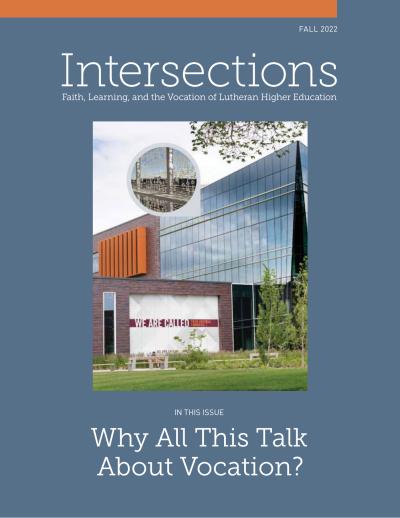
From the Editor: Why All This Talk About Vocation?
Colleen Windham-Hughes
Windham-Hughes introduces the Fall 2022 issue built around Mark Wilhelm’s keynote “Why all this talk about vocation?” and previews five panel responses, two first-time conference reflections, and companion pieces on Womanist theology — framing vocation as a call not to privilege but to constructive and corrective work that undoes unjust systems.
-
Article
Why All This Talk About Understanding the Mission of NECU Member Institutions as a Vocation?
Mark Wilhelm
In his valedictory keynote, retiring NECU Executive Director Mark Wilhelm argues that Lutheran higher education is, properly understood, vocation-based education — outlining four core practices recovered over the past fifty years and naming the constructive and corrective work still to be done, including a fuller embrace of DEIJ and of the diverse vocations of NECU’s 27 institutions.
-
Response
Response to Mark Wilhelm: Vocation, Mission and Privilege
Marit Trelstad
Trelstad affirms Wilhelm’s claim that vocation is the foundational shared mission of Lutheran higher education rather than one program among many, and presses the critique that calls to “vocational reflection” can mask privilege — arguing that an intersectional lens shows vocational discernment is in fact a matter of survival and flourishing for students from marginalized communities.
-
Response
Response to Mark Wilhelm: DEI, Great; DWS (Dismantling White Supremacy), Even Better
Vic Thasiah
Thasiah argues that if Lutheran colleges and universities want to live out their commitment to the flourishing of all, DEI is good but DWS — dismantling white supremacy — is even better, and offers three Lutheran sensibilities (suspicion of self-righteousness, the decolonial shockwave of the cross, and critical thinking that can still register awe) that can make DWS a core practice of higher education.
-
Response
Response to Mark Wilhelm: Distinguishing Between Identity and Vocation
Andrew Tucker
Tucker proposes that NECU’s next most faithful step is to faithfully and effectively differentiate vocations and identities — arguing that identity is who you are, vocation is what you do, and that recognizing the plurality of both helps Lutheran institutions name which work is theirs to take up and which is good work that belongs to someone else.
-
Response
Response to Mark Wilhelm: Vocation—Wide Perspective Questions
Mary-Paula Cancienne
Cancienne, drawing on Iain McGilchrist, asks whether higher education has prioritized micro lenses at the expense of the macro view, and invites educators to hold the drama of individual vocation stories within a wider plot that includes James Webb Telescope wonder, climate grief, the long shadow of enslavement, and the resilience of native populations.
-
Article
Work Works
Julius Crump
Crump argues that in an era of class-stratified careerism and the “ruins of neoliberalism,” commencement-speech rhetoric about heroic vocation will not resuscitate vocation — instead, professors embodying vulnerability, extemporaneity, and contemporaneity in the classroom can show students that consistent work, embodied as service to others, is itself worthy.
-
Reflection
Why All This Talk About Vocation?
Madyson Ray
Ray, a junior at Midland University and the only student attendee at the 2022 conference, reflects on four workshops — on teaching womanist thought, on supporting student-athletes, on resistance to the word “vocation,” and on vocational reflection — and brings home concrete ideas including a women’s-history scavenger hunt and semester-long vocational reflections.
-
Institutional Focus
LibGuide: Introduction to Womanist Theology
Elli Cucksey
Cucksey, the head librarian at Trinity Lutheran Seminary, recounts how Beverly Wallace’s Introduction to Womanist Theology class — the first offering of the ELCA Seminaries’ Womanist Theology Initiative — led her to build a publicly available LibGuide that amplifies Black women’s voices and gathers the resources of the course for future students.
-
Article
Doing the Work One’s Soul Must Have
Beverly Wallace, Yolanda M. Norton
Norton and Wallace describe the Womanist Experiential Learning Initiative — including the Beyoncé Mass, study-abroad partnerships in Portugal, Brazil, and Ghana, and the Black Girl Magic Academy for teenage girls — as a way of centering Black women’s voices in theological education and doing, as Katie Geneva Cannon put it, “the work…that one’s soul must have.”
-
 Article
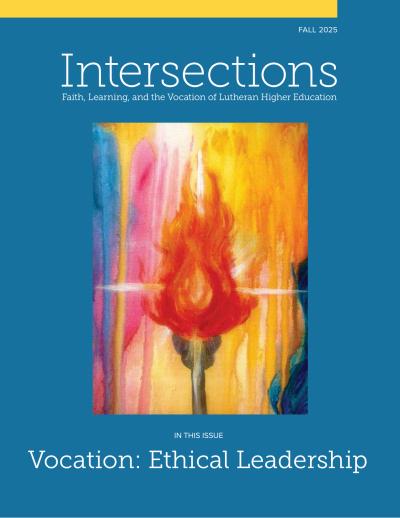
What is Required of You?: Higher Education Leadership in a Moral Key
Paul C. Pribbenow
No. 62 · Fall 2025
15 min audio
Drawing on Micah 6:8 and Stephen Carter’s “etiquette of democracy,” Pribbenow describes the three things Augsburg requires of every incoming student — show up, pay attention, and do the work — as a democratic social ethic that prepares students for engaged citizenship in a fractured public life.
-
 Institutional Focus
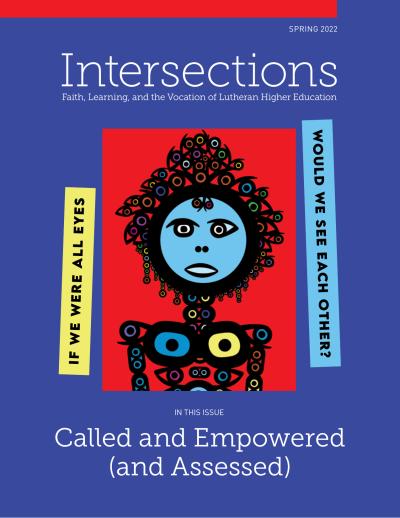
Sharing the Gift of Vocation at (and beyond) Augsburg University
Paul C. Pribbenow
No. 55 · Spring 2022
Pribbenow, drawing on a 2022 NetVUE panel with Dorothy Bass and Jodi Porter, considers how the gift of vocation forged with undergraduates can be extended — beyond undergraduate campuses to graduate students, faculty, and staff; across the vocational lifespan from high schoolers to alumni navigating the “gig economy”; and into accompaniment of faith communities through Augsburg’s Riverside Innovation Hub.
-
 Article
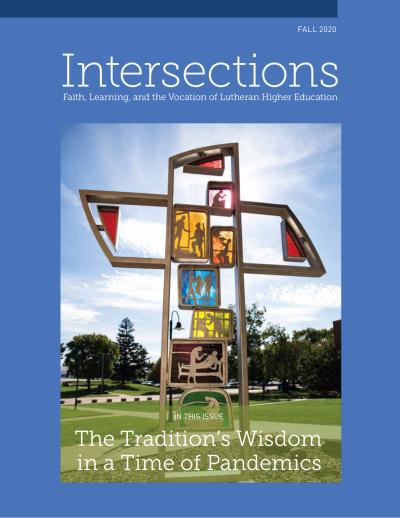
Through Truth to Freedom—by Way of Reconciliation
Paul C. Pribbenow
No. 52 · Fall 2020
Reflecting on Augsburg’s 150th-anniversary motto “Through truth to freedom,” Pribbenow argues that in a season of three pandemics — pandemic illness, economic collapse, and the racial sin laid bare by the murder of George Floyd — higher education’s most authentic work is to educate for truth and freedom by way of confession and reconciliation.
-
 Article
Say Something Theological: A Meditation on the Vocation of Lutheran Colleges and Universities to Serve the Common Good
Paul C. Pribbenow
No. 42 · Fall 2015
Pribbenow expands Luther’s “priesthood of all believers” into a meditation on doing theology with the Bible in one hand and the New York Times in the other — reading Luke 14 alongside walls, immigration, and hunger in his Minneapolis neighborhood — and argues that the leadership of Lutheran colleges demands a willingness to engage the theological issues at the heart of their public vocation.
-
 Article
Hospitality is Not Enough: Claims of Justice in the Work of Colleges and Universities
Paul C. Pribbenow
No. 35 · Spring 2012
Pribbenow argues that Augsburg’s incarnational motto — “And the Word became flesh” — grounds a calling beyond hospitality to justice. Drawing on Stephen Carter on civility, Letty Russell on just hospitality, Henri Nouwen, Parker Palmer, Michael Sandel, Bonhoeffer, Niebuhr, and Teresa of Avila, he describes four components of Augsburg’s practice: education “off the main road,” co-created common life, abundance over entitlement, and the anchor-institution model in which colleges become economic and civic partners with their neighborhoods.
-
 Article
Dual Citizenship: Reflections on Educating Citizens at Augsburg College
Paul C. Pribbenow
No. 29 · Spring 2009
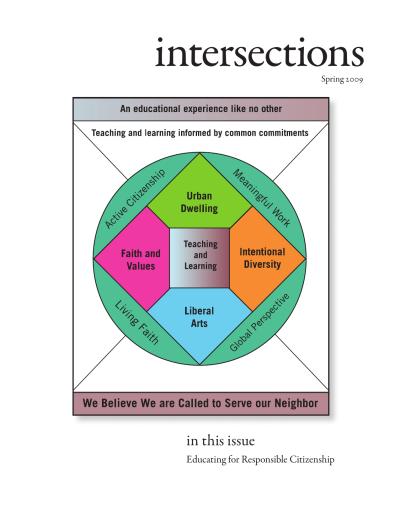
Pribbenow argues that the vocation of Augsburg College is to educate “dual citizens”—those able to live within the messiness of common work rather than resolve every tension once and for all. Drawing on John Courtney Murray on democracy as “the intersection of conspiracies,” Bill Moyers, Jean Bethke Elshtain, Stephen Carter, and the Augsburg vision statement “We believe we are called to serve our neighbor,” he names four common commitments and five principles of civic education that ground Augsburg’s incarnational mission in its city neighborhood.
-
 Article
"Our Calling in Education": Working Together to Generate a Strong Social Statement on Public Schools, Lutheran Schools and Colleges, and the Faith Formation of Children and Young People
Marcia Bunge
No. 23 · Summer 2006
Bunge, Professor of Theology and Humanities at Christ College, Valparaiso University, makes two claims about the ELCA’s forthcoming social statement on education: first, that it should be built on a robust Lutheran understanding of vocation, addressing four common misconceptions (vocation as occupation, as self-fulfillment, as ordained ministry, and as “vo-tech”) and recovering the breadth of Luther’s teaching; and second, that the statement should narrow its focus to three urgent areas affecting children and young people — public schools, Lutheran schools and colleges, and faith formation — rather than addressing the full lifespan of education in equal depth.
-
 Editorial
From the Publisher
Mark Wilhelm
No. 51 · Spring 2020
Wilhelm frames the issue by tracing how Lutheran educational ideals — once a primary source of contemporary higher education — were masked in the United States, and introduces a NECU initiative that uses the case of business ethics to explore Lutheran social teaching as an academic resource.
-
 Response
Knowing and a Tradition to be Known
Kurt Keljo
No. 1 · Summer 1996
Keljo, University Pastor at Capital, embraces Schwehn’s vocational call but challenges his epistemological framing. We are called to bear witness to the Truth more than to pursue it; truth and power need not be dissociated when power is understood cruciform-ly as love and service; alongside objectivity, a case can be made from the tradition for connected knowing (image of God, idolatry, repentance, Incarnation). Christians offer not a particular epistemology but a foundation for epistemology—a tradition to be known. He closes with James Fowler’s four marks of the “public church”: particularly Christian, prepared for pluralism, balancing intimacy with public engagement, and unafraid of ideological pluralism in confident, nondefensive civility.
-
 Reflection
Sweet on My Lips
Corin Wesner
No. 13 · Winter 2002
A passage from Wesner’s travel journal during the same South Africa workshop. Walking into a wood-and-tin shack church where raindrops fall on already-soaked carpet and the service is in Xhosa, she remembers her painted, carpeted home church and her adolescent argument with her mother about wearing a dress to worship, and finds herself engulfed in warmth as the few women sing—welcomed by a stranger’s smile and opened up.
-
 Article
Welfare of the City and Why Lutherans Care about Education
L. DeAne Lagerquist
No. 38 · Fall 2013
Lagerquist takes readers on a historical tour from sixteenth-century Saxony through the founding decades of Lutheran higher education in the United States to the present day, recovering Luther’s “gift economy” alongside Lewis Hyde and Oswald Bayer as a counter to the market logic that increasingly governs American higher education. She offers four propositions on vocation and commodification and proposes that Lutheran institutional vocation is to accept and pass along the gifts that come to our schools for the well-being of students, neighbors, and the world.
-
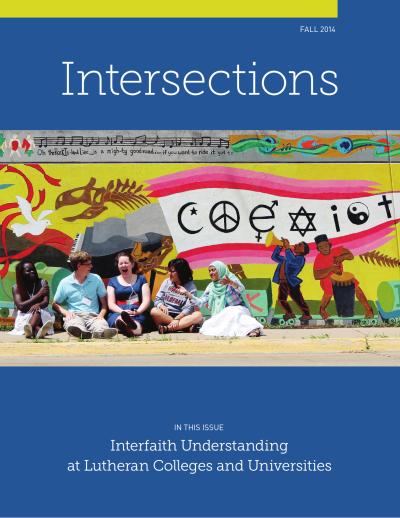 Editorial
Guest Editorial
Kristen Glass Perez, Richard Priggie
No. 40 · Fall 2014
Glass Perez and Priggie introduce the issue by recounting the campus conversations and the June 2014 Interfaith Understanding Conference at Augustana College that gave rise to it, framing the central question, “What does it mean to be Interfaith at a Lutheran College?,” as a living example of the praxis of being a Lutheran college in the twenty-first century.