Say Something Theological: A Meditation on the Vocation of Lutheran Colleges and Universities to Serve the Common Good
Intersections No. 42 · Fall 2015
He said also to the one who had invited him, “When you give a luncheon or a dinner, do not invite your friends or your brothers or your relatives or rich neighbors, in case they may invite you in return, and you would be repaid. But when you give a banquet, invite the poor, the crippled, the lame, and the blind. And you will be blessed, because they cannot repay you, for you will be repaid at the resurrection of the righteous.
Luke 14: 12-14, NRSV
A distinguished member of the divinity school faculty where I pursued my graduate education was once asked at a cocktail party to “say something theological,” to which he is purported to have responded, “God,” before walking away.
As much as we might like to get away with such a retort, those of us who lead Lutheran colleges and universities are often asked to say something theological as pertains to the mission and work of our institutions. And truth be told, we don’t always feel equipped to do so. That said, I want to argue that our leadership demands of us a willingness to engage the theological issues that are at the heart of the vocation of Lutheran higher education—not because we need to prove ourselves as theological scholars but because the world needs the distinctive theological voice of the Lutheran tradition that points to love for the neighbor and hope for the world God loves so much. And we are uniquely situated in our leadership roles to help that voice be heard.
Furthermore, I believe that the questions around our personal and institutional callings to serve the common good are particularly fitting for theological reflection, creating an opportunity to engage our communities in the exploration of how our distinctive identities and missions as colleges and universities of the Lutheran church offer an important voice in the public discourse about pressing social issues.
The early twentieth century Swiss theologian, Karl Barth, once said that he did theology with the Bible in one hand and the New York Times in the other. How about you? How do you “do theology?” Maybe you think that task belongs only to the professional or expert class, such as members of our religion departments, those who have devoted their lives to scholarly research and reflection. Or maybe you believe it is the work of those called to ordained ministry, the clergy who teach and preach.
I want to explore in this essay the Lutheran idea of “the priesthood of all believers,” Martin Luther’s contention that the work of “priests” or “clergy” and even theologians belongs to all the faithful. This offers a way of understanding how the work of “doing theology” is actually another way of describing vocational reflection, discerning what God is calling us to be and do in the world.
Theological Education Unbound
In 2013, I was appointed by then ELCA Presiding Bishop Mark Hanson to the Theological Education Advisory Council (TEAC) for the Evangelical Lutheran Church in America (ELCA). TEAC was charged with exploring the ecology of theological education within the ELCA and recommending ways in which theological literacy might be strengthened for all the baptized.
In particular, we focused on the vast and abundant resources for theological education that exist across our church—in seminaries certainly, and also in colleges and universities, in lay training schools, in congregations and synods, in outdoor ministries, and so on. In fact, I came to see my role on the Council as someone who reminds my colleagues that theology is being done day in and out in settings far and wide. Our job should be to tell the story of this expansive network of theological education.
Most days we get this work right, but to get it right clearly requires a different understanding of what it means to do theology and who is charged with the work of theological education. And here we have our Lutheran Christian tradition to thank for a more expansive understanding of theological education. For those of you who went through the confirmation program in a Lutheran church, remember that key question: “What does this mean?” It is a question that invites us into the work of “doing theology.”
One of the joys for me in serving on TEAC has been the opportunity to share the remarkable theological education happening on the Augsburg campus every day. Theological education is happening in the classroom and residence halls, in locker rooms and cafeteria, in the sacred space of Augsburg’s Campus Chapel and out in the community, in Urban Plunges for middle and high school students and Spring break service trips and interfaith projects—and it belongs to all of us!
So what does “doing theology” look like? What are we invited to do when we talk about theological reflection and education? As Martin Luther taught us, we need to work out our own relationships with God—there is no mediator in the person of a theologian or a priest or a church. That is the work of doing theology.
The Bible, the Times, and Community
More specifically, to do theology truthfully and commendably requires us to explore the theological issues pregnant in our world’s most pressing challenges. Let’s start with theologian Karl Barth’s instructions to have the Holy Scriptures in one hand and the New York Times (or some similar arbiter of world news and social realities) in the other. But we need also to add another critical component of doing theology. Beside scriptural literacy and knowledge of contemporary events, we need to situate our theological reflections in the context of communities of memory, tradition, and ongoing practice. Churches and other faith communities provide one kind of context, but so do academic communities.
The remarkable passage from Luke’s gospel quoted above serves as our scriptural foundation. Surely there are copies of the New York Times and plenty of other newsfeeds close by. And each of us lives and works in a particular community of faith and learning.
An Inviting God
First, here are three themes from Luke’s gospel that offer us insight into the nature of the God we know in Jesus Christ—themes that go to the heart of the character of God and God’s aspirations for our common life:
- Ours is an inviting God, not a commanding and controlling God. We are invited in. And then the choice is ours whether to come to the banquet or not.
- Ours is an inclusive God, urging us to invite not simply those who will feel obligated to come (and return the favor) or those entitled to come, but those vulnerable and forgotten whose place at the table is not secure.
- Our is a God of fellowship and hospitality—a God who understands that feeding our bodies also feeds our souls, that the banquet table is a compelling metaphor for our lives together in the community. Ours is a God who wants the banquet hall filled with those who hunger for nourishment of all sorts.
News about Walls
Second, there is the New York Times or some online news source, pointing to the realities of our lives in the world:
- We build walls to keep people both in and out. Even as we read about the twenty-fifth anniversary of the Berlin Wall coming down, we are surrounded here in our Minneapolis neighborhood by the “walls” that have been built to separate us from each other—walls in the guise of freeways and concrete jungles and other less tangible means of walling ourselves in and out.
- We argue over whether and how to welcome the stranger to our country and community and banquet table. Our struggles over immigration reform boil down to our fears of losing control and jobs and power and safety. The experiences of our immigrant neighbors here in the neighborhoods of Cedar-Riverside and Phillips are daily reminders of a fearful world.
- People are going hungry and homeless when there is plenty to go around. When food and homes become weapons, we surely have reached a low point in our humanity, refusing to feed bodies and souls. We don’t need to go far to witness this barbarism in our own community.
The Character of Community
And finally, we at Augsburg have particular values and commitments, as does every college of the church. While other churches and college communities will certainly be different, each is called to live out the biblical vision in society that often pulls us in opposing ways. Some of the particular gifts we try to nourish at Augsburg include the following:
- We are a community with an “immigrant sensibility.” Surrounded by immigrants in our Minneapolis neighborhood for most of our history, we have the gift of living alongside neighbors who don’t take for granted the freedoms and opportunities most of us enjoy. What difference does that make for our educational work in this college and for our commitments in the world?
- One of the central tenets of our campus ministry program (and I would argue for our entire college community) is our core commitment to radical hospitality. What does that look like in daily practice? Why do we have too many students on this campus and fellow travelers in the neighborhood who bear the burden of bias and prejudice in their daily lives? And what are we doing about it?
- Which points to my final thought about the character of this community: We have to believe that, as important as it is, hospitality is not enough. We must believe that gifts of education and community and faith demand of us more than inviting people in; they demand that we fight for the justice that evades too many of our fellow citizens in their journeys in the world—journeys in pursuit of safety, nourishment, meaningful work, a better life.
Here is what doing theology looks like: We discern the character of our God and the nature of God’s work in the world through the scriptures that have been passed to God’s faithful over two millennia. We also seek to understand the realities of the world that challenge God’s good intentions for God’s people by our vigilance in study and experience. Finally, we discern our vocations as co-creators of God’s will and plan for the world in the midst of this particular community and beyond.
Conclusion
I conclude by asking some simple theological questions that flow from these reflections:
- God invites us in—will we accept the invitation and invite others to join us?
- God loves all creation—will we be good stewards of that inclusive impulse?
- God believes in hospitality and justice—will we join in the work to be done?
The invitation is into the work of doing theology, into the practices of loving God’s good world, and into the wonder of community where we know God’s grace and love in the work of compassion and reconciliation. What a remarkable gift. We are all deputized and commissioned as theologians. Let us get to work.
-
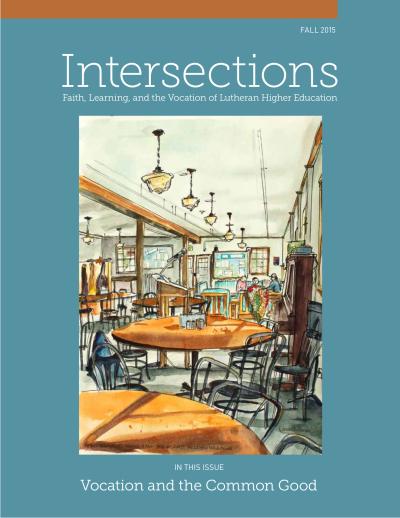 Editorial
From the Editor
Jason A. Mahn
Mahn introduces the “Vocation and the Common Good” issue by asking what is left of “the commons” in an age of privatized goods and education-as-commodity, and frames church-related colleges — with their stubborn vocabulary of “liberal arts,” “collegiate,” and “calling” — as among the least fully-privatized resources left in American life.
-
Article
Vocation and the Common Good
Mark Wilhelm
Wilhelm argues that ELCA colleges and universities are Lutheran not by ethnic culture or institutional checklists but because they stand in a 500-year-old intellectual tradition that educates for vocation. He draws out two insights from that tradition — a common walk of life shared across callings, and a humility about claims to know the good — to ground the schools’ commitment to prepare students for the common good.
-
Article
Making the Common Good Common
René Johnson
Johnson reflects on the Servant Leadership House for women at Finlandia University — from a sweaty trip to the local landfill to weekly habits of campus presence — to argue that the common good becomes truly common when it is embedded in the ordinary details of vocational living, and that Luther’s sense of neighbor calls servant leaders to “little bits of good” as well as to more radical pursuits of justice.
-
Article
"Greed is an Unbelieving Scoundrel": The Common Good as Commitment to Social Justice
Samuel Torvend
Torvend uses his Lutheran Heritage course at Pacific Lutheran University to ask what “the common good” might mean concretely — fresh air, clean water, food, shelter, healthcare — and traces the early Lutheran reform of literacy and social welfare to argue that the first gift of Lutheran education is the capacity to question the status quo and to push beyond charity into the pursuit of social justice.
-
Article
Grinding for the Common Good and Getting Roasted
Rahuldeep Singh Gill
Reading Starbucks’ ill-fated “Race Together” campaign as a parable for campus work on the common good, Gill argues that interfaith cooperation, vocational reflection, and the “re-storying” of our campuses require us to err boldly across lines of difference — not pretending that difference doesn’t matter, but inviting students to imagine and realize what the common good might mean to them.
-
Article
Attentional Commons and the Common Good: Technology and Higher Education
Amy Weldon
Weldon argues that the electronic devices our students (and we) reach for are designed to monetize attention and fragment the very capacities — tolerance for complexity, sustained focus, real conversation — that build lives of meaning and service to the common good. Drawing on Crawford, Lanier, Arendt, and Palmer, she sketches practical tech-mindfulness for the small-college classroom as a defense of the “attentional commons.”
-
Article
Women Presidents in Higher Education: How They Experience Their Calling
Aimee Goldschmidt, Gary McLean, Katherine A. Tunheim
Drawing on in-depth interviews with fifteen women college presidents and a transformative-learning-theory framework, Tunheim, McLean, and Goldschmidt trace a three-stage journey — identifying, interpreting, and pursuing the call — and ask what the language of vocation contributes to the preparation and mentoring of women leaders in higher education.
-
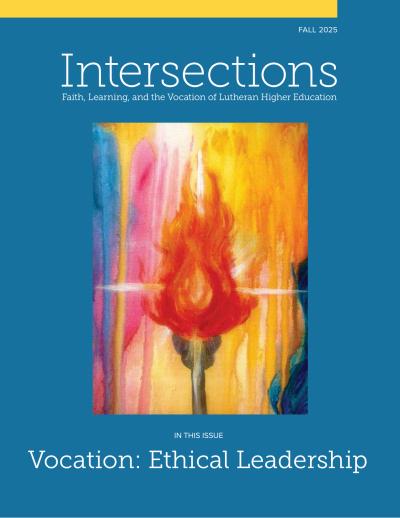 Article
What is Required of You?: Higher Education Leadership in a Moral Key
Paul C. Pribbenow
No. 62 · Fall 2025
15 min audio
Drawing on Micah 6:8 and Stephen Carter’s “etiquette of democracy,” Pribbenow describes the three things Augsburg requires of every incoming student — show up, pay attention, and do the work — as a democratic social ethic that prepares students for engaged citizenship in a fractured public life.
-
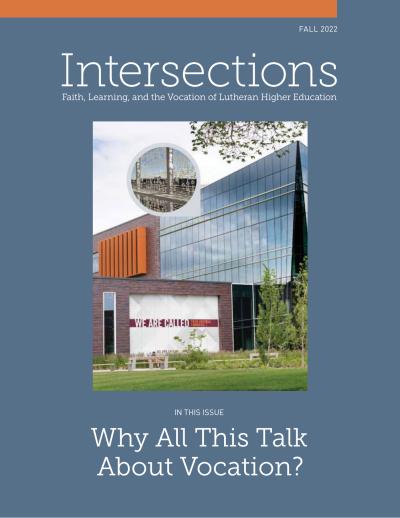 Response
Response to Mark Wilhelm: Adopting the Framework of ‘Because’ and ‘Therefore’
Paul C. Pribbenow
No. 56 · Fall 2022
Pribbenow describes how Augsburg University responded to its dramatic demographic transformation (from 18% to nearly 70% BIPOC entering students over sixteen years) by adopting an institutional vocational statement and a simple “because/therefore” framework for translating particular Lutheran theological convictions into institutional programs, policies, and practices.
-
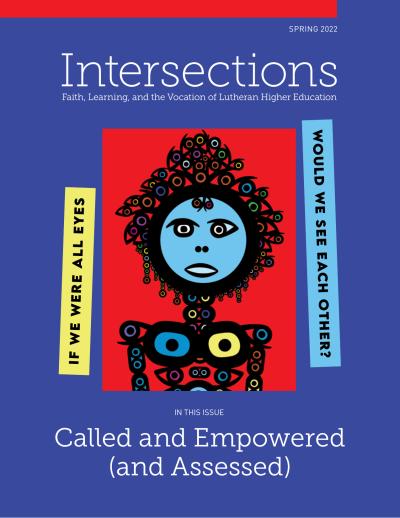 Institutional Focus
Sharing the Gift of Vocation at (and beyond) Augsburg University
Paul C. Pribbenow
No. 55 · Spring 2022
Pribbenow, drawing on a 2022 NetVUE panel with Dorothy Bass and Jodi Porter, considers how the gift of vocation forged with undergraduates can be extended — beyond undergraduate campuses to graduate students, faculty, and staff; across the vocational lifespan from high schoolers to alumni navigating the “gig economy”; and into accompaniment of faith communities through Augsburg’s Riverside Innovation Hub.
-
 Article
Through Truth to Freedom—by Way of Reconciliation
Paul C. Pribbenow
No. 52 · Fall 2020
Reflecting on Augsburg’s 150th-anniversary motto “Through truth to freedom,” Pribbenow argues that in a season of three pandemics — pandemic illness, economic collapse, and the racial sin laid bare by the murder of George Floyd — higher education’s most authentic work is to educate for truth and freedom by way of confession and reconciliation.
-
 Article
Hospitality is Not Enough: Claims of Justice in the Work of Colleges and Universities
Paul C. Pribbenow
No. 35 · Spring 2012
Pribbenow argues that Augsburg’s incarnational motto — “And the Word became flesh” — grounds a calling beyond hospitality to justice. Drawing on Stephen Carter on civility, Letty Russell on just hospitality, Henri Nouwen, Parker Palmer, Michael Sandel, Bonhoeffer, Niebuhr, and Teresa of Avila, he describes four components of Augsburg’s practice: education “off the main road,” co-created common life, abundance over entitlement, and the anchor-institution model in which colleges become economic and civic partners with their neighborhoods.
-
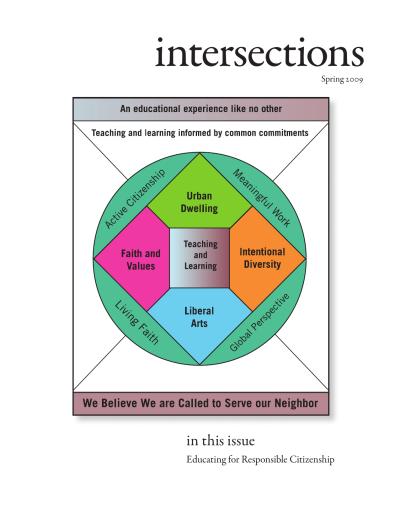 Article
Dual Citizenship: Reflections on Educating Citizens at Augsburg College
Paul C. Pribbenow
No. 29 · Spring 2009
Pribbenow argues that the vocation of Augsburg College is to educate “dual citizens”—those able to live within the messiness of common work rather than resolve every tension once and for all. Drawing on John Courtney Murray on democracy as “the intersection of conspiracies,” Bill Moyers, Jean Bethke Elshtain, Stephen Carter, and the Augsburg vision statement “We believe we are called to serve our neighbor,” he names four common commitments and five principles of civic education that ground Augsburg’s incarnational mission in its city neighborhood.
-
 Article
Team Culture is Key to Success: Learning from Student-Athletes
Colleen Windham-Hughes
No. 59 · Spring 2024
On a December weekend in “Championship City” Salem, Virginia, both California Lutheran’s Women’s Soccer Team and St. Olaf College’s Men’s Soccer Team won NCAA Division III national titles. Windham-Hughes talks with coaches, faculty mentors, and student-athletes about how off-the-field team culture — built on trust, relationships, and shared why — translates onto the pitch and into liberal arts and sciences education.
-
 Editorial
From the Publisher
Mark Wilhelm
No. 45 · Spring 2017
Wilhelm describes how ELCA colleges and universities have shifted the definition of Lutheran higher education away from institutional markers toward alignment with educational values drawn from the Lutheran intellectual tradition — and previews a NECU-convened faculty working group whose recommendations will go to the ELCA college presidents at their June 2017 conference on Lutheran identity.
-
 Book Review
Review of Educating for Shalom: Essays on Christian Higher Education
Tom Christenson
No. 20 · Fall 2004
Christenson reviews Nicholas Wolterstorff’s Educating for Shalom: Essays on Christian Higher Education (Eerdmans, 2004), edited by C.W. Joldersma and G.G. Stronks. After recounting his own early prejudice against Wolterstorff’s Reason Within the Bounds of Religion and his subsequent conversion through Art in Action, he focuses on two threads: Wolterstorff’s expansive reading of shalom—not merely peace but justice, community, communal responsibility, and delight—as the overall goal of Christian collegiate education, and the influence of Abraham Kuyper’s claim of “privileged cognitive access” for Christian inquirers, which Wolterstorff demonstrates rather than declares.
-
 Response
Hitting a Moving Target
Harry Jebsen
No. 3 · Summer 1997
Jebsen, former Provost of Capital University, responds to Reichenbach by arguing that the institutions, the ELCA, congregations and pastors, students, and curriculum are all moving targets. Drawing on Alvin Toffler’s Future Shock and his own fifteen years of hiring as Dean and Provost (a candidate who hoped the cross out front didn’t mean anything), he traces the drift from the “Mr. Chips” faculty who personified Dana and Midland Lutheran to a campus culture where “everybody is nice to each other” has replaced theological substance, and where MBA programs, conservatories, law schools, and adult-education programs further dilute the focus of the residential Lutheran college.
-
 Article
Rooted and Open: Background, Purpose, and Challenges
Mark Wilhelm
No. 49 · Spring 2019
Wilhelm traces Rooted and Open’s seventy-year backstory — from Conrad Bergendoff’s 1948 call for a Lutheran philosophy of education through the recovery of the vocation tradition — and describes the document’s process, purpose as a teaching and study resource, and the embodiment, contextual, and cultural challenges it implies for NECU institutions.
-
Article
Deep Roots, Big Questions, Bold Goals
Colleen Windham-Hughes
No. 49 · Spring 2019
Adapted from a presentation to the California Lutheran University Board of Regents, Windham-Hughes reads the title Rooted and Open as both reaching back into the Lutheran tradition and opening forward into a shared future, then unpacks the document’s “called and empowered — to serve the neighbor — so that all may flourish” through the lenses of freedom of inquiry as a third path, vocation-centered education, radical hospitality, and civil discourse oriented toward the common good.