The presidents of ELCA colleges and universities meet each February in conjunction with the annual meeting of the Lutheran Educational Conference of North America. LECNA is officially an association of all Lutheran colleges and universities in the United States and Canada. In practice, it is now an association of ELCA colleges/universities and the schools of the Concordia University System of the Lutheran Church Missouri Synod, although an occasional Canadian college and a few other Lutheran-related schools in the United States participate. It is not unfair to say that the annual meetings have often been perfunctory and sometimes aimless affairs, albeit spiced with the convivial pleasures and networking opportunities born of time together with good colleagues. Conviviality and networking will certainly remain a part of future presidential gatherings, but the perfunctory part is—I hope—about to be history.
Decisions made at the February 2013 meetings of LECNA and our ELCA presidents should allow the annual meeting of our presidents to claim in the future a more substantive role in directing the shared identity and common mission of ELCA colleges and universities. First, the meetings authorized reviews of the funding and organizational practices of both LECNA and our ELCA network. The review of our ELCA network—in addition to feeding into the LECNA review—represents a consensus that ELCA colleges and universities should take the lead in organizing our network, with the churchwide organization serving as a partner instead of the network’s leader. Second, our ELCA presidents’ meeting appointed a working group to draft a presidential statement on what it means to be a college or university of the ELCA. When finalized, all presidents will be asked to consider signing the statement. Both the organizational practices and presidential statement working groups are to report their progress on August 14th to a meeting of the presidents during the churchwide assembly in Pittsburgh. Recommendations for the future of LECNA will come to the annual meeting in February 2014.
I could offer a long recitation of the possibilities inherent in these outcomes of the February 2013 meetings for strengthening the identity and common mission of ELCA schools, but space does not allow it. Let me simply note for the readers of this journal, who care deeply about the vocation of our colleges and universities, that the potential of a more vital common life lies ahead.
-
 Editorial
From the Editor
Jason A. Mahn
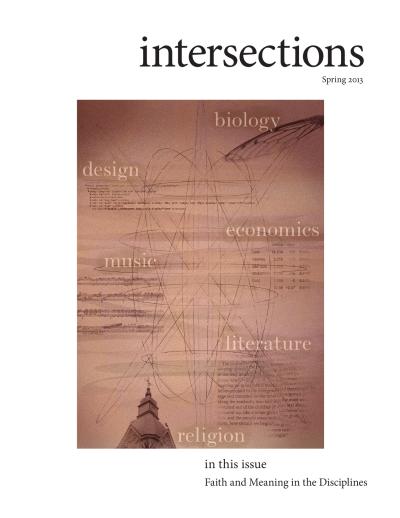
Mahn introduces the issue’s six essays as parallel attempts—from poetry, economics, choral music, biology, religion, and Lutheran higher education—to resist our culture’s fact-value split, and uses Augustana’s Fritiof Fryxell, a 1922 biology and English graduate who began teaching just as the Scopes Trial ignited, to illustrate how church-related colleges have long held faith and disciplinary inquiry together.
-
Article
Valuing Poetry
Allison Wee
Writing from California Lutheran University as “value” in higher education collapses into “can it get you a job?”, Wee makes a case for poetry as a life-saving discipline. Drawing on William Carlos Williams, Shakespeare, the Psalms, Wordsworth, Pattiann Rogers, Mary Oliver, and her own Environmental Literature assignment that sends students outside for an hour of attentive stillness, she argues that the poet’s skill of translation cultivates the close attention, fresh perspective, and immaterial dimensions of life her students need most.
-
Article
Calling Economists
Lynn Hunnicutt
Reading Luther’s Whether Soldiers, Too, Can Be Saved alongside Adam Smith’s Theory of Moral Sentiments and Wealth of Nations, Hunnicutt asks whether economists, too, can be saved—and whether economics can host a serious conversation about vocation. She traces her own move from Utah State to Pacific Lutheran University and its Wild Hope Center for Vocation, and turns to Deirdre McCloskey and George DeMartino as economists whose work makes room for vocation and the common good within the discipline.
-
Article
Singing Faith
Adam Luebke
Luebke describes the Waldorf College Choir as a community of faith whose daily devotions, century-long lineage from F. Melius Christiansen, and disciplined wrestling with sacred repertoire—from Fauré’s Requiem to African-American spirituals to Romans 8 sung backstage—form students spiritually as they form them musically, so that fully grasping what they sing becomes a discovery of why they sing.
-
Article
Living Biology
Stephanie Fuhr
Fuhr recounts how a one-credit Becoming Biologists course at Augustana College was rebuilt around the biological worldview after a student flagged John Janovy Jr.’s argument that values are legitimate tools in biology. Drawing also on Stephen Jay Gould’s The Mismeasure of Man, she argues that visions and values—not skills alone—inspire a life’s work in science and provide the foundation for lifetime engagement in the work of biology.
-
Article
Professing Religion
John D. Barbour
Barbour reflects on the vocation of a Professor of Religion at St. Olaf College, asking when and how a teacher should disclose personal faith in the classroom. Drawing on his graduate teachers Anthony C. Yu and Langdon Gilkey, and on Augustine’s Confessions, Dorothy Day, Malcolm X, C. S. Lewis, and Kathleen Norris, he argues that teaching autobiography invites teaching autobiographically—and that professing religion is finally a matter of how one believes, not just what.
-
Article
A Lutheran Dialectical Model for Higher Education
Ernest L. Simmons
Drawing on “The Freedom of a Christian,” simul justus et peccator, Richard Hughes, Joseph Sittler, Martha Nussbaum, and Tom Christenson, Simmons argues that the Lutheran tradition informs an open, dialectical educational model that holds Christian and academic freedom together. He locates vocation at the intersection of the practical (why are you here?) and the existential (why are you here?) and proposes Lutheran higher education as education for self-transcendence and leadership Soli Deo Gloria.
-
 Article
Why All This Talk About Understanding the Mission of NECU Member Institutions as a Vocation?
Mark Wilhelm
No. 56 · Fall 2022
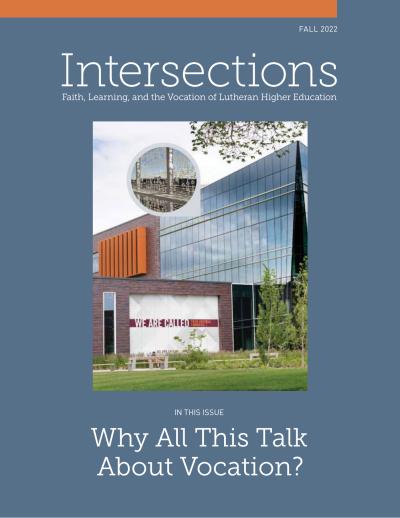
In his valedictory keynote, retiring NECU Executive Director Mark Wilhelm argues that Lutheran higher education is, properly understood, vocation-based education — outlining four core practices recovered over the past fifty years and naming the constructive and corrective work still to be done, including a fuller embrace of DEIJ and of the diverse vocations of NECU’s 27 institutions.
-
 Editorial
From the Publisher
Mark Wilhelm
No. 55 · Spring 2022
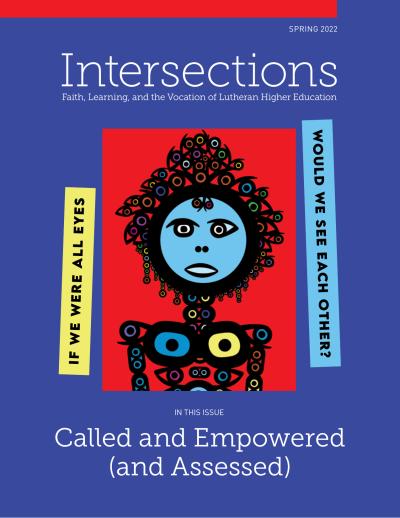
Wilhelm announces his planned retirement on January 31, 2023, after serving as the founding executive director of the Network of ELCA Colleges and Universities, and gives thanks for the privilege of helping NECU articulate a shared vision for Lutheran higher education in twenty-first-century North America.
-
 Editorial
From the Publisher
Mark Wilhelm
No. 53 · Spring 2021
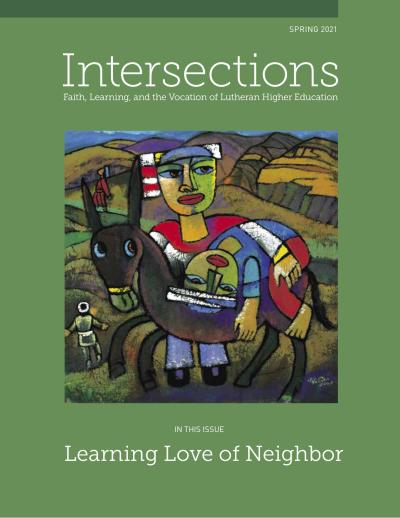
Wilhelm reflects on an NPR report of teenagers’ pandemic diaries and the fraught Christian history of struggling to live out Jesus’s ethic of love, framing the issue as a record of NECU institutions working out how to act for the common good through the pandemic of 2020–2021.
-
 Editorial
From the Publisher
Mark Wilhelm
No. 52 · Fall 2020
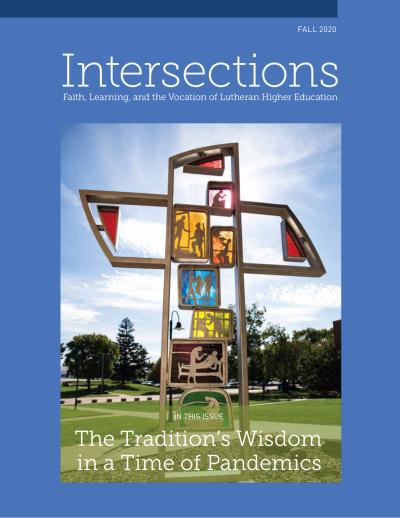
Wilhelm argues that the “hackneyed” expressions of higher education — “you are not just a number,” “the college experience,” “risen to the challenge” — tell the simple truth about NECU institutions even as the Covid-19 pandemic has pushed budgets, employees, and campus life to the breaking point.
-
 Editorial
From the Publisher
Mark Wilhelm
No. 51 · Spring 2020
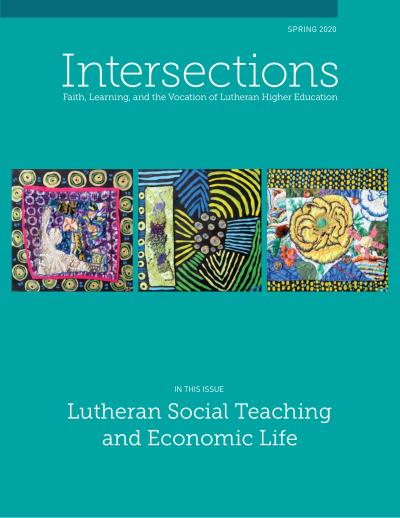
Wilhelm frames the issue by tracing how Lutheran educational ideals — once a primary source of contemporary higher education — were masked in the United States, and introduces a NECU initiative that uses the case of business ethics to explore Lutheran social teaching as an academic resource.
-
 Editorial
From the Publisher
Mark Wilhelm
No. 50 · Fall 2019
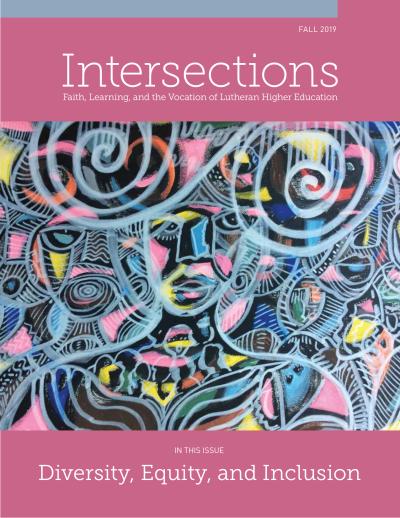
Wilhelm frames the issue by noting that a federal court’s vindication of Harvard’s race-conscious admissions process is a win for higher education’s commitments to diversity, equity, and inclusion — and argues that for Lutheran higher education, the commitment to diversity is an old and foundational claim, rooted in Christianity’s openness to all and reflected in the four diverse gospels of the New Testament.
-
 Article
Lutheran Higher Education in the Land of Anxiety
Jon Micheels Leiseth
No. 47 · Spring 2018
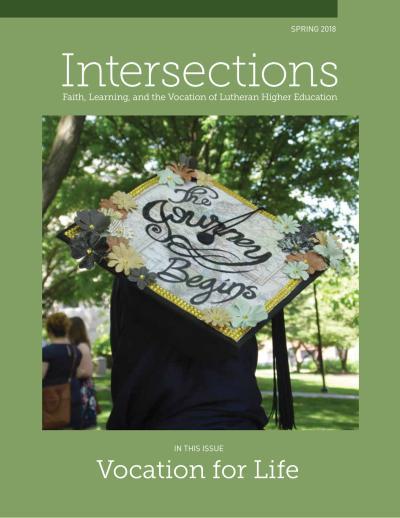
Leiseth, returning to Concordia from work with the ELCA’s Young Adults in Global Mission in Southern Africa, draws on Bessel van der Kolk and Babette Rothschild to argue that pervasive student anxiety functions as low-grade trauma that hijacks the storytelling at the heart of vocational discernment — and explores embodied, breath-based practices that might help students reclaim their stories.
-
 Institutional Focus
Embodying the Tradition: The Case of Wittenberg University
Baird Tipson
No. 2 · Winter 1997
Tipson, President of Wittenberg University, locates Wittenberg in the “American” strain of Ohio Lutheranism founded in 1845 under Ezra Keller (a Pennsylvania College and Gettysburg Seminary graduate and disciple of Samuel Simon Schmucker), with English-language preaching, financial support from the pan-Protestant New England Society, Presbyterians on the Board, and an Episcopalian teaching Latin. He names two ongoing challenges—remaining authentically Lutheran while welcoming a pluralistic student body (just under a quarter are Lutheran in a primary service area that is 5% Lutheran), and making the tradition clear and compelling to non-Lutheran or lukewarm Lutheran students—and presents the five things every Wittenberg graduate should be able to do (respond to the human condition; recognize, define, and solve problems; develop a sense of vocation; assume servant-leadership; take moral responsibility) as authentic expressions of the Gospel and of the university’s ELCA relationship.
-
 Editorial
From the Editor
Jason A. Mahn
No. 38 · Fall 2013
Mahn reads Michael Sandel’s What Money Can’t Buy alongside Larry Rasmussen and Martha Nussbaum to ask how Lutheran schools can articulate the “value added” of vocation without commodifying it, and previews the 2013 Vocation of a Lutheran College conference papers, Patricia Lull’s sermon, and Ann Hill Duin and Eric Childers’ Project DAVID essay that make up the issue.
-
 Book Review
The Courage to Change: Creating New Hearts with Palmer and Zajonc
Martha E. Stortz
No. 39 · Spring 2014
Stortz reads Parker Palmer and Arthur Zajonc’s The Heart of Higher Education from the landscape of Lent and notes that the book’s strategies all target students, not their professors. Drawing on her own Faculty Formation Group at Pacific Lutheran Theological Seminary and the Ignatian Colleagues Program at Jesuit institutions, she asks what a Lutheran analogue might look like that would form the educators who teach for transformation.
-
 Editorial
From the Publisher
W. Robert Sorensen
No. 5 · Summer 1998
Sorenson frames Intersections and the Vocation of a Lutheran College Conference as vehicles for widening the scope of inquiry that the separation of mind from spirit has curtailed, citing Ernest Boyer on probing “the deep places of the mind and the deep longings of the human spirit.” He previews an announcement at the 1998 conference of the Conrad Bergendoff Series—named for the late scholar and former Augustana College president—whose first volume, by Ernest Simmons of Concordia College, will support an Academy of Scholars in Lutheran Higher Education.
-
 Article
Lutheran Colleges: Past and Prologue
Paul J. Dovre
No. 30 · Fall 2009
Dovre offers a reminiscence rather than a research paper, drawing on Aristotle’s ethos, logos, and pathos to trace fifty years of change at Midwestern Lutheran colleges through the key issues of survival, respectability, faithfulness, and relationship to the church — from the dependence of the 1950s through the independence of the late twentieth century to the partnership of the 2000s — and identifies key variables (the student marketplace, faculty formation, and the identity/diversity paradox) for shaping the identity and mission of Lutheran colleges into the future.