Robert D. Haak
Coordinating Director of CORE; Former Editor of Intersections
Augustana College
-
 Book Review
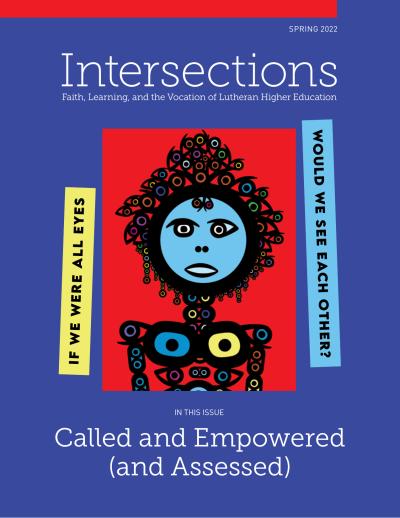
Assessing the Value of Liberal Arts: A Review of The Evidence Liberal Arts Needs, by Richard A. Detweiler
Robert D. Haak
No. 55 · Spring 2022
Haak reviews Richard A. Detweiler’s The Evidence Liberal Arts Needs, in which the former president of the Great Lakes Colleges Association analyzes 240 college mission statements and interviews more than 1,000 graduates to argue that liberal arts educational experiences have a measurable impact on adult lives of consequence, inquiry, and accomplishment — and invites NECU institutions into a further conversation about how Detweiler’s methodology applies to Lutheran higher education.
-
 Article
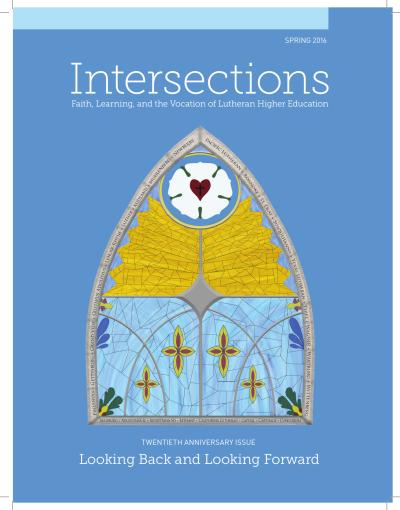
The Vocation of Intersections on its Twentieth Birthday
Jason A. Mahn, Robert D. Haak, Tom Christenson
No. 43 · Spring 2016
The three editors of Intersections — Bob Haak, Jason Mahn, and Tom Christenson (in spirit, following his death in 2013) — trace the twenty-year vocation of the journal itself: its 1996 birth at Capital University; its coming-of-age years of debate over institutional markers, two-kingdoms theology, and Lutheran identity; the ascendancy of “education for vocation” as the central marker of Lutheran higher education; and its ongoing identity in relation to a changing ELCA and to the broader cultural conversation about purpose, wholeness, and the vocation of higher education.
-
 Editorial
From the Outgoing and Incoming Editors
Jason A. Mahn, Robert D. Haak
No. 34 · Fall 2011
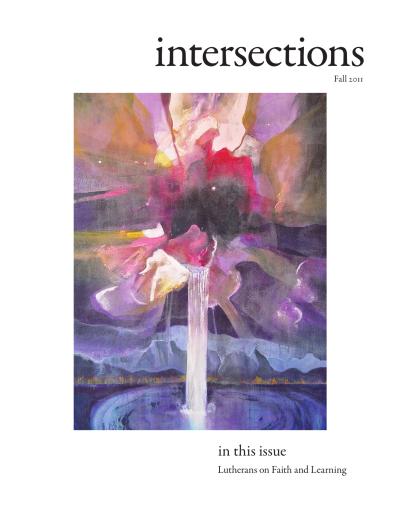
Outgoing editor Robert D. Haak reflects on a six-year run inheriting Intersections from founder Tom Christenson, the “powerful voices” that have driven the conversation (Dovre, Jodock, Christenson, Simmons, Morgan, Olsen, Wilhelm) and the newer ones now entering (Mahn, Bussie); incoming editor Jason A. Mahn, picked up from the airport in Bob’s pickup truck five years ago, names central issues that “Lutherans on Faith and Learning” engages and previews essays by Dovre, Jodock, McDonald, Hill, Turnbull, and Jodock again.
-
 Editorial
From the Editor
Robert D. Haak
No. 33 · Spring 2011
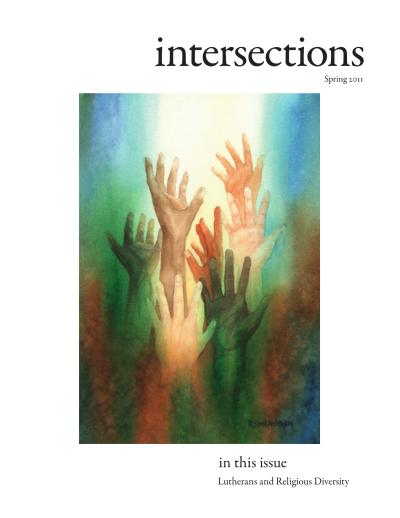
Haak frames the issue by asking how Lutheran colleges and universities understand the changing landscape of religious identification on their campuses, and argues that Lutheran theological commitments — including the work of the Spirit and the Incarnation — call institutions to create places where the voice of “the other” is heard and valued.
-
 Article
Called to Serve
Robert D. Haak
No. 31 · Winter 2010
Haak describes Augustana’s Center for Vocational Reflection (CVR) and its threefold framework of skills/gifts/talents, passions/values, and needs of the community. He surveys the CVR’s Working with Faith group, seminary visits, spiritual companioning, Servant Leader Internships, international travel reflection, and the major Senior Inquiry curriculum revision—then reports the lessons learned at Augustana: that multiple exposures matter more than any single program, that the language of vocation works even for non-religious students, that student-initiated ideas (like Erin Blecha’s Athletes Giving Back) often succeed most, and that the CVR will soon merge into a new Community Engagement Center.
-
 Editorial
From the Editor
Robert D. Haak
No. 30 · Fall 2009
Haak frames the issue around the question of Lutheran college identity as formed in distinction from some “other,” introducing essays by Witherup on the Joint Declaration, Reuther on Holden Village, Afzaal on Christian-Muslim dialogue, Dovre on the history of Midwestern Lutheran colleges, Radecke on service-learning, and Ratke on Wilhelm Löhe — each making the claim that the “other” is an essential partner in conversation who helps us know who we are and shape who we will become.
-
 Editorial
From the Editor
Robert D. Haak
No. 29 · Spring 2009
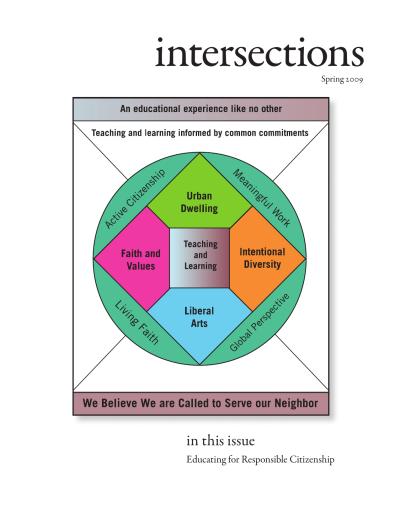
Haak frames the issue’s essays around the question of Lutheran colleges and the role of citizen, noting H. Richard Niebuhr’s typology in Christ and Culture and Luther’s own complex understanding of Christian and state, and offers a fitting farewell to Arne Selbyg with Mike Blair’s tribute song “A Fine Norwegian.”
-
 Editorial
From the Editor
Robert D. Haak
No. 28 · Fall 2008
Haak frames the issue around “Lutheran conversations,” centered on the exchange between Robert Benne and Tom Christenson at Wartburg College’s ongoing campus conversation about what it means to be a “college of the church,” alongside Mark Wilhelm’s historical and social context, Lake Lambert’s sermon, and Bishop Mark Hanson’s short piece reprinted from The Lutheran—and points readers to the Lutheran Academy of Scholars seminar at Harvard as a place to continue the conversation.
-
 Editorial
From the Editor
Robert D. Haak
No. 27 · Spring 2008
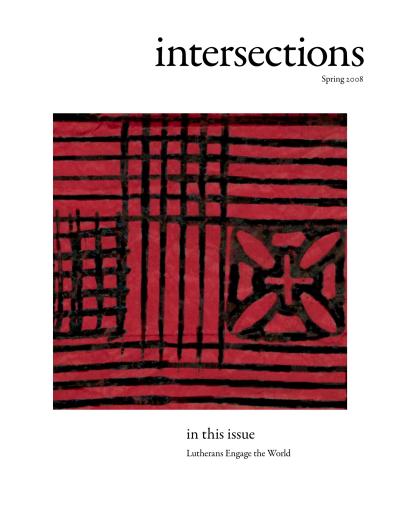
Haak frames the issue around the question of why Lutherans engage the world rather than retreat from it, locating the answer in the doctrines of creation and incarnation, and introduces essays by Erwin on globalism, Carlsen on local community engagement, Marty on multiple callings, and Mattes on the Grundtvigian heritage at Grand View. He also bids farewell to publisher Arne Selbyg, noting the fittingness of the Adinkra (“farewell”) cloth on the cover of this final issue under Selbyg’s leadership.
-
 Editorial
From the Editor
Robert D. Haak
No. 26 · Fall 2007
Haak introduces the issue with the question of whether “our Lutheranism” should have any discernible effect on how we operate as Lutheran colleges, and proposes a working list of “Lutheran” values that characterize our institutions — complexity, real evil, suffering as part of human experience, the centrality of discourse, transcendent values, attention to place, institutional self-criticism, and unity over division — inviting campuses to extend the conversation begun by Simmons, O’Hara, and the Wartburg colleagues.
-
 Editorial
From the Editor
Robert D. Haak
No. 25 · Spring 2007
Haak frames the issue around the question of what holds the twenty-eight ELCA colleges together amid their geographic, economic, and theological diversity, introducing Mark Hanson’s address to the assembled college presidents, Randall Balmer’s outsider perspective on the commonalities of Christian liberal arts, José Marichal and Pamela Brubaker on diversity rooted in community and globe, Storm Bailey’s argument that being Lutheran is precisely what makes us embrace diversity, and Jaime Schillinger’s St. Olaf chapel reflection on the formative power of worship and liturgy.
-
 Editorial
From the Editor
Robert D. Haak
No. 24 · Fall 2006
Haak introduces the issue’s essays by Stanley N. Olson, Kathryn L. Johnson, Gail Summer, Lake Lambert, and Steven C. Bahls; argues that on Lutheran campuses, professional programs in business, education, and nursing are not “second-class citizens” but integral to the institution’s vocation; cites Olson’s mantra (“Because of Christ, the world; because of the world, vocation; because of vocation, education”); and thanks Matt Marohl for assisting with the editing.
-
 Editorial
From the Editor
Robert D. Haak
No. 23 · Summer 2006
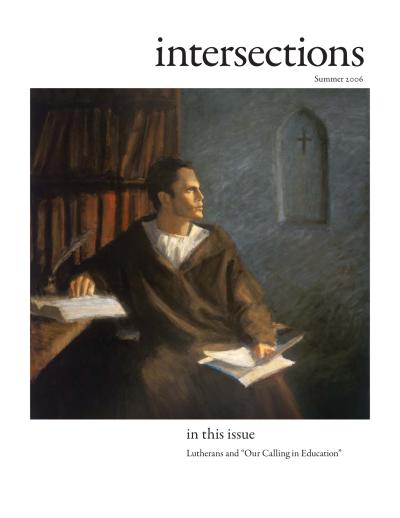
Haak previews the issue’s four essays by Marcia Bunge, Paul Dovre, Samuel Torvend, and Cheryl Budlong — each engaging the ELCA Task Force on Education’s study document and first draft of the social statement on Lutheran education — and invites readers to bring their distinctive voices as professional educators at Lutheran institutions into the conversation before the October 15 deadline. He also invites submissions to Intersections and directs readers to LauraOMelia@augustana.edu to be added to the direct mailing list.
-
 Editorial
From the Editor
Robert D. Haak
No. 22 · Spring 2006
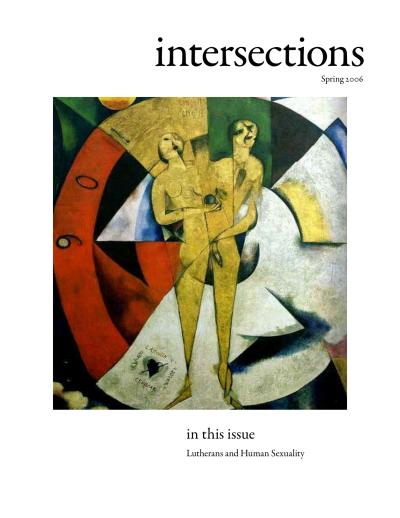
Haak introduces himself as the new editor inheriting the journal from Tom Christenson and frames the issue around the question of what ELCA colleges might contribute to conversations about human sexuality. He summarizes the contributions of Yeager, Benne, Williams, Bussie, and Nack, and shares previously uncollected National Study of Youth and Religion data on the sexual attitudes and behaviors of Lutheran teens—including that 25% of regularly-attending ELCA teens report the church has done nothing to help them with their sexuality.
-
Lutherans on Faith and Learning
No. 34 · Fall 2011
The Fall 2011 “Lutherans on Faith and Learning” issue marks the editorial transition from Robert D. Haak to Jason A. Mahn. Paul J. Dovre sketches a Lutheran learning paradigm organized around four narratives—biblical, confessional, theological, and vocational. Darrell Jodock’s “Gift and Calling” grounds Lutheran higher education in human giftedness, calling forth a “third path” both rooted and inclusive. Joseph McDonald argues the Lutheran capacity for paradox equips colleges to recover service-learning’s socio-political vision. Sermons by Turnbull and Jodock and Dave Hill’s “Endtimes” round out the issue.
-
Lutherans and Religious Diversity
No. 33 · Spring 2011
The Spring 2011 issue of Intersections, drawn from the 2010 Vocation of a Lutheran College Conference, asks how Lutheran campuses respond to religious diversity. Essays by Darrell Jodock, Terence S. Morrow, Karla R. Suomala, Mark N. Swanson, and Jacqueline Aileen Bussie chart a “third path” between sectarian and non-sectarian models, examine civil discourse on campus, trace new contexts for Jewish-Christian engagement, explore Christian-Muslim relations at ELCA institutions, and offer practical recommendations for embracing reconciled religious diversity.
-
Lutherans in an Age of Anxiety
No. 32 · Spring 2010
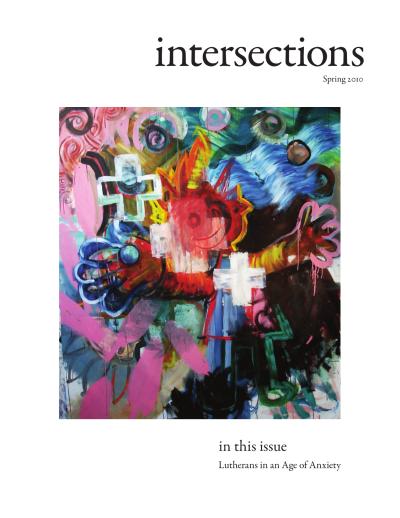
The Spring 2010 “Lutherans in an Age of Anxiety” issue draws on the 2009 Vocation of a Lutheran College Conference. Presiding Bishop Mark S. Hanson reflects on living at the intersection of fear and hope; Martha E. Stortz names four charisms Lutheran higher education brings to a culture of fear; Jason Peters reads ecological decline through Pope, Blake, Lewis, and Kierkegaard; Rebecca Judge finds hope in the bursting of market fundamentalism; David L. Tiede frames Lutheran higher education as “an apostolate of hope”; Susan M. O’Shaughnessy rereads Pentecost as a corrective to cultural imperialism.
-
Lutherans and Vocational Reflection
No. 31 · Winter 2010
The Winter 2010 issue gathers reports from the “Called for Life” study, in which Luther, Augsburg, and Augustana assessed their Lilly Endowment-funded vocational programs. Richard L. Torgerson introduces the project; Wilder Research’s Greg Owen, Ellen Shelton, and Brian Pittman compare “Lilly” to “pre-Lilly” graduates; Mark D. Tranvik narrates Augsburg’s journey from Exploring Our Gifts to its new Center for Faith and Learning; Ruth R. Kath describes Luther’s Sense of Vocation program; Robert D. Haak chronicles Augustana’s Center for Vocational Reflection.
-
Lutheran Colleges and the "Other"
No. 30 · Fall 2009
The Fall 2009 “Lutheran Colleges and the ‘Other’” issue explores how identity is formed in distinction from some “other” as partner rather than foil. Ronald D. Witherup marks ten years of the Lutheran-Catholic Joint Declaration; Rosemary Radford Ruether’s 1968 essay from Holden Village offers a Catholic’s view of Lutheranism from inside the sauna; Ahmed Afzaal charts a path from Christian-Muslim suspicion to trust; Paul Dovre traces fifty years of change in Midwestern Lutheran colleges; Mark Wm. Radecke offers a Screwtape-style satire on short-term mission trips; David C. Ratke recovers Löhe’s educational vision.
-
Educating for Responsible Citizenship
No. 29 · Spring 2009
The Spring 2009 “Educating for Responsible Citizenship” issue gathers essays from the 2008 Vocation of a Lutheran College Conference at Luther College. Paul C. Pribbenow argues Augsburg’s mission to educate “dual citizens” calls students to live in the tensions of common life; Jose Marichal proposes Aristotelian phronesis as the goal of digital citizenship; retiring ELCA director Arne Selbyg offers the jazz ensemble as a better metaphor than the melting pot; Wanda Deifelt returns to Luther on neighborly love and the two kingdoms.
-
Lutheran Conversations
No. 28 · Fall 2008
The Fall 2008 “Lutheran Conversations” issue gathers reflections on what it means to be a “college of the church.” Presiding Bishop Mark S. Hanson names curiosity, faith, moral discernment, and engagement in mission as the marks. Mark Wilhelm traces individualism and religious pluralism and their implications. Robert Benne and Thomas Christenson weigh in via a Wartburg Point/Counterpoint. Lake Lambert III’s sermon “Saving Minds,” preached in the Castle Church in Wittenberg, calls Lutheran educators to name the sins of the mind.
-
Lutherans Engage the World
No. 27 · Spring 2008
The Spring 2008 issue, on Lutheran higher education’s engagement with the world, marks Arne Selbyg’s retirement after a decade as Director for ELCA Colleges and Universities. Mary S. Carlsen offers a recipe for engaging the local community drawn from social work. R. Guy Erwin advances three theses on the vocation of Lutheran colleges in a globalist context. Peter Marty challenges the “one calling” assumption with a poly-dimensional account of vocation. Mark C. Mattes traces Grand View’s Grundtvigian heritage. Richard W. Priggie’s closing sermon calls for a “deep ecumenism” loving the whole cosmos.
-
Luther and Melanchthon
No. 26 · Fall 2007
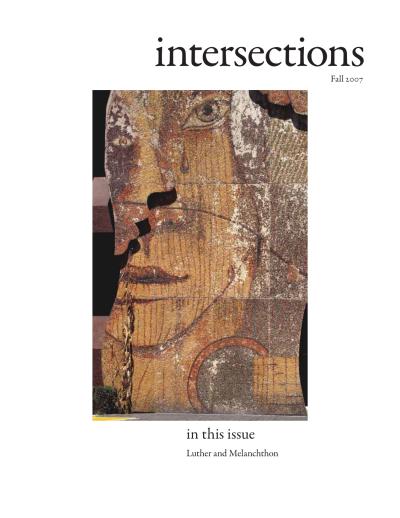
The Fall 2007 “Luther and Melanchthon” issue draws on the ELCA Wittenberg Center on the eve of the “Luther Decade.” Ernest Simmons argues Lutheran higher education is well suited to cultivate “public intellectuals”; Sabine U. O’Hara reflects on education as Bildung; Kathryn Kleinhans, Cynthia Bane, Penni Pier, and Fred Waldstein share fruits of Wartburg’s 2006 seminar in Wittenberg, Eisenach, and Neuendettelsau; Kathy Book imagines No Child Left Behind in conversation with Melanchthon; Matthew J. Marohl reviews Imaging the Journey and The Grand View College Reader.
-
Shared Commitment and Diversity
No. 25 · Spring 2007
The Spring 2007 “Shared Commitment and Diversity” issue opens with Presiding Bishop Mark S. Hanson’s LECNA address on the shared mission of the twenty-eight ELCA colleges. Guest editor Madeleine Forell Marshall introduces four papers from the 2006 ALCF meeting: Randall Balmer proposes Christian liberal arts colleges as “halfway houses” for engaging pluralism; Storm Bailey argues Lutheran identity undergirds academic freedom; José Marichal diagnoses the “decoupling” of campus diversity and civic engagement; Pamela K. Brubaker tells two Lutheran communion stories from Bolivia and Brazil.
-
Liberal Learning and Professional Preparation
No. 24 · Fall 2006
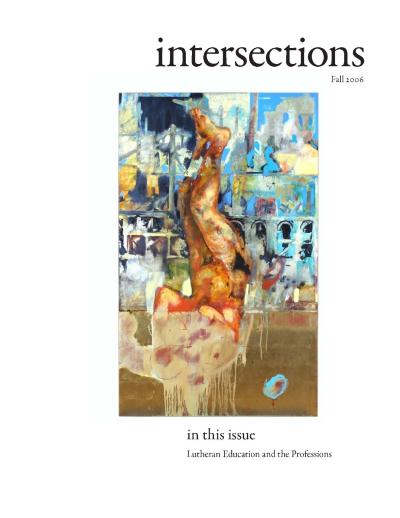
The Fall 2006 issue of Intersections, “Liberal Learning and Professional Preparation,” gathers papers from the 2006 Vocation of a Lutheran College conference at Midland. Stanley N. Olson asks whether Lutheran colleges draw contentment from being on Lutheran soil rather than from the work of vocation. Kathryn L. Johnson revisits Luther’s “Freedom of a Christian” as a paradigm for the freedom of a Lutheran college. Gail Summer and Lake Lambert argue the real divide is within, not between, liberal arts and professional preparation. Steven C. Bahls closes with a call for “philosopher-servants.”
-
Lutherans and "Our Calling in Education"
No. 23 · Summer 2006
The Summer 2006 issue of Intersections draws on the 2005 Vocation of a Lutheran College Conference at Capital University, contributing to the ELCA’s forthcoming social statement “Our Calling in Education.” Marcia J. Bunge, Paul J. Dovre, Samuel Torvend, and Cheryl Budlong each respond to the Task Force’s draft: Bunge urges focus on children and youth across public schools, Lutheran schools, and faith formation; Dovre traces the statement’s social context and Lutheran resources; Torvend insists it speak to the post-Lutheran “none zone”; Budlong asks educators to reexamine their ‘mental models’ of education itself.
-
Lutherans and Human Sexuality
No. 22 · Spring 2006
The Spring 2006 “Lutherans and Human Sexuality” issue arrives after the 2005 ELCA Churchwide Assembly’s contested votes on same-sex couples and rostered ministry, and marks Robert D. Haak’s first issue as editor. D. M. Yeager defends the church as a community of moral deliberation; Adina Nack surveys research on sexuality across the lifespan; Ritva Williams tests a Lutheran “critical traditionalist hermeneutic” against Gagnon on Romans 1; Jacqueline Bussie argues the theology of the cross supports rejecting state bans on gay marriage; Robert Benne questions whether Lutheran colleges can model fair moral discourse.