So That All May Belong: Lutheran Roots for Diversity, Equity, Inclusion, and Justice
Altheia Richardson
Network of ELCA Colleges and Universities
Angie Hambrick
Pacific Lutheran University
Caryn Riswold
Wartburg College
Colleen Windham-Hughes
California Lutheran University
Deanna Thompson
St. Olaf College
Marcia Bunge
Gustavus Adolphus College
Robert Clay
Luther College
Intersections No. 61 · Spring 2025
Introduction1
Institutions that make up the Network of the ELCA Colleges and Universities (NECU) share a common calling of “equipping graduates who are called and empowered to serve the neighbor so that all may flourish.”2 Although their mission statements vary, these institutions are committed to providing students of all backgrounds an excellent education and preparing them to use their unique strengths to contribute to the flourishing of people and our planet.
These commitments are rooted in educational reforms and a specific notion of calling or vocation promoted by Martin Luther in the 16th century. At a time when education was limited to the wealthy or to monks, nuns, and priests, Lutheran reformers claimed that all are called to use their unique gifts and strengths to love others, seek justice, and contribute to the common good. Thus, the various ways that people serve others, whether at home, work, or in civic life, are worthy callings. This simple but powerful concept of vocation led to a radical idea at the time: everyone should have access to education.
This concept of vocation informs NECU’s commitment not only to provide education for students of all backgrounds, but also to promote diversity, equity, inclusion, and justice (DEIJ). Doing so fosters belonging, honors the contributions of the diverse members of our campus communities, and aligns with the mission of NECU institutions. Furthermore, as we actively strive to cultivate campus communities where all feel a sense of belonging and DEIJ thrives, NECU institutions are called to not only reject and address unjust or harmful institutional legacies and practices, but also to acknowledge where they have been active agents in the creation and maintenance of such legacies and practices. This call to acknowledge and redress harm is in line with the Lutheran spirit of reform and its commitment to justice.
One important way to strengthen DEIJ efforts is to emphasize how they are grounded in and supported by the missions and Lutheran roots of NECU institutions. Thus, this document highlights vital connections between NECU’s Lutheran roots and DEIJ efforts so that faculty, staff, students, administrators, and board members might better understand and more actively support this work. Understanding these connections can spur campus-wide support for DEIJ by dispelling a common misconception that DEIJ efforts and the Lutheran tradition are in conflict. Supporting DEIJ benefits all stakeholders because it fosters belonging, enriches community, and creates a vibrant educational environment where diverse backgrounds, ideas, perspectives, and experiences are integral to academic life.
Definitions, Connection to Lutheran Roots, and Calls to Action3
DIVERSITY
Definition: Diversity refers to the various backgrounds, lived experiences, values, and worldviews of individuals and communities that stem from differences in culture and circumstance. This includes race, ethnicity, gender and gender expression, age, religion, nationality, language, (dis)ability, sexual orientation, socioeconomic status, political ideology, geographic region, and more. Diversity reflects the broad spectrum of human identity and experience, and it shapes how we understand the world and interact with one another.
Lutheran Roots: Lutheran theology affirms the goodness and diversity of creation and claims all persons are made in the image of God, thereby possessing equal dignity and worth. Furthermore, Lutheran theology claims that although human beings can know much about God and the world, the universe is complex, and human understanding is always limited. Recognizing creation’s diversity and the limits of human knowledge, Lutheran theology embraces diversity and emphasizes the significance of wonder, academic freedom, intellectual humility, life-long learning, and building a world in which all people and our planet flourish.
Shaped by these notions, Lutheran higher education embraces diversity as a core value that enriches both the academic environment and the broader community. This commitment to diversity is not limited to demographic representation; it is about cultivating an environment where all voices are heard, respected, and valued. By engaging with diverse perspectives, Lutheran higher education helps individuals better understand the complex and dynamic world we live in and equips them with the skills to navigate and positively impact that world.
Call to Action: Diversity requires more than just acknowledgment—it demands action and commitment from all members of the community. To create a truly diverse and inclusive environment, each of us must play an active role in embracing difference and seeking out new perspectives. This work is ongoing and requires continuous learning, self-awareness, and a willingness to engage with others in meaningful ways.
We call on our Lutheran colleges and universities to:
Focus on recruitment and retention: Work to recruit and retain people from diverse communities (students, faculty, staff and administration).
Appreciate cultural wealth: Recognize and appreciate the richness that comes from diverse backgrounds, experiences, and identities. Intentionally engage with our own identities and experiences as well as those of people whose identities and experiences differ from our own.
Challenge bias and discrimination: Educate ourselves about diverse communities and issues to more effectively take an active stance against behaviors, practices, and policies that marginalize or disadvantage individuals or groups.
By committing to these actions, we strengthen our community and ensure that diversity is not just something we tolerate but something we embrace as part of the goodness of creation. These actions also make possible ample opportunities to engage with individuals from diverse backgrounds and perspectives.
EQUITY
Definition: Equity is the active process of identifying and reducing or eliminating the structural barriers related to race, class, disability, gender, and other identities that limit access to, or prevent full participation in, our institutions and communal life. It requires understanding the root causes of disparities, identifying these barriers, and addressing the exclusion of historically marginalized groups within society. Equity is about ensuring that individuals and communities receive the specific resources and support they need to thrive, based on their unique circumstances.
Lutheran Roots: Lutheran theology affirms the dignity and worth of all persons and claims all are called to use their unique gifts and strengths to love and serve others. Lutheran tradition is therefore always reforming institutions and values various roles and responsibilities that contribute to the common good.
Lutheran colleges and universities seek to foster communities where every individual can succeed and contribute meaningfully. This requires recognizing that while everyone is of equal worth, not everyone starts from the same place or faces the same challenges. Equity goes beyond equality by acknowledging these differences and working to remove barriers that prevent full participation, particularly for those from historically marginalized groups.
By providing targeted support and addressing barriers related to race, class, disability, gender, and other social identities, Lutheran institutions aim to create an environment where everyone can thrive and fully engage in academic and community life.
Call to Action: Equity requires active engagement from all members of the community. Achieving equity is an ongoing process that involves addressing both visible and invisible barriers to participation, particularly for those from historically underrepresented groups. It demands a commitment to understanding the unique challenges faced by different individuals and working collectively to create solutions that promote access and opportunity for all.
We call on our Lutheran colleges and universities to:
Identify and address barriers: Examine the policies, practices, and structures within our institutions that may unintentionally disadvantage certain groups. Commit to actively working to reduce or eliminate these barriers.
Provide targeted support: Recognize that different individuals and communities may need different forms of support to fully participate and succeed. Advocate for resources, support, and opportunities that are tailored to meet these specific needs.
Foster accountability: Create mechanisms that hold our institutions and ourselves accountable for promoting equity. This includes regularly assessing the impact of policies and practices on marginalized groups and making adjustments when necessary.
Promote equity through education and advocacy: Engage in ongoing learning about the root causes of disparities and advocate for initiatives that promote equity, both within our institutions and in the wider community.
By committing to these actions, we uphold the dignity of all persons and move closer to creating an equitable community where everyone, regardless of background or identity, can succeed. Equity is not just about fairness for individuals—it is about building a more inclusive and just society for all.
INCLUSION
Definition: Inclusion is the intentional act of embracing difference and creating environments where any individual or group is welcomed, respected, supported, valued, and given the opportunity to fully participate. Inclusion fosters a sense of belonging through centering and valuing the voices and perspectives of all individuals.
Lutheran Roots: Lutheran theology affirms that everyone is called to use their unique gifts and strengths to contribute to the common good. Building on their gifts, all people are free to pursue questions; seek truth, justice, and beauty; and share what they discover with others.
Inclusion is fundamental to the mission of Lutheran higher education: to cultivate individuals who are thoughtful, engaged, and compassionate citizens. It is about creating spaces where students, faculty, and staff from all backgrounds are valued and supported, allowing them to fully participate in academic, social, and civic life.
In this context, inclusion is not only about welcoming difference, but also about creating conditions where each person can contribute their unique perspectives and talents, enriching the entire community. By centering voices that have historically been marginalized, Lutheran institutions aim to foster environments where everyone is empowered to succeed. This inclusive approach ensures that the education provided prepares students not only for careers, but also for their roles as leaders in an increasingly diverse world.
Call to Action: Inclusion requires intentionality and action. Each member of the academic community—students, faculty, staff, and administration—has a role to play in fostering an inclusive environment. To fully live out the principles of inclusion, we must actively challenge behaviors and practices that exclude or marginalize individuals or groups.
We call on our Lutheran colleges and universities to:
Engage in self-reflection: Consider how our own identities, actions, assumptions, and biases may impact others and work to build greater awareness and understanding.
Create inclusive spaces: Work to ensure that everyone in the community feels welcomed and valued, regardless of their background or identity. This means being mindful of how spaces, both physical and social, can include or exclude certain groups.
Foster dialogue and understanding: Encourage open conversations about diversity and inclusion and engage in respectful dialogue that promotes mutual understanding. Be willing to listen, learn, and grow from interactions with others whose experiences and perspectives may be different from your own.
Advocate for inclusive policies and practices: Advocate for and support initiatives that promote full access and participation, particularly from underrepresented groups.
By committing to these actions, we strengthen our community, affirm that all are called to use their unique gifts to serve the world, and ensure that our institutions remain places where everyone can belong, contribute, and succeed. Inclusion is a shared responsibility, and together, we can create a more welcoming and inclusive environment for all.
JUSTICE
Definition: Justice is the outcome of dismantling barriers to resources and opportunities for people who live in marginalized communities. Justice occurs when all individuals can live a full and dignified life, and all communities can thrive.
Lutheran Roots: In line with its affirmation of God’s good creation, the dignity of all persons, and its robust concept of vocation, Lutheran theology emphasizes the development of the whole person (mind, body, spirit), love of neighbor, and social and environmental justice. Relationships and institutions, though fallible, are necessary for promoting the well-being of individuals, families, communities, and the planet.
In the context of Lutheran higher education, justice is not an abstract concept, but a lived commitment to creating environments where fairness, equity, and compassion are at the core of community life. Lutheran values align closely with justice by promoting the common good through service to others, care for the vulnerable, and environmental protection.
Lutheran higher education actively works to eliminate the barriers—whether social, economic, or structural—that prevent individuals and groups from accessing the full range of opportunities available. This ensures no one is unfairly disadvantaged by circumstances beyond their control.
Call to Action: Justice requires action. To realize a just and equitable community, we must commit to actively dismantling the barriers that exclude, marginalize, or disadvantage certain groups. This work is ongoing and demands continuous self-reflection, collaboration, and advocacy. Each member of the community has a role to play in promoting justice.
We call on our Lutheran colleges and universities to:
Build solidarity: Stand alongside those who are fighting for social and environmental justice, and use our voices, influence, and resources to support efforts that dismantle inequities and create pathways for all people to thrive.
Dismantle systemic and physical barriers: Identify and remedy institutional practices, policies, and structures that may unintentionally perpetuate inequality or exclusion, particularly for marginalized groups.
Uplift marginalized voices: Actively listen to and amplify the perspectives of individuals and groups who have historically been excluded or oppressed. Recognize their experiences and contributions as essential to creating a more just community.
Engage in service and advocacy: Support initiatives both on and off campus that work toward justice, from service to the neighbor to advocating for equitable policies.
By taking these steps, we move closer to the goal of justice and love of neighbor: a community where every person can live a full life, and where the structures that uphold inequity are transformed into systems that foster greater accessibility and collective flourishing.
Cultivating a Sense of Belonging through DEIJ
The intersection of DEIJ principles and Lutheran higher education creates a unique educational environment that promotes belonging and sets NECU institutions apart. Belonging is the extent to which people know and feel that they are valued, respected, included, and celebrated for their individual and unique contributions and identities. This is the outcome of DEIJ at work.
NECU institutions are called to offer a unique environment where students, faculty, and staff are not only included, but also celebrated, supported, and given the opportunity to thrive within a community grounded in faith and justice. This distinctive approach sets Lutheran institutions apart from other colleges and universities. These institutions can continue to differentiate themselves by offering an educational experience where belonging is not just a byproduct of DEIJ initiatives, but an integral part of the mission.
As these institutions look to the future, continued emphasis on belonging will further distinguish them as leaders in creating inclusive, supportive, and justice-driven educational environments that are intellectually rigorous and socially responsible, involving:
Enhancing support for underrepresented groups, ensuring that all students, faculty, and staff have access to the resources they need to thrive academically, professionally, and personally.
Expanding the definition of community, creating spaces where individuals from diverse backgrounds can engage with one another in meaningful ways.
Deepening partnerships with local and global communities, reflecting the Lutheran commitment to service and global citizenship.
Innovating our approaches to DEIJ work, grounded in the theological principles of grace, justice, and reconciliation, ensuring that belonging is not only inclusive but also spiritually and socially transformative.
Allocating resources (human and financial) for accountability to outcomes that foster belonging for all members of the community.
Lutheran rootedness and commitments to diversity, equity, inclusion, and justice are in alignment with each other. Therefore, NECU institutions are called to foster opportunities for strategic connections and collaborations across departments and offices to facilitate this work. Together we must equip individuals not only with the knowledge but also with the tools to actively contribute to a more just, equitable, and inclusive society that fosters belonging for all.
Endnotes
1. A shortened version of this document also appears in this issue of Intersections.
2. Rooted And Open: The Common Calling of the Network of ELCA Colleges and Universities.
3. Definitions of Diversity, Equity, Inclusion, and Justice in this document are adapted from the National Association of Diversity Officers in Higher Education (NADOHE).
-
 Editorial
From the Publisher
Lamont Anthony Wells
5 min audio
Wells introduces So That All May Belong: Lutheran Roots for Diversity, Equity, Inclusion, and Justice as a theological and institutional articulation of NECU’s commitments, and previews four accompanying essays that frame vocation as a societal responsibility rooted in justice and not solely an individual pursuit.
-
Editorial
From the Editor
Colleen Windham-Hughes
5 min audio
Windham-Hughes uses Fred Rogers’ neighborhood as a living embodiment of a Lutheran understanding of vocation — seeing dignity in each person, offering one’s gifts generously, and trusting that the well-being of the neighborhood is intrinsically connected to the well-being of every neighbor.
-
Institutional Focus
Scriptures That Inspire Work for Diversity, Equity, Inclusion, and Justice
Altheia Richardson, Angie Hambrick, Caryn Riswold, Colleen Windham-Hughes, Deanna Thompson, Marcia Bunge, Robert Clay
9 min audio
A companion list of biblical verses — from Genesis 1:27 and Galatians 3:28 to Micah 6:8 and Luke 4:18-19 — that grounded NECU’s drafting of So That All May Belong, organized by the four DEIJ commitments and offered as an invitation to share other texts that ground and sustain the work.
-
Institutional Focus
So That All May Belong: Lutheran Roots for Diversity, Equity, Inclusion, and Justice [abridged]
Altheia Richardson, Angie Hambrick, Caryn Riswold, Colleen Windham-Hughes, Deanna Thompson, Marcia Bunge, Robert Clay
8 min audio
A condensed version of the NECU statement that consolidates Lutheran theological grounding for DEIJ and a single combined call to action for Lutheran colleges and universities — offered as a shareable summary alongside the complete document.
-
Article
Vocation at Full Stretch: Reflections on Follow Your Bliss and Other Lies about Calling and its Use among College Students
Jason A. Mahn
43 min audio
Mahn engages Bonnie Miller-McLemore’s Follow Your Bliss and Other Lies about Calling as required reading in a sophomore religion course, showing how her categories of missed, blocked, conflicted, fractured, unexpected, and relinquished callings empower young adults to perceive embodied, unplanned, and often painful dimensions of life as essential parts of vocation — and help close the gap between mission-driven and tuition-driven realities.
-
Article
How Mister Rogers’ Neighborhood Reminds Us About Work
Than Oo
5 min audio
Drawing on a Season 15 arc of Mister Rogers’ Neighborhood in which residents redirect pool funds to fix a plumbing problem, Oo finds in Fred Rogers’ vocation-honoring storytelling a reminder that limited resources are an invitation to creativity, perseverance, and optimism in higher education.
-
Reflection
Ecotones of Faith
Tracy Paschke-Johannes
7 min audio
Paschke-Johannes draws on the ecological metaphor of the ecotone — the life-teeming transitional space between two ecosystems — to claim that we are not called to minister in the world of the past or one fifty years hence, but to nurture the kairos moments God is creating in the freshwater-to-saltwater present.
-
Article
Finding the Miracle in the Intersection of Mission and Limitations: Lessons from Latin America
Kat Peters
14 min audio
Peters draws on her time interning with Lutheran World Relief and leading a study abroad program in Central America — including a Costa Rican women’s farm cooperative whose ecotourism project was “unprofitable” but life-giving — to argue that the intersection of God’s preference for struggle and God’s desire for abundant life is itself the miracle higher education can claim amid scarcity.
-
 Editorial
From the Publisher & Editor
Colleen Windham-Hughes, Lamont Anthony Wells
No. 63 · Spring 2026
6 min audio
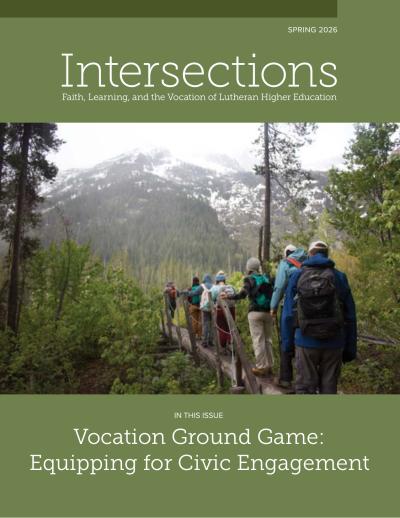
Wells and Windham-Hughes frame vocation as “ground game” — the practical, public living-out of faith through civic engagement — and introduce the issue’s focus on how Lutheran higher education equips students to repair the world.
-
 Editorial
From the Editor
Colleen Windham-Hughes
No. 62 · Fall 2025
5 min audio
Windham-Hughes plays on the shared Latin root of “education” and “seduction” (ducere, to lead) to warn against the No-saying seductions of giving up or condemnation, and to call educators to the riskier Yes of showing up to build third-space communities of truth-telling and hope.
-
 Article
Committed to Paradox
Caryn Riswold
No. 60 · Fall 2024
Riswold lifts up paradox — saint and sinner, lord and servant, Rooted and Open — as a distinctive Lutheran root that lets institutions honor the complicated truth of who their students are and embrace the messy, ever-reforming work of access and accessibility as a theology of the cross.
-
Editorial
From the Editor
Colleen Windham-Hughes
No. 60 · Fall 2024
Windham-Hughes welcomes newcomers and seasoned colleagues to the conversation, lifts up Mary Elise Lowe’s three Lutheran “whys” for educational access, and commends Rev. Jen Rude’s “Sacred Pause” practice as a way to humanize one another and make opening access both easier and more joyful.
-
 Editorial
From the Editor: Vocation as Action in the Affirmative
Colleen Windham-Hughes
No. 59 · Spring 2024
Windham-Hughes frames vocation as practicing “at the borders of our incompetence” — every small yes to the callings we experience, every effort made in the direction of life, is action in the affirmative — and previews the issue’s essays on diversity, transformation, AI, championship team culture, and dreaming big within and beyond our limitations.
-
Article
Team Culture is Key to Success: Learning from Student-Athletes
Colleen Windham-Hughes
No. 59 · Spring 2024
On a December weekend in “Championship City” Salem, Virginia, both California Lutheran’s Women’s Soccer Team and St. Olaf College’s Men’s Soccer Team won NCAA Division III national titles. Windham-Hughes talks with coaches, faculty mentors, and student-athletes about how off-the-field team culture — built on trust, relationships, and shared why — translates onto the pitch and into liberal arts and sciences education.
-
 Article
It's Time to Rewrite the Rules of Civility
Jon Micheels Leiseth
No. 48 · Fall 2018
Leiseth contends that the prevailing rules of civility too often function as the majority’s rules, stifling those facing real harm — and proposes that NECU institutions rewrite civility as “neighboring,” guided by the ELCA’s five values of accompaniment: mutuality, inclusivity, empowerment, sustainability, and vulnerability.
-
 Editorial
From the Editor
Jason A. Mahn
No. 35 · Spring 2012
Mahn introduces five essays from the 2011 Vocation of a Lutheran College Conference at Augsburg, framing how Torvend, Anderson, Svennungsen, Tunheim, and Pribbenow press Lutheran colleges to turn outward—recovering the public character of Luther’s gospel, forming students for moral deliberation, investing in the infrastructure of civic renewal, and pursuing justice and education “off the main road.”
-
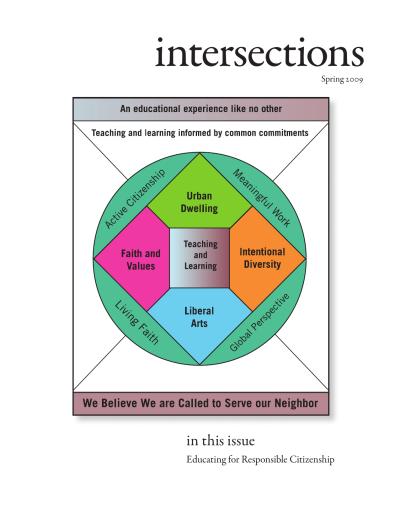 Article
Students in the Cloud: Creating Digital Citizens
Jose Marichal
No. 29 · Spring 2009
Marichal weighs the utopian and dystopian views of the “networked information economy,” drawing on Yochai Benkler, Manuel Castells, Henry Jenkins, Cass Sunstein, Robert Putnam, Nicholas Carr, and Andrew Keen to chart the promise and peril of life “in the cloud,” and proposes Aristotle’s intellectual virtue of phronesis—developed through Hubert Dreyfus’s five stages of skill acquisition—as the goal of digital citizenship for college faculty and their students.
-
 Article
Mars, Mammon—and Other Options
Carl Skrade
No. 20 · Fall 2004
In a wide-ranging public lecture from a Capital University Philosophy and Religion department series on “The Empire, Its Religions, and Some Alternatives,” Skrade distinguishes the military from militarism (using Oxford and Chalmers Johnson definitions), catalogs evidence of contemporary U.S. militarism—budget allocations, arms sales, the military-academic complex, post-1945 interventions, overseas bases, and Bush-era profiteering through Bechtel and Halliburton—and traces its roots in resource greed, racism, right-wing religiosity, and Augustinian incurvatus in se ipsum. After surveying the financial and human costs through testimony from Jonathan Shay’s Achilles in Vietnam, Samuel Hynes’s The Soldier’s Tale, Dalton Trumbo’s Johnny Got His Gun, and Staff Sergeant Jimmy Massey, he applies Vincent Ferraro’s seven principles of just war to Gulf II, reads Matthew 5:43-48 as a call to indiscriminate care, and proposes a www.religiousleft.org website to host a Christian alternative to Mars and Mammon.
-
 Article
"Our Calling in Education": Working Together to Generate a Strong Social Statement on Public Schools, Lutheran Schools and Colleges, and the Faith Formation of Children and Young People
Marcia Bunge
No. 23 · Summer 2006
Bunge, Professor of Theology and Humanities at Christ College, Valparaiso University, makes two claims about the ELCA’s forthcoming social statement on education: first, that it should be built on a robust Lutheran understanding of vocation, addressing four common misconceptions (vocation as occupation, as self-fulfillment, as ordained ministry, and as “vo-tech”) and recovering the breadth of Luther’s teaching; and second, that the statement should narrow its focus to three urgent areas affecting children and young people — public schools, Lutheran schools and colleges, and faith formation — rather than addressing the full lifespan of education in equal depth.
-
 Editorial
From the Publisher
Arne Selbyg
No. 27 · Spring 2008
Selbyg, retiring this summer as Director for ELCA Colleges and Universities, reflects on his decade serving as spokesperson between the church and its twenty-eight colleges and universities, and argues that the link between the colleges and the church has grown stronger over the last ten years — sustained by supportive church leaders like Presiding Bishop Mark Hanson, the annual Vocation of a Lutheran College conference, and a Lutheran theology of higher education whose principles (questioning authority, returning to the sources, including the excluded, serving the neighbor) remain a strong basis for operating colleges and universities in the twenty-first century.