Freedom, Humor, and Community: A Lutheran Vision for Higher Education
Intersections No. 13 · Winter 2002
Inaugural Lecture, Bernhardson chair, Gustavus Adolphus College, 9/21/99
Thank you all for coming this evening. You some from different places and have different sorts of connections with me. I am glad each of you is here.
It is also a pleasure for me to be here. I am grateful to the Bernhardsons for their vision and generosity in creating this chair. It is such a good idea. And I am grateful to members of the search committee, the Dean, and the President for inviting me to fill it. Not only am I grateful, I am humbled by the task ahead, and a little fearful that the expectations may be larger than I can fulfill. I will give it my very best, but I can’t, after all, do miracles or walk on water!
The assertion that will undergird everything I say tonight is that the Lutheran tradition, properly understood, provides a profound and challenging underpinning for the best ideals of contemporary higher education—more profound and challenging than that other source from which we can draw our identity—the assumptions and values of contemporary American society.
I intend to treat this topic selectively rather than exhaustively. To that end I have chosen three themes.
The first is a sense of humor.
I beg the indulgence of anyone here who may have heard me tell this story before, but it is one of my favorites, and in this new setting I can risk telling it again. Back in 1969 or 70, when I was fresh out of graduate school and had just started teaching, a fellow faculty member came up to me in the hallway and asked, “Do you know anything about John Deere tractors?” Amid my surprise, I stammered out some sort of “yes, a little, why do you ask?” “Well,” he said, I have a small Christmas tree farm 40 miles north of town, and on it I have a John Deere B (that’s a tractor from the 1940s, back when they were still simple), and it isn’t working, can you fix it?” I asked what was wrong, he told me, and I said, “Yes, I think I can help you.” A week or two later, we drove to his little plot of land, I repaired his tractor, he drove it around, hopped off, looked me in the eye and said,” Jodock, you’re the first person with a Ph.D. I ever met who knew anything!”
Whenever I am tempted to take academia too seriously—or even the honor of being selected for this position too seriously, I remember that reaction—and recognize that life is larger than the academic world and that education is only one of the many needs that humans have.
This observation leads directly into the first theme, because one contribution made by the Lutheran tradition is that it does not take too seriously many of the things it values.
I will discuss the theme of humor in two steps. First, its theological basis. The central religious issue for Luther was that he had experienced the religion of his day as a demand. The practices he had encountered and the theology he had been taught both seemed to require that he take the first steps toward God. If he did what he could and worked diligently toward the goal of salvation, then God would do the rest. Luther tried and tried but could not manage to make any progress. After intense religious and intellectual struggles, he broke open this system by discovering in the Bible, as well as in Augustine and others, a different message: the message that God takes the initiative. Instead of requiring that we move toward God, God moves toward us and adopts us, not because we have met any prerequisites but only out of God’s generosity and mercy. If God takes the initiative and saves even the ungodly, then we humans have no control over God’s generosity—whether toward us or toward others. And if we have no control, we can take no credit. If God’s favor really is undeserved, then we cannot take ourselves too seriously, or our morality too seriously, or even our theology too seriously. All of these are important but not ultimate. And Luther himself, though willing to stand before Emperor and Princes and say “I cannot and will not recant,” could also laugh at himself. Among his last words, he called himself a beggar still; he did not want his followers to be named after him, as if he were all that important, and be called Lutherans; and when given credit for the Reformation, he once responded that he deserved none at all, because while he and his friend Philip had sat drinking good Wittenberg beer, the Word of God had done it all.
Step two. One implication of this sense of humor for the persons in a college is broader perspective. We ought to be able to laugh about our degrees and about that carefully gained body of knowledge each of us has accumulated and (dare I say it?) even about our departmental and disciplinary boundaries. In 28 years of teaching, I have noticed from time to time that academics tend to overrate the importance of some things. We can fight at length about the number of credits allowed in a major, as if the whole world depended on allowing that extra course, or argue at length over a single word in a proposal. Whenever our own departmental turf is challenged, we tend quite quickly to lose our perspective and our sense of humor. But we ought to be able to laugh, not because degrees and knowledge and disciplines are unimportant but because they are not of ultimate importance—to laugh, not because we don’t value them but because we have a larger vision of life within which they fit. Theology is part of the world; colleges and universities are part of the world; neither is itself the whole.
A second implication of the theme of humor and a larger perspective is freedom of inquiry. As some of you know, the novelist John Updike, who now belongs to an Episcopal church was raised a Lutheran in Shillington, Pennsylvania. In his memoir, Self-Consciousness, he has given voice to the connection between God’s generosity and an unfettered search for the truth.
God is the God of the living, though his priests and executors, to keep order and to force the world into a convenient mould, will always want to make Him the God of the dead, the God who chastises life and forbids and says No. What I felt, in that basement Sunday School of Grace Lutheran Church in Shillington, was a clumsy attempt to extend a Yes, a blessing, and I accepted that blessing….
…Having accepted the old Shillington blessing, I have felt free to describe life as accurately as I could, with especial attention to human erosions and betrayals. What small faith I have has given me what artistic courage I have. My theory was that God already knows everything and cannot be shocked. And only truth is useful. Only truth can be built upon (p.243).
As we all know, Luther valued the Bible very highly, so highly that his followers have usually included it in their list of “alone’s”—“Grace alone, Christ alone, faith alone, Scripture alone.” Yet Luther could laugh even about the Bible. He could playfully suggest that the epistle of James be removed from the canon and replaced by a work from his colleague Melanchthon, his Loci Communes. Luther was comfortable with all sorts of critical questions, ready to say that Moses was not the author of the Pentateuch, even though it carried the title “The Books of Moses,” and that the sayings in Isaiah were mixed up, coming from different times in the history of Israel. He was ready to acknowledge the individuality of authors and the uneven value of their writings. For Luther, not even the Bible was to be taken too seriously. It was not exempt from inquiry and criticism. A college related to the Roman Catholic Church may perhaps get nervous if criticism gets too close to the teaching authority of that denomination. A Baptist college may get nervous if one criticizes the Bible or congregational autonomy, but there is no issue in a Lutheran college that is immune from analysis and criticism, no boundary beyond which freedom of inquiry is halted. Any idea, any program, any realm of human life, including politics, science, business, and even religion, can be critiqued.
However, this brings us to our second theme, because, having affirmed a basic sense of humor, we need to distinguish this view from cultural tendencies that say, “okay, anything goes; one person’s opinion is as good as another; everything can be criticized because nothing matters; it’s all relative.” But ideas do matter. It was, after all, an idea that prompted Stalin to starve out three million peasants in the Ukraine during the 1930s. It was an idea that prompted Dr. King to work for racial equality. And an idea is what prompts a white supremacist to open fire in a Jewish community center. Unlike relativism, a sense of humor respects the importance and the consequences of ideas. It does so because it is intimately connected to the second theme: the centrality of community.
At this point, a discussion of Luther’s distinction between the two kingdoms would be appropriate, but instead of starting on that general a theological level, allow me to go directly to what he says about the purpose of education. In 1524 he wrote an open letter to the city councils of Germany in which he urged them to support at public expense schools for both young men and young women. In that open letter Luther stated clearly that the primary reason for doing so was that the schools would benefit the community as a whole. In order to make wise decisions, the citizenry needed to understand the whole scope of human history and decision-making, to learn the results of earlier decisions and decisions made elsewhere in the world and thereby see what kinds of things turned out to be beneficial or which had consequences detrimental to themselves and other human beings. In order to make wise decisions, they needed to be educated. Yes, Luther was anxious that young men and women learn to read the Scriptures and learn more about Christianity, but even if the Scriptures and God were left out and the citizens had no souls, education would still be important, because the communities needed wise and able decision-makers. The city councils could not depend on parents to do this, because the students needed a broader perspective than could be provided by the experience of their parents or even that one generation. If schooling were left to their parents, “the net result is little more than a certain enforced outward respectability; underneath they are nothing but the same old blockheads.”
The implication of Luther’s advice is that the primary purpose of a college related to the Lutheran church is to educate wise leaders for the good of society as a whole. Yes, we believe that an appreciation for and understanding of Christianity can enhance their wisdom and service, but our primary purpose is not to make people religious but to equip them to make wise decisions. Our primary purpose is to inspire in them such a passion for justice and human welfare that they will provide moral leadership in their neighborhoods and help the nation as a whole to make wiser decisions.
I said earlier that we needed to hold together our sense of humor and this primary purpose of education. We need to do so, because freedom of inquiry and unrestricted criticism are not ends in themselves. When correctly used, they serve and benefit the larger community. A misplaced loyalty undermines wise decisions, so it needs to be uncovered. Ignorance jeopardizes wise decisions, so it needs to be corrected. Programs, proposals, ideas all need to be critiqued for the sake of the community, because a better insight will benefit its members. Here too, I admit, we academics aren’t always at our best. We may, for example, glory in identifying inconsistency in an author without acknowledging the profundity of that person’s thought. We delight in deconstructing but profess no better alternative. We dissect the truth into pieces and leave our students on their own to try to put those pieces together in some insightful way.
So freedom of inquiry goes hand in hand with a commitment to educate for the benefit of the community, to educate wise leaders to serve that larger community.
Up to this point I have used the word “community” to refer to the larger human community in which and for which a college does its work. Now I use it in a second sense, to refer to the college itself as a community of discourse and deliberation.
If I may step back into the theological tradition for a moment, Luther was very clear that the church is primarily a community of believers. Even in the Garden of Eden, he could say, there was a church, because Adam and Eve formed a community of faith. In 1530 at Augsburg, when the task fell to Melanchthon to explain the Lutheran position to the assembled princes of the Holy Roman Empire, he would pen the words that have become normative for Lutherans:
The church is the assembly of saints [or gathering of believers] in which the Gospel is taught purely and the sacraments are administered rightly. For the true unity of the church it is enough to agree concerning the teaching of the Gospel and the administration of the sacraments. It is not necessary that human traditions or rites and ceremonies, instituted by men, should be alike everywhere (Article VII, Augsburg Confession).
As envisioned by Luther, this community is free to decide what structure it should have, what pattern of worship it should adopt, what social program it should endorse. No particular pattern of organization or set of ceremonies is needed. What is needed for the church to be the church are human beings deliberating together about the best way to embody the good news they have received and affirmed. That is to say, the church is a community of discourse.
Similarly, a college campus should be a community of discourse, because our purpose is not simply to uncover knowledge and transmit it, our purpose is not simply to provide training, our purpose is to seek wisdom—the kind of wisdom needed to make good decisions, decisions that benefit the whole community. As a college student I used to return to my home to work every summer. My father was a wise and intelligent man, respected in his community, but not well educated. He quit school in the 10th grade and in some ways regretted that decision the rest of his life, transforming his regret into a personal crusade to encourage younger neighbors and relatives and anyone who would listen into staying in school. Having overheard my father talking to others, it never occurred to me (or to my sister or to my brother, for that matter) not to go on to college. Once this small town farm boy got there, college was an exciting adventure—and sooner or later, as my father and I worked together, a topic would come up where I could apply something of what I had learned. I’d wax eloquent—or so it seemed to my 18 year old ears—with my proposal, and my father would listen, think a little, and then ask, “but have you thought about….?” And suddenly the flaw in what I had been saying would be evident—a flaw usually regarding some aspect of human nature or human behavior. My new knowledge did not translate quickly or easily into wisdom. Wisdom, after all, cannot be found quickly and cannot be found alone. It grows slowly, haltingly, and sometimes even painfully amid the give-and-take within a community of discourse. In my case, my father was but an extension of that community, which should at minimum include all people on campus. All of us who have listened to campus conversations recognize that wisdom may not automatically arise from the interaction of students, faculty, and staff, but we can also be certain that it will not come at all if these encounters do not occur, if we are so isolated from one another that we do not talk together about deep and important things. If we are content to generate knowledge without wisdom, we will all simply become what my father liked to call “educated fools”—or Luther described so vividly as “the same old blockheads.”
So far we have discussed a sense of humor and community. The third theme is freedom. Here too I think the Lutheran tradition has something to offer higher education.
Let me begin in this case with Luther himself. Strangely enough, he was criticized in his own day both for giving humans too much freedom and for giving them too little. He gave them too little, some contemporaries argued, because he said that humans were not able to take the initiative and on their own generate a good relationship with God. The first step must be taken by God. In reply to a Discourse on Free Will in which Erasmus objected to his views, Luther wrote a book entitled The Bondage of the Will. There he complimented Erasmus for having tackled the central issue. Unlike others who wearied him with “extraneous issues about the Papacy, purgatory, indulgences and the like,” Erasmus had tackled the crucial issue; he had aimed for the jugular vein. And later he said that The Bondage of the Will was one of only two of his many, many writings that he regarded to be worth preserving. For Luther everything depended on recognizing human un-freedom vis-à-vis God.
At the same time Luther was criticized for giving humans too much freedom. Believers, he thought, were free to make up their own minds about which religious practices were beneficial—and not obligated to submit to the authority of any church leader regarding fasting or other religious practices. In matters of religion persuasion was the appropriate tool, not coercion, for if God took the initiative, no one else could be in control of one’s own God-human relationship.
But the second kind of freedom was also highly nuanced. He put it into a two-sentence paradox:
The Christian is the free lord of all, subject to none
The Christian is the dutiful servant of all, subject to all.
The meaning is this: the freedom to decide is not a license for self-indulgence. The freedom to decide is simultaneously a freedom from coercion and a freedom for service to others.
Let me shift from theology to higher education. The traditional goal of the liberal arts has been to engage students in studies that set them free. If, as an institution of higher education, we were to follow the promptings of our society, we would assume that the kind of freedom envisioned is “freedom from”—freedom from ignorance, freedom from prejudice, freedom from subservience to anyone else. And if we were to follow the promptings of our society we would assume that the kind of freedom envisioned is individual—the kind a person has in isolation from others.
But if we were to reaffirm the insights of the Lutheran tradition, we would adopt a different goal—a more nuanced and, I believe, more profound understanding of freedom. The freedom for which we would then aim is, yes, liberation from ignorance, prejudice, and subservience, but it is also freedom for service and wise community leadership.
The best way to illustrate this is to call to mind the rescuers during the Holocaust: namely, those individuals who risked their lives to help would-be victims in one or another of the groups targeted by the Nazis. A person in one of those groups would often go to a friend or acquaintance, ask for help, and be turned down. Then he or she would turn to a perfect stranger, make the same request, and be given shelter or aid. Both the person who refused and the person who said “yes” had been subjected to the same propaganda, both had been threatened with the same punishment (of death), but the rescuer would come through, offer a place to hide, provide food, and do whatever else he or she could. When now asked why they did it, rescuers are not very helpful. They shrug their shoulders and say, “so and so was in need, what else could I do?” However unsatisfying, their answer reveals a deeper freedom—what I am calling a “freedom for.” Not only did the rescuer refuse to have his or her own identity defined by Nazi propaganda, not only did the rescuer refuse to allow the Nazis to define the “other” as non-human, the rescuer also had a positive commitment to the well being of those other human beings. The rescuers had, what Nechama Tec has called a universalistic sense of caring (one not limited by the color of a uniform or the ethnicity or religious identity of the other), an independence of moral judgment (the willingness to take a stand different from the rest of society), and a history of care-giving. In no case, for any of the Polish rescuers she examined, was a rescuer providing aid for the first time. They had developed a habit of helping others; they were practiced at exercising their “freedom for” others. And that is why they shrug and say, “what else could I do?”
What the Lutheran tradition suggests to me is that the goal of liberal arts education includes the kind of freedom exhibited by the rescuers. It is a profound freedom for courageous moral action, for action that benefits others even at expense to oneself. This makes “freedom for” not at all something an individual has in isolation; it is evident only in that person’s behavior toward others, only in that person’s commitment to the well being of one’s neighbors, only in that person’s deep engagement in the social fabric of our nation and the world.
I confess that I find this to be a most daunting task. How do we educate so that among our graduates there are more rescuers and fewer bystanders or, God forbid, perpetrators? However challenging this question may be, should we not affirm this tradition and ponder how we enable students to learn, value, and practice care-giving (without boundaries) so that they are free to do it whenever and wherever the need arises?
I’ve said that the concept of freedom is nuanced. It’s “freedom for” as well as “freedom from,” but it’s nuanced in yet another way—in its understanding of the depth of un-freedom with which we contend, the depth of the challenge facing us as a liberal arts college.
The usual image of freedom is that of a person standing at the fork of a road. The individual who is free is able to choose one path or the other without constraint or coercion.
The flaw in this image is that it ignores our individual and social histories. Those histories so influence our decision-making that the choices are seldom equally easy or even equally possible. I am not a downhill skier, so an alternative image comes to mind. Freedom is like an unskilled skier whizzing down a steep slope, deciding whether to make a sharp turn at some particular marker along the path. All of the momentum is on the side of not turning. Trying to turn runs the risk of falling or crashing into something. Our individual and societal histories propel us in certain directions. Once the depth of our un-freedom is acknowledged, then genuine freedom involves a clear sense of what is at stake and the willingness to risk. It is the willingness to risk doing something new or out of step with society for the sake of justice or protecting the dignity of another.
This suggests another form of the same question. How do we educate so that people are free enough to try the turn? Free enough even in the face of social pressure to take risks, free enough to know what’s important in life and to understand what is reason enough to risk falling or crashing? Once, halfway through a course on the Holocaust, after the students knew well what the camps were like, I asked them to pretend that they were the board of directors of a corporation. The corporation had been offered the chance to build a factory in one of the camps. If they said yes, their company would benefit from the lower overhead of cheaper labor and either reap higher profits or sell their goods more cheaply than their competitors. If they said no, they would face no retaliation. They would not be arrested; they would only need to explain their actions to the stockholders. After a period of discussion, the students voted. They voted to build the factory. When the role-play was over, they explained. We knew what you would have preferred, they said, but you asked us to pretend we were really on the board, and when we did so, we realized that we did not have the courage to face losing our place on that board. Even with stakes so relatively low, they were not willing to risk the turn.
When asked what I wish for every graduate of a Lutheran college I have said “a passion for justice.” This is a Lutheran answer. It is but another way of saying “freedom for” others—the freedom to risk in the face of the momentum that impedes it.
So, we’ve identified three interlocking themes—sense of humor, community, and freedom. They are by no means the only important ones that can be drawn from the reservoir of Lutheran tradition or that can help ground & inform & inspire higher education. These three are but a tantalizing sample.
Following Luther himself, the Lutheran tradition lives with paradoxes and unresolved tensions. It does so because it is more interested in people than in the consistency of its abstract ideas. One such tension for a college related to the Lutheran church is between rootedness and engagement with the world. To choose tradition alone would leave that religious tradition uncritiqued. To choose immersion in the society alone would leave the assumption of that society uncritiqued. The Lutheran heritage summons the college to work out the tension inherent in a “both…and,” both an affirmation of its own tradition and an engagement with today’s world. Its underlying conviction is that such tension is productive of insights that actually serve society, of insights that foster societal justice and develop courageous individuals. However, at any given moment in history, one side or the other may need greater emphasis. Fifty or 75 years ago, when our colleges were emerging from their ethnic ghettoes, engagement needed to be emphasized. Now (in the face of the homogenizing tendencies in that culture) reaffirming our tradition is a higher priority—not because we’re nostalgic, but because such a reaffirmation will make us a better college.
What I hope is apparent is that the resulting view, although very much in support of the best ideals of liberal arts education, is also out of step with many contemporary American societal attitudes.
For example, Americans tend to define freedom only as “freedom from.” I’ve suggested it needs to be supplemented by “freedom for.”
Americans also tend to define it in individualistic terms. I’ve called for a communal dimension.
Furthermore, Americans tend to assume that healthy individuals can be whole and complete in themselves, rather than needing to be deeply embedded in a community. I’ve suggested that community is central to their vocation and identity.
To cite another example, Americans tend to practice the kind of tolerance that leaves unchecked and unchallenged their own private opinions and ideology and then, thinking it is their right to believe whatever they want, become quite uncivil whenever those opinions or beliefs are challenged. By contrast, I’ve said that wisdom emerges from a mutual critique and engagement in a community of discourse.
Moreover, Americans tend to be so co-opted by the technological glamour of our society as to be paralyzed and unable to risk. As they choose between brands, they have the illusion of freedom while in actuality being radically unfree to consider alternatives to consumption as the path to the good life. I’ve advocated a deeper understanding of our un-freedom and thereby the possibility as well of a deeper freedom.
And finally, Americans tend to narrow their sense of responsibility to the point where it includes only success in one’s individual career and then to settle for an impoverished life that endangers our children, our neighborhoods, and themselves. The larger perspective I’ve tried to affirm includes a more fully developed sense of vocation, which includes one’s career but is primarily a calling to serve the community.
My contention (I repeat) is that the Lutheran perspective on life provides a deeper, more profound grounding for the liberal arts college than do the ordinary conceptions available in our society.
Therefore I think we should reclaim it and let it inform our endeavors. It has the potential to help a college like Gustavus become even more fully what it already claims to be: a college dedicated to service and leadership.
-
 Editorial
From the Publisher
Arne Selbyg
Selbyg reports that Executive Director Leonard Schulze has challenged the ELCA Division for Higher Education and Schools to develop a comprehensive communications plan reaching high school students, college students, parents, pastors, and journalists, and invites Intersections readers to review the redesigned elcacolleges.org website, the “FREE STUFF” brochures, the journal’s advertisements in The Lutheran and related publications, Ernie Simmons’ new Augsburg-Fortress book Lutheran Higher Education: An Introduction, and the ELCA video magazine Mosaic—and to send in their own ideas.
-
Editorial
From the Editor
Tom Christenson
Christenson previews a varied issue—Darrell Jodock’s Bernhardson inaugural lecture, Ernie Simmons’ Valparaiso conference talk on student/parent attitudes, two South Africa travel pieces by Brian Wallace and Corin Wesner, and reviews of Richard Hughes’s and Robert Benne’s recent books—and tells the story of “the church lady from hell,” a mid-fifties returning student who condemned everyone in the class with “God and I think…,” to ask what a religious tradition without a sense of humor would look like.
-
Article
The Lutheran Theological Tradition and Recruiting Lutheran Students
Ernest L. Simmons
Simmons opens with an Abraham-and-Isaac “Windows 98” joke to illustrate the dialectic of faith and learning, then argues that in a new market era of limited religious background, intentional mission and marketing go together. Drawing on Levine and Cureton’s When Hope and Fear Collide for the Millennial Generation born in 1982 and Tom Beaudoin’s Virtual Faith for their GenX parents, he reads “Reclaiming Lutheran Students” survey results showing 86% strong community at ELCA colleges versus 54% at flagship publics and 61% alumni mentoring versus 39%. He then develops three areas where the Lutheran tradition uniquely equips its colleges—community, mentoring and vocation, and the integration of faith and values—using Luther’s “two kingdoms” image of the “Left Hand” (reason) and “Right Hand” (faith) of God, with academic freedom as a product of Ahlstrom’s “Critical Current” in the tradition, and closes with three challenges: recruiting and retaining mentoring faculty, educating church leaders, and reaching potential students and parents.
-
Reflection
Truth, Reconciliation, and Redemption in South Africa
Brian Forry Wallace
Wallace, a 24-year veteran political science professor at Capital University, recounts five weeks of post-apartheid peace-building travel-study with students living south of Cape Town—visiting townships, schools, day-care centers, a children’s AIDS hospital, Robben Island, and Nelson Mandela’s cell—and offers vivid sketches of his student companions Amy, Brian, Meghan, Karrie, Patrick, Meredith, Cheryl, Corin, Debbie, April, and Audra. He concludes that these students—atheists and agnostics and Buddhists and Methodists and Baptists, headed for social work, nursing, teaching, ministry, and parenthood—embody vocation by responding to a voice that calls them out of themselves to be present and to heal in this world, and that they are his link to the redemption of a lost and broken soul.
-
Reflection
Sweet on My Lips
Corin Wesner
A passage from Wesner’s travel journal during the same South Africa workshop. Walking into a wood-and-tin shack church where raindrops fall on already-soaked carpet and the service is in Xhosa, she remembers her painted, carpeted home church and her adolescent argument with her mother about wearing a dress to worship, and finds herself engulfed in warmth as the few women sing—welcomed by a stranger’s smile and opened up.
-
Book Review
Richard T. Hughes: How Christian Faith Can Sustain the Life of the Mind
Tom Christenson
Christenson reviews Richard Hughes’s How Christian Faith Can Sustain the Life of the Mind (Eerdmans, 2001), which argues, drawing on Tillich’s notion of “religion breaking through its own particularity,” that faith is a means to the open pursuit of truth rather than its enemy. Christenson reads the argument as a natural fit for a Lutheran tradition of semper reformanda but notes Luther’s own dogmatism toward fellow reformers, and wishes Hughes had drawn a sharper line between an absolute truth that relativizes all human truths and a postmodern abandonment of truth altogether. The book was the most-cited title at the November meeting of North American Lutheran academic officers.
-
Book Review
Robert Benne: Quality With Soul: How Six Premier Colleges and Universities Keep Faith With Their Religious Traditions
Joy Schroeder
Schroeder reviews Robert Benne’s Quality With Soul (Eerdmans, 2001), which assesses the secularization documented by James T. Burtchaell’s The Dying of the Light and names six “bright lights” that resist it: Calvin, Wheaton, Baylor, Notre Dame, Valparaiso, and St. Olaf. Benne argues that piety alone or “generic Christianity” is insufficient—a school’s specific denominational intellectual tradition must permeate mission statements, classroom, and chapel, sustained by a critical mass of identifying faculty (he proposes a 2:1 ratio and at least one-third communicant membership), a first-rate theology department as “trustworthy guardian,” and visionary presidential and board leadership. Schroeder flags the under-representation of student and faculty voices but commends the book as required reading for presidents, board members, and faculty seminars at church-related institutions.
-
 Article
In a Diverse Society, Why Should Lutheran Colleges/Universities Claim their Theological Roots?
Darrell Jodock
No. 49 · Spring 2019
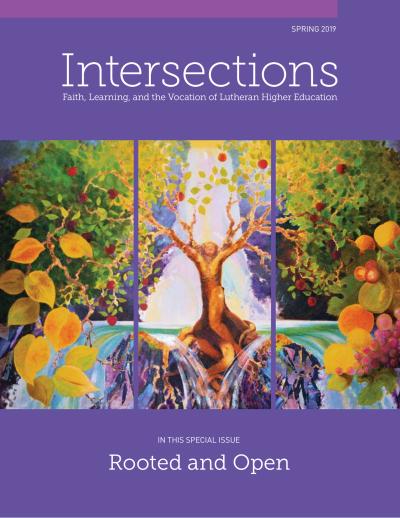
Jodock develops his “third path” account of the Lutheran college — neither sectarian nor non-sectarian but both rooted and open — analogizing the college to a bridge whose deck of daily activities rests on pillars of shared educational priorities, which in turn rest on theological footings; he then answers six common objections to claiming Lutheran roots and explains why those footings still matter.
-
 Article
Religious Diversity and the Vocation of a Lutheran College
Darrell Jodock
No. 44 · Fall 2016
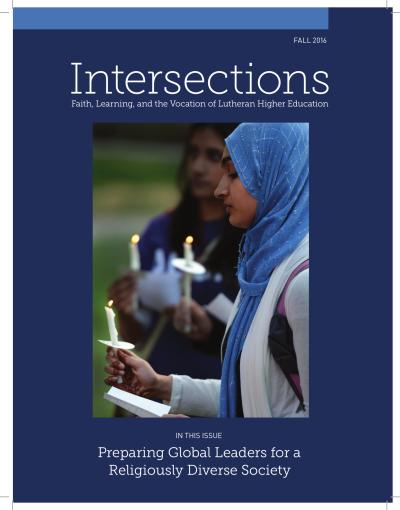
Jodock argues that a college which takes its Lutheran values seriously is well positioned to foster inter-religious relations along a “third path” that is both religiously rooted and inclusive. He traces the relational and communal character of Lutheran theology, develops a Lutheran understanding of deeper freedom, the theology of limits, and human complexity, and shows how a down-to-earth image of God offers theological resources for overcoming the anxiety and fear that block interfaith engagement.
-
 Article
Vocational Leadership
Darrell Jodock
No. 41 · Spring 2015
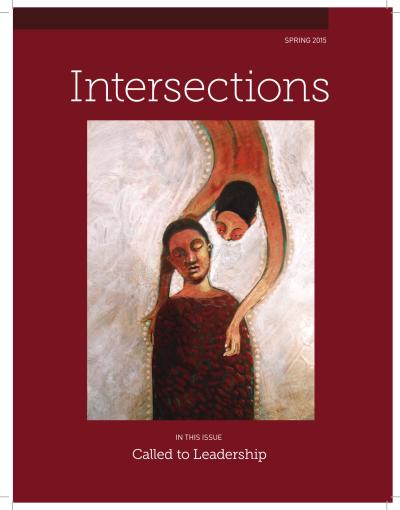
Jodock proposes “vocational leadership” as a name for a distinctive educational value at the heart of a Lutheran college — one that seeks to benefit the neighbor and the community, inspires and invites others to participate in that service, and is institutionally anchored in the Lutheran concept of vocation. He unpacks twelve facets of vocational leadership and ties them to Luther’s own leadership around indulgences, public schooling, and beggary.
-
 Article
Gift and Calling: A Lutheran Perspective on Higher Education
Darrell Jodock
No. 34 · Fall 2011
Jodock argues that a Lutheran perspective on higher education rests on three underlying ideas—that we are gifted (a giftedness that calls forth wonder, awe, gratitude, a sense of humor, and vocation as response to neighbor); that the Lutheran tradition affirms a particular kind of God who is down-to-earth and at work in the world for justice and human wholeness; and that a Lutheran “third path” can be both rooted in the tradition and inclusive of others. He draws out ten implications for higher education, from wonder as the heart of religion through liberal learning oriented toward the freedom of its members.
-
Reflection
Fumbling Toward Integrity: A Sermon on Mark 8:34-38, Pastor Kaj Munk, and Father Maximilian Kolbe
Darrell Jodock
No. 34 · Fall 2011
Preached at the 2007 ELCA Convocation of Teaching Theologians at Lenoir-Rhyne College, Jodock holds up two World War II martyrs—Polish Franciscan Father Maximilian Kolbe, who took the place of a condemned father in Auschwitz’s starvation bunker, and Danish pastor-playwright Kaj Munk, who was shot by the Nazis after helping save 97 percent of Denmark’s Jews—as mirrors for our own priorities. Drawing on the rescuer characteristics identified by Samuel and Pearl Oliner (agency, moral independence, universalistic caring, a history of care-giving) and on Jesus’s words in Mark 8:34-38, Jodock asks how we who routinely opt out at the first sign of opposition might fumble toward integrity in our own time.
-
 Article
Vocation of the Lutheran College and Religious Diversity
Darrell Jodock
No. 33 · Spring 2011
Jodock describes a “third path” for Lutheran colleges that is both rooted in the Lutheran tradition and inclusive of religious diversity — an alternative to sectarian and non-sectarian default models — and identifies six interlocking features of the Lutheran tradition (giftedness, an engaged God, wisdom, caution about claims to know, community, and an emphasis on service and community leadership) that shape how such a college engages interreligious dialogue and civil discourse.
-
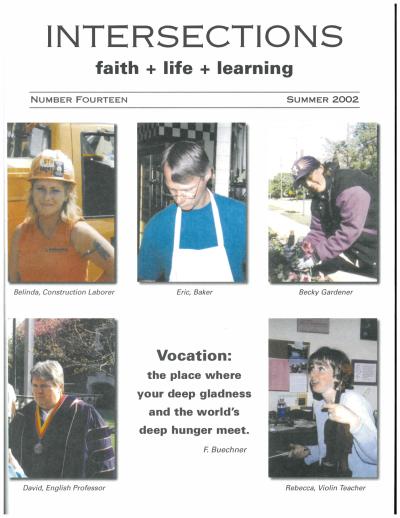 Book Review
Alister McGrath: Glimpsing the Divine: The Search for Meaning in the Universe
Don Braxton
No. 14 · Summer 2002
Braxton reviews Alister McGrath’s Glimpsing the Divine (Eerdmans, 2002), commending its twelve articulate, lavishly photographed meditations as a fine introduction to Western spirituality but criticizing its conservative neo-Barthian confessionalism, its Eurocentric treatment of non-Western traditions as “taillights” to Christianity’s “headlights,” its one-sided host-guest engagement with the natural sciences, and its metaphysical dualism. In a section added for ministerial readers, he contrasts McGrath’s self-contained confessionalism with H. Richard Niebuhr’s call to respond to all things as if to God’s actions upon us, and argues that in an era of rival fundamentalisms exclusivity must become a thing of the past.
-
 Editorial
From the Publisher
Mark Wilhelm
No. 53 · Spring 2021
Wilhelm reflects on an NPR report of teenagers’ pandemic diaries and the fraught Christian history of struggling to live out Jesus’s ethic of love, framing the issue as a record of NECU institutions working out how to act for the common good through the pandemic of 2020–2021.
-
 Editorial
From the Publisher
Arne Selbyg
No. 17 · Summer 2003
Selbyg explains that the four essays in this issue grew out of the first Lutheran Academy of Scholars in Higher Education—a two-week seminar funded by the Lutheran Brotherhood Foundation and the Lilly Endowment, led for its first three years by Dr. Ronald Thiemann of Harvard Divinity School—whose official theme “Finding Our Voice—Christian Faith and Critical Vision” became informally “What’s Faith Got To Do With It?”
-
 Article
More Value than Many Sparrows: A Sermon on Matthew 10:26-31
Patricia Lull
No. 38 · Fall 2013
Preaching at the 2013 Vocation of a Lutheran College conference, Lull recalls her own arrival at the College of Wooster the summer after Kent State and contrasts that era’s sense of students as participants in a college’s mission with today’s talk of “butts in seats.” Reading Matthew 10:26-31, she promises that the way of the cross—and its hard opportunities for slow-paced learning, genuine debate, and access for students who cannot pay the full cost—is the easy yoke, the lightest burden of all.
-
 Editorial
From the Publisher
Arne Selbyg
No. 9 · Summer 2000
Selbyg reports on the “Reclaiming Lutheran Students” research by the Lutheran Education Conference of North America (partly funded by the Aid Association for Lutherans), which found that alumni of Lutheran colleges report higher satisfaction with the overall quality of their education than alumni of flagship public universities, with more than eighty percent affirming that their college helped them develop moral principles and benefit from spiritual development, while also noting that parents of Lutheran high school students remain largely unaware of both the magnitude of financial aid offered and the quality of the education provided.
-
Article
Reinventing Lutheran Liberal Arts: A Preliminary Report on Project DAVID
Ann Hill Duin, Eric Childers
No. 38 · Fall 2013
Duin and Childers introduce Project DAVID—Distinction, Analytics, Value, Innovation, Digital opportunity—as a framework for showcasing strategic reinvention across ELCA liberal arts institutions. Building on Childers’ College Identity Sagas and reading Selingo, Norris, and Popenici alongside the AAC&U, Adrian College, NITLE, and the Delta Cost Project, they pose framing questions about distinction, vocation, affordability, value propositions, two-track innovation, and BYOE technology that ELCA campuses can use to face their own “Goliath” moments.