Lynn Hunnicutt’s guest editorial of this issue reminds us that the concept of vocation points students toward a life that finds room to love and serve others. I celebrate that the schools of the Network of ELCA Colleges and Universities (NECU) have reaffirmed and enhanced efforts to educate for these core educational outcomes that have long been part of Lutheran higher education. Across our network, curricular and co-curricular educational programs encourage students to embrace a concern for the needs and interests of others as well as themselves.
Even so, the culture of Lutheran higher education that established and sustained these educational values and outcomes is at risk. Even though the day is long past when a Lutheran educational culture could be sustained informally by a larger ecclesiastical and ethnic Lutheran culture present on our campuses, NECU schools still depend largely on individuals or cadres of individuals who informally assemble to sustain a culture of Lutheran higher education at each school. Although there is a wide recognition that it is time to institute formal, institutional practices to sustain a valued educational culture, only fledgling and partial steps have been taken. There are some bright spots. For example, a few schools have created solid programs of orientation for new faculty and staff. But, for the most part, although many at NECU schools recognize the value of the Lutheran intellectual and educational tradition for twenty-first-century higher education, most remain uncertain about how to best articulate that value. Most are hesitant to develop institutionalized practices to maintain a culture that publicly identifies our cherished educational values and student outcomes with Lutheran higher education.
As a first important step toward addressing and repairing this situation, NECU’s Board of Directors endorsed a statement on the common calling of its schools. The statement, Rooted and Open, affirms that the Lutheran identity of a NECU school is an institutional identity, not dependent upon the individual religious identities of faculty, administrators, and students of the school. It further affirms that NECU schools share a common calling to implement the educational values and outcomes that are vitally important over the whole course of a student’s life.
Best tactics for reclaiming, transmitting, and reinterpreting the 500-year-old Lutheran intellectual and educational tradition are yet to be developed. But it is a culture worth sustaining. It is worth sustaining because it is our best bulwark against forces that would transform NECU schools into mere transmitters of knowledge instead of “transmitters” of education for vocation, for purpose, and for making a contribution to the common good. When an educational culture has frayed, it could be replaced with another that affirms such values, but it is much easier to reclaim, reinterpret, and reinvigorate the received, albeit frayed, culture. Establishing tactics for just that work still face us.
-
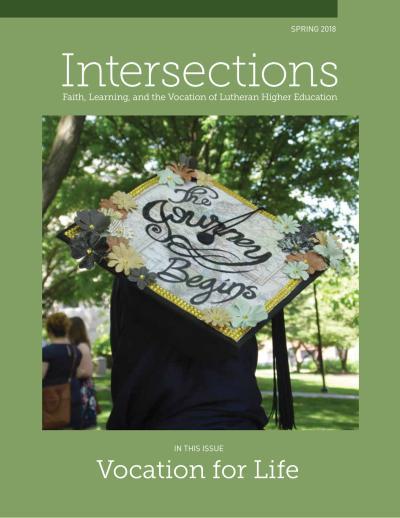 Editorial
Guest Editorial
Lynn Hunnicutt
Hunnicutt traces the etymology of vocation through its cognates — evoke, provoke, convocation — to argue that vocation presumes a relationship between caller and called, that callings are often grounded in ordinary words and humble lives, and that recognizing vocation as plural and lifelong relieves colleges of the pressure to help students find a single calling while on campus.
-
Article
One Life, Many Callings: Vocation Across the Lifespan
Katherine Turpin
Turpin, drawing on the collaborative research behind Calling All Years Good, traces how vocational discernment shifts through adolescence, younger adulthood, middle adulthood, late adulthood, and older adulthood — arguing that focusing vocation on entry into the workforce limits the capacity of intergenerational college communities to wrestle with calling throughout life.
-
Article
Vocation for Emerging Adulthood: Within and Beyond College
Adam Copeland
Copeland uses scenes from Master of None, David Brooks’ columns, Meg Jay’s The Defining Decade, and the stories of two ELCA college graduates to argue that emerging adulthood has fundamentally changed — and that Lutheran colleges should call out cultural lies about work, reframe vocation as meaning-making, and help graduates take small, wise steps into their twenties.
-
Article
Called to Compassion over the Course of a Life: A Buddhist Perspective
Florence D. Amamoto
Amamoto, an associate professor at Gustavus Adolphus shaped by Jodo Shin Shu Buddhism, argues that although Buddhism has no “caller” God, it has a strong sense of calling — we are called by the world to respond to the suffering around us with mindfulness, egolessness, and compassion — and that this lifelong journey is enriched by encounter with the Lutheran vocational tradition.
-
Article
Vocation and Dharma throughout Life's Stages: A Hindu Perspective
Vidya Thirumurthy
Thirumurthy traces her own attempt as a Hindu faculty member at Pacific Lutheran University to grasp the Lutheran concept of vocation, finding in the Bhagavad Gita’s teaching on dharma — duty fulfilled without expectation of reward — an equivalent that, like vocation, varies across the four stages of life and calls individuals to transform others through selfless service.
-
Book Review
Vocation on Campus: Reading Mark Tranvik's Martin Luther and the Called Life at Pacific Lutheran University
Alex Lund, Michael Halvorson
Halvorson and Lund — faculty member and student — review Mark Tranvik’s Martin Luther and the Called Life alongside PLU’s Wild Hope Center for Vocation, weighing the book’s warning against “vocation lite” against the challenge of speaking of God’s call to students in the Pacific Northwest’s “None Zone,” where most students have little exposure to Lutheranism.
-
Article
Luther, the Catechisms, and Intellectual Disability
Courtney Wilder
Wilder confronts Luther’s deeply troubling response to a child with disabilities at Dessau, then mines his Small and Large Catechisms for a Lutheran theology of inclusion — reading the Third Article of the Creed, the petitions of the Lord’s Prayer, and the sacrament of baptism as resources that affirm the full humanity of people with intellectual disabilities as faithful children of God.
-
Article
Lutheran Higher Education in the Land of Anxiety
Jon Micheels Leiseth
Leiseth, returning to Concordia from work with the ELCA’s Young Adults in Global Mission in Southern Africa, draws on Bessel van der Kolk and Babette Rothschild to argue that pervasive student anxiety functions as low-grade trauma that hijacks the storytelling at the heart of vocational discernment — and explores embodied, breath-based practices that might help students reclaim their stories.
-
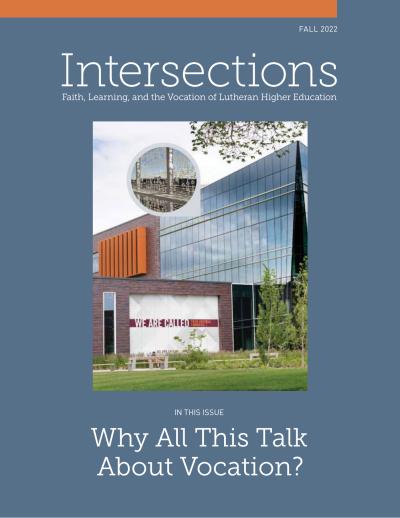 Article
Why All This Talk About Understanding the Mission of NECU Member Institutions as a Vocation?
Mark Wilhelm
No. 56 · Fall 2022
In his valedictory keynote, retiring NECU Executive Director Mark Wilhelm argues that Lutheran higher education is, properly understood, vocation-based education — outlining four core practices recovered over the past fifty years and naming the constructive and corrective work still to be done, including a fuller embrace of DEIJ and of the diverse vocations of NECU’s 27 institutions.
-
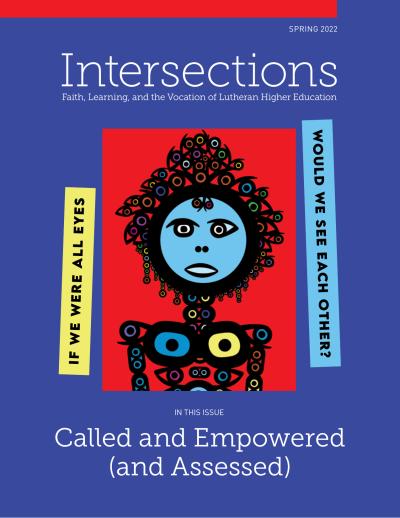 Editorial
From the Publisher
Mark Wilhelm
No. 55 · Spring 2022
Wilhelm announces his planned retirement on January 31, 2023, after serving as the founding executive director of the Network of ELCA Colleges and Universities, and gives thanks for the privilege of helping NECU articulate a shared vision for Lutheran higher education in twenty-first-century North America.
-
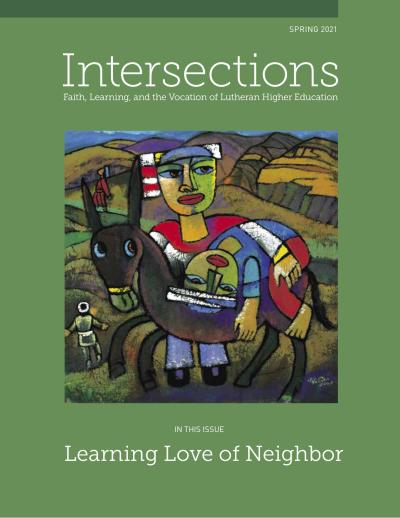 Editorial
From the Publisher
Mark Wilhelm
No. 53 · Spring 2021
Wilhelm reflects on an NPR report of teenagers’ pandemic diaries and the fraught Christian history of struggling to live out Jesus’s ethic of love, framing the issue as a record of NECU institutions working out how to act for the common good through the pandemic of 2020–2021.
-
 Editorial
From the Publisher
Mark Wilhelm
No. 52 · Fall 2020
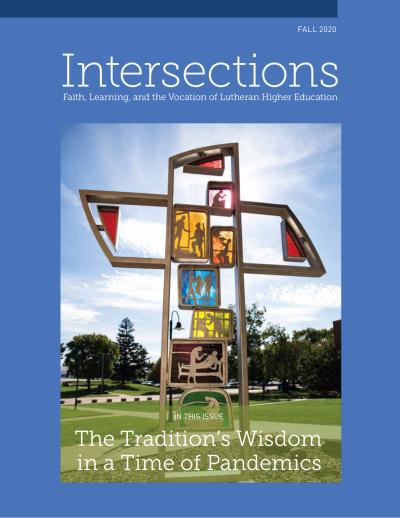
Wilhelm argues that the “hackneyed” expressions of higher education — “you are not just a number,” “the college experience,” “risen to the challenge” — tell the simple truth about NECU institutions even as the Covid-19 pandemic has pushed budgets, employees, and campus life to the breaking point.
-
 Editorial
From the Publisher
Mark Wilhelm
No. 51 · Spring 2020
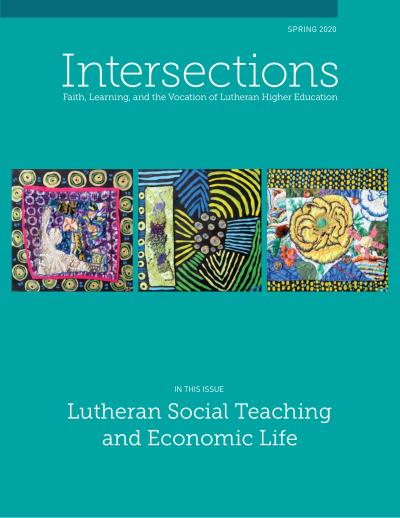
Wilhelm frames the issue by tracing how Lutheran educational ideals — once a primary source of contemporary higher education — were masked in the United States, and introduces a NECU initiative that uses the case of business ethics to explore Lutheran social teaching as an academic resource.
-
 Editorial
From the Publisher
Mark Wilhelm
No. 50 · Fall 2019
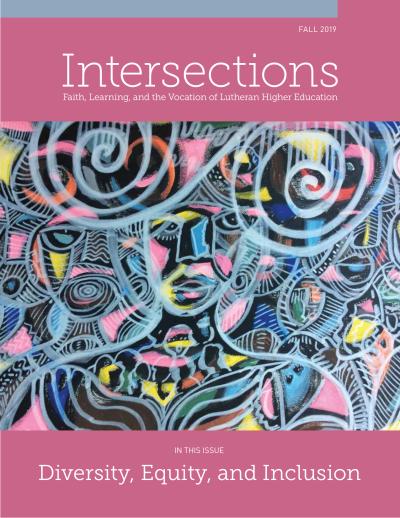
Wilhelm frames the issue by noting that a federal court’s vindication of Harvard’s race-conscious admissions process is a win for higher education’s commitments to diversity, equity, and inclusion — and argues that for Lutheran higher education, the commitment to diversity is an old and foundational claim, rooted in Christianity’s openness to all and reflected in the four diverse gospels of the New Testament.
-
 Article
Superheroes and Origin Stories: Tools to Discover and Claim One's Callings
TJ Warren
No. 41 · Spring 2015
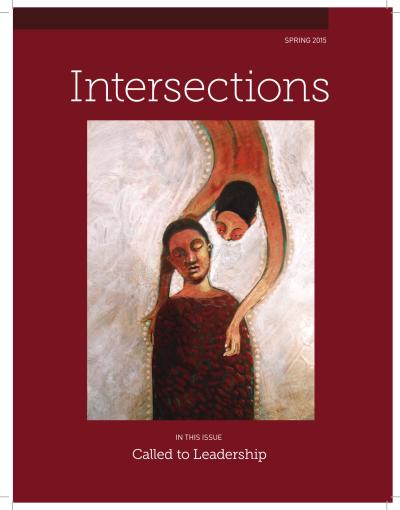
Warren argues that the “Hero’s Journey” — Joseph Campbell’s monomyth with its ordinary world, call to adventure, mentors, and return with the elixir — offers a powerful pedagogical tool for helping college students discover their origin stories and claim their callings. Drawing on Superman, Wonder Woman, and Rosa Parks alike, he invites educators to mentor students into becoming the heroes of their own lives.
-
 Editorial
From the Publisher
Mark Wilhelm
No. 36 · Fall 2012
Wilhelm argues that the rhetoric framing ELCA higher education as a binary between “secular” and “religious” is “hokum”: there is a third way of doing higher education from a Christian perspective that is religious in motivation and practice but on the ground looks secular. After more than half a century of debates, he calls on ELCA presidents to “do something” in 2013 to move forward in shared mission and vocation.
-
 Article
Lutheran Higher Education and the Public Intellectual
Ernest L. Simmons
No. 26 · Fall 2007
Simmons argues that college faculty and administrators are, like it or not, public intellectuals, and that Lutheran higher education’s dialectical understanding of Christ and culture is well suited to support four functions of the public intellectual: articulating constructive critique of received social explanation (especially the “collage identity” described by Renate Schacht); presenting a transcendent theological perspective through the theology of the cross that takes seriously God’s hiddeness, the presence of ambiguity, and the reality of suffering; pursuing the common good amid the demise of the “commons” through H. Richard Niebuhr’s “Christ and Culture in Paradox”; and educating for citizenship through Christian vocation by connecting the practical and existential dimensions of the question “Why are you here?”
-
 Institutional Focus
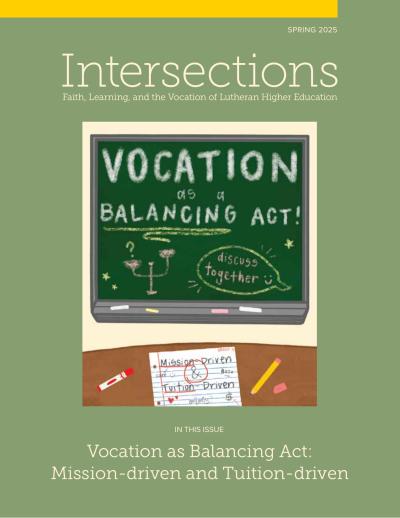
So That All May Belong: Lutheran Roots for Diversity, Equity, Inclusion, and Justice [abridged]
Altheia Richardson, Angie Hambrick, Caryn Riswold, Colleen Windham-Hughes, Deanna Thompson, Marcia Bunge, Robert Clay
No. 61 · Spring 2025
8 min audio
A condensed version of the NECU statement that consolidates Lutheran theological grounding for DEIJ and a single combined call to action for Lutheran colleges and universities — offered as a shareable summary alongside the complete document.
-
 Response
Response to Robert Benne
Baird Tipson
No. 17 · Summer 2003
Tipson responds to Robert Benne’s comments in the previous issue about his review essay of The Future of Religious Colleges, affirming their fundamental agreement that the Enlightenment epistemology dominant in higher education poses the most serious threat to the vitality of Lutheran colleges. Using the example of lecturing on early Mormon history and the Book of Mormon, he concedes that the methodological “solvent” of Enlightenment historiography acts on Christian as well as Mormon faith claims, and concludes that while H. Richard Niebuhr’s “inner” and “outer” history and Walter Brueggemann’s approach in The Theology of the Old Testament are comforting to believers, they do not offer an epistemology that can stand alongside the Enlightenment model in evaluating truth claims in the academy.
-
 Article
Bringing an Ecumenical Milestone Out of the Shadows
Ronald D. Witherup, S.S.
No. 30 · Fall 2009
Witherup draws attention to the tenth anniversary of the Lutheran-Catholic “Joint Declaration on the Doctrine of Justification” signed on Reformation Day 1999, summarizes the document’s claim that justification is the work of the triune God received by grace alone through faith, surveys the remaining questions raised by Pope John Paul II and the 2006 endorsement by the World Methodist Conference, and proposes a pastoral strategy for bringing this ecumenical milestone out of the shadows in Catholic parishes.