So That All May Flourish develops a central tenet of “Rooted and Open,” the vision document for the Network of ELCA Colleges and Universities (NECU), which advances the following mission: “Called and empowered to serve the neighbor so that all may flourish.”
Drawing together authors from across NECU campuses, the new volume provides a substantive and accessible introduction to the vocation, educational priorities, and theological foundations of Lutheran Higher Education. It is intended to spark conversations on campuses and across the network that are appreciative, critical, and constructive.
Using chapters on campus:
- Orientation programs for faculty, staff, or board members.
- In class with students!
- Workshops on vocation and Lutheran Higher Education.
- As a resource for task forces or committees that are working on specific challenges, such as: sustainability; diversity, equity, and inclusion; inter-religious understanding and cooperation; first generation students; or Indigenous relations and unceded lands.
- Professional development opportunities for faculty, staff, and administrators that focus on vocation and the core values, strengths, and contemporary challenges of NECU institutions.
Part One digs deeply into some of the most central and abiding values, or “core commitments,” that characterize NECU institutions.
Chapter 1
In “Vocation and the Dynamics of Discernment,” Marcia J. Bunge introduces the robust concept of vocation that shapes the aims of NECU institutions. Bunge clarifies that vocation refers not just to paid professions and personal passions but rather to the many ways individuals are called to use their gifts and strengths to contribute to the common good. She also describes how and why NECU institutions offer plenty of opportunities for vocational discernment.
- After reading this chapter, how do you understand the difference between some common notions of vocation, such as one’s job, career, or personal passion, and the more comprehensive concept of vocation that informs Lutheran higher education?
- Bunge states that although discerning one’s callings includes knowing one’s strengths, vocation discernment involves more than taking a StrengthsFinder test. What sources of vocational reflection mentioned in the chapter have been important in your own life or on your campus?
- Even though the notion of vocation is rooted in the Lutheran theological tradition, NECU institutions find that it can be a powerful resource for people of diverse backgrounds and worldviews to reflect on their strengths, values, and sense of purpose. Whatever your worldview, would you agree?
Marcia J. Bunge, PhD, is Professor of Religion and the Drell and Adeline Bernhardson Distinguished Chair of Lutheran Studies at Gustavus Adolphus College (St. Peter, MN) and Extraordinary Research Professor at North-West University (South Africa).
Chapter 2
In “Freedom of Inquiry and Academic Excellence,” Samuel Torvend demonstrates how NECU commitments to academic freedom and educating citizens for thoughtful and principled leadership in the world have roots in the Lutheran Reformation. In line with these commitments, NECU institutions promote critical conversations between learning and faith, advance knowledge through research, and cultivate the countercultural aims of the liberal (“liberating”) arts.
- Were you surprised to learn that ELCA-affiliated colleges and universities emphasize academic freedom, even though they are church-related institutions? What were your own assumptions about church-related colleges and universities?
- Torvend writes of the liberal arts in terms of the liberating arts, a notion that “is at odds with the commonly held notion that education serves only the individual and the individual’s ‘success’ in the world” (41-42). How are the liberal arts understood within your institution? How do they inform the counter-cultural pursuit to contribute to the common good?
Samuel Torvend, PhD, is the holder of the University Chair in Lutheran Studies emeritus and Director of External Relations in the Wild Hope Center for Vocation at Pacific Lutheran University (Tacoma, Wash.).
Chapter 3
Mindy Makant explores the central Christian calling toward loving the neighbor in her chapter, “Service, Justice, and Love of Neighbor.” Although justice and service are deeply intertwined in Lutheran theology, Makant recognizes that some forms of service can become paternalistic or self-serving. She articulates a full-bodied notion of service and highlights approaches to community engagement at Lutheran institutions that emphasize mutuality and strive toward justice.
- Where have you seen community service get all too self-serving? Why is it prone to this?
- How has your institution been able to structure community service or service learning in ways that lead to the flourishing and empowerment of both academic and civic communities?
- What do you think of Cornel West’s oft-quoted mantra: “Justice is what love looks like in public?” (see Makant 45). How have you or your institution been able to bring together interpersonal love and service with the more structural and critical pursuit of justice?
Mindy Makant, ThD, is Associate Professor of Religious Studies at Lenoir-Rhyne University (Hickory, NC) where she teaches theology and serves as the Dean of the College of Humanities and Social Sciences).
Chapter 4
In “Why Religion Matters in a Diverse and Divisive Society,” Martha E. Stortz unpacks Lutheran higher education’s unique “faith-based” approach to the study of religion. She shows how an approach simultaneously honors religious practices and promotes the critical study of religions. An approach that is both appreciative and critical helps students develop the knowledge, skills, and sensibilities they need for living and working in a religiously diverse world, whatever their professional goals.
- How do you see religious literacy, i.e., a working knowledge of the world’s religions, informing your own profession?
- Can you think of an instance in which a better understanding of a religious tradition—even your own!—would have deepened your awareness of what was going on?
Martha Stortz was Christensen Professor of Religion and Vocation at Augsburg University from 2010-2020. Before then, she served as Professor of Historical Theology and Ethics at Pacific Lutheran Theological Seminary/The Graduate Theological Union from 1981-2010.
Chapter 5
In “Educating Whole Persons for Wholeness,” Jason A. Mahn traces NECU’s commitments to holistic learning in mind, body, and spirit back to Luther’s “incarnational realism,” an understanding that resists separating mind from body and each from spirit, and so undergirds contemporary practices that lead to the flourishing of whole people within whole communities and ecosystems. Although temptations toward disaggregated and transactional education abound, Lutheran colleges and universities have particular gifts for supporting holistic education. Mahn here lifts up his own campus, and that of Midland University, Grand View University, and Capital University as places that leverage these Lutheran gifts for the holistic well-being of today’s diverse students.
- Which offices on your campus best demonstrate commitment to the wholeness of students, staff, faculty, and administration?
- What are the barriers to wholeness on your campus? How might the ideas in this chapter address those barriers?
Jason Mahn is a Professor of Religion and Director of the Presidential Center for Faith and Learning at Augustana College, Rock Island, IL. He served as editor of Intersections for the past decade and now chairs the planning committee of the Vocation of Lutheran Higher Education gathering.
Part 2 focuses on five distinctive emphases, or “signature strengths” for which Lutheran higher education is well known.
Chapter 6
Marit Trelstad in “Lutheran Values and Pedagogical Practices” finds among Lutheranism’s signature strengths the practices of reflective, self-critical, liberative teaching and learning, which she argues can be traced back to the ethos of Lutheranism as a whole. Practicing “critical appreciation,” students and educators at Lutheran institutions hold their deepest commitments as valuable while simultaneously subjecting them to analysis, critique, and study from multiple perspectives.
- Trelstad names critical appreciation; the use of good questions; the dispositions of humility, vulnerability, and compassion; and shared power as four foundational pedagogical values that cut across our campuses. What would you add to this list? Where does the Lutheran tradition “show up” in the teaching and learning on your campus?
- How have you or other good teachers you know “allow for students to challenge [your/their] own deepest values and convictions” (95)?
Marit A. Trelstad is the University Chair of Lutheran Studies and Professor of Constructive and Lutheran Theologies at Pacific Lutheran University in Tacoma.
Chapter 7
In “Disability Accommodations and Institutional Mission,” Courtney Wilder recounts how Christian churches and colleges have sometimes done more harm than good when it comes to the full inclusion and sense of belonging of people with disabilities. She argues that Lutheran higher education shares in these liabilities, but has assets too, including deep support of disabled students by drawing from the best of Lutheranism while also critiquing it, allowing it to develop in conversation with disability rights and other civil rights movements.
- What do disability accommodations look like on your campus? Are there implicit or explicit ways that these accommodations stem from or dovetail with your institutional mission?
- Are you surprised that Christians have sometimes done more harm than good when it comes to understanding and supporting people with disabilities? What makes Lutheran colleges and universities (as distinct from Lutheran and other churches) a promising resource for the full inclusion and belonging of all students and staff?
Courtney Wilder is Professor of Religion and Philosophy at Midland University in Fremont Nebraska, where she has taught for 15 years.
Chapter 8
In “Music, Vocation, and Transformation,” Anton E. Armstrong notes that excellence within music departments, choirs, and instrumental ensembles has marked Lutheran higher education from its inception. Far more than an co-curricular opportunity, music at NECU institutions is understood to be a powerful vehicle that can heal and renew the spirit, delight the heart and mind, create community, and deeply form—and transform—one’s own voice (vox) and one’s calling (vocare) toward cultivating peace and justice.
- How and where do you see music being supported and enjoyed on your campus?
- As you think about the power of music in your own life, what elements of Armstrong’s chapter struck a chord with you?
Anton E. Armstrong, DMA, is the Harry R. and Thora H. Tosdal Professor of Music and Choir Conductor at St. Olaf College in Northfield, Minnesota.
Chapter 9
Ann Milliken Pederson, in her chapter “In the Garden of Science and Religion,” emphasizes that Lutheran institutions reject “warfare” and “independence” models of the relationship between science and religion and, instead, affirm their interdependence, She shows how drawing on both disciplines generates big questions about humanity’s place in creation and strengthens our capacity to tackle contemporary challenges.
- Pederson’s students are sometimes surprised to find that studying religion and studying science is not an either/or at Augustana University? With what assumptions about those two ways of thinking do students come to your campus? Which classes and experiences help them to deepen their understanding of faith, science, and the natural world?
- What is humanity’s place among non-human creatures and whole ecosystems? How can we better learn to inhabit our place?
- How do students and educators on your campus “learn to look” (147-48)?
Ann Milliken Pederson is a Professor of Religion and the Program Coordinator for Medical Humanities and Society at Augustana University. She also is an Adjunct Professor in the Section for Ethics and Humanities at the Sanford School of Medicine at the University of South Dakota.
Chapter 10
In “Environmental Studies and Sustainability,” James B. Martin-Schramm, highlights interwoven and “wicked” racial, economic, and environmental problems and indicates how signature environmental studies programs and campus sustainability initiatives on NECU campuses seek to address them. He connects these efforts to Lutheran long-term commitments and summons NECU schools to respond with wisdom and hope.
- Of all the environmental studies programs and sustainability initiatives showcased in this chapter, which do you find most inspiring? What is your campus doing?
- On pages 165-67, Schramm argues that certain Lutheran theological staples enable NECU institutions to meet the habitat destruction, pollution, and climate change with particular resources and dispositions. Do you agree? How does the Lutheran intellectual tradition show up in your campus’s response to environmental degradation?
- Of the challenges that Martin-Schramm lists on pages 167-69, which are present on your campus and how might they be addressed
James (Jim) Martin-Schramm is Professor Emeritus of Religion at Luther College in Decorah, Iowa. Jim also currently serves on the boards of the Winneshiek Energy District and Future Iowa Energy and is also the Chair of the City of Decorah Sustainability Commission.
Part 3, “Contemporary Callings,” addresses some of the most urgent, pressing issues in higher education. To use the botanical metaphor of “Rooted and Open,” this third part of the book moves from deep roots and solid branches to places of new growth, places that will bear good fruit only with careful tending.
Chapter 11
In “Diversity, Equity, and Inclusion in a White Supremacy Culture,” Caryn D. Riswold tackles the racism embedded in all historically white institutions. Drawing on critical race theory, she examines how predominantly white NECU institutions perpetuate structural racism. Riswold calls up central Lutheran theological principles that might offer these same schools a path toward greater self-scrutiny, equality, and justice.
- As you read Riswold’s careful description of several elements of “white supremacy,” can you see any of these operating in your own school or place of work?
- Though she is critical of the tradition, Riswold also mines it for insight it might offer into the present time of “racial reckoning.” Which of the elements of Lutheran theology did you find compelling—and useful for working toward racial justice?
Caryn D. Riswold is a Professor of Religion, and since 2018 has served as the Mike and Marge McCoy Family Distinguished Chair in Lutheran Heritage and Mission at Wartburg College in Waverly, Iowa.
Chapter 12
In his chapter “The Tragedy of Racism,” Anthony Bateza uses Lutheran understandings of humanity’s “bondage to sin” to account for personal complicity in structural racism. Only by honestly coming to terms with systemic oppression can Lutheran institutions and the people within them hear and heed the call toward racial reckoning, and Bateza examines two schools that have made a robust response, St. Olaf College and Wagner College.
- George Floyd’s murder activated long-overdue discussions of racial justice in all sectors of the public square. How did it impact you? The institutions and communities of which you are a part?
- Bateza views these discussions of racial justice through the lenses of literary criticism and Lutheran theology. How do these lenses help you better understand what is going on?
Anthony Bateza is Associate Professor of Religion; Department Chair of Race, Ethnic, Gender and Sexuality Studies; and Director of Race and Ethnic Studies at St. Olaf College.
Chapter 13
In her chapter, “Institutions on Unceded Indigenous and Former Slaveholding Lands,” Krista E. Hughes grapples with the historic legacy of white colonialism, slavery, and the wrongful seizure of indigenous land. She calls out Lutheran institutions for benefiting from and thus being complicit in these historic wrongs. Hughes summons the central Christian practice of repentance to redress these sins of the past, and she imagines what reparations, repatriations, and “rematriations” might look like today.
- Does your institution or place of work acknowledge the history of the peoples who lived on and worked the land on which it is located? Do you know anything more about those histories beyond the simple acknowledgment? Stands?
- How does that knowledge activate you or your institution to take action along the lines of the repentance Hughes describes?
Krista E. Hughes serves as Director of the Muller Center for Exploration & Engagement and Associate Professor of Religion at Newberry College. She is also a facilitator for Speaking Down Barriers and co-founder of White Women Reckoning.
Chapter 14
In “Race, Climate, and Decolonizing Liberal Arts Education,” Vic Thasiah challenges the stated aims of liberal arts colleges themselves, critiquing them for ignoring climate justice, even as they address work, life, and democracy. Drawing on resources from the Lutheran theological tradition, Thasiah argues that only by pairing social justice with climate justice can Lutheran higher education serve the vulnerable human and nonhuman communities disproportionately affected by climate change.
- To drive home Thasiah’s argument, can you identify a global and a local instance of climate change impacted a vulnerable human or non-human community? Think of the water issues in Flint MI or the monarch butterfly population or the historic floods in Pakistan.
- How is your school or profession addressing the intersection between climate justice and social justice? Think of one example.
Vic Thasiah is a professor of religion and environmental studies at California Lutheran University. He is also the founder of the nonprofit environmental organization Runners for Public Lands, and serves on the board of directors of Los Padres ForestWatch.
Chapter 15
Deanna A. Thompson writes the final chapter of the book, entitled “Vocation, Deep Sadness, and Hope in a Virtual Real World.” Building on insights gained amidst the twin pandemics of COVID-19 and racial violence, Thompson suggests that people’s deep sadness, and not only their gladness, should be included in their vocational stories, and she recommends ways that digital technologies can be used to see and hold one another’s pain, bearing witness to healing love.
- Thompson extends Frederick Buechner’s famous definition of vocation as “the place where your deep gladness and the world’s deep hunger meet” to include a person’s “deep sadnesses” as well. How has your own vocation or vocations been influenced by COVID-19, racial violence, or other tragedies and traumas?
- How have you been able to use virtual technologies to become present to others who need you? How have others done the same for you? Are you convinced by Thompson’s claim that our “ecologies of vocation” can deepen with the use of virtual technologies?
Deanna A. Thompson, PhD, is Director of the Lutheran Center for Faith, Values, and Community and Martin E. Marty Regents Chair of Religion and the Academy at St. Olaf College in Northfield, Minnesota.
-
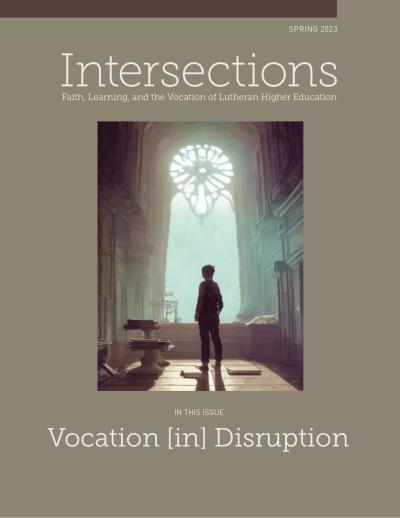 Editorial
From the Publisher: Introduction and Invitation
Lamont Anthony Wells
Wells introduces himself as the new Executive Director of NECU, succeeding Rev. Dr. Mark Wilhelm, and frames this Spring issue as a passionate response to the crises facing higher education amid threats to academic freedom and the well-being of educators.
-
Editorial
From the Editor: Vocation [in] Disruption
Colleen Windham-Hughes
Windham-Hughes introduces the issue’s theme — vocation amidst disruption — previews new features including contributor contact information, a study guide for So That All May Flourish, and invited pieces on reproductive rights, and shares results from the Fall survey of readers.
-
Reflection
“Miracles are no longer required”—Life Writing as a Healing Tool
Barbara Reul
A music historian and cancer survivor chronicles how a uterine cancer diagnosis in the early months of the COVID-19 pandemic disrupted her vocation as a university professor, and how writing two open-access memoirs became an unexpected tool for healing body, mind, and soul.
-
Article
The Power of Ritual Action and George Floyd Square
Mary Clare Tiede Hottinger
A California Lutheran University senior examines how George Floyd Square in Minneapolis has been transformed into sacred space through ritual action, and considers what this site of remembrance, mourning, and ongoing struggle for justice can teach us about the power of ritual to unify and sustain community.
-
Reflection
Be Like Jesus: Flip Some Tables
Jessica Easter
Easter argues that the example of Jesus overturning the moneychangers’ tables in Matthew 21 calls Christians not to work within unjust systems but to disrupt them — and that this table-flipping must be done in community with others who share the vision of a world where all are seen, heard, and valued.
-
Article
Necessary Disruptions: Centering Vocation in the Common Good
Erin VanLaningham
VanLaningham previews the forthcoming NetVUE volume Called Beyond Our Selves: Vocation and the Common Good, arguing that vocation, common, and good all need to be disrupted and expanded so that students might arrive at a wider sense of individual purpose and collective well-being.
-
Article
Where Disruption and Vocation Meet: One Path Toward Teaching Reproductive Justice in Challenging Times
Lena R. Hann
Hann recounts how a missed math class in her first college term led her into volunteer work at a feminist abortion clinic and ultimately a career in public health, and describes how she designed and taught a Reproductive Justice immersive term course at Augustana College through the disruptions of COVID-19, George Floyd’s murder, and the Dobbs decision.
-
Article
The Duty to Teach and Restore Bodily Autonomy: Reflections from the Classroom
Cynthia Richards
Richards reflects on a Narrative Medicine course she taught at Wittenberg University in the wake of the Dobbs decision, in which students examined cultural “first recognitions” of the reproductive body and discovered that almost none had ever had a way of talking openly about their reproductive selves — an alienation she calls educators to address.
-
Article
Turning to a Reproductive Justice Framework for Inclusive Dialogue across Differences
Jenny M. James
James makes the case that a reproductive justice framework, rooted in the work of black feminist scholars and activists, gives educators tools to overhaul polarized pro-choice/pro-life conversations and to host inclusive dialogues across differences of race, sexuality, gender identity, and faith.
-
Article
A Reconsideration of the Political Approach to Abortion
Sophia Cruz Ponce
Cruz Ponce argues that the pro-life versus pro-choice binary distracts from the underlying social factors that lead to unwanted pregnancies, and proposes a reframed political approach focused on mandated sex education, free contraception, and crisis pregnancy centers that address the social, political, and economic barriers women face.
-
Article
Take Heart: Is Neutrality Really What We Need Right Now?
Abbylynn Helgevold
Helgevold, an ethicist at Wartburg College, argues that calls for faculty neutrality on abortion in the post-Roe classroom stifle the courageous conversations Lutheran higher education is uniquely positioned to host — conversations grounded in “Rooted and Open” and the ELCA’s 1991 Social Statement on Abortion.
-
Article
Views on Flourishing After the Age of Roe
Caryn Riswold, Mary J. Streufert
Riswold and Streufert reflect on the Radcliffe Institute’s January 2023 conference “The Age of Roe” and argue that the ELCA’s 1991 Social Statement on Abortion and its 2019 statement Faith, Sexism, and Justice offer Lutheran higher education a third way to approach reproductive justice grounded in serving the neighbor so that all may flourish.
-
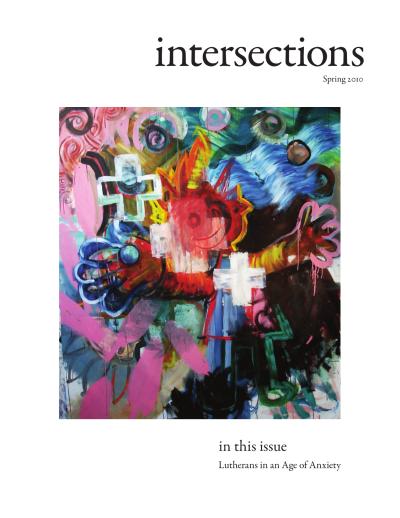 Reflection
The Neglected Miracle of Pentecost
Susan M. O'Shaughnessy
No. 32 · Spring 2010
O’Shaughnessy, in a homily delivered at Concordia College in 2008, reads the Pentecost narrative of Acts 2 through Maria Lugones and Elizabeth Spelman’s 1983 critique of white feminism’s cultural imperialism. She argues that the miracle is not the disciples’ speaking but the immigrant Jews’ hearing—and that the writer of Acts withholds the content of what was said precisely to teach disciples that people of privilege know less than the foreigner, the immigrant, the oppressed, the woman, the child, and must learn to listen in new languages before they can speak.
-
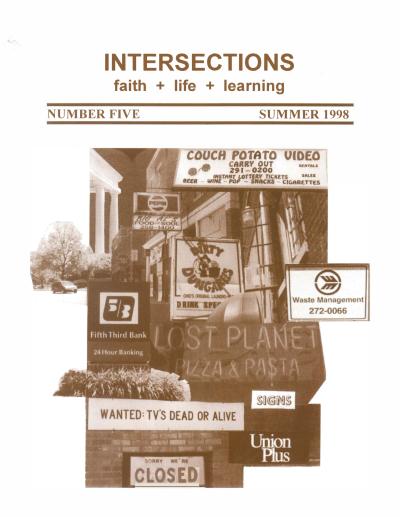 Article
The Quest Of The Historical Jesus: Problem & Promise
Robert W. Funk
No. 5 · Summer 1998
Funk, founder of the Jesus Seminar, frames the quest as the search for reliable data amid twenty-two ancient gospels and as a confrontation among three “parties”—the Jesus Party, the Apostolic Party, and the Bible Party. He surveys the Seminar’s 1985–1998 work (The Five Gospels, The Acts of Jesus, the color-coded reports), defends the synoptics over John, the priority of Mark, the Sayings Gospel Q and the Gospel of Thomas, and argues that a recovered Jesus—a teacher of a trust ethic, celebration, a kingdom without social barriers, a society without brokers, without cult rituals—may serve as catalyst for a sweeping third-millennium reformation that purges the “clogged arteries” of institutional Christianity.
-
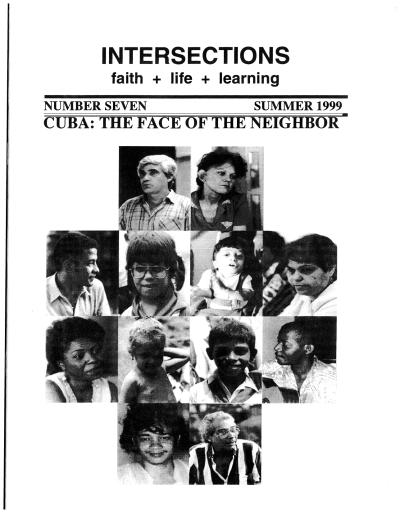 Institutional Focus
Letters to the Editor
No. 7 · Summer 1999
The journal’s first letter to the editor: Pastor John L. Vaswig of Spokane, a Pacific Lutheran University alumnus and member of the PLU Board of Regents, writes after reading James Tunstead Burtchaell’s The Dying Light: The Disengagement of Colleges and Universities from Their Christian Churches to ask whether church-related institutions, in their effort to be open and tolerant, have abandoned a compelling word of hope and forgiveness in Jesus Christ.
-
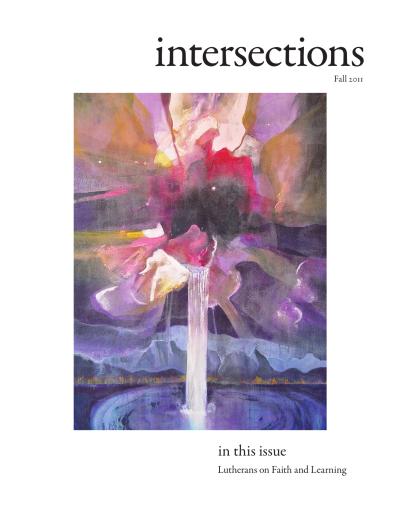 Reflection
Fumbling Toward Integrity: A Sermon on Mark 8:34-38, Pastor Kaj Munk, and Father Maximilian Kolbe
Darrell Jodock
No. 34 · Fall 2011
Preached at the 2007 ELCA Convocation of Teaching Theologians at Lenoir-Rhyne College, Jodock holds up two World War II martyrs—Polish Franciscan Father Maximilian Kolbe, who took the place of a condemned father in Auschwitz’s starvation bunker, and Danish pastor-playwright Kaj Munk, who was shot by the Nazis after helping save 97 percent of Denmark’s Jews—as mirrors for our own priorities. Drawing on the rescuer characteristics identified by Samuel and Pearl Oliner (agency, moral independence, universalistic caring, a history of care-giving) and on Jesus’s words in Mark 8:34-38, Jodock asks how we who routinely opt out at the first sign of opposition might fumble toward integrity in our own time.
-
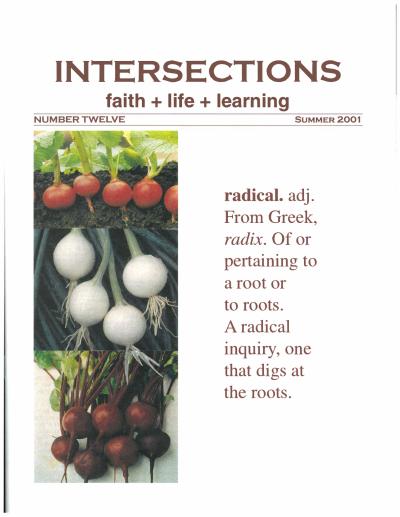 Article
Perspectives on Institutional Service: All Hands on Deck
Ruth Henricks
No. 12 · Summer 2001
Henricks, President and CEO of Lutheran Family Services of Nebraska, uses Annie Dillard’s image of Christians tourist-like on Deck C to call colleges and social ministry organizations to “all hands on deck” in a church standing at a threshold of shifting demographics—a growing rich-poor gap, a coming Hispanic majority, an aging baby-boom, dual-career families, contingency workers, and for-profit Lockheed Martin-style competitors entering human services. Drawing on Foster McCurley, Andrew Grove’s Only the Paranoid Survive, Justo Gonzales’s Manana, Arthur Becker, Bob Bacher, David Tiede, and the ELCA constitution, she argues that SMOs and colleges are the “hands” of the body of Christ and asks whether we have courage to require Spanish, partner ecumenically, cut services to Caucasian clients, and lead the church from the front rather than the rear.
-
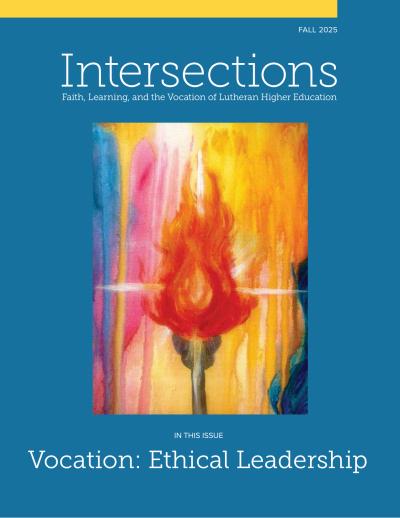 Editorial
From the Publisher
Lamont Anthony Wells
No. 62 · Fall 2025
5 min audio
Wells frames the issue as a record of the 2025 VLHE Conference at Augsburg under the theme “Ethical Leadership in a Changing World,” arguing that vocation is never solitary but a collective, public witness of ethical formation, theology and care, flourishing and belonging, and leadership rooted in God’s grace.