I never expected to grow up and become a church and higher education bureaucrat! When I revisited the encouragement received from faculty during my seminary years, resulting in a decision to enter a doctoral program in my mid-thirties, I envisioned joining the faculty at a wonderful Lutheran college or university after defending my dissertation. That did not happen. Nonetheless, I am grateful for the unanticipated opportunities that put me on an unexpected path to becoming the founding executive director for the Network of ELCA Colleges and Universities.
Gratitude is rising up in me these days as I anticipate my retirement next winter. As many readers of Intersections will have heard, I announced at NECU’s annual meeting in early January 2022 that I will retire on January 31, 2023. Much time remains before next January, and many tasks are yet to be completed. Even so, I have already begun to reflect on my experience with NECU, and those reflections have sparked gratitude within me. I am deeply and profoundly grateful for the privilege of serving our association and for the opportunity to meet many—but not nearly enough—of the thousands of gifted people at NECU member institutions.
NECU’s growth in its collective understanding of the vocation of Lutheran higher education has been the most gratifying development during my time as executive director. Articulating a vision for Lutheran higher education in twenty-first-century North America was identified as a core purpose for NECU when it was established in 2015. That vision was expressed in our 2018 statement, Rooted and Open: The Common Calling of the Network of ELCA Colleges and Universities. The journal Intersections has promoted conversation about this vision, and NECU’s summer conferences on the Vocation of Lutheran Higher Education have annually explored various aspects of the Lutheran vision for higher education.
Before I reach retirement, my hope is that we will make additional progress on articulating and claiming how a common vocation to embody a shared vision for Lutheran higher education is expressed in diverse and distinctive ways by NECU’s 27 member colleges and universities in the United States and Canada. The first sentence of a new mission statement for NECU (adopted at last January’s annual meeting) names this issue. The sentence reads, “The Network of ELCA Colleges and Universities articulates a vision for Lutheran higher education in North America that finds expression in the rich and diverse missions of its member institutions.” The first goal of NECU’s 2022-2025 strategic plan directs our association to “deepen the understanding of the rich diversity of Lutheran identity at NECU institutions.”
We will explore this topic at the 2022 Vocation of Lutheran Higher Education Conference, next July 18-20. (Please see information on page 20 of this issue.) Good work toward addressing the issue is also underway at three NECU member institutions through their NetVUE “institutional saga” grants, in the diverse ways vocational reflection is carried out on our campuses, and through other distinctive practices.
With gratitude for the work done and for the work to come, I thank God for my time with NECU even as I thank NECU for giving me the chance to serve our community of higher education.
-
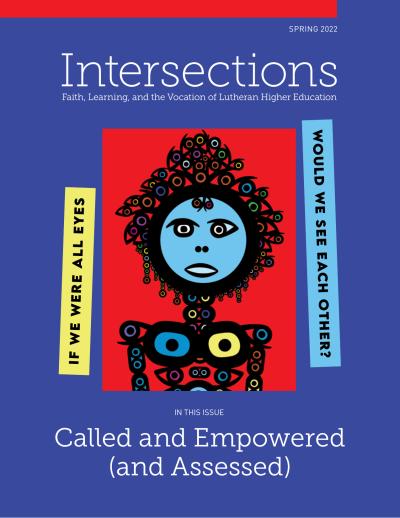 Editorial
From the Outgoing Editor
Jason A. Mahn
Mahn closes out a decade of editing Intersections, passes the duties to Colleen Windham-Hughes, gives thanks to Mark Wilhelm and Augustana College, and introduces an issue largely drawn from comments by Lutheran faculty, staff, and administrators at the 2022 NetVUE national gathering.
-
Editorial
From the Incoming Editor
Colleen Windham-Hughes
Windham-Hughes introduces herself as incoming editor by reclaiming the root of assess — “to sit by” — and committing to the question “What does this mean?” as she sits with readers in the worth of our work and the universality of vocation.
-
Institutional Focus
Building a Developmental Framework for Vocational Reflection at Thiel College
Brian Riddle, Greg Q. Butcher, Liza Anne Schaef
Riddle, Schaef, and Butcher describe how a NetVUE Program Development Grant enabled Thiel College to build “the Tomcat Way” — a four-year developmental framework with personal, social, academic, and professional domains and four phases (Explore, Envision, Belong and Lead, Launch) — that now guides every aspect of the student experience.
-
Article
Assessing Self-Assessment Instruments at Finlandia University
René Johnson
Johnson surveys three self-assessment instruments presented at the NetVUE conference — PathwayU at Colorado State, the Intercultural Development Inventory at Friends University, and Mark Savickas’s Career Construction Counseling Manual at Union College — and describes Finlandia’s use of the CliftonStrengths© assessment to link students’ personhood to “behaviors that benefit the community.”
-
Institutional Focus
Pivoting to Imaginative Programming in the Midst of the Pandemic at Bethany College
Arminta Fox
Fox recounts how Bethany College’s NetVUE Program Development Grant — originally designed around service-learning trips — was reimagined under COVID-19 into a guest-speaker model that tripled student participation and opened new vocational possibilities through the close, personal stories of alumni, alums-turned-volunteers, and community partners.
-
Institutional Focus
Serving and Building Community at Concordia College
Larry Papenfuss
Papenfuss, director of the Dovre Center for Faith and Learning, frames eight ways Concordia College serves the world by building community — from quality teaching and liberating liberal learning to interfaith cooperation and modeling “diversity with particularity” as a Lutheran “third path” institution.
-
Institutional Focus
Sharing the Gift of Vocation at (and beyond) Augsburg University
Paul C. Pribbenow
Pribbenow, drawing on a 2022 NetVUE panel with Dorothy Bass and Jodi Porter, considers how the gift of vocation forged with undergraduates can be extended — beyond undergraduate campuses to graduate students, faculty, and staff; across the vocational lifespan from high schoolers to alumni navigating the “gig economy”; and into accompaniment of faith communities through Augsburg’s Riverside Innovation Hub.
-
Book Review
Assessing the Value of Liberal Arts: A Review of The Evidence Liberal Arts Needs, by Richard A. Detweiler
Robert D. Haak
Haak reviews Richard A. Detweiler’s The Evidence Liberal Arts Needs, in which the former president of the Great Lakes Colleges Association analyzes 240 college mission statements and interviews more than 1,000 graduates to argue that liberal arts educational experiences have a measurable impact on adult lives of consequence, inquiry, and accomplishment — and invites NECU institutions into a further conversation about how Detweiler’s methodology applies to Lutheran higher education.
-
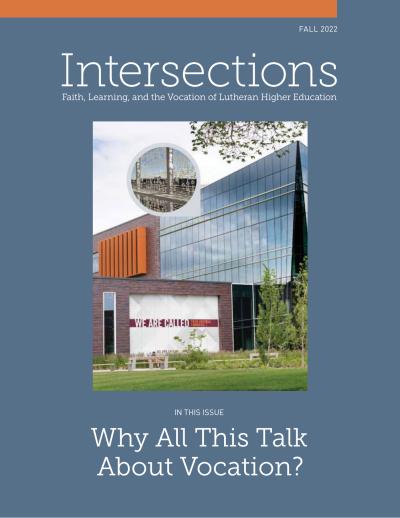 Article
Why All This Talk About Understanding the Mission of NECU Member Institutions as a Vocation?
Mark Wilhelm
No. 56 · Fall 2022
In his valedictory keynote, retiring NECU Executive Director Mark Wilhelm argues that Lutheran higher education is, properly understood, vocation-based education — outlining four core practices recovered over the past fifty years and naming the constructive and corrective work still to be done, including a fuller embrace of DEIJ and of the diverse vocations of NECU’s 27 institutions.
-
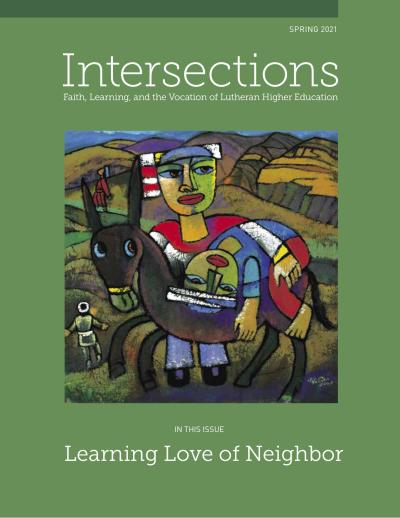 Editorial
From the Publisher
Mark Wilhelm
No. 53 · Spring 2021
Wilhelm reflects on an NPR report of teenagers’ pandemic diaries and the fraught Christian history of struggling to live out Jesus’s ethic of love, framing the issue as a record of NECU institutions working out how to act for the common good through the pandemic of 2020–2021.
-
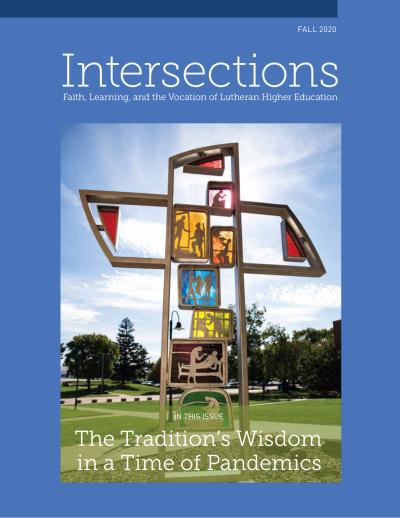 Editorial
From the Publisher
Mark Wilhelm
No. 52 · Fall 2020
Wilhelm argues that the “hackneyed” expressions of higher education — “you are not just a number,” “the college experience,” “risen to the challenge” — tell the simple truth about NECU institutions even as the Covid-19 pandemic has pushed budgets, employees, and campus life to the breaking point.
-
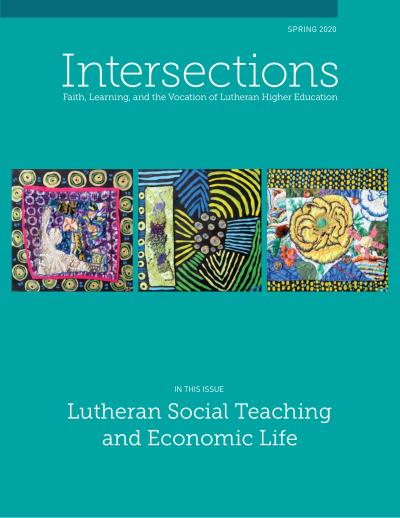 Editorial
From the Publisher
Mark Wilhelm
No. 51 · Spring 2020
Wilhelm frames the issue by tracing how Lutheran educational ideals — once a primary source of contemporary higher education — were masked in the United States, and introduces a NECU initiative that uses the case of business ethics to explore Lutheran social teaching as an academic resource.
-
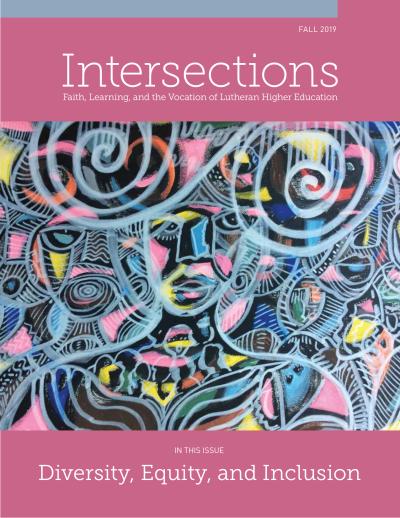 Editorial
From the Publisher
Mark Wilhelm
No. 50 · Fall 2019
Wilhelm frames the issue by noting that a federal court’s vindication of Harvard’s race-conscious admissions process is a win for higher education’s commitments to diversity, equity, and inclusion — and argues that for Lutheran higher education, the commitment to diversity is an old and foundational claim, rooted in Christianity’s openness to all and reflected in the four diverse gospels of the New Testament.
-
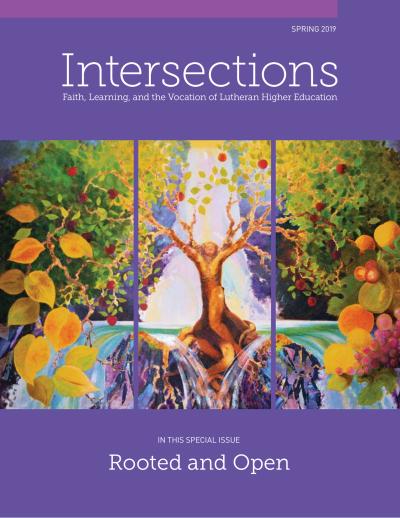 Article
Rooted and Open: Background, Purpose, and Challenges
Mark Wilhelm
No. 49 · Spring 2019
Wilhelm traces Rooted and Open’s seventy-year backstory — from Conrad Bergendoff’s 1948 call for a Lutheran philosophy of education through the recovery of the vocation tradition — and describes the document’s process, purpose as a teaching and study resource, and the embodiment, contextual, and cultural challenges it implies for NECU institutions.
-
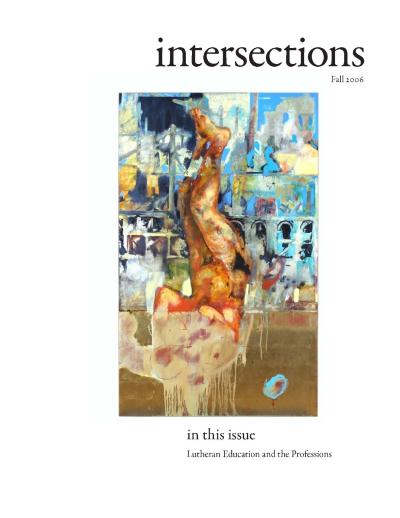 Article
Freedom of a Christian-College: Looking through the Lens of Vocation
Kathryn L. Johnson
No. 24 · Fall 2006
Johnson, Paul Tudor Jones Professor of Church History at Louisville Presbyterian Theological Seminary, re-reads Luther’s 1520 treatise The Freedom of a Christian as a paradigm for the “freedom of a Christian college” amid the pressures of professional preparation. She traces Luther’s paradoxical claim that a Christian is “a perfectly free lord of all, subject to none” and at the same time “a perfectly dutiful servant of all, subject to all,” and argues that the same dialectic frees a Lutheran college to engage the professions without being captured by them.
-
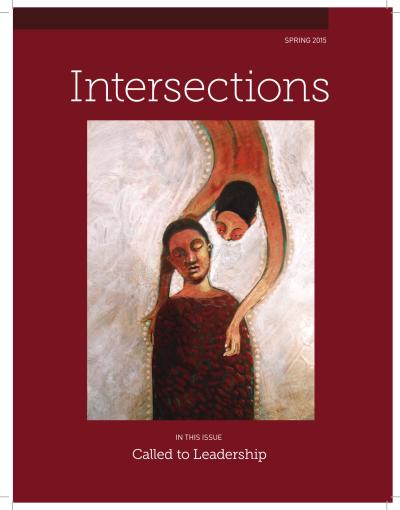 Article
The Dangers of "Vocation" for Students Thinking about Career
Carl Hughes
No. 41 · Spring 2015
Hughes warns that Lutherans too often use “vocation” as a theologically glorified synonym for a fulfilling career — a misuse that constricts God’s call to our jobs and excludes minimum-wage workers, caregivers, and others from the dignity of calling. Recovering Luther’s expansive understanding, he argues that vocation refers first to people, not professions, and must always be bigger than any one aspect of our lives.
-
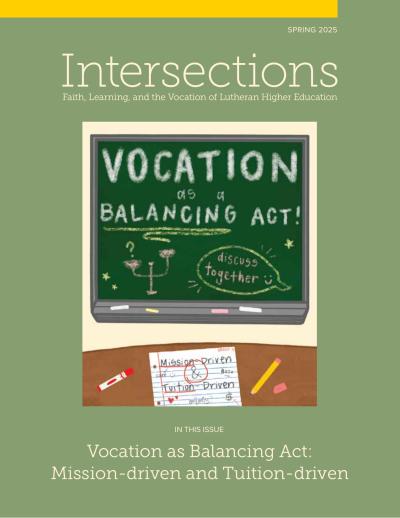 Institutional Focus
So That All May Belong: Lutheran Roots for Diversity, Equity, Inclusion, and Justice
Altheia Richardson, Angie Hambrick, Caryn Riswold, Colleen Windham-Hughes, Deanna Thompson, Marcia Bunge, Robert Clay
No. 61 · Spring 2025
22 min audio
The full NECU statement grounds DEIJ work in Luther’s 16th-century reforms and Lutheran theological claims about the image of God, equal dignity, and the limits of human knowing — offering definitions, Lutheran roots, and calls to action for diversity, equity, inclusion, and justice, with belonging as the outcome of DEIJ at work.
-
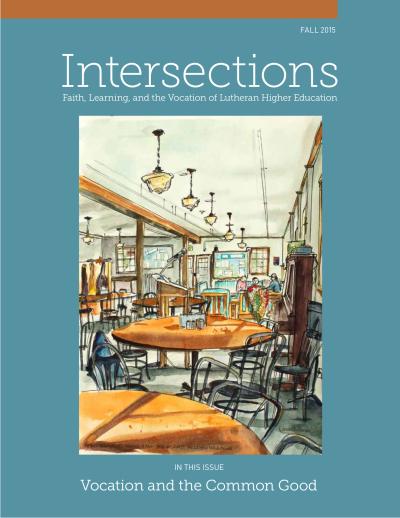 Editorial
From the Editor
Jason A. Mahn
No. 42 · Fall 2015
Mahn introduces the “Vocation and the Common Good” issue by asking what is left of “the commons” in an age of privatized goods and education-as-commodity, and frames church-related colleges — with their stubborn vocabulary of “liberal arts,” “collegiate,” and “calling” — as among the least fully-privatized resources left in American life.
-
Institutional Focus
About the Cover and Artist
No. 49 · Spring 2019
Kristen Gilje, a Bellingham, Washington artist who spent nine years as Artist in Residence at Holden Village, recounts the “Tree of Life” she painted for the Holden Village 1999 summer theme and the unexpected interpretation Lapidary Fred offered of Yggdrasol, Prometheus, the Druid Tree Spirit, and the crucifix all at once.
-
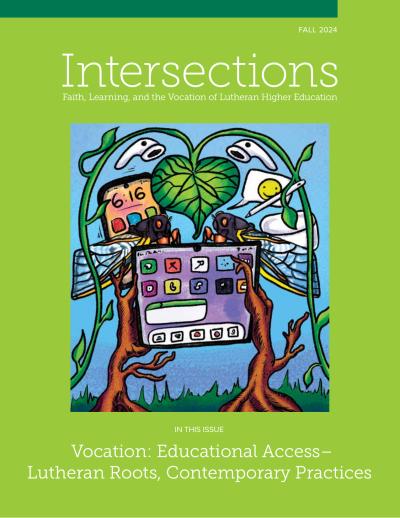 Article
2024 VHLE Conference: "Rooting Access" Panel Talking Points
Guy Nave
No. 60 · Fall 2024
Nave reads “access” across Deuteronomy 23, Ruth, Isaiah 56, Acts 10, and Matthew 15:21-28 as an ongoing biblical conversation that evolves from exclusion to ever-widening welcome — and presses ELCA institutions to shift their focus from “student readiness” to “institutional readiness.”