The five-hundredth anniversary of the beginning of the Reformation has brought Martin Luther into public consciousness in a fresh way. One question that emerges as we compare the origins of the Lutheran tradition with modern faith communities is what resources, if any, does Luther’s writings offer for people with disabilities? This is a treasure hunt with both dead ends and rich rewards. Although Luther’s own response to people with disabilities is starkly problematic at times, both Luther’s Small Catechism and Large Catechism offer substantial resources for a Lutheran theology of inclusion and the basis to recognize the full humanity of people with disabilities as faithful children of God.
Disability and Religious Participation
The experience of disability, while sometimes regarded as anomalous or unusual, is in fact both commonplace and, presuming a person lives long enough to become aged, almost inevitable. About 12.6 percent of people living in the United States have disabilities; census data indicates that this percent has remained steady for several years (Annual Disability 38). Among people over the age of 65, over one-third are identified as disabled (7). People with disabilities are underrepresented in American religious communities, however. A study produced by the Kessler Foundation and the National Organization on Disability called “The ADA, 20 Years Later” finds:
Half of people with disabilities (50 percent) state that they attend religious services at least once per month. However, 57 percent of people without disabilities do the same—a gap of 7 percentage points. The gap between people with and without disabilities in terms of attendance at religious services is almost identical to that in 2004 and all previous years with the exception of 2000 when this gap was wider at 18 percentage points. (12)
The Kessler Foundation/National Organization survey identifies a series of interrelated issues that may impact church attendance. For example, people with disabilities are likely to have fewer transportation options and lower income than those without disabilities (3). Other research suggests that families with a child who has a disability do not find congregations well prepared to meet their family’s needs, and often do not even ask what those needs might be. Churches are not necessarily welcoming (Ault 54).
Theological Issues
While architectural barriers, lack of access to transportation, and lack of support of people with disabilities in participating in congregation life all contribute to the problem of exclusion of people with disabilities from Christian communities, there are also issues with religious teaching. Christian religious doctrines are mixed in terms of their recognition of people with disabilities as eligible for full Christian practice. People with disabilities may be regarded within Christian communities as having been punished by God, or as otherwise unsuited for being part of Christian congregations. Theologian of disability Nancy Eiesland describes this as the “disability-sin conflation” (Eiesland 72). She argues that the biblical record and centuries of Christian practice have created systemic marginalization of people with disabilities:
“Christian religious doctrines are mixed in terms of their recognition of people with disabilities as eligible for full Christian practice.”
In order for the Christian church to stop doing harm and energize their efforts to be a body of justice, critical and careful attention must be given to a theology of disability as an established feature of the systematic theological enterprise…The consequences of relegating a theology of disability to an occasional and peripheral concern can be disastrous not only for people with disabilities but also for institutional integrity and justice. (Eiesland 75)
People with intellectual disabilities are particularly neglected by mainstream Christian doctrine. The American Association of Intellectual and Developmental Disabilities (AAIDD), an advocacy organization promoting among other things the human rights of people with intellectual disabilities, offers this description: “Intellectual disability is a disability characterized by significant limitations in both intellectual functioning and in adaptive behavior, which covers many everyday social and practical skills” (“Frequently Asked”). The AAIDD holds that “limitations in individuals often coexist with strengths, and that a person’s level of life functioning will improve if appropriate personalized supports are provided over a sustained period” (“Frequently Asked”). Put plainly, people with intellectual disabilities are members of families and communities; like all other people they need support to flourish, and also like all other people they have meaningful gifts to contribute to the communities to which they belong. This includes churches. Unfortunately, churches have not always seen people with intellectual disabilities as full members of the body of Christ.
One problem is that some religious communities may have difficulty recognizing the desire and capacity for faith among people with intellectual disabilities. Anglican theologian John Swinton argues, “For many of us whose roots lie within the Reformed theological tradition, there is often the idea that literacy and verbal assent to intellectual formulations are inseparable companions in the quest for authentic faith” (Swinton 22). This formulation of faith as belief, and the capacity to express that belief, leaves people whose expressive language or whose ability to absorb a series of complex religious doctrines is minimal outside the boundaries of Christian faith. Swinton continues, “Certainly our intellect and cognitive capacities help us to participate with God in ways relevant to our current understanding of reality. However, the essence of our relationship of grace is that it is initiated and sustained by God in a way that lies outside our current understanding, and as such is independent of our cognitive capabilities” (Swinton 22). Thus, as Eiesland argues, a critical examination of religious doctrine is necessary to address the injustice of exclusion of people with disabilities from the church. The theological problem is not people’s capacity for faith, but a skewed understanding of what faith entails.
“The theological problem is not people’s capacity for faith, but a skewed understanding of what faith entails.”
One place to begin this work is to reexamine constructs of faith. People with intellectual disabilities can certainly express religious faith and identity, and people who do not have the capacity for that expression can nevertheless demonstrate recognition of sacred ritual and sacred space. Susan Speraw interviewed parents of children diagnosed with a significant disability; she argues, “Even in the case of children who had severe or profound disabilities that limited their participation in services, parents focused on their child’s potential for spiritual connection to God or their ability to remind others of God’s presence” (Speraw 221).
Religious communities were sometimes profoundly supportive of the religious identity and experiences of people with intellectual disabilities. One father reported, discussing his priest’s response to his daughters, both of whom have significant intellectual disabilities:
The priest told me he had faith in their ability to learn, or at least to be close to God in their hearts, even if they couldn’t talk. Where I went to church before, we were anonymous as a family. Now, the kids enjoy being in church and we are welcomed. For me it is a joy to be there and the praying I get to do is a gift. Being in our church now makes me feel as if God never left my side. (Speraw 224)
However, many families reported experiences of exclusion and isolation. Their family members were dismissed when seeking to contribute to congregations; parents were expected to provide their children’s own religious education.
Other research demonstrates that people with intellectual disabilities can have strong religious identities. Eleanor Liu, who interviewed young men and women with autism or intellectual disabilities about their religious lives, argues that
Faith…contributes to a sense of connection and thriving among young people with [intellectual and developmental disabilities]. Young people addressed how faith helped them navigate difficult circumstances and provided critical support at key times. Their relationships with God and with people in their faith communities were important to them and a source of flourishing in life. (Liu et al. 399)
Moreover, the young people she interviewed “spoke of their disability as a gift to be shared…most considered themselves to be loved, valued, and understood by God… These opinions do offer another perspective, contrary to prevailing societal and professional views that disability is something that needs to be fixed, solved, or changed” (Liu et al. 399). Liu suggests that religious communities need to be better equipped to support the spiritual formation of young people with intellectual disabilities (400). She also points out that “individuals whose support needs are more intensive and communication challenges more complex may be most prone to having their spiritual preferences and needs overlooked” (Liu 395).
Before turning to Lutheran teaching in the catechisms as a source for a theology of inclusion of people with disabilities, we must honestly and critically examine some of Luther’s views on disability.
Problems with Luther
Luther is not typically regarded as an enlightened thinker on issues of disability (and rightfully so), although he is not alone in this among Christian theologians. Luther has, for example, frequently been critiqued in the modern era for his words about a twelve-year-old child from Dessau whom he encountered. The child seems to have had symptoms of Prader-Willi Syndrome—a complex genetic disorder affecting appetite, growth, metabolism, cognition, and behavior. The child “devoured as much as four farmers did, and did nothing else than eat or excrete” (“Table Talk” 397). Luther is reported to have suggested that the child should be suffocated “…because I think he’s simply a mass of flesh without a soul. Couldn’t the devil have done this, inasmuch as he gives such shape to the body and mind even of those who have reason that in their obsession they hear, see, and feel nothing? The devil is himself their soul” (397). A later account of the exchange reports that Luther “had himself seen and touched the boy and that he advised the prince of Anhalt to have the boy drowned” (396-97 n.140). Some defend Luther here, arguing that he in no way intended these views to be dogma or otherwise generalizable (Schofield). Still, it is this version of the story that has lodged itself into the broader consciousness. In fact, as recently as 1964, the belief that Luther consistently held this deplorable view was powerful enough that it was cited in a court case; this report of Luther’s words, and the subsequent line of thinking, has influenced religious reflection on the inherent value of people with disabilities.
In short, Luther’s response to the child he encountered—presuming some germ of the story is historical—was the opposite of what we might hope for. The rejection of this child from the church and the association of a person with disabilities with the devil are deeply unsettling. The suggestion that a person might be without a soul violates the doctrine of the Imago Dei (the person as created in the image of God), which is central to Christian belief and practice. It also serves to support ableism (the discrimination against people with disabilities), which has been practiced within Christian communities, and given theological support, for centuries.
“In short, Luther’s response to the child he encountered—presuming some germ of the story is historical—was the opposite of what we might hope for.”
As Luther’s thinking changed over time, he became more open to the notion of infants with significant disabilities being baptized as other Christian infants were. While in 1532 he indicated that he was opposed to baptism in the case of children born with significant disabilities (Miles 22), “By 1539 Luther was ready to tell a questioner that changelings should indeed be baptized, because during the first year one could not tell that they were changelings” (22). The notion that a child whose appearance or behavior was so unusual that it might be a “changeling”—that is, an infant whom malevolent, supernatural forces had swapped out for the original baby—is common in Medieval folklore, although it is difficult to know whether parents of infants who would now be diagnosed with disabilities believed this explanation or not. In any case, Luther does not suggest withholding baptism even if there might be some suspicion that a baby is a changeling. Miles argues that
throughout his career as a religious and social reformer, Luther repeatedly made written and spoken comments in which children and adults with disabilities…were understood to have full human value and were considered worthy members of the Church…As against this, Luther had some beliefs and some doubts in the area of devilry, changelings and witchcraft…The balance of Luther’s published writings in which adults and children with disabilities were treated with respect in various practical ways, as against some written and reported prejudicial comments, appears to be weighted strongly towards the positive. (34)
Given this mixed record, we might well ask: what does Luther have to offer people with significant disabilities, especially intellectual disabilities? What of his writing might be faithfully and thoughtfully used in modern Christian response to disability? One very useful resource is Luther’s educational writing. Luther provides the Small Catechism and the Large Catechism for Christians seeking to understand and practice their faith more fully. These instructional texts, written in 1529 for ordinary lay Christians, have remained influential for centuries. Both of the catechisms provide a construct of faith that is useful for Christians with and without disabilities who seek a theological basis for more inclusive congregational life.
Resources within Luther’s Catechisms
Luther’s understanding of faith and of the mechanism of salvation is often described with the shorthand “salvation by grace through faith.” What this shorthand does not always clearly convey is that God’s gracious activity (that is, God’s gift to human beings) is not only providing salvation, but also in providing the faith through which people experience a relationship to God. Luther’s reflection on the Apostle’s Creed includes a reflection on this process.
The Apostle’s Creed
The Third Article of the Apostle’s Creed reads as follows: “I believe in the Holy Spirit, the holy Christian church, the communion of saints, the forgiveness of sins, the resurrection of the body, and the life everlasting” (Small Catechism 17). In the Small Catechism Luther writes the following commentary: “I believe that by my own understanding or strength I cannot believe in Jesus Christ my Lord or come to him, but instead the Holy Spirit has called me through the gospel, enlightened me with his gifts, made me holy and kept me in the true faith, just as he calls, gathers, enlightens, and makes holy the whole Christian church on earth and keeps it with Jesus Christ in the one true faith” (17).
“Faith is not fundamentally about a person’s intellectual capacity or accomplishments. It is, Luther says, rather an experience of being called and led into Christian community and relationship with Christ by the Holy Spirit.”
Several aspects of this analysis are applicable to the faith experiences of people with intellectual disabilities. Luther is emphatic that it is not through the work or virtue of the Christian that he or she comes to know God or have faith; the individual’s “understanding or strength” is not at issue. Thus Luther suggests that a person’s capacity for understanding does not correlate with his or her ability to have faith. Faith may include, for many people, an intellectual grasp of the elements of the Christian tradition, and indeed, Luther is writing his catechisms in order to provide Christians with the opportunity to better understand their faith. But faith is not limited by a person’s intellectual abilities, because faith is not fundamentally about a person’s intellectual capacity or accomplishments. It is, Luther says, rather an experience of being called and led into Christian community and relationship with Christ by the Holy Spirit. Just as the AAIDD argues, “limitations in individuals often coexist with strengths” (“Frequently Asked”). This is true for all people, not only people with intellectual disabilities, and Luther’s account of the work of the Holy Spirit is that it does not depend on either limitations or strengths. Faith is reflective of the work of God in human beings; it is not the result of human effort.
In Luther’s Large Catechism he writes the following in his commentary on the Third Article of the Creed:
Just as the Son obtains dominion, whereby He wins us, through His birth, death, resurrection, etc., so also the Holy Ghost effects our sanctification by the following parts, namely, by the communion of saints or the Christian Church, the forgiveness of sins, the resurrection of the body, and the life everlasting; that is, He first leads us into His holy congregation, and places us in the bosom of the Church, whereby He preaches to us and brings us to Christ. (Large Catechism paragraph 37)
Luther argues here that the Holy Spirit works through Christian congregations. What this suggests is that failure of congregations to provide an inclusive community of fellowship and worship does not align with the will of God. The Spirit works by means of the church, and so one important role of the church is to gather in people of faith, regardless of ability or disability, to create a Christian community. Nowhere does Luther suggest that only people who have established a certain degree of expertise in Christian doctrine or biblical exegesis are welcome; indeed, this would be at odds with his understanding of baptism, as we will see below, and contrary to the notion that God provides people with their Christian faith. There should be no expectation of any particular capacity or level of accomplishment for people who want to practice their Christian faith by gathering with others.
Moreover, Luther writes explicitly in the Small Catechism that “the whole Christian church on earth” (Small Catechism 17) is called, gathered, enlightened, and made holy. This whole church includes people with intellectual disabilities, not just people without disabilities. John Swinton argues,
The absence of a certain level of cognitive capability does not exclude a person from the experiential spirituality made manifest in loving relationships. Authentic religious faith thus understood is a matter of an “existential commitment to the reality of the divine as made manifest within relationships, which determines the basic character of a person’s life.” (Swinton 25)
This experience of faith and love, both given and received, does not depend on intellectual capacity.
Petitions of the Lord’s Prayer
Luther’s reflections in the catechisms on the Lord’s Prayer are also useful in building a theology that is inclusive of people with disabilities. In response to the Sixth Petition of the Lord’s Prayer, “Save us from the time of trial,” Luther writes in the Small Catechism, “God tempts no one…we pray that God would guard us and keep us, so that the devil, the world, and our sinful nature may not deceive us or mislead us into false belief, despair, and other shame and vice…” (21). What sort of vice should we be alert to in our focus on disability?
“Ableism is a sin, much as other forms of social oppression are sinful.”
Theologians of disability have long argued that ableism is a sin, much as other forms of social oppression are sinful. Nancy Eiesland writes,
Christ’s body, the church, is broken, marked by sin, divided by disputes, and exceptional in its exclusivity. Church structures keep people with disabilities out; church officials affirm our spiritual callings but tell us there is no place for our bodies to minister; and denominations lobby to gain exception from the governmental enforcement of basic standards of justice. There is no perfect church as there is no “perfect” body. (Eiesland 108)
Eiesland names the act of excluding people with disabilities as a sin, and provides a reminder: there is no perfect body. The Seventh Petition of the Lord’s Prayer is “Deliver us from evil.” Luther interprets the Seventh Petition, “We pray…that our Father in heaven would rescue us from every evil of body and soul,” and when writing on the Sixth Petition Luther names “the devil, the world, and our flesh” as possible sources of deception and evil (Small Catechism 21-22). Certainly our political and social world provides reinforcement for the idea that people with disabilities do not really matter, do not really deserve access to education, opportunities for employment, support in maintaining their health, and the regard of their communities in the same way that able-bodied people do. Able-bodied people can maintain the illusion that their own bodies are perfect by drawing sharp contrasts between themselves and people with disabilities, and enforcing these contrasts with exclusionary practices. Eiesland helps us identify this as the kind of sin Luther writes about.
Luther expands on the temptations provided by the world in the Large Catechism:
Next comes the world, which offends us in word and deed, and impels us to anger and impatience. In short, there is nothing but hatred and envy, enmity, violence and wrong, unfaithfulness, vengeance, cursing, raillery slander, pride and haughtiness, with superfluous finery, honor, fame, and power, where no one is willing to be the least, but every one desires to sit at the head and to be seen before all. (paragraph 103)
Luther identifies the desire to elevate oneself above one’s neighbors, especially in social status, as one of the temptations the world dangles before the Christian. This is connected with a construct of faith as belief, that is, as an intellectual accomplishment on the part of the Christian rather than a gift from God that does not depend on a person’s ability or capacity. Any belief that people with intellectual disabilities cannot fully participate in Christian communities depends on a mistaken and sinful belief that faith is an accomplishment that elevates one above the neighbor.
Baptism
Finally, Luther’s teaching on baptism is another possible source for an inclusive theology of disability. In the Small Catechism, Luther writes that the call for baptism is from Matthew 28: “Go therefore and make disciples of all nations, baptizing them in the name of the Father and of the Son and of the Holy Spirit.” Luther’s reading of the text does not indicate any exclusion of any kind in that instruction. While the history of colonialist practices of evangelizing based upon this instruction is clearly problematic, the idea that “all nations” are eligible to be baptized as Christians reinforces the fundamental inclusiveness of baptism as a sacrament. The verse clearly does not say: baptize all people except those with disabilities, nor does Luther read it to say that.
“Luther favored the baptism of infants, arguing both that they are capable of faith, and that even if this were not the case, the power of the sacrament does not depend upon human beings.”
In the next two passages in the Small Catechism, Luther emphasizes the pairing of baptism with belief, which at first blush might seem to reinforce a minimum requirement of verbal expression of faith for those being baptized. However, Luther favored the baptism of infants, arguing both that they are capable of faith, and that even if this were not the case, the power of the sacrament does not depend upon human beings. Kirsi Stjerna argues that Luther’s teaching is that
we should both assume the reality of children’s faith in terms of their salvation and remember that baptism is given for the sake of that faith to be received and nurtured. Infant baptism is a case in point that baptism is not necessary for salvation as such, just as no human act or intent is. Baptism is a sure deliverer of what the Word promises and does. That salvation is a gift implies that the faith that receives God is also a gift. (Stjerna)
We must note here explicitly that people, especially adults, with disabilities should not be infantilized or have their capacities diminished for rhetorical purposes; however, Luther’s theological development of the sacrament of baptism and encouraging infant baptism is useful in setting aside any argument that intellectual disability precludes exclusion from Christian faith. As Luther writes in the Large Catechism,
We are not so much concerned to know whether the person baptized believes or not; for on that account Baptism does not become invalid; but everything depends upon the Word and command of God. This now is perhaps somewhat acute but it rests entirely upon what I have said, that Baptism is nothing else than water and the Word of God in and with each other, that is when the Word is added to the water, Baptism is valid, even though faith be wanting. For my faith does not make Baptism, but receives it. (paragraph 52)
This suggests that a person does not have to demonstrate his or her faith, or even the capacity for expression of faith, in order to receive baptism. Thus baptism is appropriately offered to people with disabilities, regardless of capacity. This confirms the right of people of all abilities to be baptized into the church and regarded as full members of the body of Christ.
Conclusion
Lutheran theology gives a powerful account of grace as the source of our faith and separates the cause of faith from human attributes or accomplishments. Intellectual capacity cannot be a requirement for salvation; thus belief understood as “assent to doctrine” cannot be the whole of faith. Luther offers a strong critique of the values of the world as sinful; the elevation of some people over others within the church based on a flawed assessment of their ability to have faith is an example of this sinful thinking. He affirms that all people are eligible for baptism, including infants. The ability to make a statement of faith is not a requirement. Rejection of people with disabilities (or people on grounds of race or other features of their identity, including sexual orientation or gender identity) directly contradicts Luther’s interpretations of the Apostle’s Creed, the Lord’s Prayer, and the sacrament of baptism.
While the notion of salvation by grace, through faith is deeply resonant for Lutherans, explicit consideration of faith as a gift to people with disabilities is less common, both in academic theological reflection and in the daily life of the church. Luther’s analysis of disability requires careful interpretation and in some cases outright rejection, but there is still a great deal in Luther’s most accessible texts that provides clear affirmation of people with disabilities as rightful members of Christian communities.
Works Cited
Annual Disability Statistics Compendium, Institute on Disabilities/UCED. University of New Hampshire. Accessed 1 May 2018, www.disabilitycompendium.org
Ault, Melinda, Belva C. Collins, and Erik W. Carter. “Congregational Participation and Supports for Children and Adults with Disabilities: Parent Perceptions.” Intellectual and Developmental Disabilities 51, no. 1 (2013): 48-61.
Eiesland, Nancy. The Disabled God: Toward A Liberatory Theology of Disability. Nashville: Abingdon, 1994.
“Frequently Asked Questions on Intellectual Disability.” American Association of Intellectual and Developmental Disabilities. 2017. Accessed 1 May 2018, http://aaidd.org/intellectual-disability/definition/faqs-on-intellectual-disability#.Ws34wdTwbZ4
Liu, Eleanor, and Erik W. Carter, Thomas L. Boehm, Naomis H. Annandale, and Courtney E. Taylor. “In Their Own Words: The Place of Faith in the Lives of Young People with Autism and Intellectual Disability.” Intellectual and Developmental Disabilities 52, no. 5 (2014): 388-404.
Luther, Martin. Large Catechism. The Book of Concord: Confesssions of the Lutheran Church. Accessed 1 May 2018, http://www.bookofconcord.org/lc-1-intro.php
———. Small Catechism. St. Louis, MO: Concordia, 1965.
———. “Table Talk Recorded by John Mathesius.” Luther’s Works (American Edition), volume 54. Philadelphia: Fortress, 1967.
Miles, M. “Martin Luther and Childhood Disability in 16th Century Germany.” Journal of Religion, Disability & Health 5 no. 4 (2001): 5-36.
Schofield, John. Martin Luther: A Concise History of His Life and Works. Amazon Digital Works: The History Press, 2010.
Speraw, Susan. “Spiritual Experiences of Parents and Caregivers Who Have Children With Disabilities or Special Needs.” Issues in Mental Health Nursing 27 (2006): 213–30.
Stjerna, Kirsi. “Baptism in Martin Luther’s Theology.” Oxford Research Encyclopedias. Accessed 1 May 2018, http://religion.oxfordre.com/view/10.1093/acrefore/9780199340378.001.0001/acrefore-9780199340378-e-360
Swinton, John. “Restoring the Image: Spirituality, Faith, and Cognitive Disability.” Journal of Religion and Health 36 no 1 (Spring 1997): 21-28.
Taylor, Humphrey. “The ADA 20 Years Later.” The Kessler Foundation/National Organization on Disability 2010 Survey of Americans with Disabilities. Accessed 1 May 2018, http://docplayer.net/36088718-The-ada-20-years-later.html
-
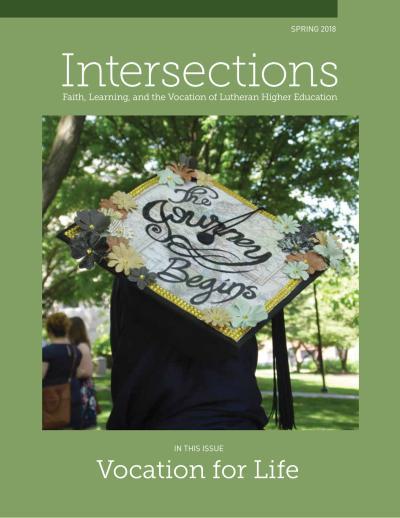 Editorial
From the Publisher
Mark Wilhelm
Wilhelm celebrates that NECU schools continue to educate for vocation but warns that the culture of Lutheran higher education is at risk — sustained largely by informal cadres of individuals — and introduces NECU’s Rooted and Open statement as a first institutional step toward reclaiming the 500-year-old Lutheran intellectual and educational tradition.
-
Editorial
Guest Editorial
Lynn Hunnicutt
Hunnicutt traces the etymology of vocation through its cognates — evoke, provoke, convocation — to argue that vocation presumes a relationship between caller and called, that callings are often grounded in ordinary words and humble lives, and that recognizing vocation as plural and lifelong relieves colleges of the pressure to help students find a single calling while on campus.
-
Article
One Life, Many Callings: Vocation Across the Lifespan
Katherine Turpin
Turpin, drawing on the collaborative research behind Calling All Years Good, traces how vocational discernment shifts through adolescence, younger adulthood, middle adulthood, late adulthood, and older adulthood — arguing that focusing vocation on entry into the workforce limits the capacity of intergenerational college communities to wrestle with calling throughout life.
-
Article
Vocation for Emerging Adulthood: Within and Beyond College
Adam Copeland
Copeland uses scenes from Master of None, David Brooks’ columns, Meg Jay’s The Defining Decade, and the stories of two ELCA college graduates to argue that emerging adulthood has fundamentally changed — and that Lutheran colleges should call out cultural lies about work, reframe vocation as meaning-making, and help graduates take small, wise steps into their twenties.
-
Article
Called to Compassion over the Course of a Life: A Buddhist Perspective
Florence D. Amamoto
Amamoto, an associate professor at Gustavus Adolphus shaped by Jodo Shin Shu Buddhism, argues that although Buddhism has no “caller” God, it has a strong sense of calling — we are called by the world to respond to the suffering around us with mindfulness, egolessness, and compassion — and that this lifelong journey is enriched by encounter with the Lutheran vocational tradition.
-
Article
Vocation and Dharma throughout Life's Stages: A Hindu Perspective
Vidya Thirumurthy
Thirumurthy traces her own attempt as a Hindu faculty member at Pacific Lutheran University to grasp the Lutheran concept of vocation, finding in the Bhagavad Gita’s teaching on dharma — duty fulfilled without expectation of reward — an equivalent that, like vocation, varies across the four stages of life and calls individuals to transform others through selfless service.
-
Book Review
Vocation on Campus: Reading Mark Tranvik's Martin Luther and the Called Life at Pacific Lutheran University
Alex Lund, Michael Halvorson
Halvorson and Lund — faculty member and student — review Mark Tranvik’s Martin Luther and the Called Life alongside PLU’s Wild Hope Center for Vocation, weighing the book’s warning against “vocation lite” against the challenge of speaking of God’s call to students in the Pacific Northwest’s “None Zone,” where most students have little exposure to Lutheranism.
-
Article
Lutheran Higher Education in the Land of Anxiety
Jon Micheels Leiseth
Leiseth, returning to Concordia from work with the ELCA’s Young Adults in Global Mission in Southern Africa, draws on Bessel van der Kolk and Babette Rothschild to argue that pervasive student anxiety functions as low-grade trauma that hijacks the storytelling at the heart of vocational discernment — and explores embodied, breath-based practices that might help students reclaim their stories.
-
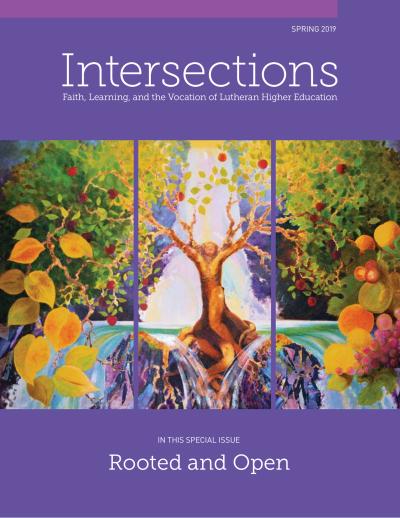 Article
Rooted and Open: Background, Purpose, and Challenges
Mark Wilhelm
No. 49 · Spring 2019
Wilhelm traces Rooted and Open’s seventy-year backstory — from Conrad Bergendoff’s 1948 call for a Lutheran philosophy of education through the recovery of the vocation tradition — and describes the document’s process, purpose as a teaching and study resource, and the embodiment, contextual, and cultural challenges it implies for NECU institutions.
-
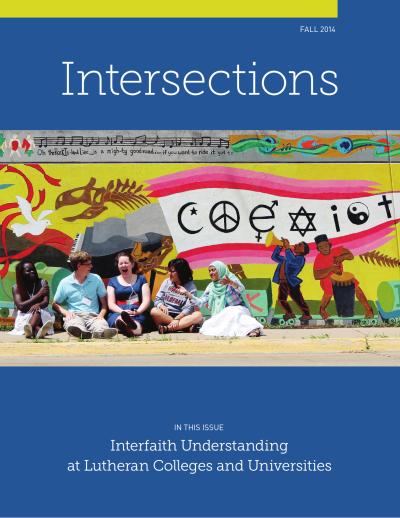 Article
Vocational Re-Formation for a Multi-Religious World
Elizabeth Eaton
No. 40 · Fall 2014
ELCA Presiding Bishop Elizabeth Eaton frames vocational formation for a multi-religious world as one of the most significant challenges facing the church and the liberal arts today, calling ELCA colleges and universities to live into Darrell Jodock’s “third path” that is both deeply rooted and dialogical.
-
 Article
Why Diversity and Civic Engagement Don't Talk to Each Other on College Campuses: The Need for Public Work
Jose Marichal
No. 25 · Spring 2007
Marichal opens with Thurgood Marshall’s line from Milliken v. Bradley and traces the “decoupling” of campus diversity and civic engagement initiatives back to their shared grounding in Benjamin Barber’s “thin” or pluralist democracy. Reviewing CIRCLE data on youth political disengagement, the limits of mandatory volunteerism, and persistent residential segregation, and drawing on Mary Ann Glendon, Lani Guinier, Caryn McTighe Musil, and Richard Rorty, he argues that only Harry Boyte’s notion of “public work” can bind diversity and civic engagement together—and contends that Lutheran colleges, with their understanding of vocation as call into the world, are uniquely positioned to build that infrastructure.
-
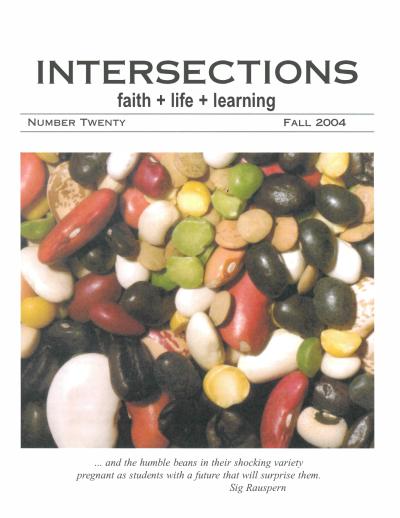 Article
Luther's Theology of Learning: Discovering the Vocation of Today's Small Lutheran Liberal Arts College
Eric Childers
No. 20 · Fall 2004
In an excerpt from his Wake Forest University Divinity School senior thesis, Childers profiles six students hand-picked by presidents and chaplains at Concordia College (Moorhead), Lenoir-Rhyne College, and Muhlenberg College—Nathan Gossai, Amy Nelson, Alison Schmidt, Ryan Sigmon, Julie Christianson, and Jeffrey Slotterback—as a living testament to Luther’s theology of learning. He then draws on Solberg, Mark R. Schwehn (in Paul J. Dovre’s The Future of Religious Colleges), Robert Benne, Ernest Simmons, Mark Noll, Richard Hughes, and James Burtchaell to argue that Lutheran colleges have not yet fully articulated their own theology of education and that their vocation is to embrace, engage, and galvanize a Lutheran tradition of learning rooted in the liberal arts, Scripture, the Confessions, and confident ecumenism.
-
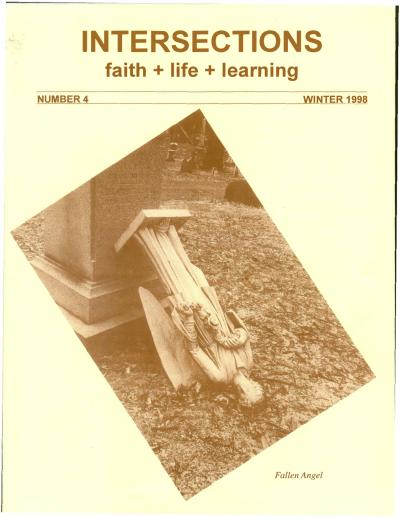 Article
The Skeptical Theologian's Dictionary
Carl Skrade, Spencer Porter
No. 4 · Winter 1998
Porter and Skrade offer selections from a mock-lexicon of theological terms: answer, church, faith, God, grace, hope, justification, love, prayer, sin, soul, and theology, among others. Each entry begins with a standard definition and then unsettles it—answer reminds the reader that in theology and poetry the questions matter more than their answers; church alternates between “the mystical Body of Christ” and ordinary human gatherings whose machinery often obscures the gospel; God is the One whose name we are told not to take in vain and yet whose name we keep using; prayer is communion with God yet often degenerates into a list of demands. The form’s irony exposes the gap between the language of theology and its lived realities—a sober, witty corrective for Lutheran classrooms and chapels alike.
-
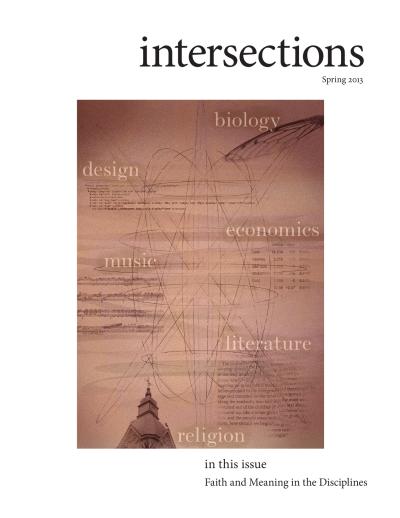 Article
Calling Economists
Lynn Hunnicutt
No. 37 · Spring 2013
Reading Luther’s Whether Soldiers, Too, Can Be Saved alongside Adam Smith’s Theory of Moral Sentiments and Wealth of Nations, Hunnicutt asks whether economists, too, can be saved—and whether economics can host a serious conversation about vocation. She traces her own move from Utah State to Pacific Lutheran University and its Wild Hope Center for Vocation, and turns to Deirdre McCloskey and George DeMartino as economists whose work makes room for vocation and the common good within the discipline.