Vocation is what my university’s mission statement was based on and I did not even realize it until I attended the Vocation of Lutheran Higher Education conference. Going into this conference, I was not quite sure what it was about, but the amount of knowledge I gained in the three day conference was mind-blowing. The conference name was Why All This Talk About Vocation and if I’m being honest, I was asking the same question. However, after being surrounded by educated, well-experienced, and deep-thinking individuals I learned that vocation is so much more than just a calling. Vocation is what gives education purpose. Vocation is what makes education not only about learning. Vocation is an intersection of where we are our best selves and where we do our best work. That is why as faculty, staff, and students within a university we must talk about vocation; it goes hand in hand with the material we are either teaching or receiving. Without understanding vocation and the embodiment of it, our education is almost meaningless. I am very grateful that I had the opportunity to attend this conference as a student because it gave me a new perspective on Lutheran institutions and their missions. I gained an understanding of the meaning and use of vocation within the ELCA school’s values, mission statements, and definitions of education.
This conference gave me valuable insight into what my college, Midland University, could benefit from. I attended four different workshops while at the conference and they were all so unique in the ideas and materials they shared. The first workshop was about teaching womanist thoughts at Lutheran Institutions. It was awesome to hear the discussion in the room and how each institution does different activities to acknowledge women’s contributions to society. Coming back to my university, I wanted to bring the idea of having a scavenger hunt around campus. At each location, there would be a QR code so students could learn about different women who have made contributions either to our university or community.
I also went to a workshop called Beyond the Playing Field. Midland University has a very large athlete population, so I could relate to the presentation very well. During the session, there was plenty of data that suggested a Player Development Coach would be highly beneficial to hire in order to increase retention rates and help athletes understand what life will look like after college. While Midland does have a student development staff member, it would be advantageous to invest in hiring someone who focuses directly on athletes.
There was a workshop that focused on the resistance behind saying the word vocation in our everyday vocabulary. I was immediately drawn to this workshop because I have rarely been exposed to the word ‘vocation’ and I wanted to know how to allow space for it to be recognized and responded to in an inclusive manner. However, what I enjoyed the most about this workshop and what I would bring back to my university was the video the presenters displayed. It went back to the basics and showed numerous interviews with people from around their campus and what vocation meant to them. At Midland we have an introductory course all freshmen are required to take and I believe making a video similar to the one in the presentation would help our students understand vocation from many different perspectives. Learning about vocation early on in higher education would help students understand why Lutheran education is set up the way it is so they can grow an appreciation for it.
Lastly, I learned about vocational programs across campus in the fourth workshop. This workshop caused a big shift in perspective for me because it was aimed at faculty and staff and different teaching techniques. I really enjoyed it, though, because I discovered how to do a vocational reflection. The professor would give a prompt and the students would take time to write, choose what they want to share, and feel comfortable sharing. The impact that reflection had on me in one workshop was amazing. I can’t imagine the influence of doing a reflection for a whole semester. Vocational reflections are going to be implemented at Midland this semester. Also, the presenter talked about an elective they have on campus called Vocational Exploration where students can choose to take this cohort and they meet as a group for 2 hours every week. They do retreats, talk to other faculty members, write essays, create vision boards, and have guest speakers. I would bring this to my university as well because it not only creates a good bond between students and faculty but also gives students the opportunity to learn about their personal vocations.
I was the only student to attend the conference this year and I believe this conference would benefit other students greatly. Not only would we be able to network with each other, but also with staff and faculty from other universities. After hearing the topic for next years conference, I think education students would get a lot out of it. One thing you might want to do before taking a student is have a pre-conference meeting where a professor goes over what the conference will be like, how to pick workshops that would benefit them the most, and some vocabulary that students might not understand. If the conference organizers made some workshops more student focused, it would be more advantageous to the students and the ideas they bring back to their institutions.
Midland University’s mission statement is to inspire people to learn and lead in the world with purpose. After attending this year’s Vocation of Lutheran Higher Education conference, the puzzle pieces connected for me, and that mission statement made perfect sense. At this conference, I was able to absorb information and conversations about vocations that will benefit me greatly as I continue my education. I’m beyond excited to bring back the ideas that were shared by the amazing speakers and execute them on campus.
-
 Editorial
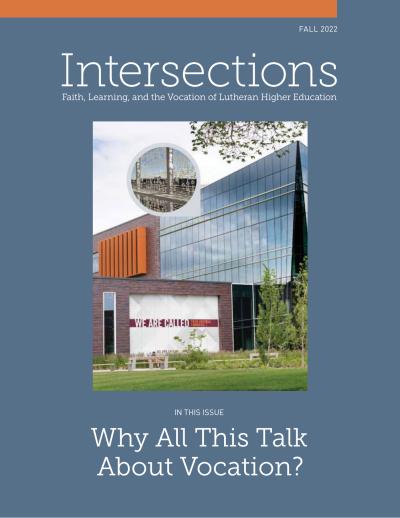
From the Editor: Why All This Talk About Vocation?
Colleen Windham-Hughes
Windham-Hughes introduces the Fall 2022 issue built around Mark Wilhelm’s keynote “Why all this talk about vocation?” and previews five panel responses, two first-time conference reflections, and companion pieces on Womanist theology — framing vocation as a call not to privilege but to constructive and corrective work that undoes unjust systems.
-
Article
Why All This Talk About Understanding the Mission of NECU Member Institutions as a Vocation?
Mark Wilhelm
In his valedictory keynote, retiring NECU Executive Director Mark Wilhelm argues that Lutheran higher education is, properly understood, vocation-based education — outlining four core practices recovered over the past fifty years and naming the constructive and corrective work still to be done, including a fuller embrace of DEIJ and of the diverse vocations of NECU’s 27 institutions.
-
Response
Response to Mark Wilhelm: Vocation, Mission and Privilege
Marit Trelstad
Trelstad affirms Wilhelm’s claim that vocation is the foundational shared mission of Lutheran higher education rather than one program among many, and presses the critique that calls to “vocational reflection” can mask privilege — arguing that an intersectional lens shows vocational discernment is in fact a matter of survival and flourishing for students from marginalized communities.
-
Response
Response to Mark Wilhelm: DEI, Great; DWS (Dismantling White Supremacy), Even Better
Vic Thasiah
Thasiah argues that if Lutheran colleges and universities want to live out their commitment to the flourishing of all, DEI is good but DWS — dismantling white supremacy — is even better, and offers three Lutheran sensibilities (suspicion of self-righteousness, the decolonial shockwave of the cross, and critical thinking that can still register awe) that can make DWS a core practice of higher education.
-
Response
Response to Mark Wilhelm: Distinguishing Between Identity and Vocation
Andrew Tucker
Tucker proposes that NECU’s next most faithful step is to faithfully and effectively differentiate vocations and identities — arguing that identity is who you are, vocation is what you do, and that recognizing the plurality of both helps Lutheran institutions name which work is theirs to take up and which is good work that belongs to someone else.
-
Response
Response to Mark Wilhelm: Vocation—Wide Perspective Questions
Mary-Paula Cancienne
Cancienne, drawing on Iain McGilchrist, asks whether higher education has prioritized micro lenses at the expense of the macro view, and invites educators to hold the drama of individual vocation stories within a wider plot that includes James Webb Telescope wonder, climate grief, the long shadow of enslavement, and the resilience of native populations.
-
Response
Response to Mark Wilhelm: Adopting the Framework of ‘Because’ and ‘Therefore’
Paul C. Pribbenow
Pribbenow describes how Augsburg University responded to its dramatic demographic transformation (from 18% to nearly 70% BIPOC entering students over sixteen years) by adopting an institutional vocational statement and a simple “because/therefore” framework for translating particular Lutheran theological convictions into institutional programs, policies, and practices.
-
Article
Work Works
Julius Crump
Crump argues that in an era of class-stratified careerism and the “ruins of neoliberalism,” commencement-speech rhetoric about heroic vocation will not resuscitate vocation — instead, professors embodying vulnerability, extemporaneity, and contemporaneity in the classroom can show students that consistent work, embodied as service to others, is itself worthy.
-
Institutional Focus
LibGuide: Introduction to Womanist Theology
Elli Cucksey
Cucksey, the head librarian at Trinity Lutheran Seminary, recounts how Beverly Wallace’s Introduction to Womanist Theology class — the first offering of the ELCA Seminaries’ Womanist Theology Initiative — led her to build a publicly available LibGuide that amplifies Black women’s voices and gathers the resources of the course for future students.
-
Article
Doing the Work One’s Soul Must Have
Beverly Wallace, Yolanda M. Norton
Norton and Wallace describe the Womanist Experiential Learning Initiative — including the Beyoncé Mass, study-abroad partnerships in Portugal, Brazil, and Ghana, and the Black Girl Magic Academy for teenage girls — as a way of centering Black women’s voices in theological education and doing, as Katie Geneva Cannon put it, “the work…that one’s soul must have.”
-
 Editorial
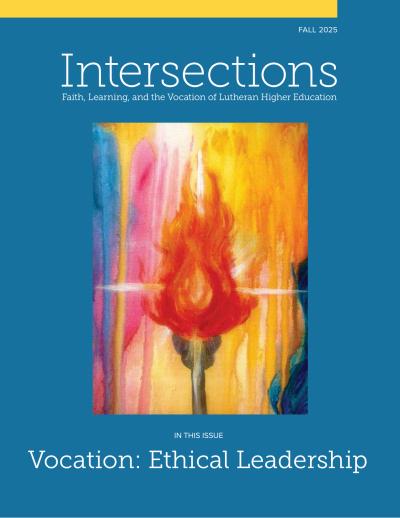
From the Editor
Colleen Windham-Hughes
No. 62 · Fall 2025
5 min audio
Windham-Hughes plays on the shared Latin root of “education” and “seduction” (ducere, to lead) to warn against the No-saying seductions of giving up or condemnation, and to call educators to the riskier Yes of showing up to build third-space communities of truth-telling and hope.
-
 Response
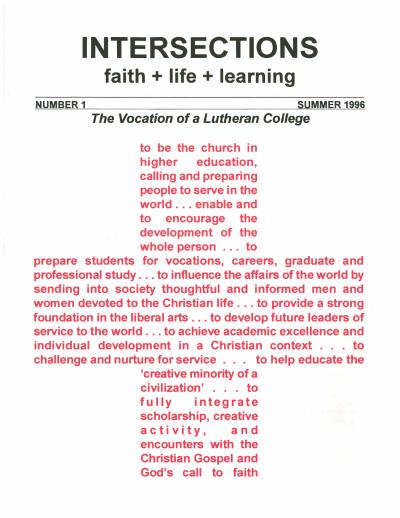
Lutheran Colleges: The Context for the Conversation
Thomas Templeton Taylor
No. 1 · Summer 1996
Taylor of Wittenberg engages Schwehn’s first argument by sketching the institutional predicament of Lutheran colleges through three converging forces: the collapse of differences among old-line Protestant groups in the wake of ELCA-era ecumenism (with Robert Wuthnow); the secularization of American higher education described by George Marsden; and the post-war decline of liberal arts colleges under pressure to professionalize. The result is an “in-between stage” in which Lutheran colleges retain rhetoric without substance. Following Richard John Neuhaus’s “Eleven Theses,” he argues that, for a time at least, Lutheran colleges’ institutional affiliations must remain actively Lutheran if they are to remain in any sense Christian.
-
 Editorial
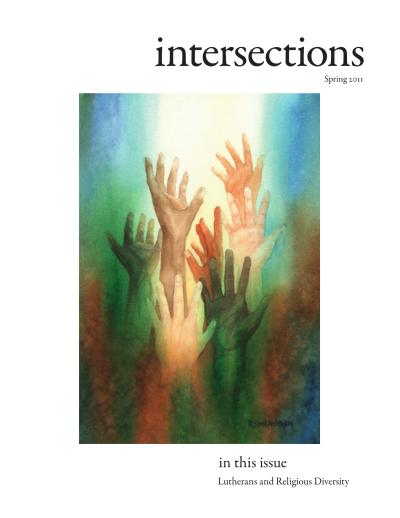
From the Editor
Robert D. Haak
No. 33 · Spring 2011
Haak frames the issue by asking how Lutheran colleges and universities understand the changing landscape of religious identification on their campuses, and argues that Lutheran theological commitments — including the work of the Spirit and the Incarnation — call institutions to create places where the voice of “the other” is heard and valued.
-
 Article
Community-Building On Campus and Beyond
Krista E. Hughes
No. 54 · Fall 2021
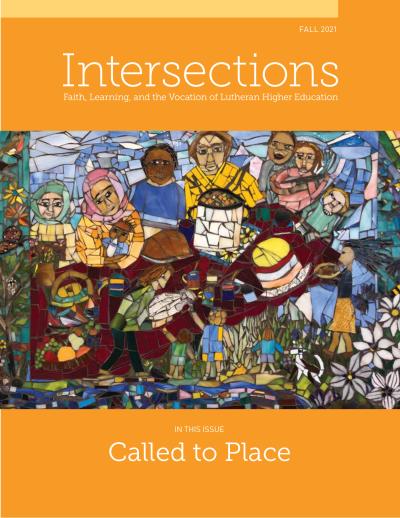
Hughes describes Newberry College’s effort to build a “culture of community” that mirrors South Carolina’s demographics while reckoning with the institution’s founding ties to slavery — and names the challenges and promising city-college collaborations that shape this ongoing work.
-
 Book Review
Richard T. Hughes: How Christian Faith Can Sustain the Life of the Mind
Tom Christenson
No. 13 · Winter 2002
Christenson reviews Richard Hughes’s How Christian Faith Can Sustain the Life of the Mind (Eerdmans, 2001), which argues, drawing on Tillich’s notion of “religion breaking through its own particularity,” that faith is a means to the open pursuit of truth rather than its enemy. Christenson reads the argument as a natural fit for a Lutheran tradition of semper reformanda but notes Luther’s own dogmatism toward fellow reformers, and wishes Hughes had drawn a sharper line between an absolute truth that relativizes all human truths and a postmodern abandonment of truth altogether. The book was the most-cited title at the November meeting of North American Lutheran academic officers.
-
 Editorial
The Vocation of a Lutheran College: Some Transitional Thoughts
James M. Unglaube
No. 4 · Winter 1998
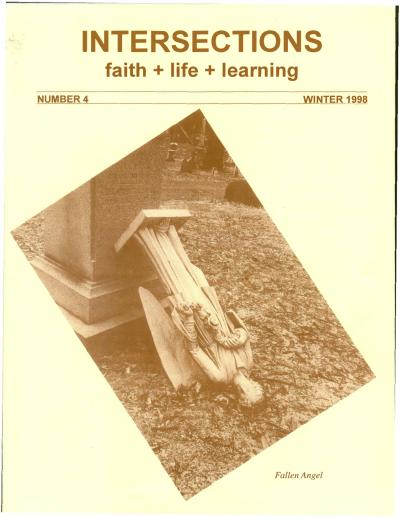
Unglaube offers final reflections on thirty years in Lutheran higher education as he leaves the ELCA Division for Higher Education and Schools to join Carthage College, his alma mater. He recalls colleague Richard Solberg’s influence, the closing of Upsala College in 1995, the Higher Education and Namibia program shared with Naomi Linnell, the growth of endowments from $70 million to $1 billion in 25 years, and the Vocation of a Lutheran College project he credits Paul Dovre with inspiring. He likens the twenty-eight ELCA colleges to flowers on a rose bush—same Lutheran tradition, each blossom different—requiring constant nurture if the partnership between church and college is to thrive.