Journey Toward Pluralism: Reimagining Lutheran Identity in a Changing World
Intersections No. 40 · Fall 2014
Who are we as an institution? Who do we want to become? What does it mean to be a Christian college when our students, faculty, and staff are atheist, “nones,” Muslims, Christians, Baha’is, and Jews, among others? These questions pepper the pressing conversations regarding mission and identity happening all across the United States, especially in church-related institutions such as ELCA colleges and universities. As one result of wrestling with these questions, Concordia College in 2011 founded the Forum on Faith and Life, which takes as its mission “to foster a deeper and more compassionate understanding of one another across traditional boundaries” by creating “opportunities for genuine encounter with the intra-faith and interfaith neighbor.” Hired to help establish and direct this interfaith resource center, I was overjoyed to be a part of a pioneering initiative that so clearly took seriously the reformation claim that the church—and its colleges and universities—must live semper reformanda, that is, always being reformed in light of a changing world and the ever-changing needs of the world’s people. This essay will share crucial insights gleaned and practical steps taken by Concordia College thus far on our journey toward religious pluralism, in the hopes that our learning might prove illuminative for institutions on a similar trajectory. I begin with two anecdotes.
First: It is August, 2012, and Dr. Eboo Patel, founder and president of Interfaith Youth Core and the first Forum on Faith and Life guest speaker, has just given the keynote at Concordia’s fall convocation. A mother whose daughter is considering a religion major sits in my office and muses, “I don’t get it. Why would a Lutheran Christian school have a Muslim convocation speaker?” Her tone is curious, not confrontational. It’s not the first time this question will be asked, nor will it be the last. I ponder: Are we, as a community, prepared to answer this together in an articulate, thoughtful, informed, and theologically-grounded way?
Second: It is January, 2013, and Concordia is offering for the first time its new course on interfaith studies entitled Faith in Dialogue: Interfaith Leadership. My students and I visit various sites of worship and also invite community members from diverse faith traditions to speak to our campus. My friend Fauzia, a member of the local mosque, comes to our class and shares her faith journey. After class, Fauzia comes up to me with tears glistening her eyes and says, “Because I am Muslim and Concordia is Christian, I never believed I would be welcome here. I can’t tell you what today meant to me.” I am left wondering: How can our college be more intentional about articulating what it means to us to be a Christian college in a religiously pluralistic world? How can we expect people to know they belong unless we tell them so?
Strategies for Loyalty and Reverence
Diana Eck, Director of Harvard’s Pluralism Project, explains that diversity is a fact, while pluralism—diverse religious folks coming together and cooperating toward a common good—is an achievement (Eck). Concordia College has publicly committed to working toward achieving pluralism. Our engagement with interfaith work is a clear expression of this desire to reimagine what a Lutheran institutional identity might mean in a world where even the once predominantly Lutheran Fargo-Moorhead area now has over 5000 Muslims, numerous synagogues, and thriving Baha’i and Buddhist communities. As a college, we aim to avoid what I identify as the two extreme pitfalls of the institutional identity-crisis continuum. At one extreme, we are not interested in eschewing who we are, as if heritage and rootedness is a source of shame (“We were once a Lutheran school, but that doesn’t mean anything to us now”). At the other extreme, we have no interest in defining our identity in negative or exclusivist terms—in defining ourselves by who we are not or by who is not welcome or included (“We are not a college that hires only Lutheran faculty, teaches exclusively Lutheran students, or seeks to convert all students to Lutheranism”). Who then are we?
“Our engagement with interfaith work is a clear expression of this desire to reimagine what a Lutheran institutional identity might mean in a world where even the once predominantly Lutheran Fargo-Moorhead area now has over 5000 Muslims, numerous synagogues, and thriving Baha’i and Buddhist communities.”
Interfaith activist Rabbi Abraham Joshua Heschel once pithily explained that the challenge we face in a pluralist society is how to simultaneously sustain loyalty to our own religious tradition with a deep reverence for other people’s religious traditions. Fortunately, Lutherans are adept at what I call “simul” or both/and thinking. It was Martin Luther who paved the path to resist the either/or mold with his designation of human beings as simul justus et peccator (simultaneously righteous and sinner). What specific steps, then, can a Lutheran institution take in order to lay the tracks toward pluralism’s simul challenge of loyalty and reverence? Three concrete strategies have greatly helped Concordia College and might prove useful to other institutions.
Assess the Campus Climate
First, we forged a productive partnership with Interfaith Youth Core, which recommended we perform an initial baseline assessment of our campus religious climate. As one of 25 schools participating in the Campus Religious and Spiritual Climate Survey national pilot, Concordia discovered numerous unknown strengths as well as areas for growth. We discovered to our delight, for example, that our students place an incredibly high value on learning about diverse religious traditions, with 99 percent of students reporting a medium-to-high pluralism orientation. But we also discovered that not all of our students saw our campus climate as hospitable, with 38 percent of secular and non-religious students reporting that they felt coercion or a lack of acceptance toward their beliefs. This latter data point helped our school establish its first-ever secular student organization, an organization that had always been denied official recognition in the past because it was understood to be at odds with our school’s Lutheran identity. Lessons learned? Don’t fear assessment. Courageous assessment is essential to the reformation tradition of semper reformanda, which Martin Luther helped to establish in the sixteenth century. We cannot know what areas in our community life might be in need of reform until we intentionally ask our community members this question. Assessment is akin to using a GPS. As any GPS user knows, heading anywhere new requires an accurate understanding of where we now stand.
Invite Many to Participate
Second, Concordia established an Interfaith Scholars program and a President’s Interfaith Advisory Council. The Interfaith Scholars are students who receive a fellowship to serve as liaisons between Fargo-Moorhead’s religious communities and the college and engage in interfaith studies research. Concordia’s Interfaith Scholars have presented their scholarship at national venues including the National Council on Undergraduate Research. The 22 member President’s Interfaith Advisory Council (PIAC) includes interdisciplinary faculty, staff, students, and administrators from across the institution who serve as an advisory board to the president and campus on all matters related to interfaith engagement. One faculty member said he would love to be on the council, but then confessed, “I’m an atheist, so I don’t think you want me.” I replied, “That’s exactly why you need to be on it. Your voice needs to be heard.” One of our advancement officers on PIAC became such an articulate advocate for interfaith work that she brought in the college’s first gift earmarked for the Interfaith Scholars program. She confided that Concordia’s journey toward pluralism allowed her to build relationships with alumni who felt alienated by a narrower understanding of our Lutheran heritage. Additionally, several members of PIAC were recently awarded a competitive grant from the Teagle Foundation to establish an interdisciplinary interfaith studies minor. Lessons learned? Be intentional about engaging members from all sectors of your community in religious pluralism conversations and efforts. Many old wounds might be healed and resources unearthed by an explicit invitation to belonging.
Message the Reasons Why
A third and extraordinarily constructive step taken on our journey toward pluralism was the articulation of a succinct thoughtful answer to the question raised in the above anecdotes—“Why does a Lutheran college commit itself to interfaith cooperation, dialogue, and service?” At Concordia, we knew our Better Together Interfaith Alliance students were doing amazing interfaith service projects and winning national awards; we knew our president listed interfaith engagement as a priority in the 5-year strategic plan; we knew that our Office of Ministry had an innovative and well-attended Interfaith Harmony week. We knew that these values and activities somehow expressed who Concordia is in the twenty-first century, but we still had not, in unison and in relation to our mission and Lutheran tradition, answered the simple question of the inquisitive parent in my office: Why?
“Consistent messaging really matters, because if you do not know as a community who you are and articulate why you do the things you do, tragic misperceptions fill the gaps.”
While some of us across campus had our own individual answers to this query, any business major could easily have diagnosed our woeful lack of consistent messaging. And while some academics—including myself at times—may frown on “messaging” as the for-profit concern of corporations and not colleges, my conversation with Fauzia taught me that consistent messaging really matters, because if you do not know as a community who you are and articulate why you do the things you do, tragic misperceptions fill the gaps the same way that weeds grow in your lawn precisely in those empty spaces where you fail to sufficiently water or feed the grass. This is especially true in the dichotomous, polarized, us-vs.-them culture of our day, in which it is virtually assumed that identity is a polarizing and exclusivist force.
In 1991 in a social statement on ecumenism, the ELCA intentionally disallowed polarization by explicitly stating its relationship to other Christian traditions in this manner: “It is a communion where diversities contribute to fullness and are no longer barriers to unity…The diversities are reconciled and transformed into a legitimate and indispensable multiformity within the one body” (ELCA 4) While the ELCA does not yet have a social statement on interfaith relations, I believe that a key principle—reconciled diversity—can be extracted from this statement on intra-faith relations and applied to interfaith relationships. When I once asked ELCA former Presiding Bishop Mark Hanson about the ELCA’s relationship to interfaith work, he eloquently responded, “We are called to be stewards of unity within diversity in a culture which confuses unity with uniformity” (Hanson). How shall we respond to diversity? The ELCA’s answer strikes a chord similar to Eck’s: Embrace, not erase, diversity; seek reconciliation in diversity’s midst.
Because Lutheran, Interfaith
In keeping with these principles, last year Concordia’s PIAC decided to construct an official college statement on interfaith engagement and pluralism. After all the wordsmithing, focus groups, and countless meetings, the end result was a sentence we cherish for its connections both to our specific college mission and to the ELCA’s values:
Concordia College practices interfaith cooperation because of its Lutheran dedication to prepare thoughtful and informed global citizens who foster wholeness and hope, build peace through understanding, and serve the world together.
We were delighted to discover not only that any group of people in an academic setting could unanimously agree to a one-sentence answer to any question (miraculous!), but also that the process of creating the statement evoked some fascinating (and long overdue) conversations. None of us will ever forget the meeting wherein an extraordinarily lively yet respectful debate broke out over the subordinate clause, “because of its Lutheran dedication….” Several Christian (Lutheran and other Protestant) members of the group argued for the milder subordinate conjunction “guided by,” but—perhaps contrary to expectations—an atheist student and a Muslim faculty colleague argued adamantly for the unequivocal phrasing “because of.” My Muslim colleague passionately insisted, “I want to know that there will always be a place for me here…that I belong here because this place is Lutheran, not because some folks might possibly be ‘guided’ to create a space for me…or not.” In the end, she persuaded everyone in the room. No one has ever thanked me before or since for facilitating a meeting, but that was a meeting for which people openly expressed gratitude. We all sensed that we were part of a conversation in which who we were was in the process of being revealed to us. Lesson learned? The process of creating a pluralism statement for your institution is as informative and necessary as the actual statement itself. Let the process surprise you.
“My Muslim colleague passionately insisted, ‘I want to know that there will always be a place for me here…that I belong here because this place is Lutheran.’”
Although an official statement like this can be seen as mere words, for mission-driven institutions like ours they are a point of departure, a proclamation that what lies behind the words is a community that understands genuine pluralism as an achievement and commits to the hope-driven goal of reconciled diversity. On Concordia’s journey toward pluralism, we have learned that, for institutions as well as individuals, identity results from the wondrous alchemy of continuity and change. Identity and heritage are as much about seeing who we want to become and becoming it, as they are about who we were yesterday. In the words of Eboo Patel, “We need spaces where we can each state that we are proud of where we are from and all point to the place we are going to. I fear the road is long. I rejoice that we travel together” (Patel 182).
Works Cited
Eck, Diana L. “What is Pluralism?” The Pluralsim Project, Harvard University. Accessed 1 August 2014, http://pluralism.org/pluralism/what_is_pluralism
ELCA (Evangelical Lutheran Church in America). The Vision of the Evangelical Lutheran Church in America. Accessed 1 August, 2014, http://download.elca.org/ELCA%20Resource%20Repository/The_Vision_Of_The_ELCA.pdf
Hanson, Mark. “Vocation and Reflection.” Network for Vocation in Undergraduate Education Conference. Public Lecture, California Lutheran University, Thousand Oaks, California. March 9, 2012.
Patel, Eboo. Acts of Faith: The Story of an American Muslim, the Struggle for the Soul of a Generation. Boston: Beacon, 2007.
-
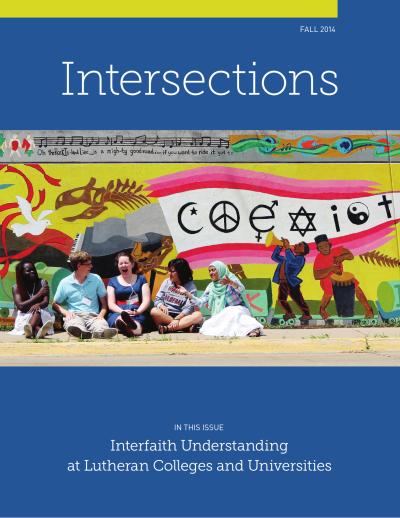 Editorial
From the Publisher
Mark Wilhelm
Wilhelm draws a parallel between the rediscovery of vocation and the rediscovery of interfaith understanding in Lutheran higher education, arguing that previously under-emphasized aspects of the Lutheran tradition point us to interfaith work and that an authentic Lutheran college or university will make interfaith understanding a feature of its mission.
-
Editorial
Guest Editorial
Kristen Glass Perez, Richard Priggie
Glass Perez and Priggie introduce the issue by recounting the campus conversations and the June 2014 Interfaith Understanding Conference at Augustana College that gave rise to it, framing the central question, “What does it mean to be Interfaith at a Lutheran College?,” as a living example of the praxis of being a Lutheran college in the twenty-first century.
-
Article
Vocational Re-Formation for a Multi-Religious World
Elizabeth Eaton
ELCA Presiding Bishop Elizabeth Eaton frames vocational formation for a multi-religious world as one of the most significant challenges facing the church and the liberal arts today, calling ELCA colleges and universities to live into Darrell Jodock’s “third path” that is both deeply rooted and dialogical.
-
Article
Why Interfaith Understanding is Integral to the Lutheran Tradition
Jason A. Mahn
Mahn returns to the root of the Lutheran tradition — church, theology, and pedagogy — to argue that interfaith encounter is not the vanishing point of Lutheran identity but central to it, beginning with confession of Luther’s anti-Judaic legacy, working through the typology of exclusivism / inclusivism / pluralism, and showing how the kenotic Christ and the theologian of the cross open Lutherans to authentic encounter with religious others.
-
Article
What it Means to Build the Bridge: Identity and Diversity at ELCA Colleges
Eboo Patel
Through the contrasting stories of two college students — Cassie’s identity relativism and April’s soft fundamentalism — Patel diagnoses Peter Berger’s twin pathologies of modernization and argues that ELCA campuses, anchored in Bonhoeffer and the Lutheran capacity to “have faith without laying claim to certainty,” are uniquely equipped to be places where the light falls: bridges of cooperation that nurture both strong religious identity and benevolence toward others.
-
Reflection
Danya Tazyeen
Danya Tazyeen
Tazyeen, a Pakistani-American Muslim student at Augustana College, reads Qur’an 49:13 — that God made us into peoples and tribes “that you may know one another” — as a charge to break down fear with open dialogue and to see one another as flawed and relatable fellow human beings.
-
Article
Building on a Firm Foundation: ELCA Inter-Religious Relations
Kathryn M. Lohre
Lohre traces the ELCA’s twenty-year arc of inter-religious work — from the 1994 Declaration to the Jewish Community and the Lutheran-Jewish Consultative Panel, through the post-9/11 Lutheran-Muslim Panel and the Shoulder to Shoulder Campaign, to fledgling dialogue with Sikhs and the dharmic traditions — and frames Lutheran inter-religious engagement as the strengthening, not the dilution, of Lutheran vocation.
-
Article
Building an Interfaith Bridge
Belle Michael
Drawing on the holiday of Shavuot, the Book of Ruth, and Martin Buber’s I-Thou, Rabbi Belle Michael picks up Patel’s bridge metaphor and identifies three building blocks for it: experiences with people of different ethnic and religious groups, genuine and long-lasting relationships, and the holy curiosity to ask the questions we are otherwise afraid to ask.
-
Reflection
Gifty Arthur
Gifty Arthur
Reading John 10:3 as a Ghanaian Christian student at Luther College, Arthur reflects on how Luther’s Journey Conversations have deepened her own spirituality precisely by giving room for students to share the personal experiences and beliefs at the center of their own traditions.
-
Reflection
David Kamins
David Kamins
Kamins, a Jewish student at Muhlenberg College, reads Rabbi Joseph Soloveitchik’s The Lonely Man of Faith alongside his own journey at the Interfaith Understanding conference on the eve of Shavuot, finding in the dual figures of Adam I and Adam II a way to remain firmly grounded in his faith community while going out to learn from those around him.
-
Article
What's in a Name?
Matthew J. Marohl
St. Olaf College Pastor Matt Marohl tells the story of designing The Undercroft’s prayer and meditation room with a campus meditation group whose members began as “Matt” and ended — as their mutual respect grew — calling him “Pastor Matt,” a counterintuitive movement toward a more formal address that signals what intentional Lutheran-Christian hospitality looks like in practice.
-
Reflection
Annie Schone
Annie Schone
Schone, raised in a small conservative Central Illinois congregation, recounts how Augustana’s Interfaith Understanding group and Interfaith Youth Core gave her the first chance to befriend Muslim, Unitarian Universalist, and atheist peers, and how she hopes to bring the joy of those friendships back to her home church through the power of storytelling.
-
Article
Journey Conversations
Amy Zalik Larson, Sheila Radford-Hill
Larson and Radford-Hill describe Luther College’s Journey Conversations Project, a four-phase contemplative practice — quiet, listen, speak, respond — rooted in the Lutheran call to be true to one’s own faith while welcoming all faiths or none, and illustrate its fruit through faith journey stories from Luther students Sukeji Mikaya (South Sudan), Habibullah Rezai (Afghanistan), and Gifty Arthur (Ghana).
-
Reflection
Tom Natalini
Tom Natalini
Natalini, a Susquehanna University senior raised Lutheran, schooled Mennonite, and seasoned by a meditative encounter in India, reflects on his journey through churchgoing, philosophy, near-Jewish conversion, and Buddhist practice to a stance he calls patience — neither Christian, Jew, Buddhist, seeker, nor “none.”
-
Article
Well, Well…Plumbing Our Depths, Telling Our Stories
Ann Boaden
Beginning with a college visit that turned into a grieving mother’s confidence about her daughter’s last moments, Boaden uses John 4’s well of living water to argue that an interfaith education worthy of the name requires Lutherans to plumb the depths of their own tradition’s wells — with rituals, stories, and seasons intact — before they can see, respectfully, into the wells from which others drink.
-
 Article
Reconciled Diversity: Reflections on our Calling to Embrace our Religious Neighbors
Jacqueline Bussie
No. 33 · Spring 2011
Bussie offers three concrete recommendations for cultivating reconciled religious diversity on Lutheran campuses — Lutheran listening and the telling of stories, engendering encounters with religious neighbors through curriculum and bridge-building events, and choosing empathy and collaboration over evangelism and creed — arguing that what students fear most in encounters with the religious “other” is the loss of their own identity and distinctiveness, and that we can show them how loyalty to one’s own tradition and reverence for different traditions can coexist.
-
 Article
Scarred Epistemologies: What a Theology of the Cross Has to Say about the Gay Marriage Ban
Jacqueline Bussie
No. 22 · Spring 2006
Responding to Robert Benne’s claim (citing Gilbert Meilander and Wolfhart Pannenberg) that one cannot defend gay marriage on biblical or confessional grounds, Bussie reads three theses of Luther’s Heidelberg Disputation alongside Moltmann’s Crucified God and Martin Luther King Jr.’s Letter from Birmingham Jail to argue that the theologia crucis—with its insistence on calling the thing what it is, its acknowledgment of scarred epistemologies and simul justus et peccator, and its refusal to domesticate God—exposes the Ohio Defense of Marriage Act as scapegoating, selective literalism, and an unjust law that the Christian conscience must reject.
-
 Editorial
From the Publisher
Arne Selbyg
No. 10 · Fall 2000
Selbyg explains that, while Intersections usually publishes papers from the annual Vocation of a Lutheran College conferences, this issue gathers presentations from a St. Olaf 125th-anniversary conference—a companion to the volume Called to Serve edited by Pamela Schwandt—because the theology and educational perspectives behind them apply to any Lutheran college and clarify what makes ELCA church-related colleges excellent institutions for students of any faith.
-
 Article
Do You Teach in a Different Manner at a Lutheran College? Unraveling the Lutheran Knot and Highlighting the Glory in the Theology of the Cross
Curtis L. Thompson
No. 16 · Winter 2003
Thompson argues that being Lutheran means having a “knot in the stomach”—a dialectical “Yes and No” tension between law and gospel, two kingdoms, Word and world—and that this knot is held together by Luther’s theology of the cross supplemented by an under-appreciated theology of glory in which God shines through human beings and creation. He then traces how the Lutheran knot shapes his teaching at Thiel College in the Religion department, the first-year team-taught “History of Western Humanities,” the second-year “Science and Our Global Heritage,” and his work as Co-Director of Thiel’s Global Institute, concluding that only such “dialectical doublespeak” leaves him with the “at-once dreaded and delightful dis-ease of the Lutheran knot.”
-
 Editorial
From the Publisher
Mark Wilhelm
No. 45 · Spring 2017
Wilhelm describes how ELCA colleges and universities have shifted the definition of Lutheran higher education away from institutional markers toward alignment with educational values drawn from the Lutheran intellectual tradition — and previews a NECU-convened faculty working group whose recommendations will go to the ELCA college presidents at their June 2017 conference on Lutheran identity.
-
 Article
Called for Life — Affirming Vocational Discernment
Richard L. Torgerson
No. 31 · Winter 2010
Torgerson introduces the “Called for Life” project, a three-year, $278,437 Lilly Endowment-funded collaboration among Luther, Augsburg, and Augustana that—in partnership with Luther Seminary’s Centered Life initiative and Wilder Research—rigorously assessed the effectiveness of campus vocation programs, examining whether students’ exposure to and understanding of calling had increased, and what program elements were most effective in shaping discernment.
-
 Article
Women Presidents in Higher Education: How They Experience Their Calling
Aimee Goldschmidt, Gary McLean, Katherine A. Tunheim
No. 42 · Fall 2015
Drawing on in-depth interviews with fifteen women college presidents and a transformative-learning-theory framework, Tunheim, McLean, and Goldschmidt trace a three-stage journey — identifying, interpreting, and pursuing the call — and ask what the language of vocation contributes to the preparation and mentoring of women leaders in higher education.
-
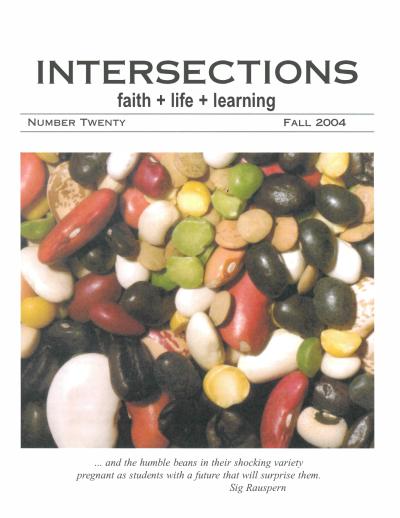 Editorial
From the Editor
Tom Christenson
No. 20 · Fall 2004
Christenson introduces an issue featuring “young and old, angry and encouraging, prophetic and hopeful” voices unified by the assumption that Christians engaged in thinking and educating will ask hard questions: how to raise concerns about militarism and the new American “imperialism,” what a Lutheran law school will say about training a new generation of attorneys, and what Lutheran colleges communicate to undergrads about vocation. Such faithful criticism, he argues, is part of who Lutheran institutions are.