From the Publisher: Reflections on the 2024 Vocational Leaders in Higher Education Conference
Intersections No. 60 · Fall 2024
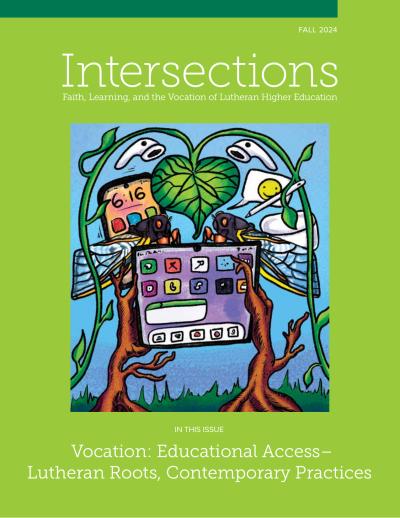
The 2024 Vocational Leaders in Higher Education (VLHE) Conference has concluded, marking yet another successful gathering of educators, administrators, and advocates committed to the cause of Lutheran higher education. This year’s theme, “Educational Access: Lutheran Roots, Contemporary Practices,” reminded us of the deep historical commitment of Lutheran education to inclusivity and accessibility. It also prompted us to reflect on how these foundational values can continue to shape our contemporary approaches to education in a rapidly evolving world.
Educational access has always been a central tenet of Lutheran higher education, stemming from Martin Luther’s revolutionary idea that both boys and girls should be educated—a radical notion in the 16th century. Today, this legacy continues as we strive to address systemic barriers and foster environments where all students, regardless of background, can thrive. The discussions and workshops at this year’s conference brought this vision into clear focus, offering both inspiration and actionable strategies to ensure that Lutheran higher education remains a beacon of opportunity for all.
As the Network of ELCA Colleges and Universities (NECU) looks toward the future, we are committed to expanding our focus by actively engaging student leaders as key partners in this work. This Fall we convened over 40 students from our network institutions who shared thoughts, concerns and ideas that will also continue to amplify NECU’s mission so that all may flourish. By continuing to convene students across the network alongside faculty and administrators, we create a more inclusive and dynamic dialogue around educational access and institutional leadership. These types of partnership will not only enrich the work of our institutions but also help foster a new generation of leaders who are equipped to continue the legacy of inclusivity and justice in (Lutheran) higher education.
The collaborative mission of NECU has always been rooted in the idea that education should serve as a force for societal good. This year’s conference affirmed that mission and provided a solid foundation for the important work that lies ahead. We are thankful for the profound messages/keynotes from every presenter at the summer conference, many who are sharing more insights with you in this volume of Intersections. We are grateful for the continued dedication of our network and look forward to the new partnerships and innovations that will emerge as we continue to grow together.
Thank you to all who participated in this transformative conference and those who will read this volume and continue to glean from the rich well of academic exploration and a faith-based connection. Your contributions help ensure that Lutheran higher education remains a source of hope, opportunity, and justice for generations to come.
-
 Editorial
From the Editor
Colleen Windham-Hughes
Windham-Hughes welcomes newcomers and seasoned colleagues to the conversation, lifts up Mary Elise Lowe’s three Lutheran “whys” for educational access, and commends Rev. Jen Rude’s “Sacred Pause” practice as a way to humanize one another and make opening access both easier and more joyful.
-
Article
Access, Accessibility, & Change: A Call for Trustworthy Leadership in Higher Education
Emma Jones
Jones surveys the converging pressures on higher education — cost, the enrollment cliff, shifting demographics, and declining public confidence — and uses Reichheld and Dunlap’s four factors of trust (transparency, capability, reliability, humanity) to call campus leaders to rebuild trustworthy leadership from the inside out.
-
Article
Creation, Justice, and Communio: Lutheran Insights Empowering Educational Access
Mary Elise Lowe
In her VLHE keynote, Lowe names three Lutheran commitments — continuing creation, neighbor justice, and communio — as the “why” that empowers ELCA colleges and universities to pursue equitable access for students often left behind by persistence and graduation gaps.
-
Article
Committed to Paradox
Caryn Riswold
Riswold lifts up paradox — saint and sinner, lord and servant, Rooted and Open — as a distinctive Lutheran root that lets institutions honor the complicated truth of who their students are and embrace the messy, ever-reforming work of access and accessibility as a theology of the cross.
-
Article
2024 VHLE Conference: "Rooting Access" Panel Talking Points
Guy Nave
Nave reads “access” across Deuteronomy 23, Ruth, Isaiah 56, Acts 10, and Matthew 15:21-28 as an ongoing biblical conversation that evolves from exclusion to ever-widening welcome — and presses ELCA institutions to shift their focus from “student readiness” to “institutional readiness.”
-
Article
Affirming, Entrusting, and Acting: A Baptismal Grounding of Affirmative Action in Lutheran Higher Education
Peter Carlson Schattauer
Schattauer draws on the Lutheran baptism liturgy — where the gathered assembly publicly affirms what it is for and is entrusted with responsibilities for justice and peace — to argue that NECU institutions create truly inclusive communities by affirming commitments, naming responsibilities, and acting in ways that embody both.
-
Reflection
Reflecting on Belonging
Melissa Woeppel
Woeppel, campus pastor at her own alma mater, wrestles with a Bethany student’s plea — “I want to feel like this is my home, like I belong” — and Mindy Makant’s reminder that we don’t choose the story of the past but do choose how we tell it forward, opening space for students from 35 faith traditions to find Lutheran institutions to be their home.
-
 Editorial
From the Publisher & Editor
Colleen Windham-Hughes, Lamont Anthony Wells
No. 63 · Spring 2026
6 min audio
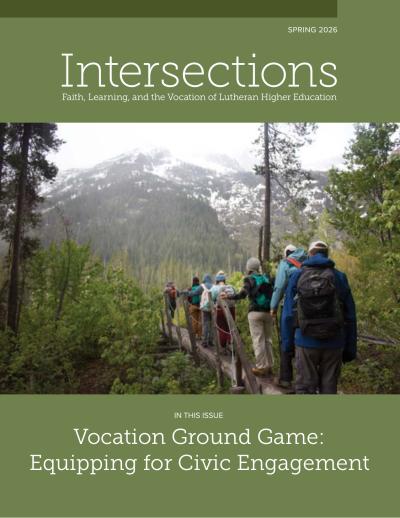
Wells and Windham-Hughes frame vocation as “ground game” — the practical, public living-out of faith through civic engagement — and introduce the issue’s focus on how Lutheran higher education equips students to repair the world.
-
 Editorial
From the Publisher
Lamont Anthony Wells
No. 62 · Fall 2025
5 min audio
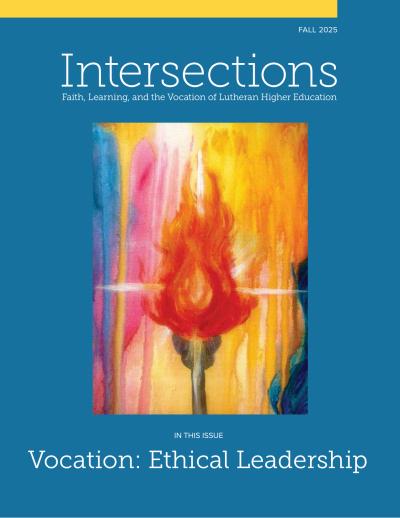
Wells frames the issue as a record of the 2025 VLHE Conference at Augsburg under the theme “Ethical Leadership in a Changing World,” arguing that vocation is never solitary but a collective, public witness of ethical formation, theology and care, flourishing and belonging, and leadership rooted in God’s grace.
-
Article
Fostering Moral Imagination and Inclusivity: The Role of Ethical Leadership in ELCA Colleges and Universities Amid Societal Challenges
Lamont Anthony Wells
No. 62 · Fall 2025
12 min audio
Wells argues that “moral imagination” — the capacity to envision ethical alternatives, empathize across difference, and respond creatively to injustice — is the heart of ethical leadership in NECU institutions, and that anchoring leadership in this principle positions Lutheran higher education to cultivate socially responsible citizens.
-
 Editorial
From the Publisher
Lamont Anthony Wells
No. 61 · Spring 2025
5 min audio
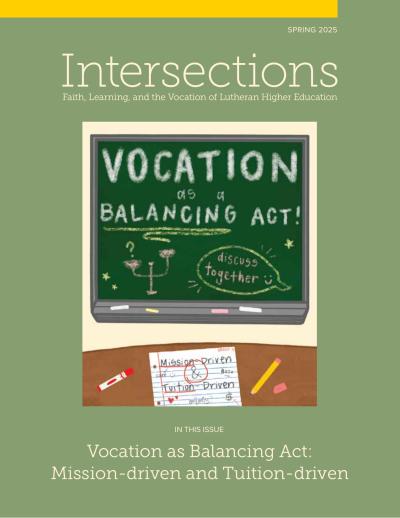
Wells introduces So That All May Belong: Lutheran Roots for Diversity, Equity, Inclusion, and Justice as a theological and institutional articulation of NECU’s commitments, and previews four accompanying essays that frame vocation as a societal responsibility rooted in justice and not solely an individual pursuit.
-
 Editorial
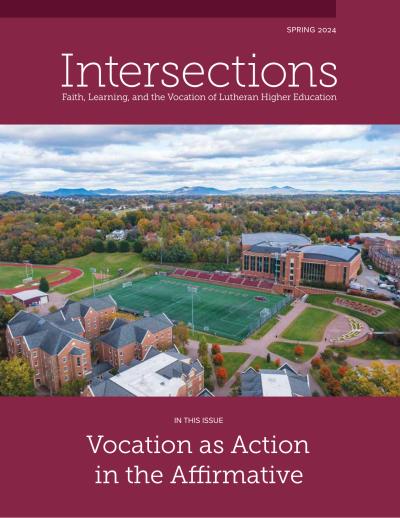
From the Publisher: Navigating Affirmative Action, DEI Policies, and Lutheran Vocational Identity
Lamont Anthony Wells
No. 59 · Spring 2024
Wells surveys the converging pressures on NECU institutions — the unsettled landscape of affirmative action, political and academic scrutiny of DEI work, and the preservation of distinctively Lutheran vocational identity — and previews how the issue draws on affirmative practices, sociological viewpoints, and theological responses to navigate a path forward.
-
 Editorial
Maintaining Our Lutheran Identity: A Source of Strength
Lamont Anthony Wells
No. 58 · Fall 2023
Wells reflects on the well-being of staff, faculty, and administration in Lutheran higher education across four pillars — rest, creativity and innovation, religious diversity and pluralism, and the preservation of Lutheran identity — and addresses the painful reality of Finlandia University’s closure as a reminder of the network’s shared mission.
-
 Reflection
On Sharing the Sacred Sauna
Rosemary Radford Ruether
No. 30 · Fall 2009
Reprinted from the National Catholic Reporter (August 1968), Ruether’s reflection from her time as a theologian on the faculty of Holden Village describes Lutheran community life in the mountains of northern Washington from a Catholic perspective — finding more catholicity in this Lutheran retreat than in many Roman Catholic communities — and culminates in a celebration of the Holden sauna as “the new sacrament, the new fellowship, the new theology.”
-
 Editorial
From the Editor
Robert D. Haak
No. 28 · Fall 2008
Haak frames the issue around “Lutheran conversations,” centered on the exchange between Robert Benne and Tom Christenson at Wartburg College’s ongoing campus conversation about what it means to be a “college of the church,” alongside Mark Wilhelm’s historical and social context, Lake Lambert’s sermon, and Bishop Mark Hanson’s short piece reprinted from The Lutheran—and points readers to the Lutheran Academy of Scholars seminar at Harvard as a place to continue the conversation.
-
 Article
The Ought
Ned Wisnefske
No. 19 · Summer 2004
Wisnefske observes that students and faculty raise contradictory objections to moral education—that students are already morally formed, and that teachers must not form them—and argues that both share the same fear of “the Ought.” He proposes that the Ought is best encountered not in front of us but behind us, nudging us, as we exercise impartiality, sympathy, and free will and discover that the persons participating in moral inquiry deserve respect; the Ought can then reform our past formations and transform our wants, so that it is never too late, or a mistake, to be shaped by it.
-
Article
How Mister Rogers’ Neighborhood Reminds Us About Work
Than Oo
No. 61 · Spring 2025
5 min audio
Drawing on a Season 15 arc of Mister Rogers’ Neighborhood in which residents redirect pool funds to fix a plumbing problem, Oo finds in Fred Rogers’ vocation-honoring storytelling a reminder that limited resources are an invitation to creativity, perseverance, and optimism in higher education.
-
 Editorial
From the Publisher
Arne Selbyg
No. 25 · Spring 2007
Selbyg notes that most papers in this issue grew out of a pan-Lutheran conference organized by the Association of Lutheran College Faculties in fall 2006 rather than the annual Vocation of a Lutheran College conference, and argues that the ELCA’s ecumenical posture—truthful but open to learning from others—is a good foundation for institutions of higher education whose faculty likewise profess while remaining subject to change based on new research and insights.
-
 Article
Renewing a Sense of Vocation at Lutheran Colleges and Universities: Insights from a Project at Valparaiso University
Marcia Bunge
No. 14 · Summer 2002
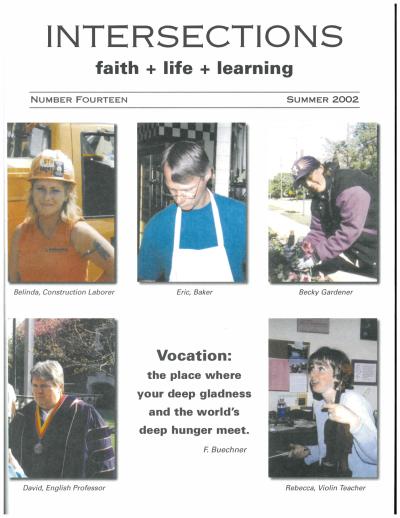
Bunge, director of the process for writing Valparaiso’s nearly two-million-dollar Lilly grant on the Theological Exploration of Vocation, argues that contemporary culture’s reduction of vocation to either paid work or self-fulfillment requires Lutheran institutions to renew attention to a rich theological concept rooted in Luther’s expansion of vocation beyond the priesthood. She outlines eight low-cost “doorways”—caring adults, prayer, worship leadership, music and the arts, service, cross-cultural experience, church camps and wilderness, study and reflection—and describes Valparaiso’s two-program structure: a Campus-Wide Program weaving vocation into Freshman Core Courses and chapel life, and a Church Vocations Program for students considering full-time ministry. She closes with four troubling questions for any institution carrying out such a grant: what faith traditions can learn from one another, how to involve parents, whether faculty and staff have space to reflect on their own vocations, and whether daily institutional practices—family policies, treatment of low-paid staff, environmental responsibility, obligations to the wider community—actually reflect a commitment to love of neighbor.