The Journey Conversations Project was founded by Dr. Diane Millis, an educator, consultant, and author of Conversation-The Sacred Art: Practicing Presence in an Age of Distraction (SkyLight Paths, 2013). The project, first launched in partnership with Luther College, provides resources and training for campuses, congregations, and community groups. At Luther, Journey Conversations is led by a team from College Ministries and the Luther Diversity Center. In partnership with other faculty and staff, the project is a major part of our interfaith work.
Each conversation moves through four phases: quiet, listen, speak, and respond. In this essay we offer some of our thinking about why we chose a contemplative conversation approach to interfaith dialogue. We also show how these four movements can deepen interfaith engagement. Finally, we provide examples of the importance of this work through the stories of two of our students.
Quiet: We begin a journey conversation by entering into silence through a centering practice. In an age marked by anxiety, relativism, polarization, and extremism, we find that it is important to quiet ourselves before beginning interfaith dialogue. We sit together in silence because this practice is part of many faith traditions and, as such, it can be shared by a diverse group.
Listen: Our time in shared silence prepares us to listen for the sacred within ourselves and with others. We practice lectio divina or reading aloud from wisdom literature (scripture, poetry, prose, hymns) from the great spiritual traditions and contemporary sources. We encourage one another through wisdom literature with what St. Benedict described as “the ears of the heart.”
Speak: Each journey conversation involves one or more participants sharing their stories of faith and their spiritual journeys. We share our stories using the first person method of theological discourse—speaking only for ourselves and not on behalf of our faith traditions. This practice helps us to articulate our particular, lived truths.
Respond: After each journey story, other participants respond to the storyteller with questions that help the speaker to reflect more deeply on what she or he has shared. These “contemplative questions” encourage the speaker to continue to explore her or his journey. This practice offers participants a way to be present to others and accompany them on their journey without seeking to correct, advise, change, or proselytize them.
These four movements—quiet, listen, speak and respond—now serve as intentions for all our interfaith work. We quiet ourselves enough to truly listen to others, even those we consider extremist, irrelevant, or uninformed. We speak from a place of deeper awareness after listening within and to others. We focus on responding to the needs of others rather than simply reacting.
“The Journey Conversations process unleashes the power of real conversation. It is harder to hate someone whose story you’ve heard first hand.”
The leaders of Journey Conversations began the project in 2009 as another way to live our Lutheran identity through interfaith work. Our task, as we see it, is to be true to our own faith while being open and welcoming to all faiths or to people with no faith at all. As Lutherans, creating this welcoming presence is a way of building peace through inclusion. We’ve discovered that being welcoming to others from different faith traditions involves listening attentively to how people’s faith experiences shape their spiritual identities in everyday life. Our understanding of how our faith traditions intersect with politics, religion, spirituality, and nation-building leads us toward the kind of interfaith dialogue that encompasses the most emphatic forms of sharing.
In Journey Conversations, the stories participants tell and the responses they receive from others of different ages, backgrounds, and life journeys bring a profound sense of hope in the prospects for peace. The Journey Conversations process unleashes the power of real conversation. It is harder to hate someone whose story you’ve heard first hand; and it’s even harder to dismiss or denigrate someone when you’ve told them your story. We see the fruits of this approach in the lives of our students. They report a greater capacity to reflect on their own lives and a greater sense of empathy towards others. As examples of the kinds of stories offered in a Journey Conversations group, we asked two of our international students to reflect on their faith journeys.
My name is Sukeji Mikaya (International Studies and Management student, class of 2017), and I come from the present day South Sudan. My country was separated from Sudan three years ago due to various reasons, including ethnic and religious conflicts. The northern part of Sudan was predominantly Muslim and the Southern region was predominantly Christian. My family was among the four million Sudanese who were displaced. My family is Christian and we chose to reside in Uganda. The small town we settled in was predominantly Muslim and I observed how my neighbors and friends practiced Islam.
During this time, I learned an important lesson about religion from my grandfather who returned from Lebanon after receiving his degree in theology. He surprised us by reading both the Bible and the Qur’an. One evening, my cousins and I were laughing about how Muslims pray when my grandfather shouted at us and asked us to stop. He was very angry at our lack of respect for others’ religious beliefs. He made us understand that we may find Islam to be different but we should remember that our Muslim neighbors could be viewing Christianity in the same way. His words and actions made the difference for me because he was a devoted Christian pastor who also read the Qur’an. Later, I took an Islamic religion class that fostered my interest in the religion. I even admired how my Muslim friends treated the Qur’an with so much respect. This knowledge did not change my beliefs as a Christian, except that it made me want to know the Bible the way my Muslim friends knew the Qur’an. My interactions with Muslims enhanced my understanding of Islam and I stopped associating the religion with all the negative things I heard.
Today, most of my friends back at home are Muslims but religion has never stood in the way of our friendship. For us to live together in peace and harmony, it is important for us to be aware of each other, listen keenly to those we are engaging with, and learn to respond rather than to react to things that we are not in agreement with. It all begins with taking the first step to create that environment of respect like my grandfather created for me.
I am Habibullah Rezai (Management, Economics, and French student, class of 2015) from Afghanistan. I would like to talk about my religious background. I am a Shia Ismaili Muslim which is a sub-sect of Islam. We are the minority of minorities in the Muslim world. There are between fifteen to twenty million Ismailis around the world. I also belong to a minority ethnic group known as Hazaras. Most of the Hazaras are Shia Muslims or the Twelver Shia and we, the Ismailis, are the minorities. When civil war broke out after the defeat of the Soviet Union, ethnic cleansing started in 1989. Diversity became a source of weakness because hatred grew among people from different religious backgrounds. The manipulation of religion was used as a tool to gain political power. For me personally, it meant hiding my religious identity when moving from one place to another. For example, when I had to pass through a Sunni community, I had to introduce myself as a Sunni and when passing through a Shia community, I had to introduce myself as Shia or Twelver Shia and not as a Shia Ismaili Muslim.
What was more difficult for us (the Shias) was the rise of Taliban in 1996. While trying to take control over northern and western Afghanistan, the Taliban committed fifteen massacres against civilians, killing thousands of people between 1996 and 2001. They thought of Hazaras as infidels and consider us as bitter enemies.
When I was leaving Afghanistan for the United States, I was told to present Afghanistan in a positive light but we Afghans cannot hide the atrocities we have committed. Of course, there was improvement after the fall of Taliban. When I returned to Kabul in 2002, I attended school with students from Sunni and Shia backgrounds, which I thought would never happen. School chairs and tables became the platform for me to engage in interfaith dialogue with other students. Our conversations were very important because we were listening and responding rather than reacting to each other as we had done during the civil war. Although religious tension still remains a problem in societies in Afghanistan, I personally believe that interfaith dialogue is very crucial for promoting peace and replacing sectarian violence.
As compelling as these stories are, we struggle, at times, to connect with international and multicultural students. In general, one of the hardest ways to engage students across their differences is to talk about faith. Students who are in the minority can be especially protective of their religious identities. Fear can shut people down so, in Journey Conversations, we decided that we would work to build an open process where everyone’s spiritual experiences could be included in the discussion. We are conscious of the need to intentionally reach out to students from diverse backgrounds. In this way, Journey Conversations creates a safe space for conversations about spiritual identities across multiple differences.
Gifty Arthur, a Luther student from Ghana studying Management and Computer Science (class of 2017), and a member of the Luther Congregation Council, expresses both her faith and the need for the welcoming presence of Journey Conversations in this way:
For me as a Christian, faith is about knowledge, belief, and behavior but, most importantly, it is about my relationship with God. This relationship reminds us of the everlasting love that God has for his people and the supernatural ways that God reveals himself through various personal encounters.
Journey Conversations offers a personal encounter with God as we engage our many differences and share the many ways that God chooses to be revealed in our lived experience.
-
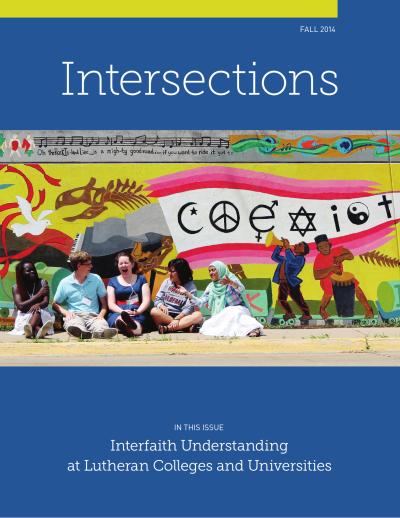 Editorial
From the Publisher
Mark Wilhelm
Wilhelm draws a parallel between the rediscovery of vocation and the rediscovery of interfaith understanding in Lutheran higher education, arguing that previously under-emphasized aspects of the Lutheran tradition point us to interfaith work and that an authentic Lutheran college or university will make interfaith understanding a feature of its mission.
-
Editorial
Guest Editorial
Kristen Glass Perez, Richard Priggie
Glass Perez and Priggie introduce the issue by recounting the campus conversations and the June 2014 Interfaith Understanding Conference at Augustana College that gave rise to it, framing the central question, “What does it mean to be Interfaith at a Lutheran College?,” as a living example of the praxis of being a Lutheran college in the twenty-first century.
-
Article
Vocational Re-Formation for a Multi-Religious World
Elizabeth Eaton
ELCA Presiding Bishop Elizabeth Eaton frames vocational formation for a multi-religious world as one of the most significant challenges facing the church and the liberal arts today, calling ELCA colleges and universities to live into Darrell Jodock’s “third path” that is both deeply rooted and dialogical.
-
Article
Why Interfaith Understanding is Integral to the Lutheran Tradition
Jason A. Mahn
Mahn returns to the root of the Lutheran tradition — church, theology, and pedagogy — to argue that interfaith encounter is not the vanishing point of Lutheran identity but central to it, beginning with confession of Luther’s anti-Judaic legacy, working through the typology of exclusivism / inclusivism / pluralism, and showing how the kenotic Christ and the theologian of the cross open Lutherans to authentic encounter with religious others.
-
Article
What it Means to Build the Bridge: Identity and Diversity at ELCA Colleges
Eboo Patel
Through the contrasting stories of two college students — Cassie’s identity relativism and April’s soft fundamentalism — Patel diagnoses Peter Berger’s twin pathologies of modernization and argues that ELCA campuses, anchored in Bonhoeffer and the Lutheran capacity to “have faith without laying claim to certainty,” are uniquely equipped to be places where the light falls: bridges of cooperation that nurture both strong religious identity and benevolence toward others.
-
Reflection
Danya Tazyeen
Danya Tazyeen
Tazyeen, a Pakistani-American Muslim student at Augustana College, reads Qur’an 49:13 — that God made us into peoples and tribes “that you may know one another” — as a charge to break down fear with open dialogue and to see one another as flawed and relatable fellow human beings.
-
Article
Building on a Firm Foundation: ELCA Inter-Religious Relations
Kathryn M. Lohre
Lohre traces the ELCA’s twenty-year arc of inter-religious work — from the 1994 Declaration to the Jewish Community and the Lutheran-Jewish Consultative Panel, through the post-9/11 Lutheran-Muslim Panel and the Shoulder to Shoulder Campaign, to fledgling dialogue with Sikhs and the dharmic traditions — and frames Lutheran inter-religious engagement as the strengthening, not the dilution, of Lutheran vocation.
-
Article
Building an Interfaith Bridge
Belle Michael
Drawing on the holiday of Shavuot, the Book of Ruth, and Martin Buber’s I-Thou, Rabbi Belle Michael picks up Patel’s bridge metaphor and identifies three building blocks for it: experiences with people of different ethnic and religious groups, genuine and long-lasting relationships, and the holy curiosity to ask the questions we are otherwise afraid to ask.
-
Reflection
Gifty Arthur
Gifty Arthur
Reading John 10:3 as a Ghanaian Christian student at Luther College, Arthur reflects on how Luther’s Journey Conversations have deepened her own spirituality precisely by giving room for students to share the personal experiences and beliefs at the center of their own traditions.
-
Article
Journey Toward Pluralism: Reimagining Lutheran Identity in a Changing World
Jacqueline Bussie
Bussie chronicles Concordia College’s Forum on Faith and Life initiative — assessing campus climate, building a President’s Interfaith Advisory Council, and drafting a one-sentence statement that Concordia practices interfaith cooperation “because of” (not “guided by”) its Lutheran identity — to argue that simul justus et peccator thinking equips Lutheran institutions to hold loyalty to tradition and reverence for others together as one piece.
-
Reflection
David Kamins
David Kamins
Kamins, a Jewish student at Muhlenberg College, reads Rabbi Joseph Soloveitchik’s The Lonely Man of Faith alongside his own journey at the Interfaith Understanding conference on the eve of Shavuot, finding in the dual figures of Adam I and Adam II a way to remain firmly grounded in his faith community while going out to learn from those around him.
-
Article
What's in a Name?
Matthew J. Marohl
St. Olaf College Pastor Matt Marohl tells the story of designing The Undercroft’s prayer and meditation room with a campus meditation group whose members began as “Matt” and ended — as their mutual respect grew — calling him “Pastor Matt,” a counterintuitive movement toward a more formal address that signals what intentional Lutheran-Christian hospitality looks like in practice.
-
Reflection
Annie Schone
Annie Schone
Schone, raised in a small conservative Central Illinois congregation, recounts how Augustana’s Interfaith Understanding group and Interfaith Youth Core gave her the first chance to befriend Muslim, Unitarian Universalist, and atheist peers, and how she hopes to bring the joy of those friendships back to her home church through the power of storytelling.
-
Reflection
Tom Natalini
Tom Natalini
Natalini, a Susquehanna University senior raised Lutheran, schooled Mennonite, and seasoned by a meditative encounter in India, reflects on his journey through churchgoing, philosophy, near-Jewish conversion, and Buddhist practice to a stance he calls patience — neither Christian, Jew, Buddhist, seeker, nor “none.”
-
Article
Well, Well…Plumbing Our Depths, Telling Our Stories
Ann Boaden
Beginning with a college visit that turned into a grieving mother’s confidence about her daughter’s last moments, Boaden uses John 4’s well of living water to argue that an interfaith education worthy of the name requires Lutherans to plumb the depths of their own tradition’s wells — with rituals, stories, and seasons intact — before they can see, respectfully, into the wells from which others drink.
-
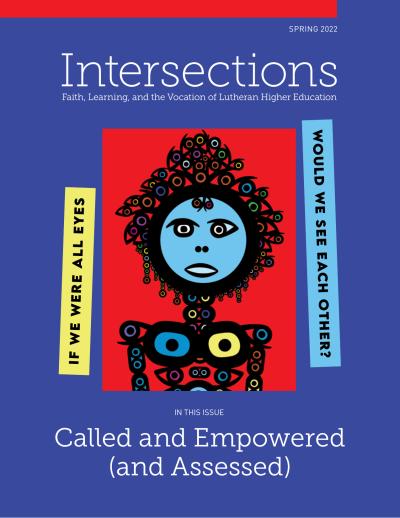 Institutional Focus
Building a Developmental Framework for Vocational Reflection at Thiel College
Brian Riddle, Greg Q. Butcher, Liza Anne Schaef
No. 55 · Spring 2022
Riddle, Schaef, and Butcher describe how a NetVUE Program Development Grant enabled Thiel College to build “the Tomcat Way” — a four-year developmental framework with personal, social, academic, and professional domains and four phases (Explore, Envision, Belong and Lead, Launch) — that now guides every aspect of the student experience.
-
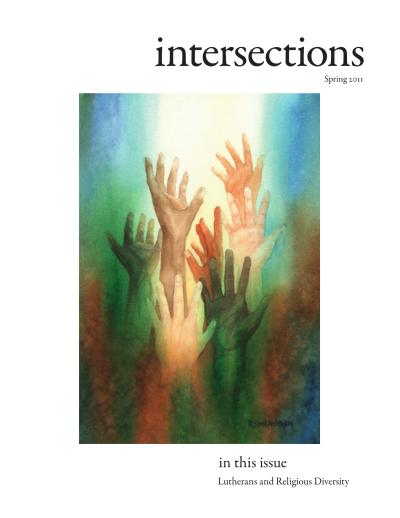 Article
The Breadth and the Depth: Dimensions of Christian-Muslim Relations at Educational Institutions of the ELCA
Mark N. Swanson
No. 33 · Spring 2011
Swanson reflects on the spatial metaphors of depth and breadth that shape Lutheran higher education and argues that the study of Islam and real conversation between Christians and Muslims can contribute to both the broadening of horizons and the deepening of faith, drawing on his experience at the Lutheran School of Theology at Chicago and pointing to hospitality as a Christian practice in which depth and breadth come together.
-
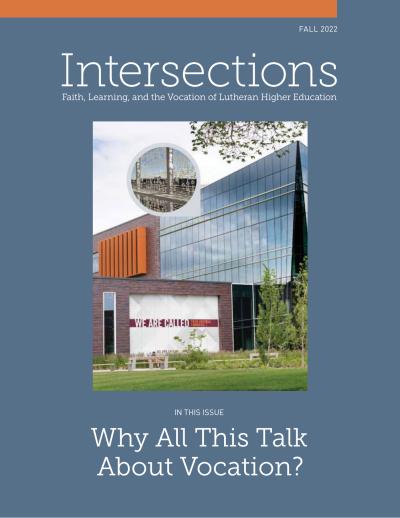 Reflection
Why All This Talk About Vocation?
Madyson Ray
No. 56 · Fall 2022
Ray, a junior at Midland University and the only student attendee at the 2022 conference, reflects on four workshops — on teaching womanist thought, on supporting student-athletes, on resistance to the word “vocation,” and on vocational reflection — and brings home concrete ideas including a women’s-history scavenger hunt and semester-long vocational reflections.
-
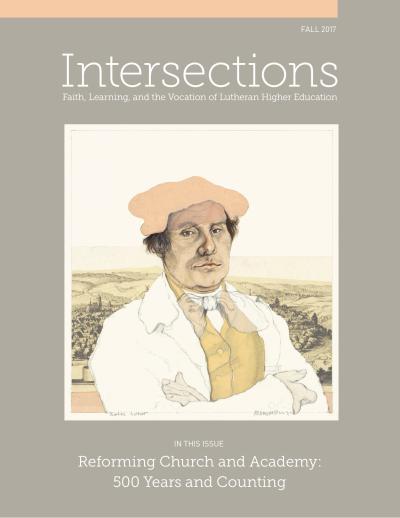 Article
Reforming Lutheran Higher Education: Ecclesiological Reflection and Theological Leadership
Brian Beckstrom
No. 46 · Fall 2017
Beckstrom diagnoses an “identity crisis” at ELCA colleges and universities rooted in inherited Enlightenment assumptions and a thin functional ecclesiology, and proposes that a Trinitarian, perichoretic understanding of God offers an ecclesiological foundation that holds together unity and diversity in a pluralistic, post-Christian context.
-
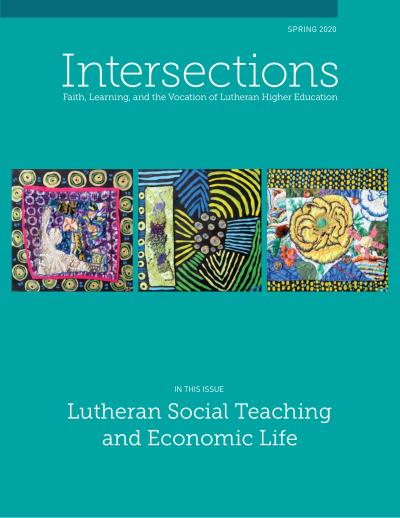 Article
ELCA Social Teaching for the Classroom?
Roger A. Willer
No. 51 · Spring 2020
Willer argues that the body of ELCA social teaching, taken as a whole, constitutes an actual social ethic — relatively comprehensive, responsibly consistent, and remarkably cogent — whose mode of responsibility ethics commends it as a classroom resource for any discipline that wrestles with moral questions.
-
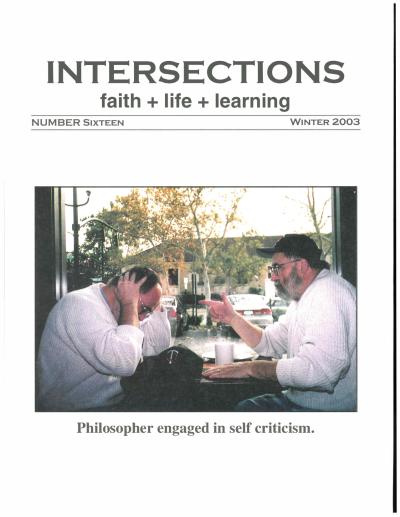 Article
Writing Toward the Night Complete: Teaching and Working at the Public, Secular Institution
Bruce Allen Heggen
No. 16 · Winter 2003
Heggen, Lutheran Campus Ministry pastor and adjunct English professor at the University of Delaware, builds on a freshman’s essay closing line—“All in all our night was complete”—to argue that even in the secular public university one can “teach hope” as a critical principle by drawing on Douglas John Hall’s Heideggerian distinction between calculative and meditative thought, the Frankfurt School’s instrumental versus substantialist reason, Luther’s theology of the cross, Parker Palmer’s “obedience to truth,” bell hooks, Lionel Basney, Shelley Shaver, and Donald Sheehan’s Frost Place “principle of compassion.” The classroom and Lutheran campus ministry together can become “communities of memory and hope” that, like the artist student’s Fourth of July, hold together danger, people getting together, explosions, and lots of fun.