The mission of California Lutheran University (Cal Lutheran) is to “educate leaders for a global society” who are committed to service and justice, and to help our students “discover and live their purpose.” Faith-based and liberal arts institutions, such as Cal Lutheran, are poised to cultivate a civic-minded ethos that embraces values and reason. As a political science faculty member, I foster a culture of civic engagement through my teaching, mentoring, service and scholarship. As an educator, I teach courses that examine phenomena which shape political life, such as Community Development, Public Policy, and Women and Politics. In these courses, students examine how public policy impacts stakeholders in all spheres of society, and they develop skills to be civically engaged. Students read original policy documents to mitigate content bias and are taught how to analyze policy by identifying real world issues, examining the causes of problems, and proposing recommendations that are feasible. By understanding the complexity of political life, students develop the skills and knowledge to be civic-minded individuals and agents of change in society. Student projects have addressed topics including maternal morbidity rates among Black women, violence against Native American women, youth activism, and generational wealth in low-income communities.
Most, if not all, students in political science pursue internships, service, or volunteer opportunities with political campaigns, local government and civic organizations, which I help them identify and secure through the personal and professional networks I cultivated while working in public policy and political campaigns. By involving students in research, I mentor students on how to use their academic skills to produce scholarship that contributes to public discourse and civic engagement. For example, my students and I have presented our research findings about the impact of the Dobbs abortion ruling at academic conferences and in the larger community, particularly during the 2022 and 2024 elections.
One of the most effective ways that my civic engagement activities and Cal Lutheran’s mission align is the meaningful collaboration I forged with the Lutheran Office of Public Policy, which is based in Sacramento. For the past two years, a delegation of Cal Lutheran students participated in Lutheran Lobby Day to advocate for legislation that supports the ELCA’s social statements and priorities in California’s proposed budget. The ELCA social statements are the denomination’s most authoritative teaching documents on major social issues. The purpose of the statements is to guide the Church’s teaching, policy advocacy, and moral deliberation. For 3 months, I prepared students by having them research the ELCA’s social statements and current issues facing California. They are trained to be policy advocates through mock policy writing and practicing oral presentations. Students work with the ELCA members to lobby legislators in the California State Assembly and Senate on legislation that aligns with the Lutheran Church’s social statements, including affordable housing, child tax credits, clean water in schools, environmental justice, and immigration reform.
Faith-based institutions like Cal Lutheran serve as incubators for students, faculty and the entire community to develop civic skills, norms, and a sense of community, which are essential to meaningful and transformative civic participation.
I am fortunate to be able to teach and produce scholarly work that cultivates knowledge and foster skills that can be applied to civic-minded activities, such as public policy, advocacy, and community activism. Faith-based institutions like Cal Lutheran serve as incubators for students, faculty and the entire community to develop civic skills, norms, and a sense of community, which are essential to meaningful and transformative civic participation. During these tumultuous political times, the ELCA social statements facilitate and strengthen our resolve at Cal Lutheran to root our civic education of students in academic analysis and the Lutheran tradition of higher education that engages both faith and reason.
-
 Editorial
From the Publisher & Editor
Colleen Windham-Hughes, Lamont Anthony Wells
6 min audio
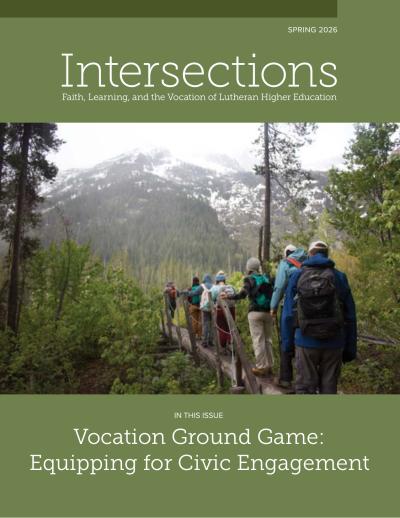
Wells and Windham-Hughes frame vocation as “ground game” — the practical, public living-out of faith through civic engagement — and introduce the issue’s focus on how Lutheran higher education equips students to repair the world.
-
Reflection
I am a Treaty Partner
Kyrie Fairbairn
7 min audio
A recent California Lutheran graduate reflects on how a course on Indigenous Rights and Practices, and a conversation with a former Chairman of the Lummi Nation, led her to claim a “treaty partner” identity and to challenge readers to learn the treaties that shape the lands they call home.
-
Article
Civic Engagement and Faith Perspectives
William O'Brochta
15 min audio
Guest editor William O’Brochta introduces the section by overviewing the ELCA’s call to civic engagement, recapping the Fall 2025 Civic Engagement and Faith Perspectives conference at Texas Lutheran University, and previewing the participant essays that follow.
-
Article
Leaning-In to the Civic Lessons of Our Namesakes
A. Lanethea Mathews-Schultz
6 min audio
Mathews-Schultz uses the civic legacy of the Muhlenberg family — from General Pete’s Revolutionary call to action to President Muhlenberg’s inaugural address on the “education of conscience” — to invite students at Muhlenberg College into a shared civic inheritance.
-
Article
Community-Based Research as Engaged Citizenship
James Paul Old
6 min audio
Old argues that genuine citizenship requires more than charitable gestures — it demands long-term, reciprocal community partnerships — and describes how Valparaiso’s Community Research and Service Center embodies that vision even amid the financial pressures threatening such programs.
-
Article
An Ecosystem of Democracy
David Thomason
6 min audio
Thomason argues that faith-based institutions should equip students not to dominate the public sphere with their convictions but to cultivate an “ecosystem of democracy” — pursuing universal values with virtue and tolerance while acknowledging humanity’s incomplete grasp of truth.
-
Article
Bringing Core Values to Life through Civic Engagement
Austin Trantham
5 min audio
Trantham shows how Saint Leo University’s Benedictine Core Values shape his civic engagement work — from advising a “Why Vote?” campaign and Constitution Day panels to engaging students in the Unify Challenge for respectful cross-institutional discourse.
-
Article
Civic Engagement, "Baylor In Deeds," and Engaged Learning
Rebecca Flavin
6 min audio
Flavin describes how Baylor’s strategic plan “Baylor in Deeds” and its Office of Engaged Learning are building civic engagement into the Arts & Sciences core curriculum, with early Global Engagement Survey data showing gains in civic efficacy and global civic responsibility.
-
Article
Fragmented in Faith: The Concerns and Hopes Found in Student Spirituality and Civic Engagement
Emma Bohmann, Monica Sitachitta
11 min audio
Two Texas Lutheran University students reflect on the cyclical pattern of low spiritual and civic engagement on their campus and argue that distinguishing Lutheran values from Lutheran practice could open space for civic engagement to become a non-optional expression of neighbor-justice for all students.
-
 Article
Learning and Teaching as an Exercise in Christian Freedom
Tom Christenson
No. 6 · Winter 1999
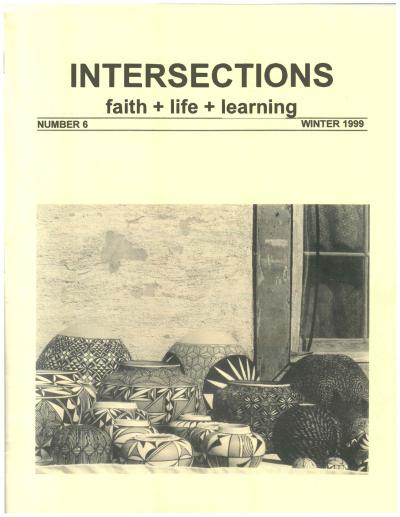
Christenson, the 1998 Wittenberg keynote, argues that what makes our institutions Lutheran is not the percentage of Lutherans served or employed, ethnic celebration, or self-conscious difference, but a theologically informed vision of the educational task framed by the linked ideas of gift, freedom, and vocation. Drawing on Joe Sittler, Wendell Berry, David Orr, Harold Kushner, John Updike, Frederick Buechner, and Luther’s On the Freedom of a Christian, he reframes the liberal arts as four “liberating arts”—critical/deconstructive, embodying/connecting, melioristic/creative, and arts of enablement and change—and closes with his mother’s “end-of-the-month soup” as an image of vocation in a particular place.
-
 Article
2024 VHLE Conference: "Rooting Access" Panel Talking Points
Guy Nave
No. 60 · Fall 2024
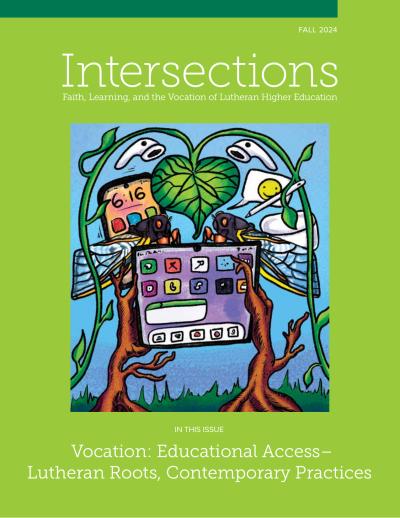
Nave reads “access” across Deuteronomy 23, Ruth, Isaiah 56, Acts 10, and Matthew 15:21-28 as an ongoing biblical conversation that evolves from exclusion to ever-widening welcome — and presses ELCA institutions to shift their focus from “student readiness” to “institutional readiness.”
-
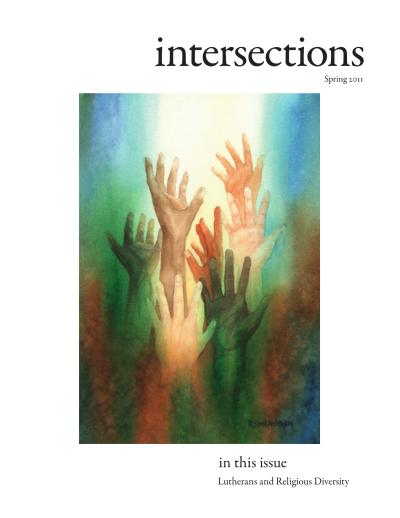 Editorial
From the Editor
Robert D. Haak
No. 33 · Spring 2011
Haak frames the issue by asking how Lutheran colleges and universities understand the changing landscape of religious identification on their campuses, and argues that Lutheran theological commitments — including the work of the Spirit and the Incarnation — call institutions to create places where the voice of “the other” is heard and valued.
-
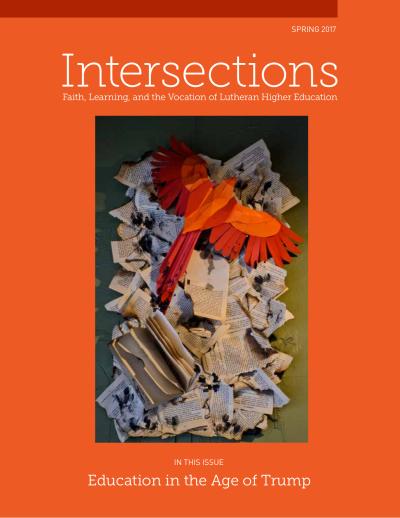 Editorial
From the Editor
Jason A. Mahn
No. 45 · Spring 2017
Mahn introduces “Education in the Age of Trump” by recounting a difficult academic year on his own campus — the Augustana “chalking” incident, a Latinx Unidos rally, and post-election conversations with marginalized students and quietly conservative Trump supporters alike — and frames the issue’s essays as careful (re)imaginings of the vocation of Lutheran higher education in an anxious political climate.
-
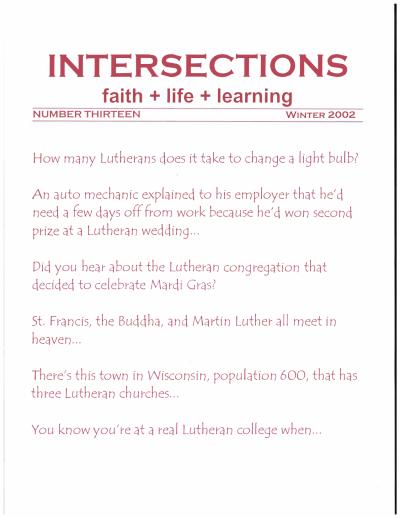 Editorial
From the Editor
Tom Christenson
No. 13 · Winter 2002
Christenson previews a varied issue—Darrell Jodock’s Bernhardson inaugural lecture, Ernie Simmons’ Valparaiso conference talk on student/parent attitudes, two South Africa travel pieces by Brian Wallace and Corin Wesner, and reviews of Richard Hughes’s and Robert Benne’s recent books—and tells the story of “the church lady from hell,” a mid-fifties returning student who condemned everyone in the class with “God and I think…,” to ask what a religious tradition without a sense of humor would look like.
-
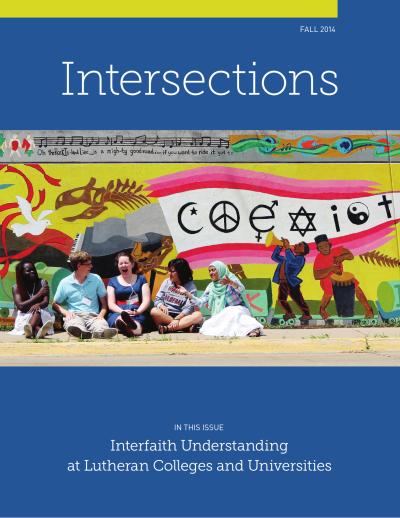 Article
Why Interfaith Understanding is Integral to the Lutheran Tradition
Jason A. Mahn
No. 40 · Fall 2014
Mahn returns to the root of the Lutheran tradition — church, theology, and pedagogy — to argue that interfaith encounter is not the vanishing point of Lutheran identity but central to it, beginning with confession of Luther’s anti-Judaic legacy, working through the typology of exclusivism / inclusivism / pluralism, and showing how the kenotic Christ and the theologian of the cross open Lutherans to authentic encounter with religious others.