The churchwide ministries of the ELCA remain vibrant. As I write this, Lutheran Disaster Relief has mobilized its effective systems to address the catastrophic effect of the earthquake in Haiti. From international relief work to support for leaders of local congregation-based ministries, ELCA churchwide ministries continue.
But it has been a difficult season. As was announced to college and university leadership last November by Stan Olson, executive director for the Vocation and Education program unit (VE), financial realities compelled the churchwide organization to implement an immediate ten-percent reduction in its budget for 2010. This followed earlier reductions taken in 2009, and further reductions may have to be taken in early 2010. In the wake of the reductions, valued colleagues within VE have had their positions eliminated and programs have been curtailed.
Among those programs is the distribution of unrestricted grants annually to colleges and universities of this church. The 2010 grant line is currently set at $275,000 less than 2009 and the amount of the reduction might exceed $600,000. Although it has been decades since direct, major support for college operating budgets has been the marker of being a college of the church, we in VE regret that such financial support can no longer be an aspect of our partnership with you. At the same time, other ministries in higher education will remain unabated. As Stan wrote in November:
I want you to know that our commitment to the mission of these schools remains very strong. Staff here want to work with you as you help students explore the many aspects of their vocations. We want to be part of your discussions about the vocation of a church-related school. Our advocacy within the ELCA for your institutions will continue. We intend to continue helping gather peer groups of your key staff. In all this, we need your counsel for wise use of the human and financial resources we have.
I will lead a conversation about our ongoing work in these arenas at the February 2010 annual meeting of ELCA college and university presidents. And, although all of us on the staff at VE will have new additional duties, Marilyn Olson and I will remain the primary contact staff for ELCA colleges and universities.
Those of you reading this issue of Intersections are not foreigners to dealing with these kinds of financial pressures. Indeed all of us are familiar with them in our private and institutional lives, given the impact of the Great Recession we are enduring. Despite the complications we all face, our commitments to our common mission remain strong, including our commitments to engaging the “other,” as the essays in this issue discuss.
-
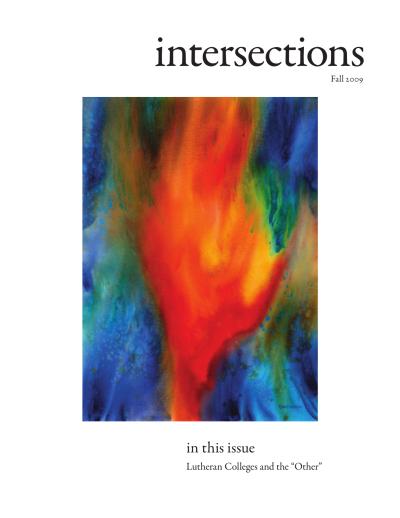 Editorial
From the Editor
Robert D. Haak
Haak frames the issue around the question of Lutheran college identity as formed in distinction from some “other,” introducing essays by Witherup on the Joint Declaration, Reuther on Holden Village, Afzaal on Christian-Muslim dialogue, Dovre on the history of Midwestern Lutheran colleges, Radecke on service-learning, and Ratke on Wilhelm Löhe — each making the claim that the “other” is an essential partner in conversation who helps us know who we are and shape who we will become.
-
Article
Bringing an Ecumenical Milestone Out of the Shadows
Ronald D. Witherup, S.S.
Witherup draws attention to the tenth anniversary of the Lutheran-Catholic “Joint Declaration on the Doctrine of Justification” signed on Reformation Day 1999, summarizes the document’s claim that justification is the work of the triune God received by grace alone through faith, surveys the remaining questions raised by Pope John Paul II and the 2006 endorsement by the World Methodist Conference, and proposes a pastoral strategy for bringing this ecumenical milestone out of the shadows in Catholic parishes.
-
Reflection
On Sharing the Sacred Sauna
Rosemary Radford Ruether
Reprinted from the National Catholic Reporter (August 1968), Ruether’s reflection from her time as a theologian on the faculty of Holden Village describes Lutheran community life in the mountains of northern Washington from a Catholic perspective — finding more catholicity in this Lutheran retreat than in many Roman Catholic communities — and culminates in a celebration of the Holden sauna as “the new sacrament, the new fellowship, the new theology.”
-
Article
Between Suspicion and Trust
Ahmed Afzaal
Afzaal argues that scholars and educators have a unique vocation to shift Christian-Muslim relations from suspicion to trust, drawing on the 2007 Muslim open letter “A Common Word,” Robert Shedinger’s Was Jesus a Muslim?, and Muhammad Iqbal’s Reconstruction of Religious Thought in Islam to argue that Christianity and Islam converge in the insight that religion is a spiritual force for social justice and human liberation — an insight obscured by the modern Western discourse of sui generis religion.
-
Article
Lutheran Colleges: Past and Prologue
Paul J. Dovre
Dovre offers a reminiscence rather than a research paper, drawing on Aristotle’s ethos, logos, and pathos to trace fifty years of change at Midwestern Lutheran colleges through the key issues of survival, respectability, faithfulness, and relationship to the church — from the dependence of the 1950s through the independence of the late twentieth century to the partnership of the 2000s — and identifies key variables (the student marketplace, faculty formation, and the identity/diversity paradox) for shaping the identity and mission of Lutheran colleges into the future.
-
Article
SCAM-ing Service-Learning and Mission Trips: A Satirical Essay
Mark Wm. Radecke
Radecke couches his research on best/worst practices in service-learning and short-term mission trips in a fictional Screwtape-style correspondence between Horatio Gumnut, CEO of “Spiritual Consultants and Mercenaries, Incorporated” (SCAM, Inc.), and Dwayne Pipe, an untenured professor seeking to sabotage a colleague’s Nicaragua mission trip — cataloging through indirection the disorienting dilemmas, commodification of the poor, exhaustion of reflective practice, and false noblesse oblige that derail such ventures, while pointing toward the genuine philoxenia, accompaniment, and structural awareness that mark a transformative experience.
-
Article
Wilhelm Löhe and Higher Education
David Ratke
Ratke recovers the educational vision of Wilhelm Löhe (1808–1872), spiritual father of Wartburg College and Wartburg Seminary, drawing on Löhe’s “Aphorismen über Schule und Schulunterricht” and other writings to argue that education is about the formation of whole persons by whole teachers in whole institutions, that all education is religious and never neutral, and that education is for eternity as well as the present — a vision in which the values of Christianity sanctify the so-called worldly means of education.
-
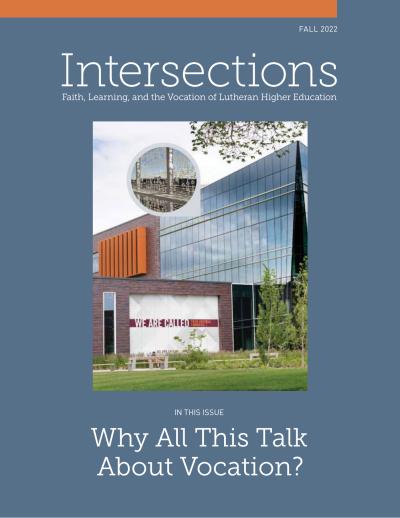 Article
Why All This Talk About Understanding the Mission of NECU Member Institutions as a Vocation?
Mark Wilhelm
No. 56 · Fall 2022
In his valedictory keynote, retiring NECU Executive Director Mark Wilhelm argues that Lutheran higher education is, properly understood, vocation-based education — outlining four core practices recovered over the past fifty years and naming the constructive and corrective work still to be done, including a fuller embrace of DEIJ and of the diverse vocations of NECU’s 27 institutions.
-
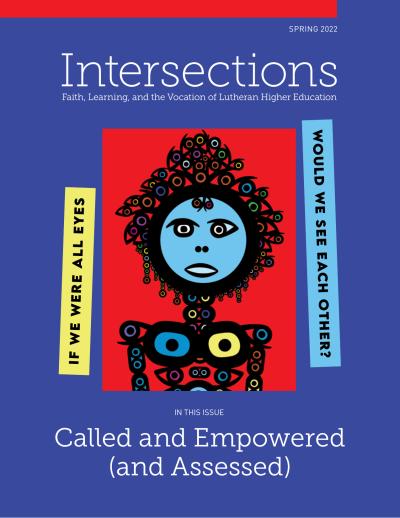 Editorial
From the Publisher
Mark Wilhelm
No. 55 · Spring 2022
Wilhelm announces his planned retirement on January 31, 2023, after serving as the founding executive director of the Network of ELCA Colleges and Universities, and gives thanks for the privilege of helping NECU articulate a shared vision for Lutheran higher education in twenty-first-century North America.
-
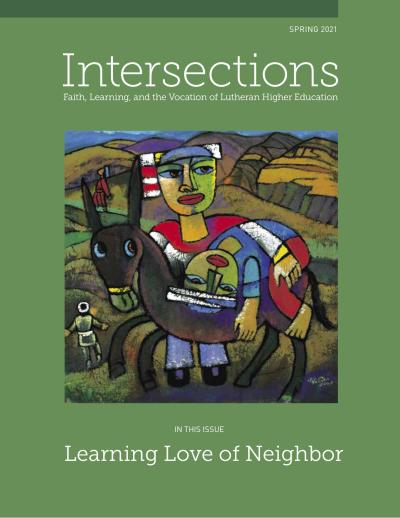 Editorial
From the Publisher
Mark Wilhelm
No. 53 · Spring 2021
Wilhelm reflects on an NPR report of teenagers’ pandemic diaries and the fraught Christian history of struggling to live out Jesus’s ethic of love, framing the issue as a record of NECU institutions working out how to act for the common good through the pandemic of 2020–2021.
-
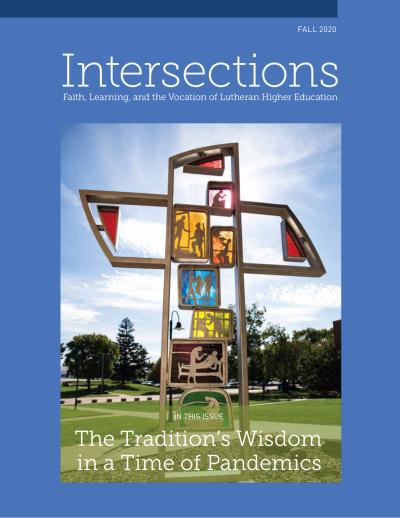 Editorial
From the Publisher
Mark Wilhelm
No. 52 · Fall 2020
Wilhelm argues that the “hackneyed” expressions of higher education — “you are not just a number,” “the college experience,” “risen to the challenge” — tell the simple truth about NECU institutions even as the Covid-19 pandemic has pushed budgets, employees, and campus life to the breaking point.
-
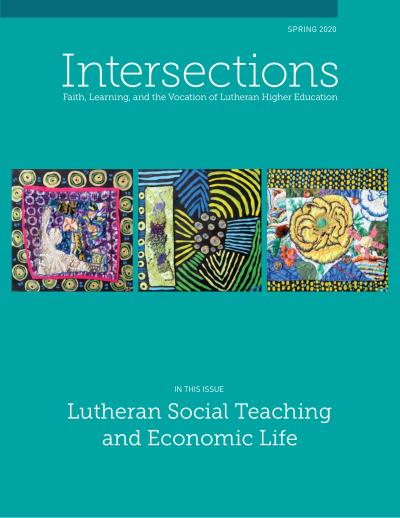 Editorial
From the Publisher
Mark Wilhelm
No. 51 · Spring 2020
Wilhelm frames the issue by tracing how Lutheran educational ideals — once a primary source of contemporary higher education — were masked in the United States, and introduces a NECU initiative that uses the case of business ethics to explore Lutheran social teaching as an academic resource.
-
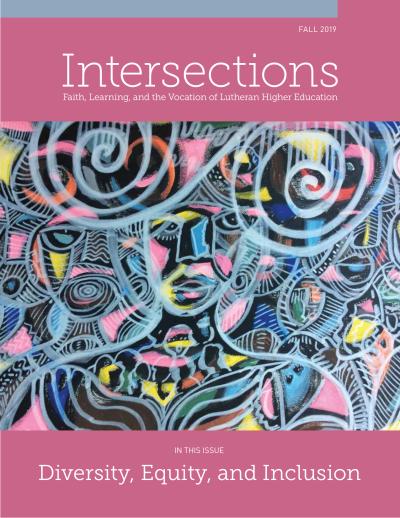 Editorial
From the Publisher
Mark Wilhelm
No. 50 · Fall 2019
Wilhelm frames the issue by noting that a federal court’s vindication of Harvard’s race-conscious admissions process is a win for higher education’s commitments to diversity, equity, and inclusion — and argues that for Lutheran higher education, the commitment to diversity is an old and foundational claim, rooted in Christianity’s openness to all and reflected in the four diverse gospels of the New Testament.
-
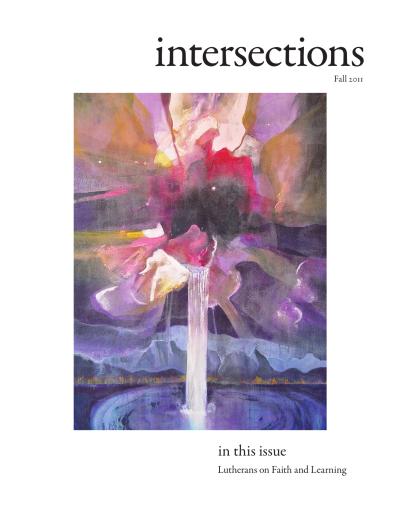 Article
A Lutheran Learning Paradigm
Paul J. Dovre
No. 34 · Fall 2011
Drawing on Hughes and Adrian’s Models of Christian Higher Education and on Ernest Simmons, Darrell Jodock, Tom Christenson, Robert Benne, and Richard Hughes, Dovre sketches a Lutheran learning paradigm shaped by four deep narratives—the biblical, the confessional, the theological, and the vocational—and traces their implications for curriculum (the study of scripture, theology, and vocation), for the religion faculty’s college-wide responsibility, and for pedagogy (moral deliberation, dialectic, paradox, the engagement of faith and the secular disciplines).
-
 Response
A Call for Creative Education
Wendy McCredie
No. 3 · Summer 1997
McCredie of Texas Lutheran responds to Reichenbach by reframing the four ideas embedded in his claim that “the entire college community should be knowledgeably committed to the college’s mission”—community, knowledge, commitment, mission—and argues that the Lutheran tradition’s unwillingness to be separate from the world should lead us to educate the public about the Lutheran tradition rather than interrogate prospective employees about their faith. She questions whether agreement on “Christian values” is possible (or even Lutheran), and reads Reichenbach’s “creative education” as the dialectical tension between gospel and law, God’s love and our human limits, that members of communities related to the Lutheran church are uniquely positioned to inhabit.
-
 Editorial
From the Editor
Jason A. Mahn
No. 41 · Spring 2015
Mahn introduces the “Called to Leadership” issue by worrying that training for leadership has become so ubiquitous in higher education as to be nearly meaningless, and recovers Luther’s sense of leadership as service — a calling to be a “slave” whose learning, power, and wisdom belong to the unlearned, the oppressed, and the foolish — as the shared mission of Lutheran colleges to train servant-leaders.
-
 Editorial
From the Publisher
Arne Selbyg
No. 16 · Winter 2003
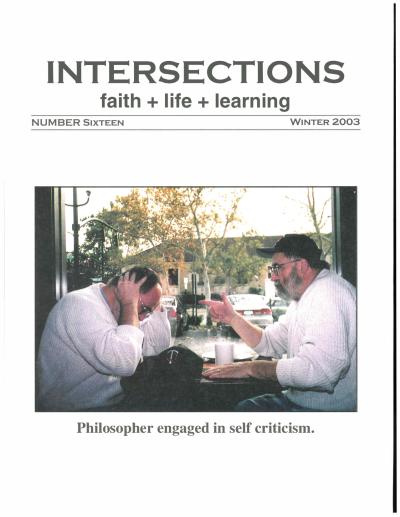
Selbyg reports that “vocation” is surely among the top three words in Intersections’s history and congratulates nine ELCA institutions—Augsburg, Augustana (Rock Island), Concordia (Moorhead), Gustavus Adolphus, Luther, Pacific Lutheran, St. Olaf, Valparaiso, and Wartburg—on receiving roughly two-million-dollar Lilly Endowment grants for the “Programs for the Theological Exploration of Vocation,” while reminding readers that for Lutherans the priesthood of all believers means callings to be accountants, nurses, police officers, and home makers count as fully as callings into ministry.
-
 Article
Civic Engagement, "Baylor In Deeds," and Engaged Learning
Rebecca Flavin
No. 63 · Spring 2026
6 min audio
Flavin describes how Baylor’s strategic plan “Baylor in Deeds” and its Office of Engaged Learning are building civic engagement into the Arts & Sciences core curriculum, with early Global Engagement Survey data showing gains in civic efficacy and global civic responsibility.
-
 Article
Where Disruption and Vocation Meet: One Path Toward Teaching Reproductive Justice in Challenging Times
Lena R. Hann
No. 57 · Spring 2023
Hann recounts how a missed math class in her first college term led her into volunteer work at a feminist abortion clinic and ultimately a career in public health, and describes how she designed and taught a Reproductive Justice immersive term course at Augustana College through the disruptions of COVID-19, George Floyd’s murder, and the Dobbs decision.