Fostering Moral Imagination and Inclusivity: The Role of Ethical Leadership in ELCA Colleges and Universities Amid Societal Challenges
Intersections No. 62 · Fall 2025
Ethical leadership occupies a central position in the operational spirit of the Network of ELCA (Evangelical Lutheran Church in America) Colleges and Universities (NECU), particularly in our search to promote moral imagination and inclusion in the midst of a variety of social challenges. “Moral imagination” is the capacity to envision ethical alternatives, empathize with others’ experiences, and creatively respond to conflict or injustice in ways that uphold human dignity and the common good (Lederach, 2005). Our institutions are largely based on the principles of faith, learning and commitment to community. We have the task and the deep responsibility to shape future leaders who not only understand but also embody the essential ethical imperatives to navigate within contemporary complexities. The challenges presented by today’s social inequalities, environmental sustainability and different cultural perspectives requires a leadership style among us that emphasizes ethical frameworks to guide decision-making processes. Drinkwater and Waghid (2024) highlights this need, which articulates that “ethical leadership can cause a transformative impact by promoting decision-making processes based on values that improve inclusion and address inequities effectively.”
As I shared in my keynote at the 2025 Vocation of Lutheran Higher Education Conference (VLHEC), the heart of ethical leadership is rooted in our moral imagination. Our ability to imagine various possibilities and perspectives to address moral dilemmas is needed now more than ever. Within the context of NECU, I propose that we encourage moral imagination to support our constituents (students, teachers and personnel) to confront conventional thinking and explore the alternative ways that prioritize ethical considerations. I believe this approach not only enriches the academic environment, but also prepares students to become individuals capable of leading efforts to instigate positive social change. For example, NECU faculty, staff and administrators play a fundamental role in the modeling of behaviors that reflect the commitment to inclusion. Each one serves in our own vocational capacity as examples and advocates in a community where each voice is recognized, and where collaborative discourse can be seen as a fundamental mechanism for collective growth and understanding.
As explored in ‘So That All May Belong’, NECU institutions have historical commitments to inclusivity and representation. Moreover, we live into an authentic commitment to difference and diversity of perspectives. Therefore, we are uniquely positioned to cultivate an atmosphere where diverse perspectives are not only welcomed but are actively sought in the configuration of politics and practice. In implementing strategies that raise the underrepresented voices, NECU leaders in our value system encourage conditions that promote collaboration and innovation. Being in community with interested parties of various origins ensures that the complexities of the social dilemmas are addressed in an informed and holistic way, which allows institutions to respond proactively instead of reactively to the challenges that may arise.
In light of the growing polarization obvious in contemporary society, the role of ethical leadership has been further amplified. Leaders in NECU institutions must face not only local narratives but also global realities that shape public discourse on issues such as race, gender, climate change, etc. This implies a conscious effort to align our institutional missions with a commitment to social justice, thus amplifying moral reasoning and ethical deliberation within academic curricula. Consequently, the challenge for our leaders becomes one of the integration of these ethical dimensions in the central operating frameworks of our institutions. Given the concepts of moral imagination and inclusive commitments, educational leaders in the network are called to create initiatives that promote critical thinking and reflexive practice, allowing students and faculty to get involved with pressing problems that transcend ideological divisions.
By anchoring ethical leadership in the principles of imagination and moral inclusion, Lutheran higher education has an opportunity to arise as a leader in the cultivation of socially responsible citizens. This requires intentional attention to our Lutheran core values and a readiness to be open to an age characterized by rapid social change and an increase in complexity. Our ability must not only imagine but also implement ethical solutions to contemporary challenges in our Lutheran distinctive mode of effective leadership within our institutions. Through such efforts, NECU can defend a vision of education that is not only transformative at the individual level, but also contributes significantly to the broader social discourse, aligning with our mission of promoting the common good.
This mission is not easy, and yet with all of the complexities of our roles as leaders in higher education it is becoming more critical to promote moral values. Liu et al. (2022) states that ethical leaders should properly navigate a landscape full of competing values and still provide a vision that galvanizes collective action. In doing so, we are being called as leaders responsible for cultivating an ethical structure and environment that enables students and faculty to engage constructively with social challenges and not simply react to crises.
The concept of moral imagination can serve as a vital tool in this educational enterprise, allowing us to see alternatives, face ethical dilemmas and develop solutions that reflect various perspectives and experiences so that all may flourish. It involves our ability to empathize with others, to recognize competing interests at stake in any ethical dilemma and to imagine a series of action possibilities that transcends conventional answers. I believe NECU is uniquely positioned to promote this mindset. We can amplify environments conducive to open dialogue and creative problem solving.
How can this be accomplished? We must organize forums, workshops, and collaborative projects among our network. We can encourage stakeholders to share their views and unique experiences, thus enriching moral discourse within each institution. Such initiatives are not new, but they illuminate the paths of moral reasoning, creating a vibrant and inclusive community, where several voices are heard and valued.
The implications and results of nourishing our moral imagination can lead to the development of institutional policies and practices that prioritize inclusion and equity. For example, programs that are based on moral imagination can seek to dismantle barriers of access for underrepresented groups, ensuring that all members of the university community can prosper. Gonçalves (2024) emphasizes the importance of challenging the status quo, suggesting that leaders who promote moral imagination contribute to a transformation of institutional culture that actively seeks to accommodate various perspectives. This may include reassessing curriculum to ensure that it reflects a multiplicity of historical voices and contexts. It also reinforces student success priorities by developing marginalized student support systems that recognize and respond to their unique challenges.
An ethically conscious leadership structure that embraces moral imagination cultivates a community that is not only responsive but also proactive in the treatment of social injustices. Leaders who incorporate these principles signal to teachers and students that ethical considerations are fundamental in decision-making processes. When leaders shape moral courage and articulate a grounded view of ethical values, they inspire their communities to exercise their own moral agency. This empowerment can manifest itself in many ways, based on initiatives led by students who defend justice and equity to the research of the faculty that interrogates systemic biases in education and beyond.
In the context of Lutheran colleges and universities, we take serious introspection and critical analysis of our purpose and impact. The experiences of students, teachers, and staff matter. Therefore, it is essential for us to create supportive environments in which each member of the community feels appreciated and accepted, which is particularly critical in an era marked by social divisions and systemic inequalities. By modeling ethical imperatives of transparency, responsibility, and integrity, we set up a culture that gives priority to inclusion as a fundamental value.
Lutheran higher education is well positioned to dismantle the barriers to inclusion by promoting fair practices that recognize and celebrate diversity. This effort requires proactive involvement with ethical dilemmas that often arise in our educational contexts. For example, decisions relating to admissions, intake practices and allocation of resources must be addressed with an ethical lens, ensuring that marginalized constituents are listened to and considered. Leaders who embrace moral imagination can include innovative solutions that expand opportunities for under-representated groups. This imaginative ability allows leaders not only to face existing disparities, but also to anticipate future challenges relating to inclusion, thus promoting an adaptive and resilient community.
In times like these, we must invite different perspectives on difficult topics, including racial injustice, gender inequality and socio-economic disparities, and by facilitating these conversations, we promote a sense of belonging and responsibility shared among the members of the community, which is essential to cultivate an inclusive environment. This shared commitment acts as a catalyst for change, as individuals will feel authorized to contribute to the continuous evolution of institutional practices. This iterative process strengthens the commitment of the institution towards inclusiveness and provides a framework to evaluate progress towards achieving these critical objectives.
As Lutheran institutions that promote an atmosphere of imagination and moral collaboration, we not only improve the global educational environment, but also fulfill our mission and common calling to prepare students to navigate and challenge the social dynamics they will meet beyond the university context. Therefore, ethical leadership is a crucial mechanism for instilling strong moral values and responsibility in future generations.
Works Cited
Gonçalves, S. (2024). Leadership, ethics, and innovative approaches in higher education. The Bloomsbury Handbook of Values and Ethical Change in Transformative Leadership in Higher Education, 144-68. https://www.torrossa.com/gs/resourceProxy?an=5869049&publisher=FZ0661#page=171
Drinkwater, M., & Waghid, Y. (2024). Considerations and Complexities of Values and Ethical Change in Transformative Leadership in Higher Education. The Bloomsbury Handbook of Values and Ethical Change in Transformative Leadership in Higher Education, 1-14. https://www.torrossa.com/gs/resourceProxy?an=5869049&publisher=FZ0661#page=28
Lederach, J. P. (2005). The Moral Imagination: The Art and Soul of Building Peace. Oxford University Press.
Liu, B. F., Shi, D., Lim, J. R., Islam, K., Edwards, A. L., & Seeger, M. (2022). When crises hit home: How US higher education leaders navigate values during uncertain times. Journal of Business Ethics, 179(2), 353-368. https://doi.org/10.1007/s10551-021-04820-5
-
 Editorial
From the Publisher
Lamont Anthony Wells
5 min audio
Wells frames the issue as a record of the 2025 VLHE Conference at Augsburg under the theme “Ethical Leadership in a Changing World,” arguing that vocation is never solitary but a collective, public witness of ethical formation, theology and care, flourishing and belonging, and leadership rooted in God’s grace.
-
Editorial
From the Editor
Colleen Windham-Hughes
5 min audio
Windham-Hughes plays on the shared Latin root of “education” and “seduction” (ducere, to lead) to warn against the No-saying seductions of giving up or condemnation, and to call educators to the riskier Yes of showing up to build third-space communities of truth-telling and hope.
-
Article
Wake Up Running! A Call to Ethical Leaders in Quest of Democratic Space
Walter Earl Fluker
44 min audio
Abridged from his VLHE keynote, Fluker draws on Habakkuk and Octavia Butler’s Parable of the Sower to call a new generation of ethical leaders to “wake up running” toward democratic futures, packing their runaway bags with love-filled-justice, grace-filled-empathy, and hope-filled-resiliency for the soul-filled work the moment requires.
-
Article
Building a Third Space in the Age of AI: A Conversation with Dr. Walter Earl Fluker
Elizabeth Kubek
11 min audio
Prompted by AI chatbots being marketed to students as a safer alternative to messy human relationships, Kubek interviews Fluker on how Howard Thurman’s vision of common consciousness, somaesthetics, and nature-rooted learning offers educators a “third space” alternative to AI’s hall of mirrors.
-
Article
Ethical Leadership: Rooted, Open, Generative, and Mindful
John Arthur Nunes
25 min audio
As he prepares to teach an Ethical Leadership First Year Seminar at California Lutheran, Nunes organizes his pedagogy around three mutually-reinforcing “turns” — inward, outward, and intellectual — grounded in Luther’s mandatum dei and larvae dei, Bonhoeffer’s estates, and Howard Thurman’s call to hear “the sound of the genuine” in oneself.
-
Article
Ethical Leadership for a Changing World: A Shared Calling from Cradle to Career
Cory Newman, Janelle Rozek Hooper
5 min audio
Hooper and Newman recount how an ELCA Barna survey on early childhood education sparked the realization at VLHE 2025 that ELCA colleges and the 1,200 Lutheran schools and early learning centers share identical challenges — and an untapped potential to form ethical leaders across the full educational continuum from cradle to career.
-
Article
What is Required of You?: Higher Education Leadership in a Moral Key
Paul C. Pribbenow
15 min audio
Drawing on Micah 6:8 and Stephen Carter’s “etiquette of democracy,” Pribbenow describes the three things Augsburg requires of every incoming student — show up, pay attention, and do the work — as a democratic social ethic that prepares students for engaged citizenship in a fractured public life.
-
Article
What Does Ethical Leadership in a Changing World Require?
Kristina Frugé
5 min audio
Frugé argues that ethical leadership in a changing — perhaps ending — world means cultivating trustworthy communities through patient, co-created relationship work, drawing on her experience stewarding the writing community behind Hungry for Hope: Letters to the Church from Young Adults.
-
Reflection
VLHE—Wednesday Morning Sacred Pause
Ann Rosendale
8 min audio
Rosendale draws on Esther 4:14 and the Lutheran practice of holding death and resurrection together — with “and” as the hardest word — to argue that the calling of Lutheran higher education for “just such a time as this” requires us to remember and name out loud that ours are places where God is at work.
-
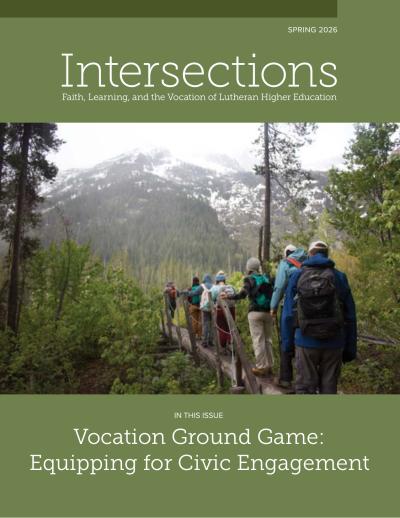 Editorial
From the Publisher & Editor
Colleen Windham-Hughes, Lamont Anthony Wells
No. 63 · Spring 2026
6 min audio
Wells and Windham-Hughes frame vocation as “ground game” — the practical, public living-out of faith through civic engagement — and introduce the issue’s focus on how Lutheran higher education equips students to repair the world.
-
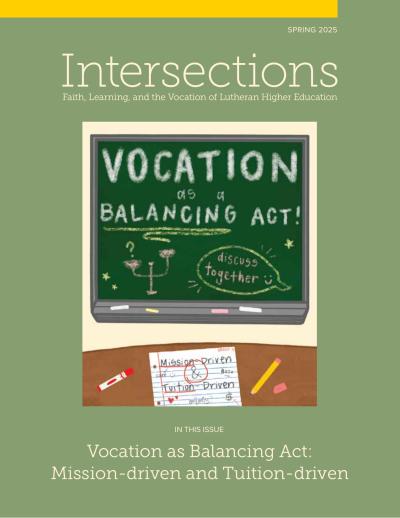 Editorial
From the Publisher
Lamont Anthony Wells
No. 61 · Spring 2025
5 min audio
Wells introduces So That All May Belong: Lutheran Roots for Diversity, Equity, Inclusion, and Justice as a theological and institutional articulation of NECU’s commitments, and previews four accompanying essays that frame vocation as a societal responsibility rooted in justice and not solely an individual pursuit.
-
 Editorial
From the Publisher: Reflections on the 2024 Vocational Leaders in Higher Education Conference
Lamont Anthony Wells
No. 60 · Fall 2024
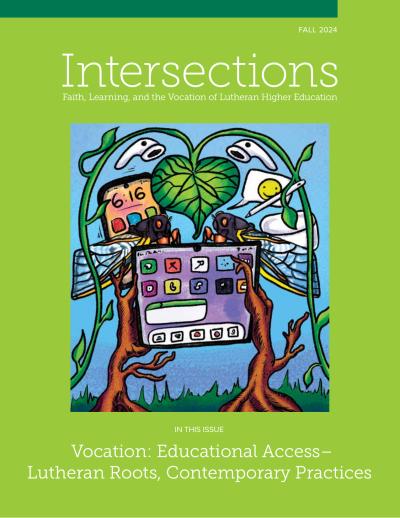
Wells reflects on the 2024 VLHE Conference theme — “Educational Access: Lutheran Roots, Contemporary Practices” — tracing today’s commitment to inclusivity back to Martin Luther’s radical 16th-century insistence that both boys and girls be educated, and previews NECU’s expanded engagement of student leaders alongside faculty and administrators.
-
 Editorial
From the Publisher: Navigating Affirmative Action, DEI Policies, and Lutheran Vocational Identity
Lamont Anthony Wells
No. 59 · Spring 2024
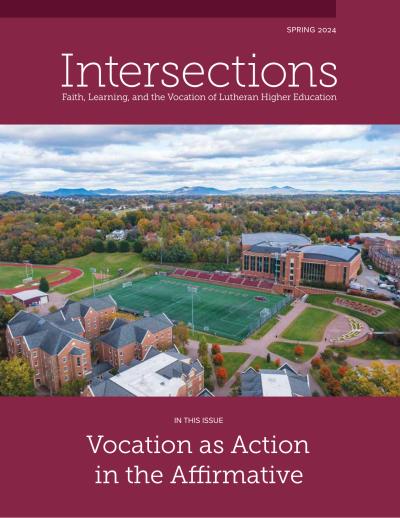
Wells surveys the converging pressures on NECU institutions — the unsettled landscape of affirmative action, political and academic scrutiny of DEI work, and the preservation of distinctively Lutheran vocational identity — and previews how the issue draws on affirmative practices, sociological viewpoints, and theological responses to navigate a path forward.
-
 Editorial
Maintaining Our Lutheran Identity: A Source of Strength
Lamont Anthony Wells
No. 58 · Fall 2023
Wells reflects on the well-being of staff, faculty, and administration in Lutheran higher education across four pillars — rest, creativity and innovation, religious diversity and pluralism, and the preservation of Lutheran identity — and addresses the painful reality of Finlandia University’s closure as a reminder of the network’s shared mission.
-
 Editorial
From the Publisher: Introduction and Invitation
Lamont Anthony Wells
No. 57 · Spring 2023
Wells introduces himself as the new Executive Director of NECU, succeeding Rev. Dr. Mark Wilhelm, and frames this Spring issue as a passionate response to the crises facing higher education amid threats to academic freedom and the well-being of educators.
-
 Article
Building an Interfaith Bridge
Belle Michael
No. 40 · Fall 2014
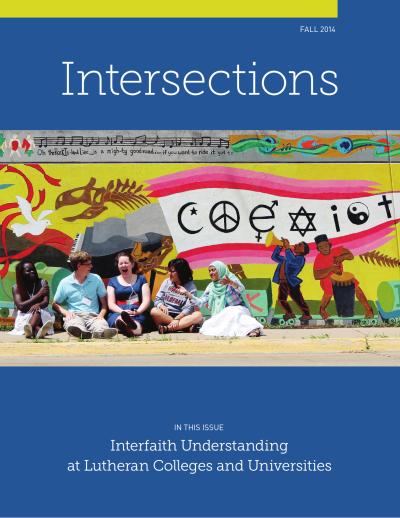
Drawing on the holiday of Shavuot, the Book of Ruth, and Martin Buber’s I-Thou, Rabbi Belle Michael picks up Patel’s bridge metaphor and identifies three building blocks for it: experiences with people of different ethnic and religious groups, genuine and long-lasting relationships, and the holy curiosity to ask the questions we are otherwise afraid to ask.
-
 Editorial
From the Editor
Tom Christenson
No. 13 · Winter 2002
Christenson previews a varied issue—Darrell Jodock’s Bernhardson inaugural lecture, Ernie Simmons’ Valparaiso conference talk on student/parent attitudes, two South Africa travel pieces by Brian Wallace and Corin Wesner, and reviews of Richard Hughes’s and Robert Benne’s recent books—and tells the story of “the church lady from hell,” a mid-fifties returning student who condemned everyone in the class with “God and I think…,” to ask what a religious tradition without a sense of humor would look like.
-
 Editorial
From the Publisher
Mark Wilhelm
No. 41 · Spring 2015
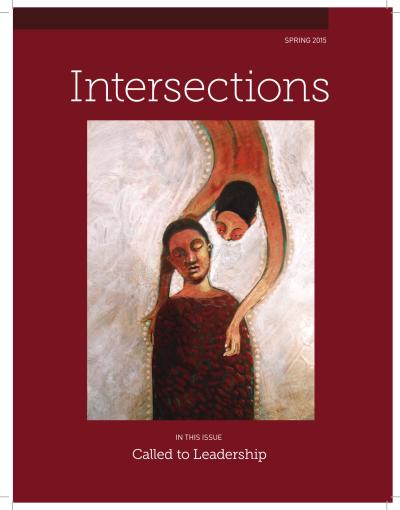
Wilhelm celebrates the leadership of ELCA colleges and universities within American higher education — from presidential service in major higher-education agencies to recognized leadership in global education and interfaith understanding — and lifts up the health of the ELCA network of schools as a church-related community that maintains shared identity while living as good citizens of the larger academy.
-
Article
What it Means to Build the Bridge: Identity and Diversity at ELCA Colleges
Eboo Patel
No. 40 · Fall 2014
Through the contrasting stories of two college students — Cassie’s identity relativism and April’s soft fundamentalism — Patel diagnoses Peter Berger’s twin pathologies of modernization and argues that ELCA campuses, anchored in Bonhoeffer and the Lutheran capacity to “have faith without laying claim to certainty,” are uniquely equipped to be places where the light falls: bridges of cooperation that nurture both strong religious identity and benevolence toward others.
-
 Article
Making Diversity Matter: Inclusion is the Key
Monica Smith
No. 50 · Fall 2019
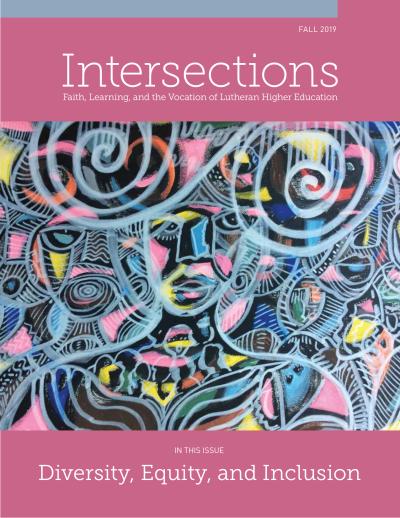
Smith, Augustana’s inaugural Vice President for Diversity, Equity and Inclusion, frames the work of a Chief Diversity Officer as that of a disrupter and argues that while diversity in higher education is already happening, inclusion is a choice — one requiring a fundamental institutional transformation that diversifies faculty and staff, infuses diversity into the curriculum, invests in professional development, and draws on senior leadership to dismantle barriers.
-
 Article
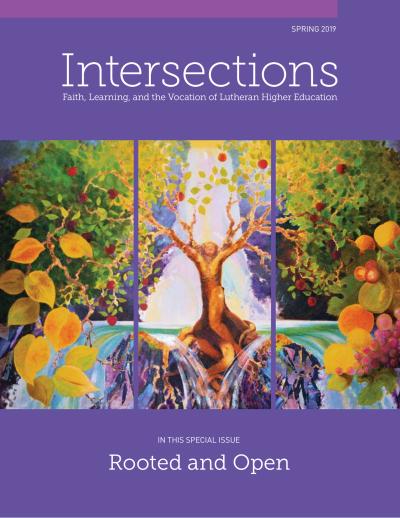
Rooted and Open: Background, Purpose, and Challenges
Mark Wilhelm
No. 49 · Spring 2019
Wilhelm traces Rooted and Open’s seventy-year backstory — from Conrad Bergendoff’s 1948 call for a Lutheran philosophy of education through the recovery of the vocation tradition — and describes the document’s process, purpose as a teaching and study resource, and the embodiment, contextual, and cultural challenges it implies for NECU institutions.