Just a few years ago, my son, Luke, was a prospective college student who was interested in a career in computer technology/security. We looked at a number of colleges and visited several campuses. Being steeped in the experience of Lutheran higher education, I was pushing the Lutheran college options. One day, he suggested that perhaps he should go to Rasmussen College (a technical college) because they offered specific course work in his area of interest and he could live at home. Imagine my reaction. How could a son of mine know so little about the differences in the types of higher education models? Did he not see the value added by attending a college where faith and learning were nurtured in the tradition of both the liberal arts and our Lutheran heritage, where he would learn not only how to make a living, but also how to make a life? How can we expect other prospective students, their parents, or even our own faculty and staff to understand how a Lutheran liberal arts education helps serve the world?
Concordia College shares a common bond with many of our sister NECU institutions, while also possessing a unique flavor instilled by the culture and pragmatism of the Norwegian immigrants who founded the college in 1891. Located in the fertile Red River valley, and adjacent Fargo, North Dakota, the area was originally tall grass prairie and ancestral home to the Sisseton-Whapeton Oyate Nation (Dakota/Sioux). Eventually, the tall grass prairie gave way to farming and the railroad, which connected western farms and ranches with markets in the east. Today, Fargo-Moorhead serves as a regional center for education, healthcare, technology, and agriculture, with a population of approximately a quarter million. While considered prairie, Fargo-Moorhead is within short driving distance of some of Minnesota’s finest lakes country, home to the Anishnaabe/Chippewa.
I serve as the Director of the Dovre Center for Faith and Learning at Concordia. The Center’s signature program is a year-long mentoring program aimed at second-year faculty and staff. Participants receive a stipend and are introduced to the mission and identity of Concordia with an opening full day workshop, six dinner discussions throughout the year, and a concluding full day workshop. This paper is adapted from a lengthier introduction to that program and focuses specifically on the portion related to how our mission and identity helps us serve the community.
Concordia College’s mission statement has remained unchanged for over sixty years: “The purpose of Concordia College is to influence the affairs of the world by sending into society thoughtful and informed men and women dedicated to the Christian life.” It captures the aspiration to be both an institution of higher learning and a place of spiritual discernment, with the ultimate purpose of serving the world. The mission is audacious in that its goal is not simply serving the local community, but influencing the affairs of the world through a transformative faith-based education grounded in the liberal arts tradition.
The taproot of Lutheran theology is that human beings are saved through grace by faith, which then frees us to serve the neighbor with a faith active in love. Concordia views such service as occurring on both the large national and international stage, as well as on the local and personal one. Here I share eight ways that I believe Concordia, and institutions like her, serve the community—in many cases, by building and modeling the kind community we hope to see in the world.
We Serve Community…
By educating students to the best of our ability
When I first came to Concordia, I attended a dinner gathering where faculty shared papers on their calling to teach at Concordia. Iris Stewart, an accounting professor at the time, started her paper by saying “Clearly there is no Lutheran way to do accounting.” While she went on to discuss how her faith impacted her sense of ethics in accounting, her point was that as a faculty member, she was fulfilling her calling by teaching her discipline to the best of her ability. She was right. First and foremost, we serve the campus community by providing quality education. It follows then, that we seek to hire the best teachers who support the educational mission of the college, but they need not be Lutheran or even Christian.
By challenging uniformed thinking
Liberal learning also serves the community by freeing us. The word “liberal” in liberal education is not to be confused with political liberalism, but is rather is a liberating or freeing type of education. It means that we are freed from our unchallenged prejudices, preconceptions, and assumptions, so that we become freed for service to others. As Darrell Jodock says, “Such an education endeavors to wean [students] (and their teachers!) from their comfortable, uncritical allegiance to societal assumptions and to entice them into both an intense curiosity regarding the worlds beyond their own experience and an intense desire to make their corner of the globe a better place in which to live” (Jodock, “Lutheran Tradition”). We present students with information, arguments, and experiences that challenge uninformed views, in order to produce thoughtful and informed men and women. Perhaps my favorite definition of a liberal arts education is attributed to Lutheran theologian Joseph Sittler, who said that the work of our Lutheran liberal arts colleges is to “complicate lives open.”
“The work of our Lutheran liberal arts colleges is to ’complicate lives open.’”
By molding future leaders
Other attributes of a liberal arts education are the ability to view problems from multiple perspectives, communicate clearly, think critically, and problem-solve creatively. These abilities often land our alumni in positions beyond what they originally pursued in their careers and vaults them into positions of servant-leadership in their professions, in their churches, and in their communities. It is no surprise that our local church councils, school boards, and non-profit organizations are filled with Concordia alumni. Like other NECU institutions, we claim an inordinate number of leaders in business, education, healthcare, and more. The combination of a liberal arts background and a faith-based motivation to serve the neighbor creates leaders that serve the community.
By helping students look beyond themselves
Luther described our chief sin as stemming from cor incurvatus in se—a heart turned in on itself. In opposition to this, Concordia literally translates as “hearts together”. Perhaps the most important goal of a liberal arts education is to draw us out of ourselves and into relationship with others. Ernest Simmons call this “self-transcending self-hood,” meaning that as we become less self-centered and focus more on others, we become more of who God wants us to be. We find our true selves by serving others (Simmons 48). We are called into relationship, into community.
By fostering community on campus
Within such a Lutheran relational theology, “relationships do not serve beliefs, beliefs serve relationships” (Jodock, “Religious Diversity,” 44). This is why a sense of community is a definitive characteristic of our institution. It is exemplified in some of our traditions, such as first-year students wearing beanies, singing the Hymn to Concordia at events, our celebrations at homecomings, and wearing the Concordia ring. (Concordia ranks second only to one of the military academies in percentage of students who purchase a class ring.) It is a characteristic that is nurtured through orientation clubs, residential living, interdisciplinary collaboration, classroom dialogue, opportunities for communal worship, and a sense of egalitarianism that can be traced to our founders.
By promoting service to the neighbor.
Having spent a decade in the office of advancement, I can attest to the deep and abiding sense of community felt by our alumni, many of whom, years removed from their college experience, speak with great fondness of their Concordia family. They share life-long relationships with classmates, but they also share life-long commitments to serving others—outgrowths of the culture of community that was inculcated here. In orientation, first year students participate in a Hands for Change Project, devoting one of their first days on campus to a community service project. Our Habit for Humanity chapter has students literally lining the halls the night before sign-up in order to secure their spot. Students participating in Justice Journey, sponsored through Campus Ministry, embark on trips over breaks to learn and serve around justice issues such as immigration and U.S. border relations, reconciliation of native boarding school experiences, disaster relief, and more. Numerous academic courses require service projects. One engages students with incarcerated young people in the juvenile justice system.
“Liberal education nurtures human freedom in the service of human community, which is to say that in the end it celebrates love.”
President William Craft, early in his tenure here, asked us to read and reflect on William Cronen’s article, “Only Connect,” which outlines the goals of a liberally educated person. Cronen concludes his essay by stating that “Liberal education nurtures human freedom in the service of human community, which is to say that in the end it celebrates love.” In this regard, both our faith and our liberal arts tradition endeavor to make us free and motivate us to serve our neighbor in love.
By encouraging dialogue and debate
Being in relationship or community with one another means we must be willing to have dialogue. This is especially true for complex topics and issues about which we disagree. Dialogue is the first step in challenging uninformed ideas, of complicating simplistic arguments, and ultimately helping us to arrive at deeper truths. Even when dialogue does not produce agreement, it deepens understanding of the other. Examples of such constructive dialogue here at Concordia include hosting a “Meet Your Muslim Neighbor Night” and hosting an interactive discussion between campus Democrats and Republicans on climate change. (Interestingly, there was agreement on the concept of a carbon tax, but disagreement regarding how such revenue might be spent.)
The Particular Community We Build and Serve
The final way that Concordia builds and serves community brings us to the particular kind of college we are, and to why the community we build and serve is of a particular sort. Darrell Jodock has described Lutheran colleges and universities as offering a third path that is distinct from both sectarian and secular schools (“Third Path,” 92). According to NECU’s foundational document, Rooted and Open, Lutheran colleges and universities are both rooted in a particular tradition and—on account of that very rooted—open to and inclusive of a diverse array of peoples and perspectives. The eighth way Concordia builds and serves community is by modeling diversity with particularity.
Thanks to the founding director of the Forum for Faith and Life, Dr. Jacqueline Bussie, Concordia has become a leader in interfaith cooperation, one of just a handful of institutions recognized for offering a minor in interfaith studies. Concordia has formed a strong relationship with Interfaith Youth Core and its leader, Eboo Patel. When Patel visited campus, a faculty member asked him why a Lutheran college should embrace other faiths? He responded that Lutherans embrace other faiths “because you are Lutheran.” This sentiment was captured in Concordia’s Statement of Interfaith Cooperation:
Concordia College practices interfaith cooperation because of its Lutheran dedication to prepare thoughtful and informed global citizens who foster wholeness and hope, build peace through understanding, and serve the world together.
Indeed, as Bussie states, “The first way church-related colleges can fulfill their vocation to educate for religious pluralism is by teaching interreligious literacy as a crucial component of twenty-first century intercultural competence and global citizenship” (242).
People of other faiths, agnostics, and atheists can embrace the educational values that spring from Lutheran theology—values like academic freedom, educational excellence, service to others, and the importance of dialogue and debate. They model for us the diversity of thought our graduates will see in the world and provide us with conversation partners who hold us accountable for what we profess to be.
At the same time, an institution need not jettison its own particular identity in order to embrace others. Lutheran theology provides a pathos or passion for living a life in the way of Jesus that we cannot abandon, and in fact, must continue to nurture. There is a danger in an academic setting to let the dialectic between the life of the mind and the life of the spirit lean too far to the side of reason, ignoring the essential motivational quality that faith plays in our lives. The mission of a third path college is a holy endeavor. Constituents pray for the success of the college, professors pray for students, and we practice communal worship in which we share together our joys and our sorrows. The thousands of people who attend our Christmas concerts still cry when, together with the assembled choirs, we sing Silent Night. The Holy Spirit is present here and active in what we do.
Many students (whether Christian, Muslim, atheist, or other) will remember their time at Concordia as a spiritual revelation as much as an intellectual one. So, while an individual faculty member or student is not asked to adopt the religious identity of the institution, they should expect that Concordia will engage in spiritual practices and be curious about what we can learn from the practices of others. We welcome individuals into our community with a respect for diversity, and a seat at the table, but also with an understanding that one should not be surprised to be asked questions about how their faith/beliefs inform their learning and how their learning informs their faith/beliefs. It is this ethos—this spirit—of Concordia that makes it a community in the strongest sense: a people made up of very diverse individuals, but who become a single body with a shared calling, without ever losing their individual identities, spiritualties, and vocations. Called into and formed by this community, students then are sent into the world to build and serve other strong, diverse communities.
“Called into and formed by this community, students then are sent into the world to build and serve other strong, diverse communities.”
Living Lives of Service in Community
In the end, my son came to Concordia, where he majored in religion, and minored in computer science. Today he works as a systems analyst at the college. He is active in the church and has a passion for social justice. He was followed a few years later by my daughter who double majored in Spanish and psychology with minors in interfaith studies and political science, graduating summa cum laude. My son is gay and my daughter is physically disabled, which requires her to use a motorized chair and receive assistance with many daily activities. Both my children found their voice here for the things they are passionate about—advocating to make our community and the world more just, especially for those who are on the margins or considered “different” in any way.
When confronted with challenging opinions, the first response of my children is now typically to ask, “Can we have a conversation about that?” They learned a commitment to dialogue and the importance of promoting understanding. Each has volunteered time in service to community and church organizations (Habitat for Humanity, Churches United for the Homeless, Tutoring new Americans, PRIDE in the Park, and the ELCA Eastern North Dakota Synod Council). They are living lives of service in the community.
Concordia provided a place and a culture where my children found mentors who could help them learn to reconcile their understanding of the world with their faith, how to articulate that understanding, and how to have a healthy suspicion of absolute claims. They found a place where learning informed their faith and faith informed their learning. They found a place that taught them how to serve the community in ways they had not imagined. The world needs this type of understanding, a “rooted and open” Lutheran liberal arts understanding, and we must work hard to continue to provide it.
Soli Deo Gloria.
Works Cited
Bussie, Jacqueline. “The Vocation of Church-Related Colleges in a Multi-Faith World: Educating for Religious Pluralism.” In Hearing Vocation Differently: Meaning, Purpose, and Identity in the Multi-Faith Academy. Ed. David S. Cunningham. Oxford University Press, 2019.
Cronen, William. “‘Only Connect’: The Goals of a Liberal Education.” Liberal Education, 85.1 (Winter 1999): 6-12.
Jodock, Darrell. “The Lutheran Tradition and the Liberal Arts College: How Are They Related?” In Called to Serve: St. Olaf and the Vocation of a Church College. Ed. Pamela Schwandt. St. Olaf College, 1999.
———. “Vocation of the Lutheran College and Religious Diversity.” Intersections 33 (Spring 2011): 5-12.
Jodock, Darrell. “The Third Path, Religious Diversity, and Civil Discourse.” In The Vocation of Lutheran Higher Education. Ed. Jason A. Mahn. Lutheran University Press, 2016.
NECU. Rooted and Open: The Common Calling of the Network of ELCA Colleges and Universities. Accessed 1 April 2022, http://download.elca.org/ELCA%20Resource%20Repository/Rooted_and_Open.pdf?_ga=2.254180808.1158413343.1555894056-509733955.1555894056
Simmons, Ernest. Lutheran Higher Education: An Introduction for Faculty, Augsburg Fortress, 1998.
-
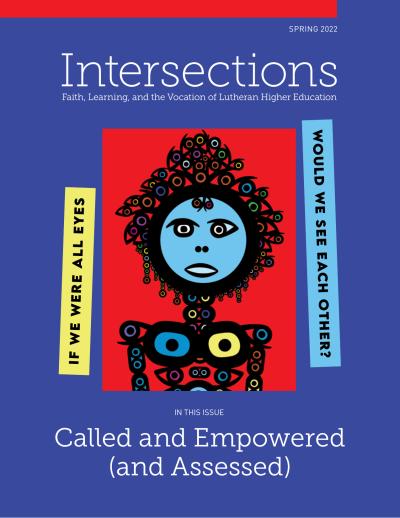 Editorial
From the Publisher
Mark Wilhelm
Wilhelm announces his planned retirement on January 31, 2023, after serving as the founding executive director of the Network of ELCA Colleges and Universities, and gives thanks for the privilege of helping NECU articulate a shared vision for Lutheran higher education in twenty-first-century North America.
-
Editorial
From the Outgoing Editor
Jason A. Mahn
Mahn closes out a decade of editing Intersections, passes the duties to Colleen Windham-Hughes, gives thanks to Mark Wilhelm and Augustana College, and introduces an issue largely drawn from comments by Lutheran faculty, staff, and administrators at the 2022 NetVUE national gathering.
-
Editorial
From the Incoming Editor
Colleen Windham-Hughes
Windham-Hughes introduces herself as incoming editor by reclaiming the root of assess — “to sit by” — and committing to the question “What does this mean?” as she sits with readers in the worth of our work and the universality of vocation.
-
Institutional Focus
Building a Developmental Framework for Vocational Reflection at Thiel College
Brian Riddle, Greg Q. Butcher, Liza Anne Schaef
Riddle, Schaef, and Butcher describe how a NetVUE Program Development Grant enabled Thiel College to build “the Tomcat Way” — a four-year developmental framework with personal, social, academic, and professional domains and four phases (Explore, Envision, Belong and Lead, Launch) — that now guides every aspect of the student experience.
-
Article
Assessing Self-Assessment Instruments at Finlandia University
René Johnson
Johnson surveys three self-assessment instruments presented at the NetVUE conference — PathwayU at Colorado State, the Intercultural Development Inventory at Friends University, and Mark Savickas’s Career Construction Counseling Manual at Union College — and describes Finlandia’s use of the CliftonStrengths© assessment to link students’ personhood to “behaviors that benefit the community.”
-
Institutional Focus
Pivoting to Imaginative Programming in the Midst of the Pandemic at Bethany College
Arminta Fox
Fox recounts how Bethany College’s NetVUE Program Development Grant — originally designed around service-learning trips — was reimagined under COVID-19 into a guest-speaker model that tripled student participation and opened new vocational possibilities through the close, personal stories of alumni, alums-turned-volunteers, and community partners.
-
Institutional Focus
Sharing the Gift of Vocation at (and beyond) Augsburg University
Paul C. Pribbenow
Pribbenow, drawing on a 2022 NetVUE panel with Dorothy Bass and Jodi Porter, considers how the gift of vocation forged with undergraduates can be extended — beyond undergraduate campuses to graduate students, faculty, and staff; across the vocational lifespan from high schoolers to alumni navigating the “gig economy”; and into accompaniment of faith communities through Augsburg’s Riverside Innovation Hub.
-
Book Review
Assessing the Value of Liberal Arts: A Review of The Evidence Liberal Arts Needs, by Richard A. Detweiler
Robert D. Haak
Haak reviews Richard A. Detweiler’s The Evidence Liberal Arts Needs, in which the former president of the Great Lakes Colleges Association analyzes 240 college mission statements and interviews more than 1,000 graduates to argue that liberal arts educational experiences have a measurable impact on adult lives of consequence, inquiry, and accomplishment — and invites NECU institutions into a further conversation about how Detweiler’s methodology applies to Lutheran higher education.
-
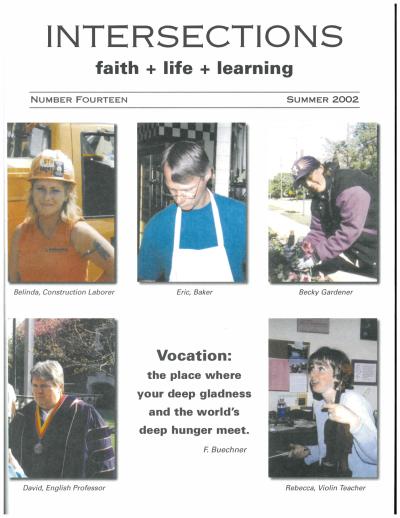 Editorial
From the Editor
Tom Christenson
No. 14 · Summer 2002
Christenson argues that whether or not the conversation is funded by the “Lilly lottery,” vocation should just be part of who we are and what we do at ELCA colleges, and proposes three low-cost conversations—among faculty (twenty dollars of wine, in vino veritas), with students throughout their four years, and with alumni—explaining why this issue is deliberately “fatter” than usual and inviting feedback on other single-topic issues.
-
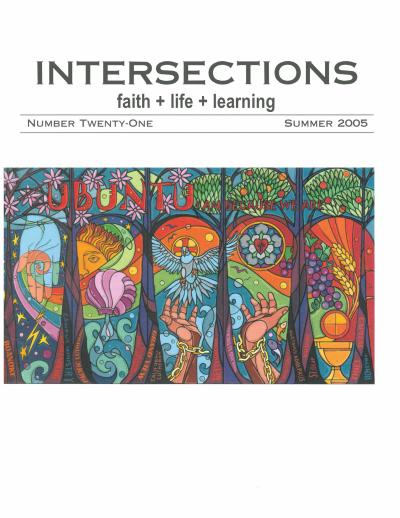 Article
Changes
W. Robert Sorensen
No. 21 · Summer 2005
Writing as former executive director of the Division for Higher Education and Schools, Sorensen places the DHES within the threefold movement of Luther’s Reformation—university, church, and individual piety—and recounts how the Division cohered its work with colleges, universities, campus ministries, and schools around Joseph Sittler’s definition of education as “movement into a larger world.” Drawing on Huston Smith’s “primordial tradition,” the Namibian student program, work in India and Palestine, and the Bergendoff series of publications, he raises a twofold concern about the proposed merger of DHES into a Division for Vocation and Education: whether the new structure will signal the core significance of education in the heritage and life of the church, and whether it can carry forward the effectiveness and scope of DHES’ work.
-
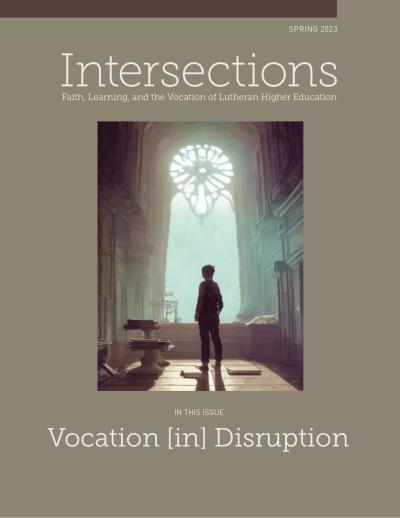 Editorial
From the Publisher: Introduction and Invitation
Lamont Anthony Wells
No. 57 · Spring 2023
Wells introduces himself as the new Executive Director of NECU, succeeding Rev. Dr. Mark Wilhelm, and frames this Spring issue as a passionate response to the crises facing higher education amid threats to academic freedom and the well-being of educators.
-
 Reflection
Walls: Talk At Gustavus Adolphus College
Elizabeth Baer
No. 5 · Summer 1998
Baer’s September 11, 1997 Gustavus Adolphus chapel homily on Joshua 6 turns from the trumpets to the walls—Robert Frost’s “Mending Walls,” the walls of the Warsaw ghetto in Vladka Meed’s On Both Sides of the Wall and Margaret Zassenhaus’s Walls, the Berlin Wall coming down in 1989—and then to the autobiographical, intertextual discourse of Gustavus chapel itself as a place where misunderstandings come down. An author’s note added after the March 29 F3 tornado reports the closing line (“LET’S MAKE THOSE WALLS COME TUMBLING DOWN”) as eerily prescient: roofs, windows, and 90% of campus trees were lost, but the Chapel walls and the eternal flame in the red glass lantern stood firm.
-
 Editorial
From the Publisher
Arne Selbyg
No. 17 · Summer 2003
Selbyg explains that the four essays in this issue grew out of the first Lutheran Academy of Scholars in Higher Education—a two-week seminar funded by the Lutheran Brotherhood Foundation and the Lilly Endowment, led for its first three years by Dr. Ronald Thiemann of Harvard Divinity School—whose official theme “Finding Our Voice—Christian Faith and Critical Vision” became informally “What’s Faith Got To Do With It?”
-
 Editorial
From the Publisher: Reflections on the 2024 Vocational Leaders in Higher Education Conference
Lamont Anthony Wells
No. 60 · Fall 2024
Wells reflects on the 2024 VLHE Conference theme — “Educational Access: Lutheran Roots, Contemporary Practices” — tracing today’s commitment to inclusivity back to Martin Luther’s radical 16th-century insistence that both boys and girls be educated, and previews NECU’s expanded engagement of student leaders alongside faculty and administrators.