I’ve been a Lutheran all my life. Except for brief stints worshiping with the Catholics in college (because they held services on Sunday evenings), and the United Church of Christ during grad school (because the building was closer to my apartment), my home congregation has always been Lutheran. Among other things, this means that even if it was rarely mentioned, the concept of vocation has been part of what I was taught to believe. For as long as I can remember, I have believed that God calls people to various jobs, and that all jobs are somehow equally valid in God’s eyes.
Given this understanding, if you’d asked me what my vocation was while I was in college, or even in graduate school, I would have said that I was waiting for God to call me in some distinctive and obvious way to my role in life, which would (of course) include significant service to the common good. In the meantime, I was just doing what made sense to me. It wasn’t until I had finished my PhD, married, started work as an assistant professor of economics, and had my first child that it dawned on me that maybe God wasn’t going to “call” me in the distinctive and obvious way that I’d been expecting. This led me to wonder: How is it that a person is called to their particular role in the world? Absent some clear and distinct calling, how do we figure out if the thing we’re doing is what we are actually called to do? How can one know the ways that one’s work and various roles in the world actually serve the common good? Interestingly, it wasn’t long after I started asking these questions that I saw an opening in my field at Pacific Lutheran University and felt, somehow, that this position was meant for me and that I couldn’t not apply.
“Absent some clear and distinct calling, how do we figure out if the thing we’re doing is what we are actually called to do?”
There are many ways to approach vocation, and one can consider the concept from a variety of faith traditions (including “none”). Rabbi Amy Eilberg uses the story of Moses’ calling to illustrate four key factors which help us understand what it means to discern one’s vocation. It turns out that discerning vocation is both easier and more difficult than my grad school self expected. While Moses was obviously and distinctively called by God, the factors Eilberg discusses suggest that it’s possible for those of us who are not so directly called to discern who we are meant to be and what we are meant to do.
Clear and Extraordinary Callings
The story of Moses’ calling is found in the third chapter of Exodus. I’m quoting it at length here and ask that you read it carefully and with fresh eyes, even if it’s a familiar story:
Now Moses was tending the flock of Jethro his father-in-law, the priest of Midian, and he led the flock to the far side of the wilderness and came to Horeb, the mountain of God. There the angel of the Lord appeared to him in flames of fire from within a bush. Moses saw that though the bush was on fire it did not burn up. So Moses thought, “I will go over and see this strange sight—why the bush does not burn up.”
When the Lord saw that he had gone over to look, God called to him from within the bush, “Moses! Moses!”
And Moses said, “Here I am.”
“Do not come any closer,” God said. “Take off your sandals, for the place where you are standing is holy ground.” Then he said, “I am the God of your father, the God of Abraham, the God of Isaac and the God of Jacob.” At this, Moses hid his face, because he was afraid to look at God. (Exodus 3:1-6)
Clearly, this is a story of calling. Moses doesn’t have to work very hard to hear the call, nor does he have to wonder just who he’s hearing it from. Even so, it contains several lessons for those of us who do not receive such clear messages. Before I get to these, let me name two components of this story that are not necessarily in all callings.
First, the obvious: vocational discernment doesn’t require an audible call from God through a burning bush. While some people speak of literally hearing the voice of God while dreaming or awake, vocation can and often does come to us in much more ordinary ways. Your friend points out something you’re really good at. You suggest to a student that they should consider your discipline as a major. You find yourself taking on a challenge that somehow, you can’t not do. All of these can lead a person to her or his vocation. And so, the burning bush is but one of many ways to become aware of—to discern—one’s vocation.
“Vocational discernment doesn’t require an audible call from God through a burning bush.”
Second, and more subtly, following this passage we learn that God is calling Moses to lead God’s people out of slavery in Egypt and into the Promised Land. The temptation is to think that vocation must be some grand action or position—one that will be prestigious, challenging, exhilarating, and powerful. What is more, we think that only those who are so called have a true vocation. To be sure, sometimes, and for some people, vocation turns out to be a call to leadership or to recognition or to distinction. Yet there are times when vocation includes neither power nor recognition, when people are called to things that no one will see, or to things that are viewed as mundane or ordinary. Small, even. Vocation, properly understood, is something everyone may claim, regardless of gender, race, or economic position. We all have a discernible vocation.
“The temptation is to think that vocation must be some grand action or position—one that will be prestigious, challenging, exhilarating, and powerful.”
Attention, Wonder, Community, Humility
Given these caveats, let’s return to the story of Moses’ calling. Eilberg claims that it illustrates four requirements for vocational discernment. The first is attentiveness. In order to sense a calling (regardless of the source), one must pay attention. One has to notice the source of the calling before it can be understood. It would have been easy for Moses to pass by the burning bush (he was, after all, in the desert and had doubtless seen burning things before). But he didn’t. Something about the bush caught his attention and held it long enough for him to really notice. Generally speaking, vocational discernment requires this sort of attention. And so I ask: Where and how do we pay attention? On what do we focus long enough to notice? What gets in the way of our noticing? Perhaps most importantly: What are we ignoring that is asking for our attention?
Wonder is the second quality of vocational discernment. One must wonder about what one notices. Once he had noticed the burning bush, Moses became curious and moved closer to investigate. He became actively engaged in trying to understand what he saw. While not everything we notice leads to our vocation, noticing without wondering only leads to an interesting collection of unusual things. Vocational discernment requires the sort of active engagement that Moses undertook—a pointed curiosity and willingness to find out more. And so I ask: What do you wonder about? How are you actively engaged in the process of wondering? How do you foster a sense of wonder in others? Where and how do our colleges and universities foster this sense of wonder? How do we accompany students as they explore the questions that cause them to wonder? It has been said that vocation is often discerned internally and confirmed externally. How do our colleges and universities serve as external confirmation for what our students wonder about themselves and the world around them? Perhaps most importantly: Where and how do we fall short?
“Where and how do our colleges and universities foster this sense of wonder? How do we accompany students as they explore the questions that cause them to wonder?”
Eilberg’s third feature of vocational discernment is a sense of communal consciousness. To understand this, you need to know that Moses was tending flocks in the wilderness because he was on the run. He had been chased out of Egypt for killing an Egyptian he saw beating one of his fellow Israelites. Moses’ sense of belonging to the Israelite community served as an important part of his discernment process. It provided him a clear sense of who he was meant to serve. Martin Luther would extend this further, claiming that a correct understanding of vocation requires that it be of service to the community, or as Luther would put it, to the neighbor. According to Luther, the Christian “should be guided in all his works by this thought and contemplate this one thing alone, that he may serve and benefit others in all that he does, considering nothing except the need and advantage of his neighbor” (Luther 365, as quoted by Kleinhans 396-97).
Vocation, properly understood, must benefit the other. It is this sort of openness to and care for the other that Mark Schwehn refers to in examining the relationship between friendship and truth. Schwehn’s descriptions of missionary Frank Laubach’s work with the Moro population of the Philippines, and of biologist Barbara McClintock’s research on the corn plant, illustrate his claim that in order to understand something, one must approach it first in friendship.1 Schwehn claims that in order to truly understand, one must first love—or “neighbor”—the other. Inasmuch as discerning vocation depends on and informs understanding, it must also involve a sense of belonging, or a communal consciousness with the thing one serves.
Finally, Eilberg notes that following this episode, Moses spent a long time arguing with God about whether he was the right person to lead the Israelites. Eilberg attributes this argument to Moses’ humility, and claims that humility is a fourth feature of vocational discernment. Purposeful action born of ambition, or a need for self-aggrandizement, Eilberg seems to be saying, is likely not vocation. Such action crowds out other features of vocational discernment such as attention and wonder, not to mention service to the other. While it is important that we accurately assess our capacities (false humility is no humility at all), it is also important that we recognize how much we can learn from the other.
The Correspondence of Calling and Civil Discourse
Isn’t it interesting that these four features—attention, wonder, communal consciousness and humility—are key aspects of civil discourse?2 Given this correspondence, we should ask: When we foster vocational discernment on our campuses, are we also promoting civil discourse? Are we forming our students to pay attention to the other until they understand? Are we forming students to wonder—about themselves, about the world around them, and (particularly) about things that are different from what they’re used to? Are we forming students to have a sense of community, and is the community that our students sense as diverse and inclusive as we hope it will be? Are we building a sense of humility within our students—a sense that they might learn from everyone they encounter on our campuses? It seems to me that this is what our colleges and universities are called to do. And it seems to me that a focus on providing students opportunities to be attentive, to wonder, to build communities with those who are different from them, and to exhibit both intellectual and ethical humility might move our campuses and our world to a much more civil state.
To conclude, I want to quote an anonymous comment submitted at the end of last summer’s Vocation of a Lutheran College Conference. I close with it because it highlights a question that is closely related to civil discourse:
I have left with questions of privilege and vocation, especially how we might engage students in conversations of vocational discernment when many may still be attempting to discern their own identities…. When students come to our institutions and are able to explore themselves [asking questions] such as, “Am I gay?” or, “What does it mean to be a man?” or “I’m a black person in a sea of white people, how do I act?” perhaps for the first time, I wonder how that engagement is different than the “traditional” white, middle-class student we gear many things toward.
Perhaps the qualities that Moses exhibited, particularly attentiveness and wonder, broaden the scope of vocation and also allow us to address questions of privilege in its discernment. That is, when we begin to discern vocation through processes of attentiveness and wonder, perhaps vocation is made available to all people, not only those to whom God speaks directly, or those who are called to religious service, or those who embody what my colleagues in sociology call the hegemonic narrative. The poet Mary Oliver says this well: “Instructions for living a life. Pay attention. Be astonished. Tell about it.”
Encouraging students to notice and wonder not only fosters civil discourse but also introduces them to vocation and its discernment. Perhaps this might provide a way for all of our students to begin considering who they are and who they might become. In that case, we do well when we find ways to promote attentiveness and wonder—ways that are welcoming to those who come to use from “traditional” backgrounds, as well as those who are encountering our traditions for the first time. Maybe this could be the beginning of introducing our students to vocation and its discernment.
Endnotes
1. In relating these stories, Schwehn cites books by David Hollinger and Evelyn Fox Keller, both listed below.
2. A brief introduction to the topic of civil discourse can be found in Andrea Leskes’s “A Plea for Civil Discourse” (see below).
Works Cited
Eilberg, Amy. “Hineini (Here I Am): Jewish Reflections on Calling.” Calling in Today’s World: Voices from Eight Faith Perspectives. Ed. Kathleen A. Cahalan and Douglas J. Schuurman. Grand Rapids, MI: Eerdmans, 2016. 1-25.
Hollinger, David. Protestants Abroad: How Missionaries Tried to Change the World but Changed America. Princeton University Press, 2017.
Keller, Evelyn Fox. A Feeling for the Organism: The Life and Work of Barbara McClintock. New York: W.H. Freeman, 1983.
Kleinhans, Kathryn. “The Work of a Christian: Vocation in Lutheran Perspective.” Word & World 25:4 (Fall 2005): 394-402.
Leskes, Andrea. “A Plea for Civil Discourse: Needed, The Academy’s Leadership.” Liberal Education 99.4 (Fall 2013): 44-51.
Luther, Martin. “The Freedom of a Christian.” Luther’s Works (American Edition), volume 31. Philadelphia: Muhlenberg, 1957.
Oliver, Mary “Sometimes.” Red Bird: Poems by Mary Oliver. Boston: Beacon, 2008.
Schwehn, Mark R. “From Faith and Learning to Love and Understanding: A Possible Future Agenda for Church-Related Higher Education.” The Cresset 81.3 (Lent 2018): 4-13.
-
 Editorial
From the Publisher
Mark Wilhelm
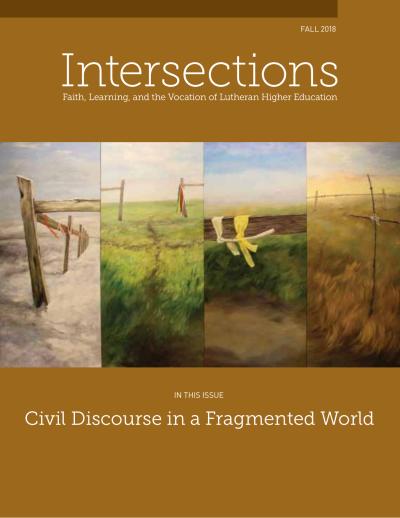
Wilhelm frames the issue by reflecting on the Letter of James and the Lutheran tradition of “calling a thing what it is” — arguing that the standards of academic discourse, deeply rooted in Lutheran insistence on frankness and honesty alongside concern for the common good, give NECU institutions a solid platform for sustaining honest but not hateful discourse about divisive issues.
-
Editorial
From the Editor
Jason A. Mahn
Mahn recounts how a participant’s probing questions at the 2018 Vocation of a Lutheran College Conference turned “civil discourse” from an innocuous theme into a contested one — and previews essays that variously urge listening and common ground, or speaking truthfully even when those words sound angry.
-
Article
Polarization, Incivility, and a Need for "Change"
Guy Nave
Nave argues that when Americans demand “change,” they usually mean that “others” need to see things their way — and that meaningful transformative change requires acknowledging the provisional nature of our perspectives, seeking to understand as much as to be understood, and bursting the ideological echo chambers of social media through projects like Clamoring for Change.
-
Article
Putting the Kind Back in Human
Sarah Ciavarri
Drawing on Brené Brown’s research on vulnerability and Edwin Friedman’s family systems theory, Ciavarri distinguishes “kind” from “nice” and argues that courageous, vulnerable, and playful truth-telling — rather than yelling louder or trading pithy memes — is the path back to one another and to our common humanity.
-
Article
It's Time to Rewrite the Rules of Civility
Jon Micheels Leiseth
Leiseth contends that the prevailing rules of civility too often function as the majority’s rules, stifling those facing real harm — and proposes that NECU institutions rewrite civility as “neighboring,” guided by the ELCA’s five values of accompaniment: mutuality, inclusivity, empowerment, sustainability, and vulnerability.
-
Poem
Original Song Lyrics: "Just a Little"
Mike Blair
Lyrics for an original song inspired by biblical images and stories, by Emma Lazarus’ “The New Colossus,” and by the faith, hope, love, and courage of immigrant friends and neighbors — led as a devotion during the 2018 Vocation of a Lutheran College conference.
-
Article
The Musician's Vocation
Jeffrey Bell-Hanson
Bell-Hanson argues that musicians, who exercise profound influence over the emotional flavor of a moment, are called not merely to technical proficiency but to a sense of vocation: understanding their art well enough to use it responsibly, to intend truthfulness rather than manipulation, and to articulate its significance in dialog with other disciplines.
-
 Editorial
Guest Editorial
Lynn Hunnicutt
No. 47 · Spring 2018
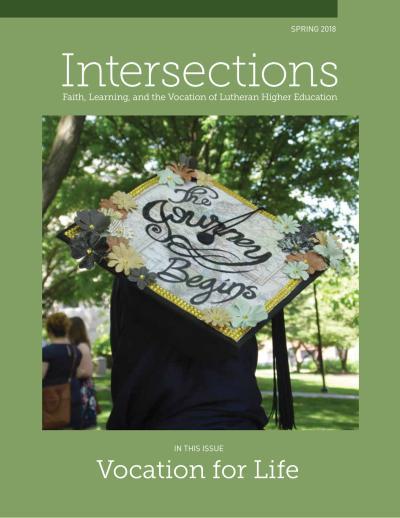
Hunnicutt traces the etymology of vocation through its cognates — evoke, provoke, convocation — to argue that vocation presumes a relationship between caller and called, that callings are often grounded in ordinary words and humble lives, and that recognizing vocation as plural and lifelong relieves colleges of the pressure to help students find a single calling while on campus.
-
 Article
Calling Economists
Lynn Hunnicutt
No. 37 · Spring 2013
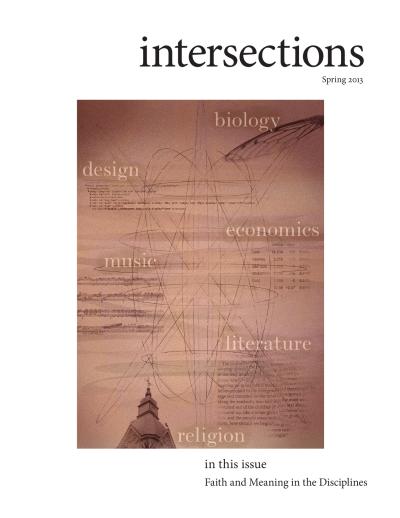
Reading Luther’s Whether Soldiers, Too, Can Be Saved alongside Adam Smith’s Theory of Moral Sentiments and Wealth of Nations, Hunnicutt asks whether economists, too, can be saved—and whether economics can host a serious conversation about vocation. She traces her own move from Utah State to Pacific Lutheran University and its Wild Hope Center for Vocation, and turns to Deirdre McCloskey and George DeMartino as economists whose work makes room for vocation and the common good within the discipline.
-
 Article
The Lutheran Liberal Arts College and Care for the Earth
H. Paul Santmire
No. 3 · Summer 1997
Santmire, author of The Travail of Nature, proposes three mandates for the Lutheran liberal arts college: take responsibility for spiritual particularity by confronting the ambiguities of the classical Christian tradition (Lynn White’s charge against anthropocentric Christianity vs. the Franciscan ecological tradition from Irenaeus through Luther) and of classical Lutheran social ethics (the Two Kingdoms, Romans 13, the Third Reich, Bonhoeffer); promote responsible cultural criticism (against Thoreau’s sociopathic anti-urban suburbanism); and promote a holistic environmental ethos through an interdisciplinary core curriculum with ecology as the queen of the sciences, a community that liberates the social imagination (Mumford, Marcuse), a cosmic Liturgical praxis rooted in the Colossians 1:15–20 hymn to the cosmic Christ, and an academy that models ecological responsibility.
-
 Article
Creation, Justice, and Communio: Lutheran Insights Empowering Educational Access
Mary Elise Lowe
No. 60 · Fall 2024
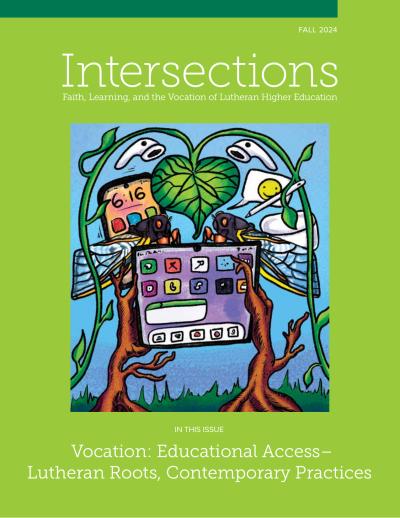
In her VLHE keynote, Lowe names three Lutheran commitments — continuing creation, neighbor justice, and communio — as the “why” that empowers ELCA colleges and universities to pursue equitable access for students often left behind by persistence and graduation gaps.
-
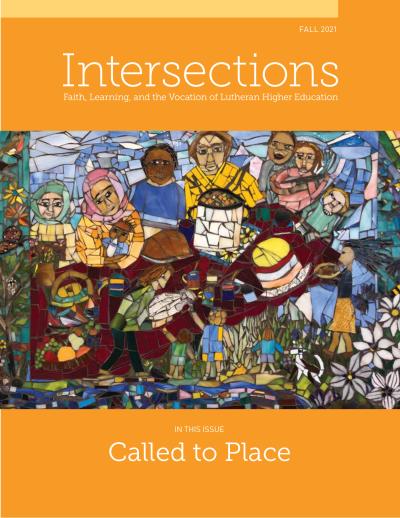 Article
Just Communities: From Liberal Arts in Prison to Racial Healing over Zoom
Monica Smith
No. 54 · Fall 2021
Smith showcases how Augustana College’s commitment to social justice extends into the Quad Cities through two initiatives: the Augustana Prison Education Program at East Moline Correctional Center, and Racial Healing conversations developed through the Truth, Racial Healing and Transformation framework.
-
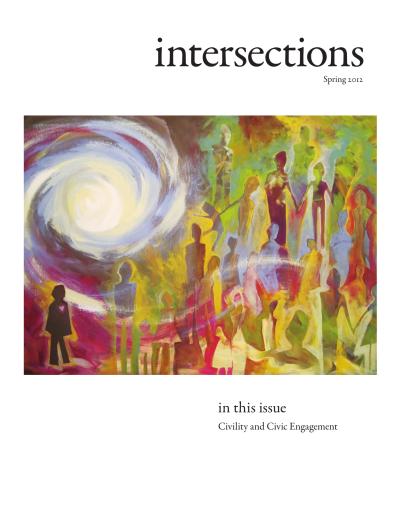 Article
Critical Engagement in Public Life: Listening to Luther's Troubling Questions
Samuel Torvend
No. 35 · Spring 2012
Torvend narrates the medieval “spiritual/temporal” division and the neo-platonic devaluation of the body that shaped the world into which Luther was born, then traces the disruptive questions Paul’s letters provoked in Luther: about indulgences, the two estates, vocation, and the public reach of baptism. He argues that Luther’s reform — expressed in Kirchenordnungen, social welfare reform, public schools, and writings on lobbyists, usury, and monopolies — carries a “genetic encoding” of public engagement that Lutheran colleges should reclaim against the temptations of holy apathy and Christian nationalism.
-
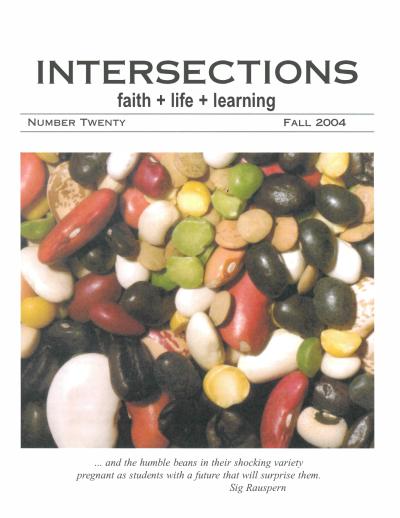 Article
Mars, Mammon—and Other Options
Carl Skrade
No. 20 · Fall 2004
In a wide-ranging public lecture from a Capital University Philosophy and Religion department series on “The Empire, Its Religions, and Some Alternatives,” Skrade distinguishes the military from militarism (using Oxford and Chalmers Johnson definitions), catalogs evidence of contemporary U.S. militarism—budget allocations, arms sales, the military-academic complex, post-1945 interventions, overseas bases, and Bush-era profiteering through Bechtel and Halliburton—and traces its roots in resource greed, racism, right-wing religiosity, and Augustinian incurvatus in se ipsum. After surveying the financial and human costs through testimony from Jonathan Shay’s Achilles in Vietnam, Samuel Hynes’s The Soldier’s Tale, Dalton Trumbo’s Johnny Got His Gun, and Staff Sergeant Jimmy Massey, he applies Vincent Ferraro’s seven principles of just war to Gulf II, reads Matthew 5:43-48 as a call to indiscriminate care, and proposes a www.religiousleft.org website to host a Christian alternative to Mars and Mammon.
-
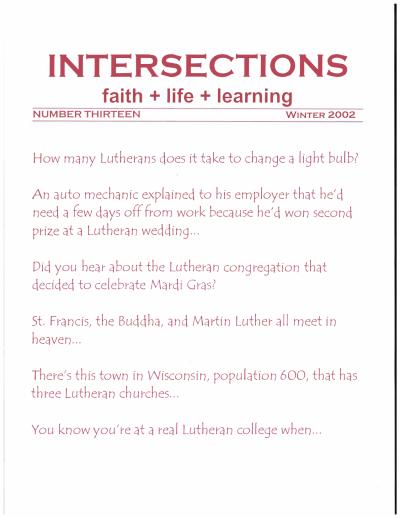 Article
Freedom, Humor, and Community: A Lutheran Vision for Higher Education
Darrell Jodock
No. 13 · Winter 2002
Jodock’s inaugural lecture for the Bernhardson chair at Gustavus Adolphus develops three interlocking themes drawn from the Lutheran tradition as a deeper grounding for the liberal arts college than contemporary American assumptions. A sense of humor rests on Luther’s discovery that God takes the initiative—Luther could call himself a beggar, joke about the epistle of James, and credit Wittenberg beer for the Reformation—and underwrites the freedom of inquiry that John Updike traces to Grace Lutheran Sunday School in Shillington. Community, grounded in Augsburg Confession VII and Luther’s 1524 letter to the German city councils, makes the college a community of discourse pursuing wisdom rather than “the same old blockheads.” Freedom is both “freedom from” and “freedom for,” illustrated by Nechama Tec’s Polish Holocaust rescuers and by Jodock’s Holocaust-class corporate role-play in which students voted to build a factory in a death camp rather than risk losing their board seats—a vivid case for educating toward “a passion for justice.”