We live in a time where the demands for change and the promises of change dominate much of American discourse. While many Americans are clamoring for change and many politicians are promising change, it’s not always clear what this so-called change is supposed to look like. What exactly is it that people are wanting and what exactly is it that politicians are promising?
While there is no universal consensus regarding a definition of “change,” there do seem to be some common assumptions shared by many people when talking about change. The most prevalent assumption is that change involves the replacement of a present undesired way of being with a proposed desired alternative way of being. Often implicit in this assumption is a belief held by those demanding change that their views represent the desired alternative way of being, while the present undesired way of being is represented by the views of those needing to change. In other words, usually when people are demanding change, what they are really demanding is that “others” see things the way they already see them.
“Usually when people are demanding change, what they are really demanding is that ‘others’ see things the way they already see them.”
How Rhetoric of Change Contributes to Polarization
Far too often when we refer to “change,” we’re referring to something we believe “others” need to do rather than something we ourselves also need to do. During a period that many people have identified as the most deeply divided period in American politics and culture—a period where political gridlock is the norm rather than the exception—there has been an exponential increase in the rhetoric of “change” (Noah 2008). I find that extremely ironic. Everyone is dug in, entrenched, and unwilling to move from their ideological position; at the same time everyone is talking about, demanding, and even promising change. What kind of change is possible when no one thinks they need to change and everyone thinks “others” need to change?
The belief that others are “the problem” hinders change and contributes to much of the incivility and polarization within society today. Polarization within both the United States Senate and the House of Representatives is the highest it has been since the Civil War post-Reconstruction period (“Polarization”).
A study of 10,000 Americans (“Political Polarization”) finds that polarization among Americans is more extreme than it has been any time in the last 20 years (Wade). The nature of this divide reflects a depth of cultural conflict that results in the demonization of people who hold opposing views (Bridges). People on opposite sides are not now simply “wrong”; they are immoral and must be opposed. Over a quarter of democrats and a third of republicans see “the other” as a “threat to the nation’s well-being” (Wade). In order to experience meaningful transformative change, this demonization of others—which only contributes to incivility and polarization—has to stop.
The Limitations of our Perspectives
Only when we allow ourselves to truly hear the perspectives of others can genuine dialogue take place. Engaging in concurrent monologues devoted to persuading others is not the same thing as engaging in dialogue. Monologues are simply about expressing one perspective. Dialogue, however, is about sharing insights and learning from one another in order to arrive at positions reflective of multiple perspectives.
Every belief we possess is based on limited amounts of information and personal experiences. When confronted with the reality of a multiverse that is infinite, we have to acknowledge that there is far more we do not know than we do know. If there is an infinite amount to learn and experience, and if our perspectives are based upon limited amounts of information and experiences, then our perspectives can only be provisional and contingent at best. We have to be willing, therefore, to consider the possibility that our perspectives do not represent the right, the best, or the only perspectives.
This way of thinking is rarely easy because one’s perspective is often a reflection of one’s worldview, which is difficult to alter because there is much at stake if the worldview is “wrong.” Worldviews are so deeply embedded in our consciousness and in the habits of our lives that to question our worldview is in many ways to question reality itself. Our worldviews are shaped by our ideologies, which represent complex belief systems that attempt to make sense of and explain social and political arrangements and relationships.
“Our worldviews and ideologies make it difficult for us to acknowledge the provisional nature of our perspectives. Instead, we operate from positions of certainty, which hinder civility between people possessing differing views.”
Our worldviews and ideologies make it difficult for us to acknowledge the provisional nature of our perspectives. Instead, we operate from positions of certainty, which hinder civility between people possessing differing views.
Using Social Media to Promote Civility
Social media often reinforces our notions of certainty. Since most people gravitate toward media sources that affirm preexisting views, social media frequently affirms our belief that “others” are the ones who need to change. Social media regularly functions as an “echo chamber” that filters the information we receive, thereby affirming our opinions about “others” (“Reason Your Feed”). Echo chambers present single ideological perspectives that resonate with the perspectives people already have, creating dangerous ideological bubbles (Grimes).
Given this challenge, I am attempting to develop a social media platform called “Clamoring for Change”1 that seeks to burst such ideological bubbles. Clamoring for Change endeavors to create a space that welcomes multiple ideological perspectives and encourages interaction and conversation across multiple perspectives.
While America is becoming increasingly divided along ideological fault lines, the majority of Americans are not ideological extremists (“Political Polarization”). This American majority, however, is often less politically engaged and frequently less willing to participate in discourse about important social issues—possibly because of frustration, disillusionment, and a distaste for the rancor and incivility associated with such discourse. Their lack of engagement allows extremist on both the right and the left to dominate much of the discourse, which results in increased polarization and incivility.
Changing the Way We Think about Change
While much of the rhetoric of change in America today is targeted at changing “others,” meaningful transformative change is not primarily about persuading and convincing one side to see things the way the other side sees them. Instead, change is about each and every side embracing perspectives informed by engagement with and understanding of others.
Understanding is a necessary ingredient for meaningful transformative change. We must all seek to understand as much as we seek to be understood. Unfortunately, too often we focus more on being understood than on trying to understand.
What is more, in our quest to be understood, we must at all times ask ourselves whether what we’re saying and the way we are saying it encourages others to seek to understand us. If we genuinely seek to be understood, we must give others a reason to want to understand us. Being disrespectful to others does not give others a reason to want to understand us.
This is not an issue of “political correctness.” It is an issue of respect—which goes a long way in reducing incivility and polarization. Promoting civility is not about promoting agreement. We are not suggesting people will (or even should) agree on everything. Differing perspectives are an essential component of a thriving and vibrant society. Disagreement is not the cause of incivility and polarization. Disrespect is a primary source of incivility and polarization, and disrespect is almost always rooted in a lack of understanding.
Request for Participation
In order for a project like Clamoring for Change to succeed, we need numerous contributors representing multiple ideological perspectives to produce “user content” (e.g. blogs, videos, podcasts, etc.) and we need participants with diverse perspectives to join the conversations regarding important social issues. While the creation of this platform is an ambitious project, we believe it has the potential of making a major contribution to the promotion of civil dialogue in a society that is growing increasingly polarized.
Please visit the Clamoring for Change website (listed below) and consider joining us in our effort to reduce polarization by promoting understanding of and engagement with multiple ideological perspectives.
Endnotes
1. Clamoring for Change is “a space that seeks to bring together people who are interested in effecting meaningful societal change regarding important social issues. We hope to help reduce societal polarization and promote civil dialogue by building a community of people with diverse views, opinions, and ideas, who are willing to share, listen, and learn—people who not only want to bring about change but who are also open to experiencing change themselves.” See clamoringforchange.com/about/.
Works Cited
Bridges, Tristan. “Political Polarization in the U.S. and Social Inequalities.” Sociological Images, The Society Pages. March 6, 2017. Accessed 15 September 2018, thesocietypages.org/socimages/2017/03/06/political-polarization-in-the-u-s-and-social-inequalities/.
Clamoring for Change. Accessed 15 September 2018, clamoringforchange.com/about/.
Grimes, David Robert. “Echo Chambers Are Dangerous: We Must Try to Break Free of Our Online Bubbles.” The Guardian. Dec. 4, 2017. Accessed 15 September 2018, www.theguardian.com/science/blog/2017/dec/04/echo-chambers-are-dangerous-we-must-try-to-break-free-of-our-online-bubbles
Noah, Timothy. Change: the Empty Word. The Los Angeles Times. Jan. 13, 2008. Accessed 15 September 2018, www.latimes.com/la-op-noah13jan13-story.html.
“The Polarization of the Congressional Parties.” K7MOA Legacy Voteview, University of Georgia. Jan. 30, 2016. Accessed 15 September 2018, legacy.voteview.com/political_polarization_2015.htm
Political Polarization in the American Public, Pew Research Center. June 12, 2014. Accessed 15 September 2018, www.people-press.org/2014/06/12/political-polarization-in-the-american-public/#utm_source=feedly&utm_reader=feedly&utm_medium=rss&utm_campaign=political-polarization-in-the-american-public.
“The Reason Your Feed Became An Echo Chamber — And What To Do About It.” All Tech Considered, National Public Radio. July 24, 2016. Accessed 15 September 2018, www.npr.org/sections/alltechconsidered/2016/07/24/486941582/the-reason-your-feed-became-an-echo-chamber-and-what-to-do-about-it.
Wade, Lisa. “Amidst Extreme Political Polarization, the Average American Goes Unrepresented.” Sociological Images, The Society Pages. June 19, 2014. Accessed 15 September 2018, thesocietypages.org/socimages/2014/06/19/amidst-extreme-political-polarization-the-average-american-goes-unrepresented/.
-
 Editorial
From the Publisher
Mark Wilhelm
Wilhelm frames the issue by reflecting on the Letter of James and the Lutheran tradition of “calling a thing what it is” — arguing that the standards of academic discourse, deeply rooted in Lutheran insistence on frankness and honesty alongside concern for the common good, give NECU institutions a solid platform for sustaining honest but not hateful discourse about divisive issues.
-
Editorial
From the Editor
Jason A. Mahn
Mahn recounts how a participant’s probing questions at the 2018 Vocation of a Lutheran College Conference turned “civil discourse” from an innocuous theme into a contested one — and previews essays that variously urge listening and common ground, or speaking truthfully even when those words sound angry.
-
Article
Vocation and Civil Discourse: Discerning and Defining
Lynn Hunnicutt
Hunnicutt draws on Rabbi Amy Eilberg’s reading of Moses’ calling to identify four features of vocational discernment — attention, wonder, communal consciousness, and humility — and argues that these same qualities are also key aspects of civil discourse, so that forming students for vocational discernment is simultaneously forming them for civility.
-
Article
Putting the Kind Back in Human
Sarah Ciavarri
Drawing on Brené Brown’s research on vulnerability and Edwin Friedman’s family systems theory, Ciavarri distinguishes “kind” from “nice” and argues that courageous, vulnerable, and playful truth-telling — rather than yelling louder or trading pithy memes — is the path back to one another and to our common humanity.
-
Article
It's Time to Rewrite the Rules of Civility
Jon Micheels Leiseth
Leiseth contends that the prevailing rules of civility too often function as the majority’s rules, stifling those facing real harm — and proposes that NECU institutions rewrite civility as “neighboring,” guided by the ELCA’s five values of accompaniment: mutuality, inclusivity, empowerment, sustainability, and vulnerability.
-
Poem
Original Song Lyrics: "Just a Little"
Mike Blair
Lyrics for an original song inspired by biblical images and stories, by Emma Lazarus’ “The New Colossus,” and by the faith, hope, love, and courage of immigrant friends and neighbors — led as a devotion during the 2018 Vocation of a Lutheran College conference.
-
Article
The Musician's Vocation
Jeffrey Bell-Hanson
Bell-Hanson argues that musicians, who exercise profound influence over the emotional flavor of a moment, are called not merely to technical proficiency but to a sense of vocation: understanding their art well enough to use it responsibly, to intend truthfulness rather than manipulation, and to articulate its significance in dialog with other disciplines.
-
 Article
2024 VHLE Conference: "Rooting Access" Panel Talking Points
Guy Nave
No. 60 · Fall 2024
Nave reads “access” across Deuteronomy 23, Ruth, Isaiah 56, Acts 10, and Matthew 15:21-28 as an ongoing biblical conversation that evolves from exclusion to ever-widening welcome — and presses ELCA institutions to shift their focus from “student readiness” to “institutional readiness.”
-
 Article
The Perils and Promise of Privilege
Guy Nave
No. 50 · Fall 2019
Nave argues that privilege is always used in one of two ways — to preserve privilege by promoting inequity, or to challenge privilege by promoting diversity, inclusion, and equity — and uses examples from Indianapolis Catholic schools, Martin Luther, and equity-mindedness research to call Lutheran institutions to address the racist practices and policies that reproduce whiteness on their campuses.
-
 Response
Response to Mark Wilhelm: DEI, Great; DWS (Dismantling White Supremacy), Even Better
Vic Thasiah
No. 56 · Fall 2022
Thasiah argues that if Lutheran colleges and universities want to live out their commitment to the flourishing of all, DEI is good but DWS — dismantling white supremacy — is even better, and offers three Lutheran sensibilities (suspicion of self-righteousness, the decolonial shockwave of the cross, and critical thinking that can still register awe) that can make DWS a core practice of higher education.
-
 Article
A Response to Paul Santmire
Don Braxton
No. 4 · Winter 1998
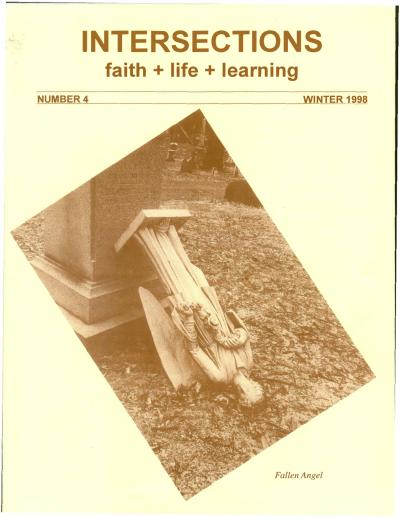
Braxton appreciates the dialectical structure of Santmire’s mandates—“skeletons in our closets and riches in our own vaults”—and reads it as a faithful expression of the Lutheran tradition of Paul, Augustine, and Luther. He argues that Santmire is on target in warning against premature flight to non-Christian traditions for environmental wisdom (theoretical sensitivity does not translate into ecological behavior in practice), and that classical Lutheran social ethics has too often been quietistic. But Lutheran ethics at its best is dialectical, not dualistic—recognizing the interpenetration of church and world, Law and Gospel, eschatological Kingdom and present realities, as in Hegel, Ritschl, Bonhoeffer, Reinhold Niebuhr, and Larry Rasmussen. Braxton commends environmental responsibility, social criticism of unsustainable practices, and a liturgical practice of resistance to instrumentalism as appropriate next steps for Lutheran liberal arts colleges, especially Capital University.
-
 Article
Where Disruption and Vocation Meet: One Path Toward Teaching Reproductive Justice in Challenging Times
Lena R. Hann
No. 57 · Spring 2023
Hann recounts how a missed math class in her first college term led her into volunteer work at a feminist abortion clinic and ultimately a career in public health, and describes how she designed and taught a Reproductive Justice immersive term course at Augustana College through the disruptions of COVID-19, George Floyd’s murder, and the Dobbs decision.
-
Editorial
From the Editor
Jason A. Mahn
No. 50 · Fall 2019
Mahn opens with Lenny Duncan’s observation that the ELCA is 96 percent white — the whitest denomination in the U.S. — and asks how teachers and administrators at historically, predominantly, and persistently white institutions can turn from white privilege and white supremacy toward spaces where people of color thrive and white people are re-formed into antiracist allies.
-
 Article
Cultivating Transformative Responsible Dialogue: Community of Moral Deliberation and Lutheran Higher Education
Per Anderson
No. 35 · Spring 2012
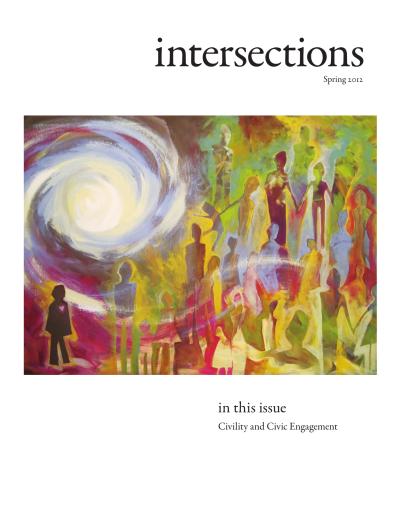
Anderson proposes that ELCA colleges and universities embrace a project of “transformative responsible dialogue” that advances the ELCA’s commitment to be a “community of moral deliberation” and answers the LIFT Report’s call for a culture of faithful discernment. Drawing on Michael Meyer’s “liberal civility,” Martha Nussbaum, Hans Jonas’s responsibility ethic, Patrick Keifert’s ecclesiology of strangers, and Kathryn Tanner on culture, he argues that liberal education at our schools can form students whose dialogue knits together civility, responsibility, and Christian openness to the other.
-
Editorial
From the Editor
Jason A. Mahn
No. 35 · Spring 2012
Mahn introduces five essays from the 2011 Vocation of a Lutheran College Conference at Augsburg, framing how Torvend, Anderson, Svennungsen, Tunheim, and Pribbenow press Lutheran colleges to turn outward—recovering the public character of Luther’s gospel, forming students for moral deliberation, investing in the infrastructure of civic renewal, and pursuing justice and education “off the main road.”