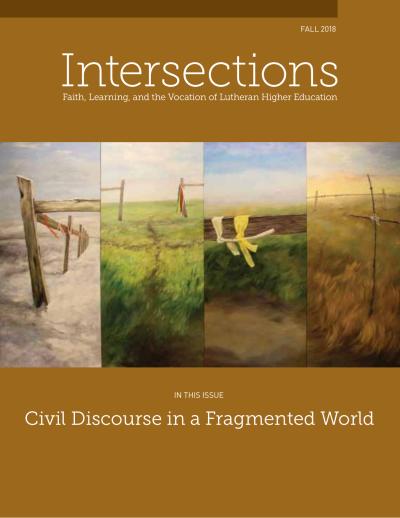
“Just a Little”
(August 2018)
Weary from the rising tides of malice,
families separated in the land of liberty.
How have we become a nation callous
to huddled masses yearning to breathe free?
Prophets’ wisdom, like a bell resounding,
justice bearing mercy and a generous feast for all,
parables of need and grace abounding,
last handful of flour becomes a widow’s generous call.
I just need a little light from Bethlehem,
it would be enough just to reach and touch the
garment’s hem.
join the great refrain, “We shall overcome,”
even dogs will get the master’s table crumbs.
All I need is a little, all I need, just a little.
Immigrant Naomi suffered losses,
like so many refugees, a tale of deep lament,
the faithfulness of Ruth, a new colossus,
“I will go where you go,” a sacred testament.
Mother of all citizens and exiles,
bless us by your welcome with so many things amiss,
courage grant amidst the chaos hostile,
what if we are born for a time such as this?
I just need a little light from Bethlehem,
it would be enough just to reach and touch the
garment’s hem.
Take and bless the gifts counted last and least,
hearts are hungry for a loaves and fishes feast.
All I need is a little, all I need, just a little.
Torch of liberty and faithful beacon,
burn with pilgrim hunger for a world more just and whole,
luminous and wise with fire of freedom,
summon forth the kindred spark in every blessed soul.
I just need a little light…
-
 Editorial
From the Publisher
Mark Wilhelm
Wilhelm frames the issue by reflecting on the Letter of James and the Lutheran tradition of “calling a thing what it is” — arguing that the standards of academic discourse, deeply rooted in Lutheran insistence on frankness and honesty alongside concern for the common good, give NECU institutions a solid platform for sustaining honest but not hateful discourse about divisive issues.
-
Editorial
From the Editor
Jason A. Mahn
Mahn recounts how a participant’s probing questions at the 2018 Vocation of a Lutheran College Conference turned “civil discourse” from an innocuous theme into a contested one — and previews essays that variously urge listening and common ground, or speaking truthfully even when those words sound angry.
-
Article
Vocation and Civil Discourse: Discerning and Defining
Lynn Hunnicutt
Hunnicutt draws on Rabbi Amy Eilberg’s reading of Moses’ calling to identify four features of vocational discernment — attention, wonder, communal consciousness, and humility — and argues that these same qualities are also key aspects of civil discourse, so that forming students for vocational discernment is simultaneously forming them for civility.
-
Article
Polarization, Incivility, and a Need for "Change"
Guy Nave
Nave argues that when Americans demand “change,” they usually mean that “others” need to see things their way — and that meaningful transformative change requires acknowledging the provisional nature of our perspectives, seeking to understand as much as to be understood, and bursting the ideological echo chambers of social media through projects like Clamoring for Change.
-
Article
Putting the Kind Back in Human
Sarah Ciavarri
Drawing on Brené Brown’s research on vulnerability and Edwin Friedman’s family systems theory, Ciavarri distinguishes “kind” from “nice” and argues that courageous, vulnerable, and playful truth-telling — rather than yelling louder or trading pithy memes — is the path back to one another and to our common humanity.
-
Article
It's Time to Rewrite the Rules of Civility
Jon Micheels Leiseth
Leiseth contends that the prevailing rules of civility too often function as the majority’s rules, stifling those facing real harm — and proposes that NECU institutions rewrite civility as “neighboring,” guided by the ELCA’s five values of accompaniment: mutuality, inclusivity, empowerment, sustainability, and vulnerability.
-
Article
The Musician's Vocation
Jeffrey Bell-Hanson
Bell-Hanson argues that musicians, who exercise profound influence over the emotional flavor of a moment, are called not merely to technical proficiency but to a sense of vocation: understanding their art well enough to use it responsibly, to intend truthfulness rather than manipulation, and to articulate its significance in dialog with other disciplines.
-
 Poem
Poem
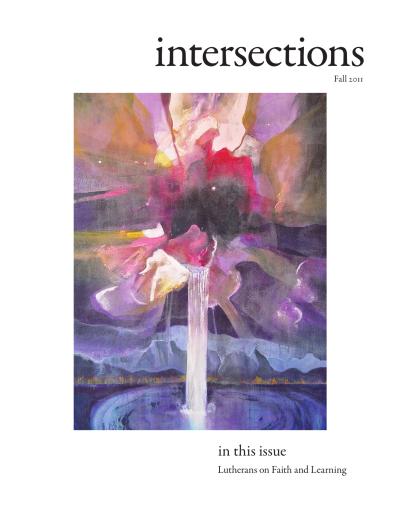
Endtimes
Dave Hill
No. 34 · Fall 2011
A four-stanza meditation on the “last perfect day” when an unblemished Sun makes the cool Ocean roll—and on the relation of each questing mind to the Deep, of each frail mortal to the pulse of the Sea at the edge of the grave. “Let it die full of Life! Let its murmurs and sighs / Give the drama a meaning. Let it not, Lord, die dead.”
-
 Poem
Poem
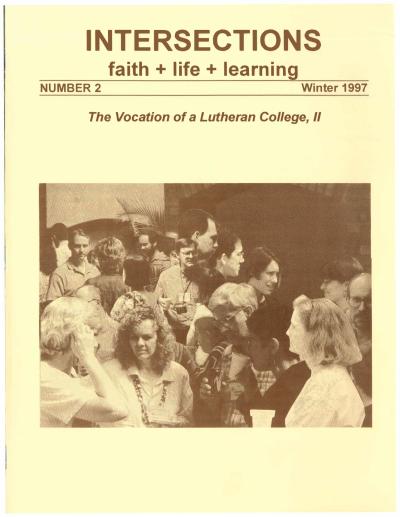
Two Poems: The Advent Carol / The Madonna of Dohany Street
Brian Forry Wallace
No. 2 · Winter 1997
Two poems by Brian Forry Wallace of Capital University: “The Advent Carol,” a litany of the babies who were not adored—the Jewish baby shot with a Luger, the Black child hanged from a tree, the female messiah tossed into a river, the Tutsi infant cut by machetes, the Japanese newborn incinerated by atom bombs, the Chinese baby crushed by Japanese bombs, the aborted Mary’s child—ending with the baby “whom we do not understand, cannot feed, whom we kill”; and “The Madonna of Dohany Street,” on a Holocaust photograph in a Budapest museum of a dead mother and her dead Christ-child daughter in the former ghetto, in which annunciation, nativity, adoration, and crucifixion are seen together in a single instant.
-
 Book Review
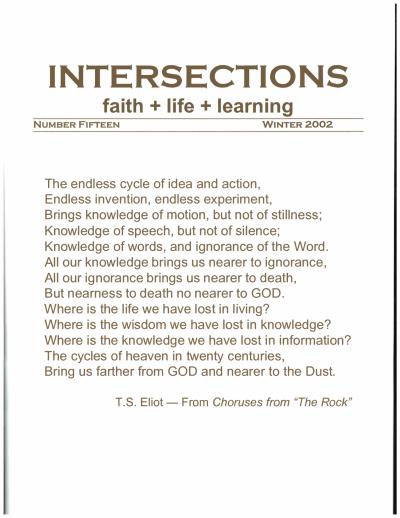
Paul Dovre, ed.: The Future of Religious Colleges
Baird Tipson
No. 15 · Winter 2002
Tipson, president of Wittenberg University, reviews Paul Dovre’s edited proceedings of the October 2000 Harvard Conference on the Future of Religious Colleges (Eerdmans, 2002), summarizing essays by Douglas Sloan on the failure of the “two-realm theory of truth,” George Marsden on faith-shaped scholarship, DeAne Lagerquist, Father David O’Connell, Mark Noll, Robert Benne, Mark Roche on Notre Dame, Joel Carpenter on neo-Calvinist Kuyperianism, and Mark Schwehn on a Lutheran “college-related church” and the centrality of vocation. Against Benne’s suggestion that only two or three robustly Lutheran colleges can be sustained, Tipson defends a less robust but still authentically Lutheran model embodied at places like Wittenberg, Gettysburg, and Roanoke, arguing for the enlightenment commitment to subjecting all truth claims to rigorous criticism and for hiring Marsden-style faith-shaped scholars rather than counting Lutheran heads.
-
 Article
Lutheran Identity, Academic Integrity, and Religious Diversity
Storm Bailey
No. 25 · Spring 2007
Bailey argues that one might rightly say of a college “that’s a pretty good school because it’s religious,” defending the proposition under three headings: academic and curricular virtues, free inquiry, and religious diversity. Drawing on Mark Schwehn’s Exiles from Eden, Richard Hughes on the Lutheran tradition’s “most potent theological resources” for the life of the mind, Parker Palmer, Lendol Calder, Mill’s On Liberty, Newman’s Idea of a University, and the AAUP’s 1940 Statement, he proposes a “critical mass” alternative in which the Lutheran commitment to truth-seeking and self-critique itself requires—rather than tolerates—a religiously diverse faculty whose opposing voices are needed for the mission to flourish.
-
 Article
Hope in the Face of Ecological Decline
Jason Peters
No. 32 · Spring 2010
Peters reads our ecological crisis—a campus “Birth Control Tree,” feminized fish, population, climate, water, and soil—through Alexander Pope, William Blake, Søren Kierkegaard, and C. S. Lewis’s The Abolition of Man, and argues that the modern project of mastering nature has made despair (the unconscious form Kierkegaard named) our condition. He calls for three reorientations: practical (assigning value to domestic arts and place over disciplinary specialization), philosophical (dismantling the Baconian/Machiavellian/Cartesian project of control), and theological (recovering the Church’s rejection of Gnosticism so that grace comes to us by means of nature, not in contempt of it).
-
 Institutional Focus
LibGuide: Introduction to Womanist Theology
Elli Cucksey
No. 56 · Fall 2022
Cucksey, the head librarian at Trinity Lutheran Seminary, recounts how Beverly Wallace’s Introduction to Womanist Theology class — the first offering of the ELCA Seminaries’ Womanist Theology Initiative — led her to build a publicly available LibGuide that amplifies Black women’s voices and gathers the resources of the course for future students.