Since the founding of the ELCA in the late 1980s, the colleges and universities related to this church have changed their self-definition of Lutheran higher education. ELCA colleges and universities have shifted the definition of Lutheran higher education away from adherence to institutional markers, such as the percentage of Lutherans on the faculty or in the student body, to an alignment with educational values derived from the Lutheran intellectual tradition. Intersections has recorded the development of this re-definition, as well as the arguments for it and the debates about it, since the journal’s beginning.
The re-definition of Lutheran higher education began before the 1980s, and a full embrace of the new definition does not yet exist. The institutional-marker definition of Lutheran higher education remains dominant in the ELCA and among many non-Lutherans involved in ELCA higher education. Nonetheless, ELCA college and university leaders have widely accepted the new definition. Recent discussions among college and university presidents have focused on deepening their understanding the new definition and the public articulation of it.
The new collegiate association for ELCA higher education, the Network of ELCA Colleges and Universities (NECU), is working to assist the presidents with these tasks. NECU convened religion and theology faculty from eight ELCA schools, inviting them to prepare recommendations for summarizing Lutheran higher education defined by values drawn from the Lutheran intellectual tradition. Their suggestions will be presented to the presidents who will gather in Chicago for a conference on Lutheran identity in June 2017.
The breadth of research into the Lutheran roots of higher education has unearthed a wealth of insights. Faculty specialists in religion and theology can navigate the historical, theological, ethical, and pedagogical complexities of the research. (You can find their discussions in back issues of Intersections at http://digitalcommons.augustana.edu/intersections.) They can readily describe the values for higher education rediscovered by this research, how these values do and should continue to drive ELCA higher education, and how an alignment with these educational values strengthens the Lutheran identity and mission of ELCA colleges and universities far more than a focus on numbers of students, faculty, and administrators who are personally Lutheran. Furthermore, they can articulate how alignment with these values has allowed ELCA colleges and universities to embrace diverse constituencies while continuing to enroll and educate leaders for the Lutheran community.
This work, however, is daunting for non-specialists in religion and theology, including most ELCA college and university presidents. The June conference is designed to fill the gap. My hope is that the presidents will find the faculty working group’s recommendations a wise, shared framework for articulating our common Lutheran identity—both within our schools and to all our external constituencies.
-
 Editorial
From the Editor
Jason A. Mahn
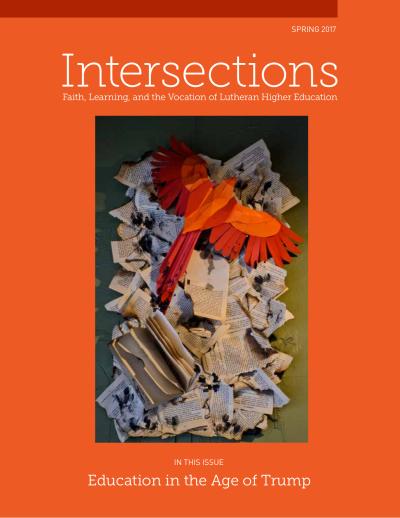
Mahn introduces “Education in the Age of Trump” by recounting a difficult academic year on his own campus — the Augustana “chalking” incident, a Latinx Unidos rally, and post-election conversations with marginalized students and quietly conservative Trump supporters alike — and frames the issue’s essays as careful (re)imaginings of the vocation of Lutheran higher education in an anxious political climate.
-
Article
Higher Education in the Age of Trump
Daniel B. Braaten
Braaten surveys what the Trump administration has and has not done on higher education — from the selection of Betsy DeVos and a rumored Falwell-led task force to the travel ban and expanded deportation priorities — and argues that Lutheran colleges, guided by the ELCA’s social message on immigration, have a special obligation to consider what they will do to protect their most vulnerable students.
-
Article
Resistance in the Age of Trump: An Interview with Ivonne Wallace Fuentes
Jason A. Mahn, M. Ivonne Wallace Fuentes
In conversation with Jason Mahn, Roanoke College historian Ivonne Wallace Fuentes describes how she launched a local chapter of Indivisible after the 2016 election, how the skills of teaching and historical research carry over into grassroots advocacy, and how her sense of vocation (vocare) has become intertwined with the work of advocacy (advocare).
-
Article
Religion in the Age of Trump
Daniel A. Morris
Morris reads the 81% evangelical vote for Donald Trump through two historical theses: that evangelicals’ once-coherent story about Godly participation in political life has fallen apart, and that their long-running tendency to exclude others — once aimed at Black Americans and Catholics — has now turned decisively against Muslims. He argues that scholars of religion and politics have a responsibility to tell these stories well, and that appeals to classroom objectivity can no longer be a luxury.
-
Article
Room at the Table: Reflections on Identity and Inclusion from a Lutheran-Friendly Muslim
Rose Aslan
Aslan reflects on her experience as a Muslim professor of Islamic studies at California Lutheran University — teaching “Introduction to Christianity” from her strengths in the Abrahamic religions, preaching an Eid khutba in a Lutheran chapel, and conversing with the university’s convocators — and proposes “Lutheran-friendly Muslim” as a way of being host and guest at once in a pluralistic Lutheran institution.
-
Article
Jonah: The Anti-Hero of Vocation
Martha E. Stortz
In a chapel talk first given at Augsburg College’s Vocation 2.0 series in September 2016, Stortz reads the prophet Jonah as the great anti-hero of vocation — one who tries to outrun God’s call to the great city of Nineveh — and argues that, in a season of urban violence and divisive election-year rhetoric, the story is less about public calling than about being called by the publics in our midst.
-
Article
Why Did the Chicken Cross the Road? A Homily on Liminality and Vocation
Lori Brandt Hale
Drawing on Wes Moore’s The Other Wes Moore, Warren St. John’s Outcasts United, Victor Turner’s anthropology of liminality, and Dietrich Bonhoeffer’s poem “Who Am I?”, Hale considers how Hmong, Muslim, Latinx, LGBTQ+, non-traditional, and other students live in “double liminal” spaces — and asks whether liminality might itself be a place of transformation in conversations about vocation.
-
Poem
Poetry: After Months of Clouds, the Sun; First Bird
Farah Marklevits
Two poems by Augustana writing instructor Farah Marklevits: “After Months of Clouds, the Sun” calls the reader up from a desk of doom-scrolling addiction and into breeze and light, while “First Bird,” epigraphed by Emily Dickinson, watches a robin flit through mid-January Midwestern loam as a phenological fairy tale of dread and the urge to live.
-
 Article
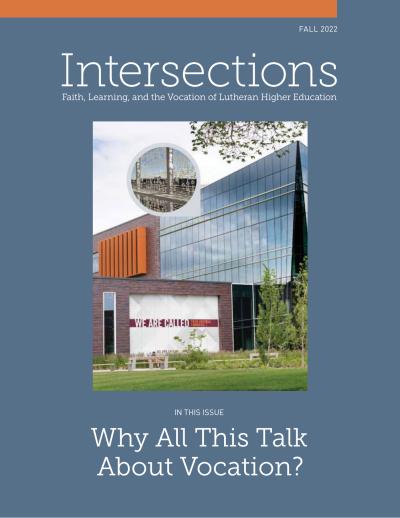
Why All This Talk About Understanding the Mission of NECU Member Institutions as a Vocation?
Mark Wilhelm
No. 56 · Fall 2022
In his valedictory keynote, retiring NECU Executive Director Mark Wilhelm argues that Lutheran higher education is, properly understood, vocation-based education — outlining four core practices recovered over the past fifty years and naming the constructive and corrective work still to be done, including a fuller embrace of DEIJ and of the diverse vocations of NECU’s 27 institutions.
-
 Editorial
From the Publisher
Mark Wilhelm
No. 55 · Spring 2022
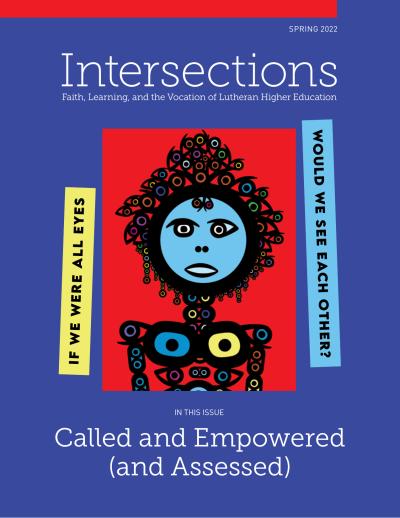
Wilhelm announces his planned retirement on January 31, 2023, after serving as the founding executive director of the Network of ELCA Colleges and Universities, and gives thanks for the privilege of helping NECU articulate a shared vision for Lutheran higher education in twenty-first-century North America.
-
 Editorial
From the Publisher
Mark Wilhelm
No. 53 · Spring 2021
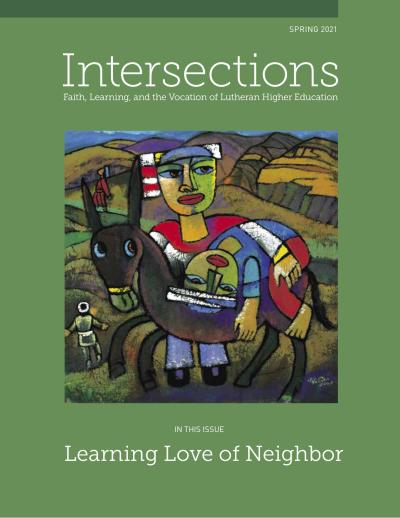
Wilhelm reflects on an NPR report of teenagers’ pandemic diaries and the fraught Christian history of struggling to live out Jesus’s ethic of love, framing the issue as a record of NECU institutions working out how to act for the common good through the pandemic of 2020–2021.
-
 Editorial
From the Publisher
Mark Wilhelm
No. 52 · Fall 2020
Wilhelm argues that the “hackneyed” expressions of higher education — “you are not just a number,” “the college experience,” “risen to the challenge” — tell the simple truth about NECU institutions even as the Covid-19 pandemic has pushed budgets, employees, and campus life to the breaking point.
-
 Editorial
From the Publisher
Mark Wilhelm
No. 51 · Spring 2020
Wilhelm frames the issue by tracing how Lutheran educational ideals — once a primary source of contemporary higher education — were masked in the United States, and introduces a NECU initiative that uses the case of business ethics to explore Lutheran social teaching as an academic resource.
-
 Editorial
From the Publisher
Mark Wilhelm
No. 50 · Fall 2019
Wilhelm frames the issue by noting that a federal court’s vindication of Harvard’s race-conscious admissions process is a win for higher education’s commitments to diversity, equity, and inclusion — and argues that for Lutheran higher education, the commitment to diversity is an old and foundational claim, rooted in Christianity’s openness to all and reflected in the four diverse gospels of the New Testament.
-
 Article
A Lutheran Dialectical Model for Higher Education
Ernest L. Simmons
No. 37 · Spring 2013
Drawing on “The Freedom of a Christian,” simul justus et peccator, Richard Hughes, Joseph Sittler, Martha Nussbaum, and Tom Christenson, Simmons argues that the Lutheran tradition informs an open, dialectical educational model that holds Christian and academic freedom together. He locates vocation at the intersection of the practical (why are you here?) and the existential (why are you here?) and proposes Lutheran higher education as education for self-transcendence and leadership Soli Deo Gloria.
-
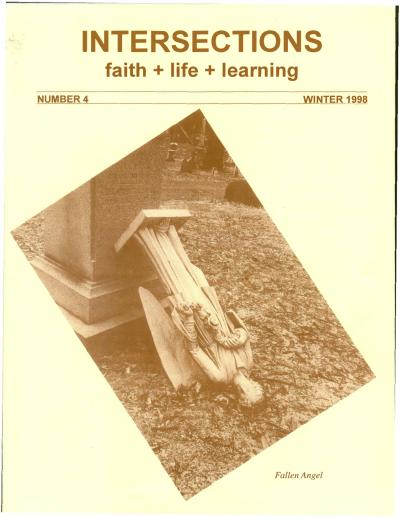 Article
A God of Peace and Love? Reflections From a Biblical Scholar
Karla G. Bohmbach
No. 4 · Winter 1998
Bohmbach responds to Gregory Clark’s call to proclaim Jesus on Lutheran campuses with biblical-scholar reservations. Israel’s sacred texts also include the herem ban, the conquest narratives, and a God who fights for Israel; the Christian canon includes the apocalyptic violence of Revelation. To proclaim Jesus is therefore to proclaim a particular and contested figure within a tradition that has its own internal violence—not a generic God of peace and love. Bohmbach asks what it would mean for staff, administrators, and teachers on a college campus to take seriously the Jesus who made himself vulnerable to the violence of his world, even to the point of suffering for it, and whether Lutheran colleges are prepared for such a vocation.
-
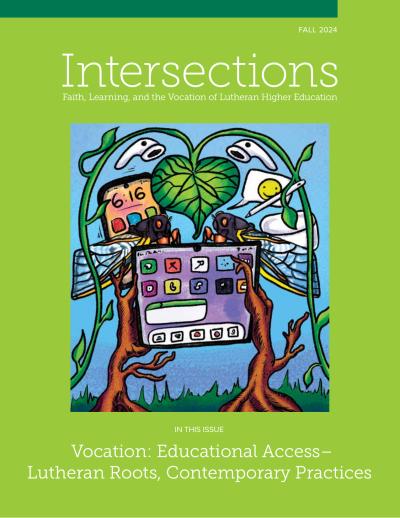 Editorial
From the Publisher: Reflections on the 2024 Vocational Leaders in Higher Education Conference
Lamont Anthony Wells
No. 60 · Fall 2024
Wells reflects on the 2024 VLHE Conference theme — “Educational Access: Lutheran Roots, Contemporary Practices” — tracing today’s commitment to inclusivity back to Martin Luther’s radical 16th-century insistence that both boys and girls be educated, and previews NECU’s expanded engagement of student leaders alongside faculty and administrators.
-
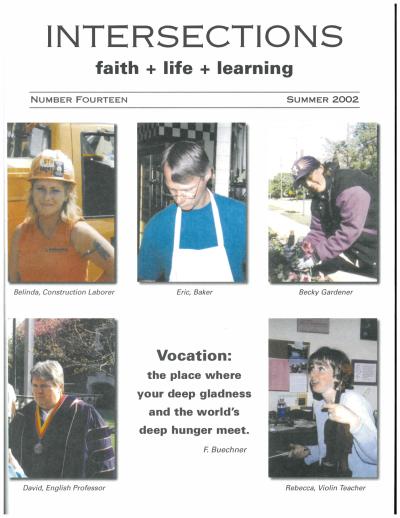 Article
Renewing a Sense of Vocation at Lutheran Colleges and Universities: Insights from a Project at Valparaiso University
Marcia Bunge
No. 14 · Summer 2002
Bunge, director of the process for writing Valparaiso’s nearly two-million-dollar Lilly grant on the Theological Exploration of Vocation, argues that contemporary culture’s reduction of vocation to either paid work or self-fulfillment requires Lutheran institutions to renew attention to a rich theological concept rooted in Luther’s expansion of vocation beyond the priesthood. She outlines eight low-cost “doorways”—caring adults, prayer, worship leadership, music and the arts, service, cross-cultural experience, church camps and wilderness, study and reflection—and describes Valparaiso’s two-program structure: a Campus-Wide Program weaving vocation into Freshman Core Courses and chapel life, and a Church Vocations Program for students considering full-time ministry. She closes with four troubling questions for any institution carrying out such a grant: what faith traditions can learn from one another, how to involve parents, whether faculty and staff have space to reflect on their own vocations, and whether daily institutional practices—family policies, treatment of low-paid staff, environmental responsibility, obligations to the wider community—actually reflect a commitment to love of neighbor.
-
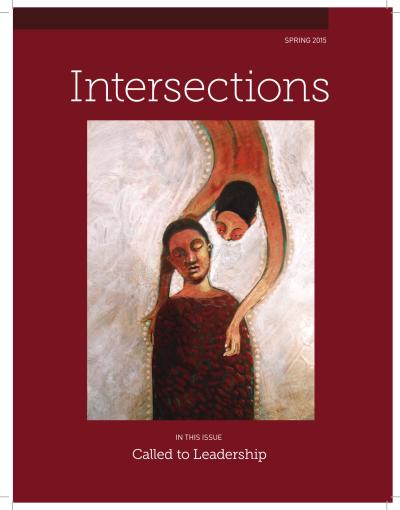 Article
Women in Leadership: Obstacles, Opportunities, and Entry Points
Susan Hasseler
No. 41 · Spring 2015
Drawing on two focus-group conversations with female faculty and academic administrators at Augustana College (Sioux Falls), Hasseler traces four obstacle/opportunity themes for women in academic leadership — valuing the intellectual work of leadership, religious and cultural interpretations of gender roles, caregiving realities, and embracing a strong voice — and proposes deliberate next steps for cultivating inclusive excellence on ELCA campuses.
-
 Article
The Lutheran Liberal Arts College and Care for the Earth
H. Paul Santmire
No. 3 · Summer 1997
Santmire, author of The Travail of Nature, proposes three mandates for the Lutheran liberal arts college: take responsibility for spiritual particularity by confronting the ambiguities of the classical Christian tradition (Lynn White’s charge against anthropocentric Christianity vs. the Franciscan ecological tradition from Irenaeus through Luther) and of classical Lutheran social ethics (the Two Kingdoms, Romans 13, the Third Reich, Bonhoeffer); promote responsible cultural criticism (against Thoreau’s sociopathic anti-urban suburbanism); and promote a holistic environmental ethos through an interdisciplinary core curriculum with ecology as the queen of the sciences, a community that liberates the social imagination (Mumford, Marcuse), a cosmic Liturgical praxis rooted in the Colossians 1:15–20 hymn to the cosmic Christ, and an academy that models ecological responsibility.