The women came into the room in a variety of states and stages—laughing, cautious, curious. I knew some of them very well and others just a little. In preparation for a presentation at the 2014 Vocation of a Lutheran College Conference, I had invited all female faculty and academic administrators at Augustana with five or more years of experience to gather for food, drink, and conversation about women in leadership. After grabbing a cup of coffee or glass of wine, the women settled in and the conversation began in earnest.
Toward Inclusive Excellence
Throughout my professional life, my work has consistently focused on promoting full inclusion in educational settings. I began that work focusing on students with disabilities. However, having descended from a line of wonderful women who have sought to find their calling and use their leadership gifts in various historical contexts, my professional interests soon expanded to include women in leadership. Experience in ethnically diverse school settings further broadened this scholarly interest to include race and ethnicity and inclusion in K-12 and higher education settings. The work of the American Association of Colleges and Universities on inclusive excellence brought coherence to this broader set of interests and has shaped much of my work since then, including this study.
I first came across the concept of inclusive excellence in Making a Real Difference with Diversity (Clayton-Pedersen, et al.) in which the authors articulate a powerful argument for the idea that there is no true excellence in education without the inclusion of diverse voices. While I was already convinced that the full inclusion of women and people of color in education and leadership was an integral part of our calling to “act justly and to love mercy and to walk humbly with our God” (Micah 6:8), the idea that the inclusion of all voices is essential for educational excellence seemed to be particularly powerful and compelling—and very closely aligned with the basic tenets of Lutheran higher education. If we intend to prepare all of our students to lead and serve in a diverse and challenging world, a clear understanding of the ways in which Lutheran institutions of higher education support and inhibit the inclusion of diverse perspectives seems especially important. Since leadership plays such a key role in shaping the mission and daily work of an institution, women and people of color must be engaged in leadership roles at all levels.
Unfortunately, while the positive impact of women in leadership has been discussed and clearly demonstrated in multiple areas over multiple decades, Benchmarking Women’s Leadership in the United States, a recent extensive study of leadership throughout society, notes that “women remain, on the average, less than 20% of positional leaders across 14 sectors in the United States” (Lennon 6). If we believe that “meeting complex challenges of the 21st century requires diversity of thought, experience and perspective”, this report asks, “how can our nation begin to meet these challenges with this kind of minimal representation of diverse perspectives in leadership?”
“Women are often among the highest performers in institutions and institutions with women in positions of leadership often perform exceptionally well.”
In their detailed examination of top performers across all 14 sectors, the authors demonstrate that women are often among the highest performers in institutions and that institutions with women in positions of leadership often perform exceptionally well (5). In their section on academia, for example, the they note that “while women only hold 29% of the tenure track positions at doctoral institutions, female researchers comprised 56% of grantees for some of academia’s more prestigious awards in education, health, humanities, and science” (8). The report highlights the particularly powerful influence of academe on society, stating that
academic leaders can have far-reaching influence on the universities they represent, as well as within other institutions where their scope of research and knowledge can affect much of society. In particular, female academicians can influence many arenas outside of their home institutions in their pursuit of generating knowledge and educating leaders of tomorrow. Like all educators, their reach surpasses a discipline or field. Perspectives brought by diverse women representing various socioeconomic, racial and ethnic backgrounds encourage a breadth and depth of ideas that cannot be found in a homogeneous pool. (12)
In the context of this compelling literature on inclusion and excellence and the positive impacts women have on the institutions and organizations they serve, it was clearly high time to determine how women were experiencing leadership in my own institution: Augustana College, Sioux Falls, South Dakota. Twenty-two articulate colleagues helped me explore these questions in two delightful focus group conversations.
Claiming the Call to Lead
The four open-ended questions used to shape these conversations came from the literature on leadership development, which consistently points to the importance of perceptions of personal leadership capacity, encouragement to lead by mentors and other significant others, and the clear identification of obstacles and opportunities as key components in the development of leaders. The questions are as follows:
- How have you been involved in or provided leadership at Augustana?
- How did you become involved in leadership? What kind of encouragement, if any, did you receive to lead?
- Have you experienced or observed any obstacles to or opportunities that support the engagement of women in leadership at Augustana? If so, what were/are they?
- What specific things can Augustana do to ensure that the leadership gifts of women are fully utilized to serve our mission?
As a way to help the participants get to know one another, I began each conversation with a question about the leadership roles they held on campus. However, the responses to this question were a bit surprising. Although most of the women either currently or had recently held a specific leadership role such as department chair or program director, they all began by identifying general leadership activities such as leading in the classroom, mentoring students, or serving on committees. After I identified specific leadership roles on campus and pointed out a few folks in the room who held those roles, one of the women said, “Come on, women! Men would have easily claimed these positions. What is our problem?” Only then did the participants begin to name the leadership roles which many of them held and to explain those roles in more detail.
While some of the challenges of identifying with “administration” particular to academe will be explored later, the tendency for my female colleagues to be more comfortable identifying relational roles than hierarchical or authoritative roles aligns with the literature on gender and leadership styles. Relational leadership, a collaborative and process-oriented approach described by Regan and Brooks , Uhl-Bien, and others, seems to develop out of the lived experience of women. While this leadership style has been shown to provide real benefits to an organization, it can also create challenges for the promotion and advancement of women in leadership. Understanding that one can claim a call to lead while embracing a relational style appears to be a good topic for future examination at Augustana, particularly as we provide powerful leadership modeling for our students, both male and female.
“The tendency for my female colleagues to be more comfortable identifying relational roles than hierarchical or authoritative roles aligns with the literature on gender and leadership styles.”
In light of the prominent place that identifying, encouraging, and mentoring members of underrepresented groups plays in the leadership literature, the response of this group of women to the question about encouragement to lead was also quite interesting. Again, when asked how they became leaders, the initial tone was self-deprecating. “No one else wanted the job so here I am!” And once again, a group member used humor to push her colleagues, noting that, “Consider who might be in charge if you choose not to be!” This comment led to a number of poignant comments on leadership including being “allowed to lead” by the senior male faculty in her department “who did not shut me down” to the affirmation of being appointed or nominated for a role where “they saw something in me that I did not see.” Many participants spoke about the influence of mentors, both male and female. As one participant shared, “Having a mentor who saw my leadership gifts and challenged me to use them changed my life.”
The role of encouragement and mentoring in leadership development is prominent in leadership literature (and in the multiple webinars and podcasts that are offered to us daily via email). However, while we have an extensive mentoring program for new faculty at Augustana, mentoring for new and prospective leaders is quite limited. Clearly there is an opportunity and need to more systematically encourage women to consider their calling to leadership through formal and informal mentoring programs.
Obstacles and Opportunities
While obstacles and opportunities around leadership emerged in response to the first two questions, the conversation became very lively when question three was asked directly. Having engaged in these kinds of conversations for many years, I was particularly struck by the tone of hope and empowerment surrounding the very real challenges that women in this group face in leadership roles. When obstacles were shared, the participants listened carefully and sympathetically but also shared ways in which those obstacles have or could be turned into opportunities. Within this part of the conversation, four major themes emerged.
Valuing the intellectual work of leadership
The rhetoric about academic leadership among faculty often has a negative or dismissive tone. Faculty members who take on administrative roles frequently reference “Crossing over to the dark side” and are offered condolences on their appointments. “You lose 20 IQ points the minute you become an administrator,” is another familiar comment. Upon my arrival at Augustana, a faculty member who was incensed about a negative response to a request said, “You do have a degree in something, don’t you?” (My diplomas were hung in a prominent location in my office the next day!) As one member of the focus groups indicated, “I couldn’t wait to become department chair to make some things happen but I keep having to pretend it is a burden.”
Women are certainly not the only academics who hear this kind of rhetoric but the impact can be stronger on those who are seeking to establish academic credibility in a historically male-dominated context. One faculty member articulated this challenge very well when she said, “The expectation that women will be the worker bees rather than the wise scholars makes it even more difficult to maintain academic credibility when you take on a leadership role.” As new definitions of intellectual work and academic leadership emerge, such as those articulated in the New American Colleges and Universities study on holistic departments and conversations about vocation and leadership take on new energy, there is an opportunity to replace this negative rhetoric with language that identifies and values the rigorous intellectual work of leadership. This shift in rhetoric will be especially important as we seek to encourage women to use their leadership gifts in academic contexts.
Religious and cultural interpretations of appropriate gender roles
While perspectives on gender roles have shifted significantly in the past two decades, the theme of student perceptions about women’s roles still emerged as an issue in these conversations. Multiple stories were shared about either subtle or obvious ways in which students challenged female faculty members’ authority or bypassed them to consult with male colleagues. Religion Department faculty and Campus Ministry staff members described the particular challenge of addressing students’ strong beliefs about biblical interpretations of women’s roles in church-related leadership. Women in historically male-dominated disciplines related examples of the ways in which they have had to work particularly hard to establish credibility with students and their colleagues. In addition, participants discussed student expectations that they will be more “nurturing” or “flexible” than their male colleagues and how this has impacted their classroom and scholarly work.
Having spent a lifetime addressing issues relating to gender roles, this conversation could have been quite discouraging. However, the women in this group immediately offered examples of ways in which they used these events as learning opportunities for male and female students. They also shared powerful examples of collaborative efforts with male allies who recognized the problematic behavior and offered to work with the female faculty members to address it. Informal conversations and formal discussion groups have emerged around gender roles and continue to provide a place for men and women to be educated and to educate one another around gifting, calling, and equity. Providing direct support and encouragement to those engaging in this educative work is essential for addressing these perceptions in a constructive way.
The cultural realities of caregiving roles
While group members were able to share powerful and exciting examples of ways in which perceptions of women’s roles were being addressed on campus, this conversation also led to a discussion of the ongoing imbalance in the amount of time women spend on family care responsibilities. Recent studies by the Family Caregiver Alliance and others indicate that women spend 50 percent more time providing care than male caregivers and that women are more likely to opt out of employment while engaged in caregiving. While embracing their complex lives as professionals and family caregivers, the women in this group identified the real impact that caregiving has on their professional lives and in particular on their willingness to take on leadership roles.
“The group discussed the opportunity our institution has to ‘live up to its family-friendly rhetoric’ as we look at the impact of caregiving on our faculty and staff.”
The group discussed the opportunity our institution has to “live up to its family-friendly rhetoric” as we look at the impact of caregiving on our faculty and staff. Augustana has already developed shared leadership roles in a number of areas but continued examination of leadership expectations and time allocation is needed. In addition, we have recently introduced parental leave and pre-tenure extension policies that provide more appropriate support for men and women to engage in family caregiving. While these are steps in the right direction, it is clear that we need to expand our efforts to make it possible for caregivers to use their leadership gifts in appropriate ways.
Embracing a strong voice
Responses to “strong” women have been a part of the public discourse since Deborah Tannen’s You Just Don’t Understand: Women and Men in Conversation became a New York Times bestseller in 1990. It is clear from the response to Sheryl Sandberg’s 2013 book, Lean In, that this conversation is still ongoing. It was also clear from the focus group conversations that female leaders at Augustana are still processing the messages they receive about speaking with a strong voice.
“One woman said, ‘Sometimes I moderate my voice so much that it no longer sounds like me at all.’”
Some of the most poignant moments of the conversation came when women talked about addressing the general discomfort they still hear regarding strong women. They talked about the stress of constantly needing to monitor and moderate their speech and interactions; the difficulty of “finding the right balance between direct and indirect, firm and gentle, confident and vulnerable.” One woman said, “Sometimes I moderate my voice so much that it no longer sounds like me at all.” Another stated, “I want to be heard, not liked.” A third said, “What if I’m not a subtle kind of person? Why can’t I still be heard even if I’m loud or passionate?” Many shared painful instances of being called pushy or bossy and having to determine whether to be quiet or to move forward in spite of these silencing labels.
However, as with the other themes, the women also talked about ways in which this ability to evaluate impact and moderate one’s voice has made them more effective communicators and leaders. As one participant said, “Learning how to read an audience and choose a particular tone has made me a better teacher.” Another pointed out that “the ability to negotiate is a special gift women have developed because of our lived experience.” One participant said with a twinkle, “I like the challenge of trying to figure out how to say something in a way that persuades others to do what I need them to do.” And one participant summarized the conversation with particular elegance when she said, “Women know how to feel the openings and find the entry points; we dance with the elements.”
The strong interest in the theme of women and voice was also evident when I presented this information at the 2014 Vocation of a Lutheran College Conference. After sharing the four obstacle/opportunity themes described above, each table group was asked to choose one of these themes and discuss how it is embodied on their campuses and how they might overcome the obstacles and expand on the opportunities. Six out of the seven table groups chose to discuss the theme of women’s voice. The challenge of having to constantly monitor and moderate one’s voice in order to be heard clearly resonated with female conference participants as well.
What Now?
Since these groups immediately gravitated toward overcoming obstacles and expanding opportunities, many excellent suggestions for next steps emerged:
- We need to be more deliberate about nominating, encouraging and appointing women to leadership positions in our institutions. In addition to reviewing hiring and promotion procedures and ensuring that women are in the pool of candidates for leadership positions, we need to look very carefully at the results of these efforts. For example, as I have examined the numbers at Augustana, I have noted that we have good representation of women in the department chair role but not necessarily as council and committee chairs, which are very important roles in the academic division. This is something that needs appropriate review and strategic action.
- We need to frequently and specifically affirm the leadership gifts of women. Women who have evidenced particular gifting in this area may need to be invited, encouraged, and even persuaded to take on leadership roles since they may not be nominated or nominate themselves. This encouragement needs to be deliberate and ongoing in order to create a climate of support for women in leadership.
- More professional development needs to be provided for all current and prospective leaders. In addition to providing specific training and mentoring for division, department, and council and committee chairs, thoughtful conversations about the intellectual calling of leadership need to be initiated and supported. These conversations very effectively could include students and staff in order to build a stronger leadership culture across the campus.
- Careful examination of our expectations of leaders, including distribution of tasks and appropriate allocation of time, is an ongoing need. Models of shared leadership, reasonable goals and timelines, and ongoing discussion of roles can help make leadership manageable and more appealing to women and men.
Capacity and Calling
These conversations were both hopeful and sobering. It is clear that we have significant work to do on our campuses to ensure that we are experiencing the inclusive excellence that diverse leaders bring. However, we have both the calling and the capacity to embrace this work. Expanding the conversations to include people of color, male faculty and staff, and students will provide even more richness. What an incredible and important task we have as we create places for all of the members of our community “to hear and respond to their callings” (Mahn 15) and to find those grace-filled places “where the light falls” (Patel 25).
Works Cited
Clayton-Pedersen, Alma R., Sharon Parker, Daryl G. Smith, Jose F. Moreno, and Daniel H. Teraguchi. Making a Real Difference with Diversity. Washington DC: American Association of Colleges and Universities, 2007.
Family Caregiver Alliance. Women and Caregiving: Facts and Figures. 2012. Accessed 1 January 2015, https://www.caregiver.org.
Lennon, Tiffani. Benchmarking Women’s Leadership in the United States. University of Denver-Colorado Women’s College. 2013. Accessed 1 January 2015, http://www.womenscollege.du.edu/media/documents/BenchmarkingWomensLeadershipintheUS.pdf
Mahn, Jason A. “Why Interfaith Understanding is Integral to the Lutheran Tradition.” Intersections 40 (Fall 2014): 7-16.
New American Colleges and Universities. Re-Imagining the Academic Department: The Holistic Department Concept. 2014. Accessed 1 January 2015, http://www.anac.org/academy/NACU%20Holistic%20Department%20Draft%20Report%205May14.pdf.
Patel, Eboo. “What it Means to Build the Bridge: Identity and Diversity at ELCA Colleges.” Intersections 40 (Fall 2014): 17-25.
Regan, Helen B. and Gwen H. Brooks. Out of Women’s Experience: Creating Relational Leadership. Thousand Oaks, CA: Corwin Press, 1995.
Sandberg, Sheryl. Lean In: Women, Work, and the Will to Lead. New York: Knopf, 2013.
Tannen, Deborah. You Just Don’t Understand: Women and Men in Conversation. New York: HarperCollins, 1990.
Uhl-Bien, Mary. “Relationship Leadership Theory: Exploring the Processes of Leadership and Organizing.” The Leadership Quarterly 17:6 (December 2006): 654-76.
-
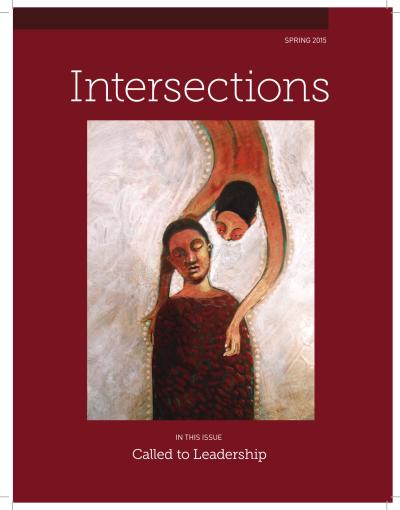 Editorial
From the Publisher
Mark Wilhelm
Wilhelm celebrates the leadership of ELCA colleges and universities within American higher education — from presidential service in major higher-education agencies to recognized leadership in global education and interfaith understanding — and lifts up the health of the ELCA network of schools as a church-related community that maintains shared identity while living as good citizens of the larger academy.
-
Editorial
From the Editor
Jason A. Mahn
Mahn introduces the “Called to Leadership” issue by worrying that training for leadership has become so ubiquitous in higher education as to be nearly meaningless, and recovers Luther’s sense of leadership as service — a calling to be a “slave” whose learning, power, and wisdom belong to the unlearned, the oppressed, and the foolish — as the shared mission of Lutheran colleges to train servant-leaders.
-
Article
Vocational Leadership
Darrell Jodock
Jodock proposes “vocational leadership” as a name for a distinctive educational value at the heart of a Lutheran college — one that seeks to benefit the neighbor and the community, inspires and invites others to participate in that service, and is institutionally anchored in the Lutheran concept of vocation. He unpacks twelve facets of vocational leadership and ties them to Luther’s own leadership around indulgences, public schooling, and beggary.
-
Article
Sharing Leadership within Colleges and Universities
Leanne Neilson
Building on Jodock’s framework, Neilson applies vocational leadership to the unique work environment of higher education — mission statements, faculty governance, the slow pace of consensus, and the sometimes uneasy relationships between faculty and staff — and asks how leaders, followers, and team players can create an atmosphere of mutual empowerment on Lutheran college campuses.
-
Article
Mentoring in the Academy: Of Gurus, Coaches, and Sponsors
Faith Wambura Ngunjiri
Ngunjiri urges faculty, staff, and administrators in faith-based institutions to assemble a “personal board of directors” of mentors — connectors, sponsors, taskmasters, motivators, dreamers, sages, and proofers — and reflects on how race and gender complicate mentoring in predominantly white, male-led ELCA institutions, where women and minorities must reach out to build the “cloud of witnesses” they need to thrive.
-
Article
The Dangers of "Vocation" for Students Thinking about Career
Carl Hughes
Hughes warns that Lutherans too often use “vocation” as a theologically glorified synonym for a fulfilling career — a misuse that constricts God’s call to our jobs and excludes minimum-wage workers, caregivers, and others from the dignity of calling. Recovering Luther’s expansive understanding, he argues that vocation refers first to people, not professions, and must always be bigger than any one aspect of our lives.
-
Article
Superheroes and Origin Stories: Tools to Discover and Claim One's Callings
TJ Warren
Warren argues that the “Hero’s Journey” — Joseph Campbell’s monomyth with its ordinary world, call to adventure, mentors, and return with the elixir — offers a powerful pedagogical tool for helping college students discover their origin stories and claim their callings. Drawing on Superman, Wonder Woman, and Rosa Parks alike, he invites educators to mentor students into becoming the heroes of their own lives.
-
Article
Leading from Within: Peer-Learning Consultations to Explore Our Callings and Campus Capacities for Leadership
Chris Johnson
Johnson reframes vocational leadership as “soul work” that calls for the deep mind as much as the conscious one, and offers two practices — deep listening and a modified Quaker clearness consultation — as ways for campus colleagues to listen one another into existence. Drawing on Sharon Daloz Parks, Marshall Ganz, Parker Palmer, and Mary Rose O’Reilley, he invites readers to map their stories of self, us, and now.
-
Book Review
Old and New Ideas of the Liberal Arts: A Review of Claiming Our Callings
David Crowe, Katie Hanson
Crowe and Hanson review Claiming Our Callings: Toward a New Understanding of Vocation in the Liberal Arts (Oxford 2014), a collection of thirteen essays by St. Olaf faculty edited by Kaethe Schwehn and L. DeAne Lagerquist. They commend the book’s thoughtful, sincere engagement with consumerism, sustainability, Buddhist meditation, and Lutheran-Bonhoefferian theology — and recommend it for any liberal arts campus pulled between idealistic mission and career-minded pressure.
-
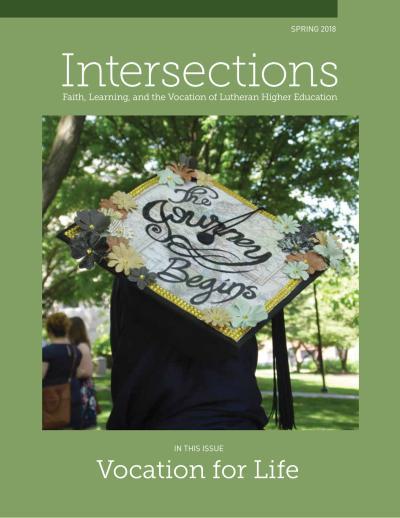 Article
One Life, Many Callings: Vocation Across the Lifespan
Katherine Turpin
No. 47 · Spring 2018
Turpin, drawing on the collaborative research behind Calling All Years Good, traces how vocational discernment shifts through adolescence, younger adulthood, middle adulthood, late adulthood, and older adulthood — arguing that focusing vocation on entry into the workforce limits the capacity of intergenerational college communities to wrestle with calling throughout life.
-
 Article
Dual Citizenship in Athens and Jerusalem: Ricoeur's Hermeneutics and the Promise of Lutheran Higher Education
Mark C. Mattes
No. 19 · Summer 2004
Mattes proposes a Lutheran model of Christian higher education that develops conversation between faith and learning while preserving the integrity of each, in contrast to Reformed, Roman Catholic, and Mennonite/free-church alternatives. Drawing extensively on Paul Ricoeur’s hermeneutics of suspicion and retrieval, his account of myth and symbol, and his understanding of truth as manifestation rather than mere correspondence, Mattes argues that issues of faith can be genuinely public; that the four phenomenological contours of dialogue—risk, listening, mutuality, and open-endedness—mark authentic Lutheran pedagogy; and that Lutheran education is best served when it charts a path between accommodationist and sectarian responses to the liberal-rationalist tradition.
-
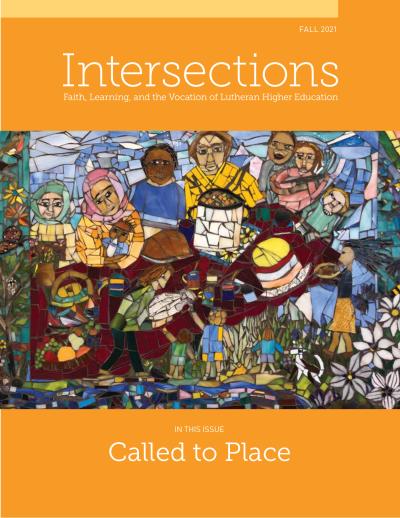 Article
Just Communities: From Liberal Arts in Prison to Racial Healing over Zoom
Monica Smith
No. 54 · Fall 2021
Smith showcases how Augustana College’s commitment to social justice extends into the Quad Cities through two initiatives: the Augustana Prison Education Program at East Moline Correctional Center, and Racial Healing conversations developed through the Truth, Racial Healing and Transformation framework.
-
 Reflection
Vocation
Matt Peterson
No. 10 · Fall 2000
In a chapel homily, St. Olaf student Matt Peterson quotes former St. Olaf professor Howard Hong’s 1955 Our Church and the World—“the tragedy is that we seem to have lost the full grasp of the Christian vocation”—to argue that vocation, from the Latin vocare, is centrally a call into daily communion with God and into continually becoming Christian, not the title of a successful career marked by GPA, win-loss records, honorary degrees, or net worth. Drawing on Anthony Bloom on prayer that must be lived, he indicts the dread of Monday, the “come hell or high water” demand for production, and the “faith community” that we take on faith.
-
 Book Review
The Prophetic Vocation and the Nature(s) of College: Reimagining College with Jim Farrell
Peder Jothen
No. 39 · Spring 2014
Jothen reads the late Jim Farrell’s The Nature of College as a prophetic critique of the dual nature(s) of college—its socio-cultural “normal” and its ecological habitat—and argues that Farrell’s call to model an “Anthropocene Responsibility” resonates with the prophetic dimension of Lutheran higher education. He proposes a re-imagined “About St. Olaf” that names vocation, ecological dependence, and personal involvement as the operative goods of college.
-
 Article
The Value of Evoking Vocation and the Vocation of Evoking Value
Mark Schwehn
No. 38 · Fall 2013
Schwehn answers Michael Staton’s call to “disaggregate” the components of a college degree by insisting that Lutheran education is integral and whole. Working through Bruce Kimball’s history of liberal education, Cardinal Newman, and Leon Kass on Athens and Jerusalem, he argues that Lutherans should defend liberal learning on instrumental grounds and offers the figure of the “local genius”—exemplified by his Valparaiso colleague John Strietelmeier—as the form of human excellence that Lutheran colleges uniquely cultivate.