I am writing this article looking out my home office window onto a canopy of old-growth trees. It is 8:00 p.m. on a late August day, and I am struck by two things. One, nighttime is rapidly falling, and two, there is a single patch of yellow near the crown of a sea of green. It is still summer, though there are no longer 15 hours of daylight in Minnesota. It is not yet autumn, though there are hints of it everywhere. The view from my window reminds me of what I already know: we live our lives in the spaces “between no longer and not yet.”1
I first came across this idea of the “space between” several years ago in a blog post by Nancy Levin. She writes, “Honor the space between no longer and not yet.”
Of the host of spaces between that existentially mark this present time, given my work at St. Olaf College as the Director of Programming, Engagement, and Innovation for Congregational Thriving, a few are critical to me: the space between no longer flourishing denominational churches and a not yet determined post-Christian church; the space between a no longer pre-George Floyd world and a not yet realized world of racial justice; the space between a no longer binary worldview and a not yet accomplished non-binary way of being. Equally significant are the personal spaces between that mark all of our lives—spaces between jobs, relationships, and stages of life, spaces between joy and sorrow, history, and hope.
Levin reminds, however, that it is not just about recognizing these spaces between, but honoring them. One way to do this is to engage in spiritual practices that “deepen…relationships with the sacred and the world around”2 us in ways that open us to the unique, creative possibilities that a particular space between affords. Such honoring is the purpose of the Vocare spiritual practice.
Developed as a part of the Nourishing Vocation Project, Vocare is a six-word spiritual practice designed to help individuals, small groups, and whole communities discern and live more fully into their various callings—personal and professional, public and private—so that life in the present can be lived more intentionally on purpose for the common good.
In its most basic form, VOCARE invites reflection upon the following questions:
V: What do I value, and how am I living my values?
O: To what am I being asked to be open? How do I respond?
C: What voices, literal and metaphorical, are calling to me? Which ones do I listen to, and why? Which ones can I silence?
A: Where am I investing my attention? Does my attention align with my values?
R: What are my regrets? What insight do I gain from them, and how are they calling me to something new or different?
E: When, where, and how have I experienced the presence of the sacred in my everyday life? What does that experience say to me? What will I carry with me from this reflection?
Designed to be used across religious traditions, perspectives and worldviews, there are a variety of established Vocare experiences. These include guided meditations, Sing Vocare!, and Christian worship liturgies. Users of Vocare are encouraged to adapt its language to their worldview, make it their own, and engage it in a way that nourishes their own unique spaces between no longer and not yet.
More information can be found in the Vocare section of the Nourishing Vocation Project website: https://tinyurl.com/288zenuh
Endnotes
1. Levin, Nancy. “Is It Time for a Graceful Exit? - Nancy Levin.” The Practice, 24 June 2015, nancylevin.com/is-it-time-for-a-graceful-exit/.
2. Brussat, Frederic and Mary Ann. “Spirituality & Practice.” What Are Spiritual Practices?, Spirituality and Practice: Resources for Spiritual Journeys, 2006, www.spiritualityandpractice.com/about/what-are-spiritual-practices.
-
 Editorial
From the Editor: So That We, Too, May Flourish
Colleen Windham-Hughes
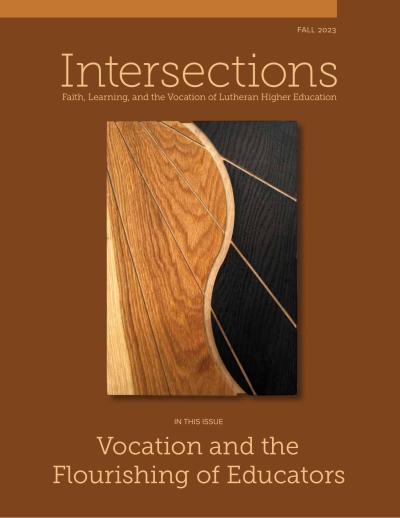
Windham-Hughes introduces the 2023 VLHE conference theme of educator flourishing, drawing on Dr. Monica Smith’s plenary challenge — “How can we flourish if only some are centered and others are at the margins?” — and invites readers to ground themselves in Us/We, the cover art by Augustana graduate William Hatchet, and join the conversation.
-
Editorial
Maintaining Our Lutheran Identity: A Source of Strength
Lamont Anthony Wells
Wells reflects on the well-being of staff, faculty, and administration in Lutheran higher education across four pillars — rest, creativity and innovation, religious diversity and pluralism, and the preservation of Lutheran identity — and addresses the painful reality of Finlandia University’s closure as a reminder of the network’s shared mission.
-
Article
A Lutheran Call for Educator Flourishing
Krista E. Hughes
Hughes argues that without educator flourishing there is no student flourishing, traces how an exploitative “passion tax” can distort vocation, and offers seven Lutheran “third-way” value pairings — including Metrics/Grace, Efficiency/Kairos, and DEI/Priesthood of All Believers — to reframe institutional success at NECU campuses.
-
Article
Do One Thing: Academic Vocation in the Age of Burnout
Jonathan Malesic
Malesic draws on Oliver Burkeman’s 4,000 Weeks and Søren Kierkegaard’s Purity of Heart is to Will One Thing to argue that academic burnout is fundamentally institutional — a widening gap between mission ideals and working conditions — and urges colleges to resist “projectitis” by focusing on the one thing that matters most.
-
Article
Cultivating Staff Flourishing in Lutheran Higher Education: A Framework for Advocacy and Engagement
Laree Winer
Winer narrates her own “love affair” with Lutheran Higher Education to argue that the heart of the tradition — vocation, de-emphasized hierarchy, and shared humanity — equips NECU institutions to advocate for staff flourishing through data collection, professional development, and ongoing relational commitment.
-
Article
Staff Governance at St. Olaf College, Northfield, MN
Don Ezra Cruz Plemons
Cruz Plemons describes how staff at St. Olaf, in the wake of a decade of difficult events, have built a three-year, glacier-paced effort toward a Staff Governance model — through affinity groups, the Council for Equity and Inclusion, and the Task Force to Confront Structural Racism — that gives staff a voice alongside faculty and students.
-
Reflection
The Importance of Connection
Alex Piedras
Piedras reflects on the 2023 “So that We, Too, May Flourish” Conference at Augsburg as a refreshing space for a weary DEI advocate — surfacing burnout, the Talking Circle on Indigenous Issues, and Dr. Monica Smith’s Racial Healing Circle as opportunities to recharge the soul and build authentic connections for the long journey.
-
Article
“A Decolonizing Conversation”: Indigenous Engagement at Luther College at the University of Regina
Marc Jerry, Sarah Dymund
Jerry and Dymund describe Luther College at the University of Regina’s response to Canada’s Truth and Reconciliation Commission — Land Acknowledgments, a Starblanket ceremony, the Project of Heart, an Elder in Residence, and the unedited video conversation with Elder Lorna Standingready that anchored their 2023 VLHE keynote.
-
Article
Beyond Deep Gladness: Coming to Terms with Vocations We Don’t Choose
Deanna Thompson
Thompson, living with incurable cancer, expands Frederick Buechner’s definition of vocation to make room for deep sadness — drawing on Arthur Frank, Shelly Rambo, Beverly Wallace, and Ross Gay to argue that practices of lament, including the public lament of Friday Flowers at St. Olaf, open space for gladness, joy, and even flourishing to emerge.
-
 Article
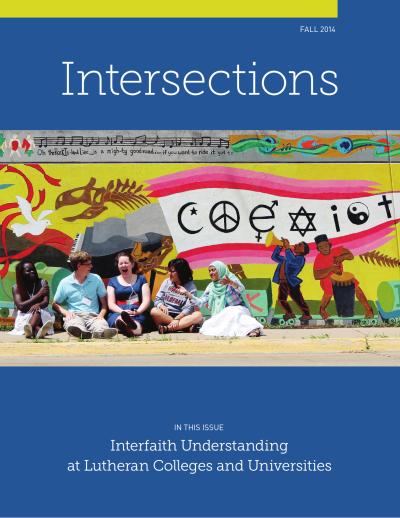
What it Means to Build the Bridge: Identity and Diversity at ELCA Colleges
Eboo Patel
No. 40 · Fall 2014
Through the contrasting stories of two college students — Cassie’s identity relativism and April’s soft fundamentalism — Patel diagnoses Peter Berger’s twin pathologies of modernization and argues that ELCA campuses, anchored in Bonhoeffer and the Lutheran capacity to “have faith without laying claim to certainty,” are uniquely equipped to be places where the light falls: bridges of cooperation that nurture both strong religious identity and benevolence toward others.
-
 Reflection
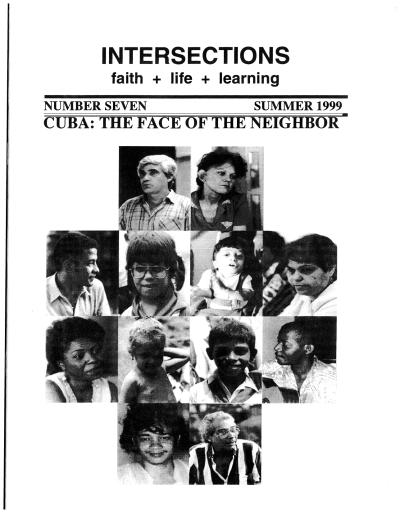
Some Personal Reflections on the ELCA Vocation of a Lutheran College Conference, 1998
Jennifer Sacher Wiley
No. 7 · Summer 1999
Sacher Wiley, a Unitarian Universalist with one Jewish parent and a first-year music faculty member at Susquehanna, reflects on common-ness and other-ness at the 1998 conference—Tom Christenson’s weaver’s warp and Charles Ives’s essay on American music—and proposes four markers of group identity. Against the fear of secularization expressed by some attendees, she suggests that “Christian” might be defined less by belief in Christ as Savior than by living a vocation as Jesus lived, with Cheryl Ney offered as an example of a “working prophet,” or “little Christ,” regardless of specific belief in the Trinity.
-
 Article
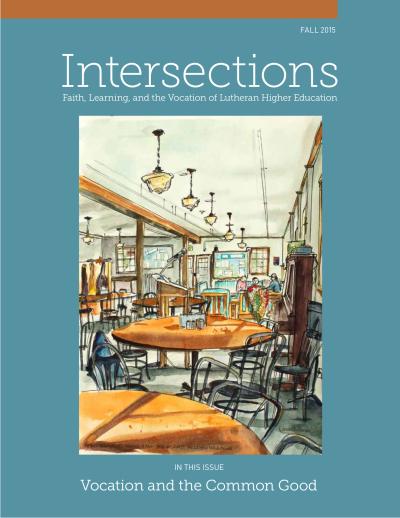
Women Presidents in Higher Education: How They Experience Their Calling
Aimee Goldschmidt, Gary McLean, Katherine A. Tunheim
No. 42 · Fall 2015
Drawing on in-depth interviews with fifteen women college presidents and a transformative-learning-theory framework, Tunheim, McLean, and Goldschmidt trace a three-stage journey — identifying, interpreting, and pursuing the call — and ask what the language of vocation contributes to the preparation and mentoring of women leaders in higher education.
-
 Response
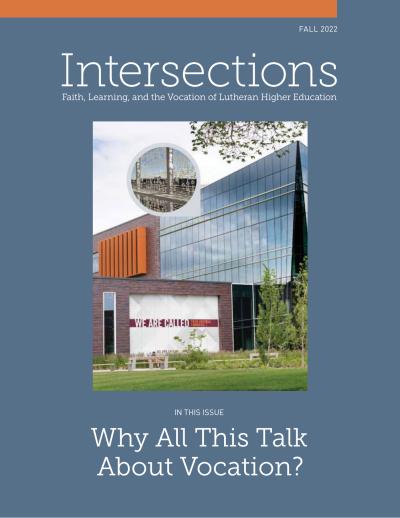
Response to Mark Wilhelm: Vocation—Wide Perspective Questions
Mary-Paula Cancienne
No. 56 · Fall 2022
Cancienne, drawing on Iain McGilchrist, asks whether higher education has prioritized micro lenses at the expense of the macro view, and invites educators to hold the drama of individual vocation stories within a wider plot that includes James Webb Telescope wonder, climate grief, the long shadow of enslavement, and the resilience of native populations.
-
 Response
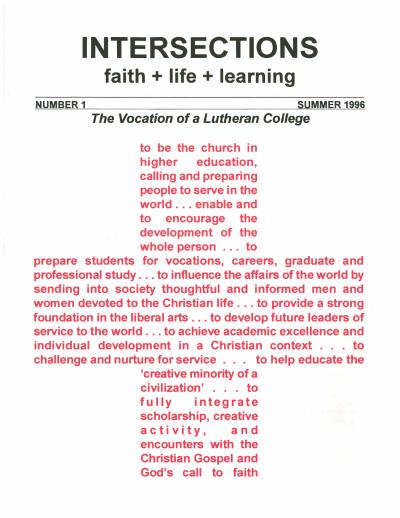
Renewing Our Journey: Some Thoughts on Pursuing the Truth
John Rehl
No. 1 · Summer 1996
Rehl, a Capital University graduate pursuing doctorates in theology at Chicago and in economics at Wisconsin, takes up Schwehn’s invitation to think again on the nature of truth. He sets aside truth as information, as object, and as mere words; recasts the church-related college’s task as a renewed emphasis on classroom teaching (Kierkegaard’s teacher as midwife) and on brave, articulate professors. He calls for moral education in courage, discipline, patience, and love, illustrates the costs of the fact-value split with examples from economics, and argues that we honor Lutheran heritage not by preserving it as a museum piece but by testing it—Luther’s theology of the cross over a theology of glory—and by preparing students for a world of Untruth, strengthened (with Julian of Norwich) by the promise that they will not be overwhelmed.
-
 Reflection
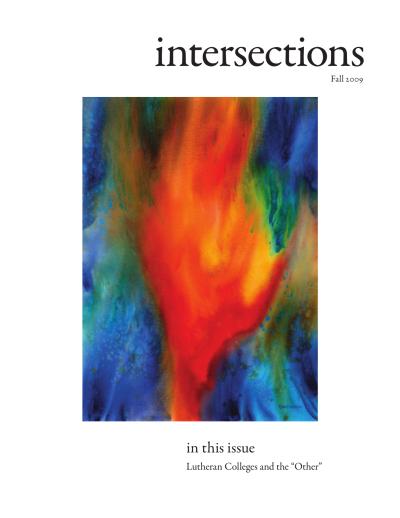
On Sharing the Sacred Sauna
Rosemary Radford Ruether
No. 30 · Fall 2009
Reprinted from the National Catholic Reporter (August 1968), Ruether’s reflection from her time as a theologian on the faculty of Holden Village describes Lutheran community life in the mountains of northern Washington from a Catholic perspective — finding more catholicity in this Lutheran retreat than in many Roman Catholic communities — and culminates in a celebration of the Holden sauna as “the new sacrament, the new fellowship, the new theology.”