I became a fan of the Lutheran doctrine of vocation decades ago. It happened while I was a first year student (we were still freshmen back then) at St. Olaf in conversations stemming from reading An Open Letter to the German Nobility in the old Dillenberger collection of Luther’s treatises of 1520. In the intervening decades, educational leaders have deeply embraced the concept and rhetoric of vocation. For example, Parker Palmer has made his living for twenty years by traveling the lecture circuit, frequently addressing groups of educators on the theme of vocation. Private higher education has been an avid participant in the larger conversation about vocation. References to the theme appear repeatedly. A recent example is a reference in a Chronicle of Higher Education (January 29, 2010, page B8) essay about the Mark C. Taylor, the highly regarded professor of religion at Columbia University, who has written (in Field Notes from Elsewhere: Reflections on Dying and Living) that he has struggled with coming to terms with “the meaning of vocation in his life and his career—what it means to receive something like a religious calling when you in fact ‘don’t believe in the one who calls.’”
Since the Lutheran church’s theological tradition is a primary source for the current conversations in the USA about vocation, some leaders in Lutheran higher education (including myself) believe all ELCA-related colleges and universities should claim vocation as the defining mark of a school rooted in the Lutheran tradition. Embracing this doctrine provides an answer to the neuralgic question, “How can a college be Lutheran if it is no longer a college where all the Lutherans are?” Persons of good will from any background can join Lutherans and our institutions in education for vocation even if, like Mark Taylor, they cannot join with Lutherans (and other Christians) in believing that God in Jesus Christ is the one who calls us.
There is, however, no consensus about naming “education for vocation” as the defining mark of Lutheran higher education. The articles in this issue of Intersections reflect the widespread engagement with the theme of vocation by ELCA colleges and universities. The standing, annual “Vocation of a Lutheran College” conference further testifies to emphasis that the theme of vocation receives in our community, and a special conference this fall will explore the many programs (Lilly Endowment-supported and others) on education for vocation. Yet I fear that “vocation” remains for many merely the higher education program du jour instead of a permanent and enlivening hallmark of Lutheran higher education. All ELCA colleges and universities have received invitations to participate in the special fall conference, October 31-November 2 at Augsburg College in Minneapolis. I hope the event helps move us further along the way from du jour to hallmark!
-
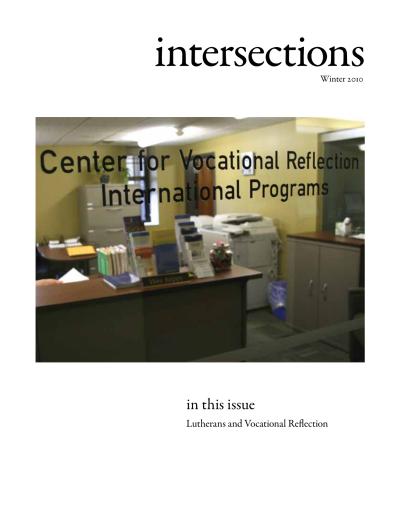 Article
Called for Life — Affirming Vocational Discernment
Richard L. Torgerson
Torgerson introduces the “Called for Life” project, a three-year, $278,437 Lilly Endowment-funded collaboration among Luther, Augsburg, and Augustana that—in partnership with Luther Seminary’s Centered Life initiative and Wilder Research—rigorously assessed the effectiveness of campus vocation programs, examining whether students’ exposure to and understanding of calling had increased, and what program elements were most effective in shaping discernment.
-
Article
Called for Life
Brian Pittman, Ellen Shelton, Greg Owen
Owen, Shelton, and Pittman of Wilder Research present the key findings of the Called for Life study, comparing the class of 2007 “Lilly graduates” from Luther, Augsburg, and Augustana to a pre-Lilly cohort from the class of 2001. They report that Lilly graduates were more than twice as likely to associate vocation with “calling” rather than “just a job,” and they identify four common ingredients of effective programming: relationships with caring adults, experiential learning outside the classroom, vocation-infused courses, and peer relationships within a pervasive campus culture of vocational exploration.
-
Article
A College with a Calling: Vocation at Augsburg
Mark D. Tranvik
Tranvik narrates Augsburg’s decade of deep engagement with vocation—from President William Frame’s 1997 visioning process and the 2002 two-million-dollar Lilly grant for Exploring Our Gifts, through five Lutheran theological principles (vocation includes the whole life, lives for the sake of others, ranks all callings equal, cannot be reduced to ethics, and engages public life), to the Wilder Foundation’s Called for Life assessment and the 2008 founding of the Augsburg Center for Faith and Learning under Dr. Tom Morgan and the Bernhard Christensen Chair held by Dr. David Tiede.
-
Article
Sense of Vocation
Ruth R. Kath
Kath describes Luther College’s Sense of Vocation program, organized into three components: General Program Initiatives (Vocation Visitors such as Parker Palmer, the Faith and Learning Workshop, self-directed reading grants, publications, and travel funds), the Church Ministry Program (Vocation Fellowships, the DIAKONOS discernment group, seminary visits, alumni discernment retreats, church leader workshops, clergy renewal, and the WIYLDE youth initiative), and the All-Student Vocation Program (Paideia I orientation, Peer Mentors, Capstone curriculum development grants, the Vocation Advising Workshop, and a Vocation Advising Handbook).
-
Article
Called to Serve
Robert D. Haak
Haak describes Augustana’s Center for Vocational Reflection (CVR) and its threefold framework of skills/gifts/talents, passions/values, and needs of the community. He surveys the CVR’s Working with Faith group, seminary visits, spiritual companioning, Servant Leader Internships, international travel reflection, and the major Senior Inquiry curriculum revision—then reports the lessons learned at Augustana: that multiple exposures matter more than any single program, that the language of vocation works even for non-religious students, that student-initiated ideas (like Erin Blecha’s Athletes Giving Back) often succeed most, and that the CVR will soon merge into a new Community Engagement Center.
-
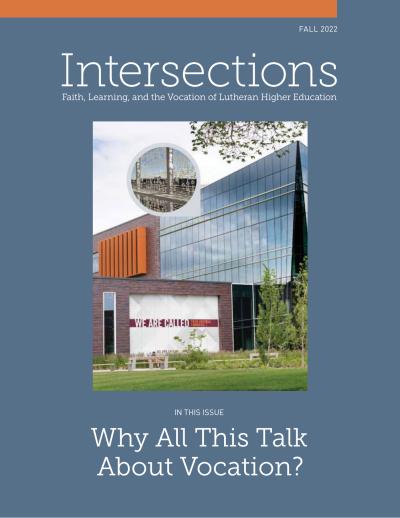 Article
Why All This Talk About Understanding the Mission of NECU Member Institutions as a Vocation?
Mark Wilhelm
No. 56 · Fall 2022
In his valedictory keynote, retiring NECU Executive Director Mark Wilhelm argues that Lutheran higher education is, properly understood, vocation-based education — outlining four core practices recovered over the past fifty years and naming the constructive and corrective work still to be done, including a fuller embrace of DEIJ and of the diverse vocations of NECU’s 27 institutions.
-
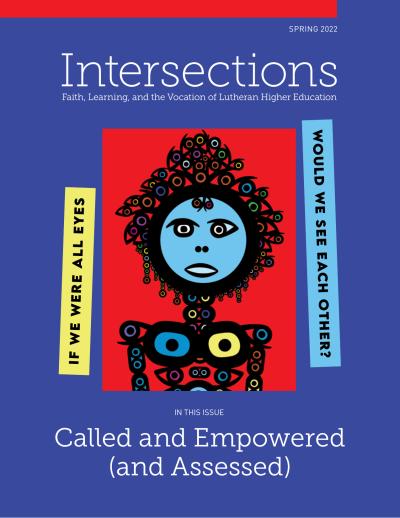 Editorial
From the Publisher
Mark Wilhelm
No. 55 · Spring 2022
Wilhelm announces his planned retirement on January 31, 2023, after serving as the founding executive director of the Network of ELCA Colleges and Universities, and gives thanks for the privilege of helping NECU articulate a shared vision for Lutheran higher education in twenty-first-century North America.
-
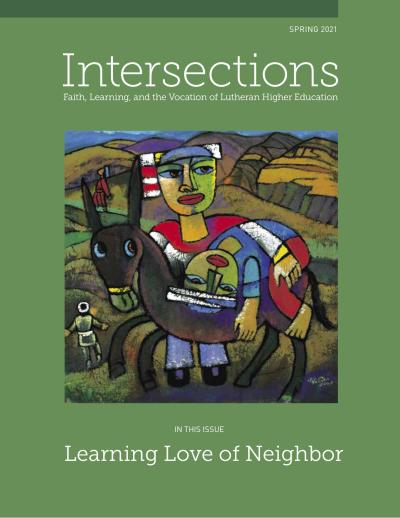 Editorial
From the Publisher
Mark Wilhelm
No. 53 · Spring 2021
Wilhelm reflects on an NPR report of teenagers’ pandemic diaries and the fraught Christian history of struggling to live out Jesus’s ethic of love, framing the issue as a record of NECU institutions working out how to act for the common good through the pandemic of 2020–2021.
-
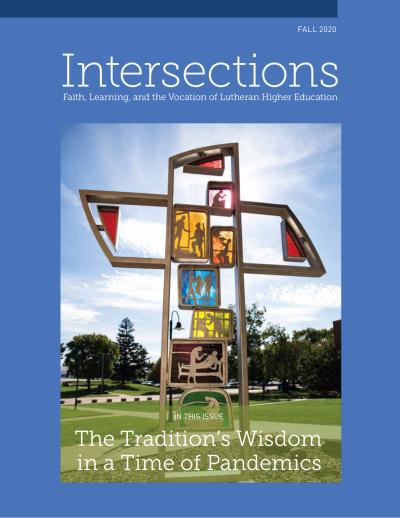 Editorial
From the Publisher
Mark Wilhelm
No. 52 · Fall 2020
Wilhelm argues that the “hackneyed” expressions of higher education — “you are not just a number,” “the college experience,” “risen to the challenge” — tell the simple truth about NECU institutions even as the Covid-19 pandemic has pushed budgets, employees, and campus life to the breaking point.
-
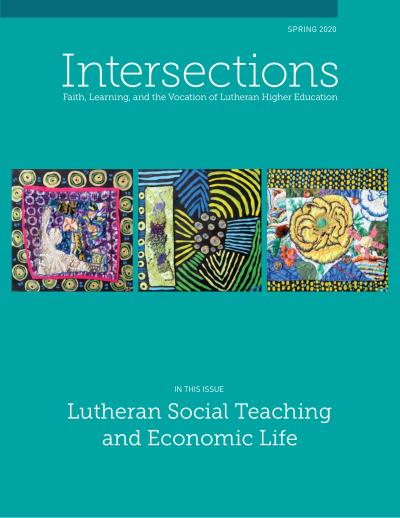 Editorial
From the Publisher
Mark Wilhelm
No. 51 · Spring 2020
Wilhelm frames the issue by tracing how Lutheran educational ideals — once a primary source of contemporary higher education — were masked in the United States, and introduces a NECU initiative that uses the case of business ethics to explore Lutheran social teaching as an academic resource.
-
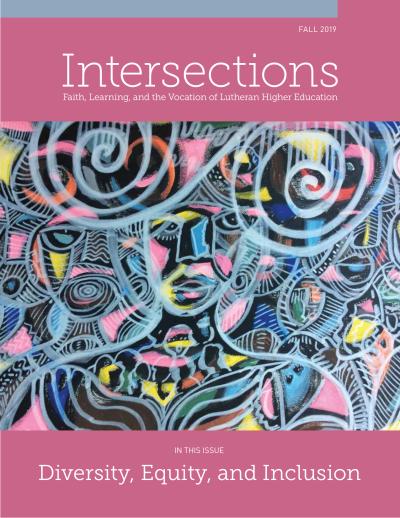 Editorial
From the Publisher
Mark Wilhelm
No. 50 · Fall 2019
Wilhelm frames the issue by noting that a federal court’s vindication of Harvard’s race-conscious admissions process is a win for higher education’s commitments to diversity, equity, and inclusion — and argues that for Lutheran higher education, the commitment to diversity is an old and foundational claim, rooted in Christianity’s openness to all and reflected in the four diverse gospels of the New Testament.
-
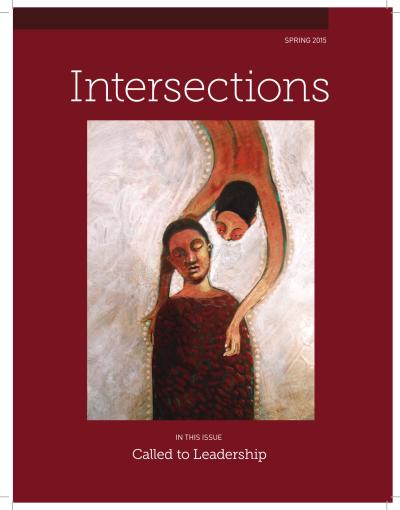 Article
The Dangers of "Vocation" for Students Thinking about Career
Carl Hughes
No. 41 · Spring 2015
Hughes warns that Lutherans too often use “vocation” as a theologically glorified synonym for a fulfilling career — a misuse that constricts God’s call to our jobs and excludes minimum-wage workers, caregivers, and others from the dignity of calling. Recovering Luther’s expansive understanding, he argues that vocation refers first to people, not professions, and must always be bigger than any one aspect of our lives.
-
 Article
Serving Two Masters: Teaching and Writing Between Academy and Church
John Reumann
No. 9 · Summer 2000
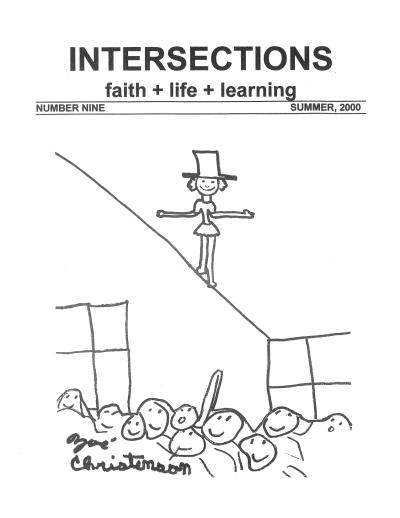
Reumann reflects on more than fifty years navigating between academy and church—the Society of Biblical Literature and Exegesis (whose Doktorvater Morton Enslin was unceremoniously dumped at Toronto by “young Turks” Robert Funk and others, while Harry Orlinsky saved the day at the centennial), the 1978–1987 New American Bible Revised New Testament committee with its bishops, the U.S. Lutheran–Roman Catholic dialogue volume on “Righteousness,” and the 1999 Joint Declaration on Justification—and uses his Anchor Bible and Augsburg commentaries on Philippians, Colossians, and Romans to illustrate Krister Stendahl’s judgment that one can no longer master all the literature: epistolary research, rhetorical and discourse analysis, social-world readings, feminist scholarship on Euodia and Syntyche, the koinonia and friendship debates (Sampley, Fitzgerald, Witherington), and the house-church recovery of Filson. The academy is antepenultimate, the church penultimate, God ultimate—professors as “believers, testifiers, witnesses” serving pro bono, pro ecclesia, and pro Deo.
-
 Book Review
Review of Educating for Shalom: Essays on Christian Higher Education
Tom Christenson
No. 20 · Fall 2004
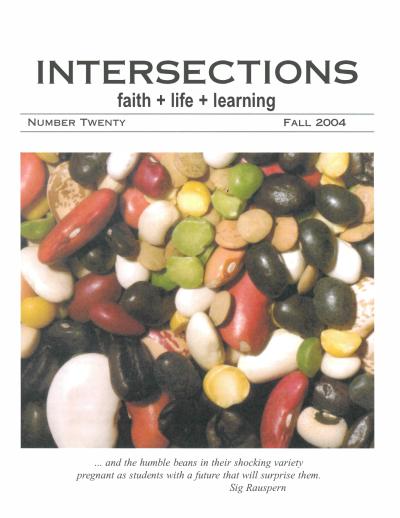
Christenson reviews Nicholas Wolterstorff’s Educating for Shalom: Essays on Christian Higher Education (Eerdmans, 2004), edited by C.W. Joldersma and G.G. Stronks. After recounting his own early prejudice against Wolterstorff’s Reason Within the Bounds of Religion and his subsequent conversion through Art in Action, he focuses on two threads: Wolterstorff’s expansive reading of shalom—not merely peace but justice, community, communal responsibility, and delight—as the overall goal of Christian collegiate education, and the influence of Abraham Kuyper’s claim of “privileged cognitive access” for Christian inquirers, which Wolterstorff demonstrates rather than declares.
-
Response
Response to Mark Wilhelm: Vocation—Wide Perspective Questions
Mary-Paula Cancienne
No. 56 · Fall 2022
Cancienne, drawing on Iain McGilchrist, asks whether higher education has prioritized micro lenses at the expense of the macro view, and invites educators to hold the drama of individual vocation stories within a wider plot that includes James Webb Telescope wonder, climate grief, the long shadow of enslavement, and the resilience of native populations.
-
 Article
Mission and Hiring in the Christian College
Bruce Reichenbach
No. 3 · Summer 1997
Reichenbach of Augsburg argues that the Christian or Church-related college’s mission to educate the whole person from a perspective of Christian faith and values can only succeed through intentional hiring of a “critical mass” of faculty, administrators, and staff committed to that mission (following George Marsden and the 1960s Danforth Commission), supplemented by on-going faculty development. He defends an inclusive community-with-diversity, a freedom-and-commitment tension grounded in Alasdair MacIntyre’s account of tradition, and the legality of preferential religious hiring under Title VII of the Civil Rights Act and the relevant case law (Tilton, Hunt, Roemer, Blanton, Grove City, Amos).
-
 Article
Distinctive Lutheran Contributions to the Conversation about Vocation
Kathryn A. Kleinhans
No. 43 · Spring 2016
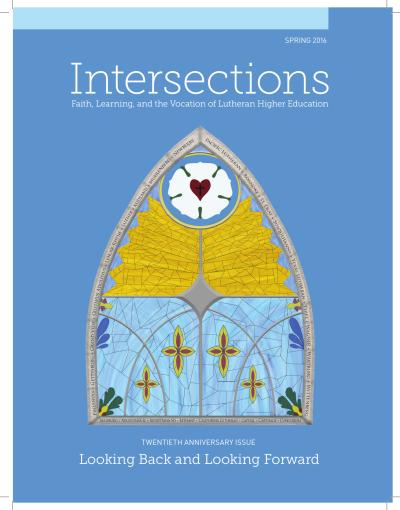
Kleinhans surveys the recent resurgence of vocation talk in American higher education — from Frederick Buechner’s widely quoted definition to Lilly Endowment’s PTEV grants and the CIC’s NetVUE Scholarly Resources Project — and uses her chapter in At This Time and In This Place: Vocation and Higher Education to highlight distinctively Lutheran emphases: vocation grounded in creation rather than redemption, the given-ness of multiple simultaneous callings, and a frank acknowledgment of the constraints and “dark side” of vocation.