Moving Forward by Looking Back: Lutheran Vocation as Foundation for Interfaith Ministry
Intersections No. 43 · Spring 2016
The majority of my professional career has been spent alongside young adults within the Evangelical Lutheran Church in America (ELCA) in its various expressions, networks, and related institutions. The beginning of the cohort that I started working with is now at the end stages of the demographic. To say that I have been given much by this generation would be an understatement. My own “Generation X” sensibilities have been opened up, expanded, and embraced by this group of people who, through their generosity, have shown me what it means to be an accompanist rather than a composer and a conversation partner rather than a soliloquist. It should be no surprise, then, that most of what I have learned about interfaith understanding I have learned from accompanying college students as their pastor.
In the 2012-13 academic year, I began my call as co-chaplain at Augustana College in Rock Island, Illinois. “Interfaith Understanding” was assigned to me as a part of my chaplaincy profile, and I looked forward to easing my way into learning more about this topic. It had been my plan to first research all that I could about the different religious traditions of students on our campus and then form a student interfaith council. I was going to think about it first, and then work on the people part. As often happens, it didn’t work out that way.
Learning from Students
The first week of classes (August 2012) was the week of the mass shooting at the Sikh Temple of Wisconsin. Before I could make any sort of plan to respond to this tragedy, I received what was maybe my first ever “invitation to edit” a shared Google Document. Student leaders from various groups on campus immediately planned that we would hold a vigil service as a response to this shooting and, to my surprise, they knew what my role would be. As described in one of the case studies within Engaging Others, Knowing Ourselves: A Lutheran Calling in a Multi-Religious World, my colleague Rev. Richard Priggie had well prepared our students for planning and experiencing interfaith “worship” together. In clergy terminology, my role would be to “preside,” not preach, at the vigil.
Having never done this type of vigil before, I was nervous, but of course I said yes. Admittedly, the misguided question I wondered about was: “Do we have any Sikh Students on campus and how will I figure that out?” Without question, we would hold the vigil, no matter what, as we grieved as a community about this tragic hate crime. Yet I still worried about identifying Sikh students and/or making them feel uncomfortable. As it turns out, I need not have worried. Indeed, we did have Sikh students on our campus and student vigil leaders were swift and adept at inviting both secular and religious Sikh students who were willing to stand and share their stories at the vigil. Some, like me, were experiencing their first week on campus. In a very real way, it was my first “on the ground” experience with twenty-first century grassroots organizing and networking among college students. What then was my role as a campus chaplain to be?
“In a very real way, it was my first ‘on the ground’ experience with twenty-first century grassroots organizing and networking among college students. What then was my role as a campus chaplain to be?”
As Lutheran Christians well know, we cannot merely think our way into relationship, and I quickly learned that interfaith understanding was not just a topic. The Incarnation brings us into a full, robust and embodied relationship with all of creation We also know, however, that we cannot be in relationship without doing some measure of careful thinking about who we are and how we are called into relationship with others. I didn’t have to worry about what my role would be at the vigil. The students mentored me into my role, which was to show up and “do life” alongside those in the community, whoever they might be. I had to think about what it would mean to “preside” in this community as it was, not as it used to be or might be in the future. From that moment on, interfaith understanding has been a journey of co-mentoring for me and for our campus. It would be an undue burden to place on our students to expect that they should teach us everything about the traditions from which they come. It also would be unjust not to dig deep into our own roots as Lutheran colleges and provide time, space, programs, and academic rigor through which to engage in these questions of identity.
Both Interfaith and Lutheran
Engaging Others, Knowing Ourselves brings deeply-rooted Lutheran theology and pedagogy to bear on its many different case studies and voices. The book offers a combination of practical tips, theological reflections, and historical analyses about interfaith understanding. In this way, it provides a helpful resource for multiple audiences. In a campus setting, it is appropriate for a faculty book discussion group, classroom text, or as a resource for work with students in co-curricular settings. For congregations, this book will provide an accessible entry point for conversations about interfaith understanding. I would even go so far as to suggest its appropriateness for use with confirmands as a helpful way to think about what it means to be Lutheran in today’s diverse world.
The book speaks with a clear and prophetic voice through the section entitled “Millennial Voices.” Rebecca Cardone, a California Lutheran graduate, describes the process of developing an interfaith student organization on campus. She writes: “We decidedly were not a club at all, to avoid drawing a distinction between members and others, or between students and stakeholders. The Interfaith Allies pointedly partnered with existing organizations and infiltrated them with intentionally interfaith angles from the ‘bottom up’” (166). As I read this section, I couldn’t help but imagine what it would look like if all parts of the ELCA leaned deeply into this beautiful description of what it means to be in community with our neighbors. What would a church without a distinction between “members” and “non-members” look like? A somewhat blurry vision, indeed.
“Interfaith understanding is perhaps one of the greatest gifts that Lutheran higher education offers not only to our students, but to the church at large.”
To help the church see more clearly, we might come to embrace interfaith understanding as a mode of praxis of the twenty-first century Lutheran college. ELCA colleges and universities are uniquely called and positioned to help the church live into its relationship with a multi-faith world. Interfaith understanding is perhaps one of the greatest gifts that Lutheran higher education offers not only to our students, but to the church at large. It expands our mission to educate students for lives of leadership and service. It also helps articulate what a lived relationship looks like with our neighbors, both religious and non-religious. Engaging Others, Knowing Ourselves invites the reader into a framework of lived theology. I am convinced there is no other way to engage an interfaith world.
Interfaith Youth Core (IFC), the leading interfaith organization working nationally with college campuses, has identified nine leadership practices of a “vanguard interfaith campus.” They are: identity and mission, campus-wide strategy, public identity, respect and accommodations for religious identity, academic priority, staff and faculty competence and capacity, student leadership, campus-community partnerships, and assessment cycle (Patel, Baxter, and Silverman). There could be some value in connecting each of these leadership practices to a Lutheran theological understanding. In the same way that ELCA colleges and universities worked as a cohort group to develop and assess vocational exploration programs in the early and mid-2000s (see Owen), there would be great benefit in developing a common language within the ELCA context for how interfaith understanding is both an expression of vocation and a disposition that strengthens the church as a whole.
“There would be great benefit in developing a common language within the ELCA context for how interfaith understanding is both an expression of vocation and a disposition that strengthens the church as a whole.”
Lutheran colleges and universities might also draw on networks for vocational exploration such as the Network for Vocation in Undergraduate Education (NetVUE) as we seek to build similar networks around interfaith understanding. Such networking would make connections between the many areas our colleges have in common, including academic disciplines, chaplaincy, student life, athletics, career development, and vocational exploration programs. By doing this, we would be able to link interfaith programing to key learning outcomes of each institution. An ELCA network that could articulate its interfaith position well would help all expressions of the church with its articulation of what it means to be Lutheran in a multi-religious world.
College Campus: A Global Community
Inspired by the statement from the Luther College community in Decorah, Iowa (“Luther”), Augustana College produced a statement in December, 2015 in support of the Muslim community on our campus and beyond. The statement was printed in large poster form and signed by hundreds of students, faculty, and staff; it was then presented to the two Muslim Communities in the Quad Cities. The statement reads:
As an Augustana College community that includes people of many different religious and non-religious identities, we the undersigned stand in support, solidarity and friendship with Muslims on our campus, in the Quad Cities, in the United States and in the world. We reject calls for discrimination, separation, hateful speech and violence based on religious belief. As articulated in The Five Faith Commitments of Augustana College, “Augustana commits to making our campus and the wider world a more livable place for all persons by loving and serving the neighbor and by acting against injustice and intolerance.” We are thus compelled to be a part of an interfaith movement because of our unique heritage, identity, and core values as a college rooted in the Lutheran expression of the Christian faith.
At Augustana and many other ELCA campuses, interfaith engagement takes place both through the academic curriculum and through robust student organizations such as Campus Ministries, Interfaith Understanding, Hillel, Muslim Student Association (MSA). This rich intersection between the curricular and co-curricular was reflected in a recent Symposium that included sessions on social justice from the perspectives of various religious traditions. Examples of student-led sessions included “Tikkun Olam-A Jewish Take on Social Justice,” and “Interfaith Dialogue: Muslim Faith Stories.” The program also featured a keynote presentation by Bassam Tariq, a TED fellow and director of the acclaimed film, These Birds Walk.
These contributions from a religiously diverse campus and global community have enriched the experiences for students, faculty, and staff. They have also given hope to our community that we might live together as people who are friends always, not only during a time of tragedy. In a similar way, Engaging Others, Knowing Ourselves suggests that interfaith literacy and understanding are not only attainable but are also critical skills and dispositions for the whole church. In this book, I see a glimpse of what it would look like if the ELCA were known for its ability to prepare all people to live, work, serve, and play as friends and neighbors in a diverse and changing world.
Works Cited
Patel, Eboo, Katie Bringman Baxter, and Noah Silverman. “Leadership Practices for Interfaith Excellence in Higher Education.” Liberal Education 101.1 (2015). https://www.aacu.org/liberaleducation/2015/winter-spring/patel
LaHurd, Carol Schersten, Darrell Jodock, and Kathryn Mary Lohre, eds. Engaging Others, Knowing Ourselves: A Lutheran Calling in a Multi-Religious World. Minneapolis: Lutheran UP, 2016.
Luther College, “Friendship Not Fear: Standing in Solidarity with Muslims at Luther College.” http://www.luther.edu/just-action/islamophobia
Owen, Greg, Ellen Shelton, and Brian Pittman. “Called for Life: Key findings from the evaluation of college programs to support vocational discernment.” Intersections 31 (Winter 2010): 5-13.
-
 Editorial
From the Publisher
Mark Wilhelm
Wilhelm announces the new Network of ELCA Colleges and Universities — established in 2015 and convened for its first Board of Directors meeting in February 2016 — as a missional collaboration between the churchwide organization and the twenty-six ELCA colleges and universities, replacing former churchwide units lost to budget reductions and offering a stronger, more viable vision of Lutheran higher education.
-
Editorial
From the Editor
Jason A. Mahn
Mahn introduces the twentieth anniversary issue of Intersections, recalling its 1996 birth at Capital University “in the twinkle of an idea” in the mind of founding editor Tom Christenson, and previewing essays by Wilhelm, Amamoto, Kleinhans, Glass Perez, and Simmons that together look back at twenty years of the journal and forward to its work in the decades to come.
-
Article
The Vocation of Intersections on its Twentieth Birthday
Jason A. Mahn, Robert D. Haak, Tom Christenson
The three editors of Intersections — Bob Haak, Jason Mahn, and Tom Christenson (in spirit, following his death in 2013) — trace the twenty-year vocation of the journal itself: its 1996 birth at Capital University; its coming-of-age years of debate over institutional markers, two-kingdoms theology, and Lutheran identity; the ascendancy of “education for vocation” as the central marker of Lutheran higher education; and its ongoing identity in relation to a changing ELCA and to the broader cultural conversation about purpose, wholeness, and the vocation of higher education.
-
Article
The Vocation Movement in Lutheran Higher Education
Mark Wilhelm
Wilhelm offers a brief history of the “vocation movement” in ELCA higher education, arguing that it arose as Lutheran leaders moved beyond institutional markers (percentages of Lutheran students, faculty, and board members) and the collapse of ethnic, separatist Lutheranism to re-ground their schools’ identity in a 500-year-old intellectual tradition that educates the whole person for vocation and the common good — an educational ideal open to persons of any religious or non-religious conviction.
-
Article
Diversity and Dialogue: Twenty Years and Counting
Florence D. Amamoto
Twenty years after her essay “Diversity and Dialogue” in the first issue of Intersections, Amamoto returns to Gustavus Adolphus College to reflect on what has changed and what has not: rising numbers of students of color and international students, faculty turnover and increased publication pressures, the disappearance of the Center for Vocational Reflection, and the renewed importance of articulating Gustavus’s Swedish Lutheran heritage and inclusive sense of community in a tuition-dependent, cost-cutting environment.
-
Article
Distinctive Lutheran Contributions to the Conversation about Vocation
Kathryn A. Kleinhans
Kleinhans surveys the recent resurgence of vocation talk in American higher education — from Frederick Buechner’s widely quoted definition to Lilly Endowment’s PTEV grants and the CIC’s NetVUE Scholarly Resources Project — and uses her chapter in At This Time and In This Place: Vocation and Higher Education to highlight distinctively Lutheran emphases: vocation grounded in creation rather than redemption, the given-ness of multiple simultaneous callings, and a frank acknowledgment of the constraints and “dark side” of vocation.
-
Article
Semper Reformanda: Lutheran Higher Education in the Anthropocene
Ernest L. Simmons
Simmons enumerates the ELCA initiatives over the past twenty years that have helped Lutheran higher education retrieve a Christian understanding of vocation, then argues that the looming reality of human-caused climate change — the geological epoch of the Anthropocene — now requires Lutheran liberal arts education to prepare students for “planetary citizenship” as sustainability leaders, drawing on the classical Trivium, Luther’s panentheism, and a quantum-physics-inflected theology of divine entanglement and hope.
-
 Article
Responding to Student Hunger at NECU Institutions
Kristen Glass Perez
No. 51 · Spring 2020
Glass Perez recounts how her work as college chaplain at Augustana and Muhlenberg evolved after a student offhandedly declared, “I am always so hungry at this school,” and shares five lessons learned from launching campus pantries, emergency grant programs, and the HOPE Survey to address food insecurity as a defining calling of NECU institutions.
-
 Editorial
Guest Editorial
Kristen Glass Perez, Richard Priggie
No. 40 · Fall 2014
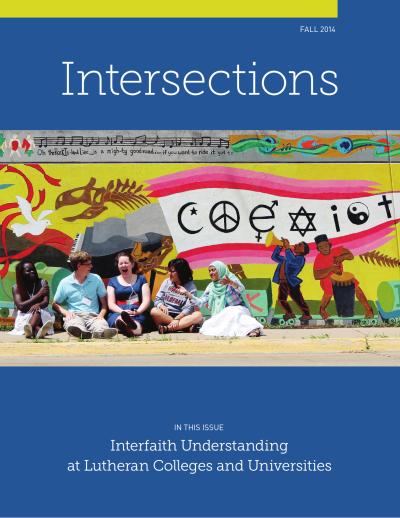
Glass Perez and Priggie introduce the issue by recounting the campus conversations and the June 2014 Interfaith Understanding Conference at Augustana College that gave rise to it, framing the central question, “What does it mean to be Interfaith at a Lutheran College?,” as a living example of the praxis of being a Lutheran college in the twenty-first century.
-
 Article
Bringing an Ecumenical Milestone Out of the Shadows
Ronald D. Witherup, S.S.
No. 30 · Fall 2009
Witherup draws attention to the tenth anniversary of the Lutheran-Catholic “Joint Declaration on the Doctrine of Justification” signed on Reformation Day 1999, summarizes the document’s claim that justification is the work of the triune God received by grace alone through faith, surveys the remaining questions raised by Pope John Paul II and the 2006 endorsement by the World Methodist Conference, and proposes a pastoral strategy for bringing this ecumenical milestone out of the shadows in Catholic parishes.
-
 Reflection
On the Power of Transformation and Becoming Human
Ken Yanai Flores
No. 59 · Spring 2024
Flores, a Cal Lutheran sophomore, reflects on personal and institutional transformation as the slow work of shedding the armor of trauma responses, engaging discomfort rather than turning away, and trusting that the work of becoming more human — more empathetic, knowledgeable, and free — will be reflected in our institutions as well.
-
 Article
It's Time to Rewrite the Rules of Civility
Jon Micheels Leiseth
No. 48 · Fall 2018
Leiseth contends that the prevailing rules of civility too often function as the majority’s rules, stifling those facing real harm — and proposes that NECU institutions rewrite civility as “neighboring,” guided by the ELCA’s five values of accompaniment: mutuality, inclusivity, empowerment, sustainability, and vulnerability.
-
Article
Forming the Division for Access, Equity & Belonging at Susquehanna University
Amy Davis, Dena Salerno, María L. O. Muñoz, Nina Mandel, Scott Kershner
No. 59 · Spring 2024
Five Susquehanna University colleagues trace the institution’s 166-year arc from a Missionary Institute founded to remove barriers to education through the formation of a new Division for Access, Equity & Belonging in 2023, arguing that access rooted in Lutheran origins must continue to drive policy revision, infrastructure, and belonging for minoritized communities today.
-
 Article
"Our Calling in Education": Working Together to Generate a Strong Social Statement on Public Schools, Lutheran Schools and Colleges, and the Faith Formation of Children and Young People
Marcia Bunge
No. 23 · Summer 2006
Bunge, Professor of Theology and Humanities at Christ College, Valparaiso University, makes two claims about the ELCA’s forthcoming social statement on education: first, that it should be built on a robust Lutheran understanding of vocation, addressing four common misconceptions (vocation as occupation, as self-fulfillment, as ordained ministry, and as “vo-tech”) and recovering the breadth of Luther’s teaching; and second, that the statement should narrow its focus to three urgent areas affecting children and young people — public schools, Lutheran schools and colleges, and faith formation — rather than addressing the full lifespan of education in equal depth.
-
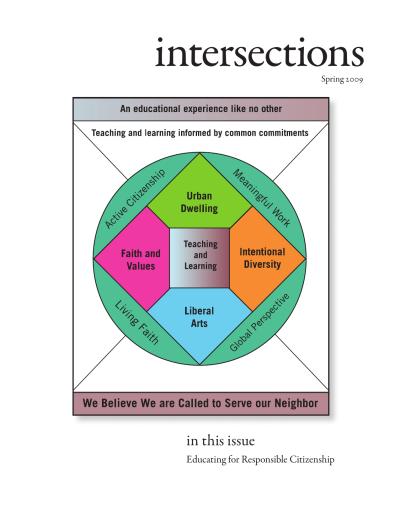 Editorial
From the Publisher
Mark Wilhelm
No. 29 · Spring 2009
Wilhelm introduces essays from the 2008 Vocation of a Lutheran College Conference held at Luther College under the theme “Educating for Responsible Citizenship,” previewing contributions from Paul Pribbenow on dual citizenship at Augsburg, Wanda Deifelt on Luther College’s engagement with civic vocation, Jose Marichal on the promise and peril of digital citizenship, and Arne Selbyg on his three experiences of being educated for citizenship.