One spring in the Philadelphia Museum of Art, I had a revelation about why art is spiritual. Even though dance is the only art form whose primary language is movement, all art is in perpetual motion. Without this perpetual motion, our experience of art can never be spiritual or redemptive.
I was at the museum with a friend who wanted to show me his favorite paintings and sculptures, as a way of sharing his history with me. So there was a context of something spiritual—a kind of communication—that underlay our visit. He took me through the part of the museum that houses Marcel Duchamp’s work and led me into a small, dimly-lit room to see Étant donnés, Duchamp’s last work. The room was the size of an average office in a typical college or business building; the wall facing us had a pair of old wooden doors without a handle, surrounded by brick work. The scene reminded me of an abandoned garden or estate that was permanently boarded up. As I approached the doors, I noticed that there were two tiny holes around eye level. My friend stood in front of the doors, looked in, and then moved away so I could do the same. I stepped up to put my eyes to the holes.
What I saw on the other side immediately riveted me to the spot. Directly before me was a stripped female body laying on its back, her face covered with tangled hair, one foot so close to the door that I couldn’t see it. Her legs were spread apart, but there was nothing except a smooth indentation where her genitals would have been. Lying in a pile of leaves and broken branches, she appeared both violated and tidied up. I stared at the body for about fifteen seconds before I realized that she was holding a lamp. Her left arm, with the lamp, was pointing toward the scene behind her, which was quite beautiful—with trees, leaves, mossy rocks, a pale blue sky, and a glowing waterfall in the background. Filled with a sense of wonder, I stared at the scene.
I’m not sure how long I was standing in front of those doors, but finally, my friend whispered, “Look.” I took my eyes away from the peepholes and turned around. The room, which had been empty when we first entered, was crowded. Several people were lined up behind me, waiting to find out what I was looking at. After I moved away from the doors, my friend and I stood in the back of the room, watching all the people as, one by one, they went up to put their eyes to the peepholes. Each person stood there a long time. Some people said nothing as they stepped aside. Others muttered or shook their heads. One man said, “Didn’t do anything for me,” as he and his family walked past us and left the room. My friend and I waited until everyone was done, then we, too, left.
As we walked away, we knew that we had experienced a magical moment. We’d had the honor of being collaborators or accomplices of Duchamp’s, setting the piece in motion for him. Just for a few moments, Duchamp was in that room with us, watching all those people watching what was on the other side of the doors. He was sharing the joke with us—especially about the man who said, “Didn’t do anything for me.” That man was so right and so wrong at the same time. For days, weeks, he would be telling all his friends about this piece that “didn’t do anything” for him. If someone asked him what he saw at the Philadelphia Museum of Art, Étant donnés would be the piece he was most likely to describe in detail—he had come to know that piece in ways he hadn’t come to know the paintings or sculptures he might have thought that he loved unequivocally.
Later that evening, my friend and I had an experience that was a perfect counterpoint to Étant donnés. We were walking in the historic district, looking for a restaurant that wasn’t too crowded or too empty. It was Sunday evening in mid-March. The sun had set and the wind was turning cold, we were shivering and talking about the past that hadn’t been perfect for either of us. We’d lost track of exactly where we were, when we came to the square where the Liberty Bell was displayed. Although my friend had been to Philadelphia many times, he had never seen the Liberty Bell; I hadn’t either. So we walked over to the glass-encased structure in which the bell was housed, even though we could see immediately that this was a hideous thing both in concept and execution—a glass cage for a piece of history. Three people were standing in front of us pushing the buttons that turned on the pre-recorded explanation about the bell. As we approached, a tape-recorded voice was saying something about the Liberty Bell in German. One of the people said, “Hey, maybe we can hear about it in Japanese next.” My friend and I stopped for about two seconds and then left—not disappointed exactly, but certainly not moved.
The whole set-up around the Liberty Bell was a parody—though not an intentional one—of a spiritual experience. We were presented a patriotic and almost holy object enshrined in glass, while the German voice went on, “speaking in tongues.” This experience became counterpoint to what was really a spiritual experience—seeing the Duchamp. The spiritual quality of art has everything to do with the process that is in perpetual motion, rather than with the subject matter. As far as the subject matter was concerned, the Liberty Bell was more likely to be spiritual than Étant donnés—a peepshow involving a disturbing landscape with a dead nude. But the setting of the Liberty Bell was completely static and obvious. Étant donnés, on the other hand, happened in a series of small mysterious motions, as perfect as a beautifully choreographed dance. First, we entered the small room and my friend showed me how the piece progressed as we walked toward the doors, stood in front of them, and he put his eyes to the peepholes. When he moved away and it was my turn to look, I had to take in the scene, one detail at a time from the nude to the lamp to the waterfall, my gaze drawing an arc across the landscape. When the arc was complete, my friend showed me how we had set the performance aspect of the piece moving by stirring up the curiosity of all the people in the room. We stepped back, and the piece continued to move until everyone was through. It came to a rest when the last person was done, but it was only waiting to be set in motion again by another group of viewers. In the meantime, as we left the room, everyone who saw it, even the man who thought it didn’t do anything for him, was embraced into the same perfect motion. Even now, that piece goes into motion again and again in my mind, in my writing.
The perpetual motion of Étant donnés was larger than the sum total of all the people who were there, who participated in it whether willingly or not—just as in church, the spiritual force that moves through us is far greater than the sum total of all of us and our capabilities. What we experience is a communion that transcends our individual capacity for perception, understanding, beauty, or goodness. I believe that writing is spiritual and redemptive for the same reason. Though the writer and the readers are not all in the same place at the same time, a powerful force of understanding can be set into motion through books. As a reader, I’ve had moments when I felt as though I were being blown across a huge expanse of water or land by another person’s writing, carried far beyond my narrow understanding of something I wasn’t even thinking about consciously till only a moment ago. It doesn’t bother me very much to learn later—as often is the case—that the person who wrote those words was not a perfect and wise human-being all the time. We are redeemed, or given those moments of understanding and grace, not by the writer but by the force or the process that is larger than all of us combined.
On a personal level as well as the communal, I suppose I turn to writing as a redemptive act, but this is a complicated notion. Just as Étant donnés is more spiritual than the Liberty Bell, everything about writing is a paradox: writing is not a redemptive act or process in an obvious or easy way. Many people think that by writing about our great suffering or our painful past, writers find an outlet for our emotions and a way to put the chaos of our pain into an order that leads to spiritual and psychological healing. But that is too easy and obvious an interpretation. The truth is much more complicated.
There is a significant difference between rituals of healing and art. Rituals are primarily about comfort and consolation. When we make objects like charms, amulets, or memorial stones that bring about an inner peace, talk or write letters to the dead to tell them the things we couldn’t say in this life, we are practicing a ritual, not necessarily art. Rituals are what we do to put boundaries on our pain so we can begin to manage and understand it. I don’t disparage rituals at all. In fact, I’m often quite moved by them, but they are not the same as art, which forces us to look at the truth, whether painful or not.
I have a lot of respect for rituals, but art, faith, and redemption would have to be more than a source of comfort.
I am in as much need of comfort, ritual, and healing as anyone else, but I don’t expect my work to give me comfort. The urge to work, for me, is primarily an urge to work—not to heal myself or to increase my joy. I don’t turn to my writing to redeem or heal myself in times of pain, but I’m always working whether I am moving through good times or bad, so whatever I am experiencing inevitably colors what I write. In times of pain, then, of course I turn to my work—though perhaps no more so than when my life is calm and perfect. If I find comfort in turning to work, it isn’t because I think I’ll find answers there or ways to solve my real-life problems. When my whole life seems like a big tangle of confusion or pain, work is one of the few things that can still give me satisfaction: I enjoy the act of writing and rewriting, the process itself regardless of its outcome, whether it makes me wiser or not.
Many people seem to believe that writing is a redemptive act because the process takes the chaos of reality and puts it into a more controlled arrangement, a perfect order. Through her or his discipline and work, the belief goes, the writer conquers the chaos of her or his pain, makes sense out of the almost-unknowable, and experiences an emotional or psychological release. The way I experience it, the process is the exact opposite: as I get deeper into the writing process, I move from the orderly to the more chaotic, everything-under-control to I’m-not-sure-what-this-really-means-any-more. While at work on the first draft of any project, I don’t agonize over what I’m writing about—rather, I am full of anxiety about how to write it. Whatever turmoil I feel is about how the piece is or isn’t coming together—I’m upset that something in the plot doesn’t feel right, I seem to have too many characters scattered about the novel, I can’t get my main character from one place to the next in a natural and smooth way, or if it’s non-fiction, I’m bothered that the voice I’m using sounds too chatty or too austere, that I can’t quite find the thread of what hold all the details together. These things keep me awake at night and make me a difficult person to live with, but I’m not fazed by the content of what I’m writing about, such as how I feel about my past or what insecurities I have about various issues in life. I don’t have the problem that my feelings are so strong that I cannot control my writing. The opposite is true. No matter what I write, the first draft I finish is too neat and ordered, almost too beautifully written in a superficial way. There’s a lot of control there, maybe too much control. To get my books to be everything they are meant to be, I have to go back and crack open the beautiful surface and pull out the murky depth of feeling. That’s what revisions are about. My books always have to get worse before they can get better. I suppose that process can be seen as true healing—moving from superficial understanding to deeper realization—but psychologically, I would have been just as well off on a day-to-day basis if I’d never taken up the writing project, if I had stayed where I was at the beginning—in a place where I thought I had a complete handle on everything. A little denial isn’t always a bad thing. There is nothing wrong, in terms of living from day to day, with all the small defense mechanisms our minds resort to, to stay comfortable and happy in an imperfect world. I don’t write to feel better because I’m very good at this sort of healthy denial, and I usually feel fine enough in a general way. I write to write better, and if there is redemption in that, it’s because redemption is more than being happy or comfortable. Writing is redemptive because we are encouraged to let go of our initial easy, superficial understanding, and then we are forced to find something deeper and potentially frightening but true.
No matter how much deeper our understanding, however, the finished product is never perfect. Regardless of the many revisions and many attempts to find a deeper truth, nothing I write is perfect or flawless. I don’t expect it to be. In fact, the slight imperfections and flaws are essential to art and to the concept of redemption. I remember watching some master potters working at the wheel in a pottery village I visited with my mother when I was eight. After they were done with each vessel on the wheel—bowls, vases, cups—the potters would take the perfectly shaped vessel between their hands and skew it ever so slightly, so that each one was different and slightly imperfect. That’s how these vessels differed from the mass-produced pretty porcelain cups we saw at department stores. One was art and redemption through imperfection; the other was decoration, fine taste, comfortable living. They’re both necessary but not the same.
Parts of this essay are excerpted from Kyoko Mori’s Polite Lies (Henry Holt 1997), reprinted with permission of the author.
-
 Editorial
From the Publisher
W. Robert Sorensen
Sorenson frames Intersections and the Vocation of a Lutheran College Conference as vehicles for widening the scope of inquiry that the separation of mind from spirit has curtailed, citing Ernest Boyer on probing “the deep places of the mind and the deep longings of the human spirit.” He previews an announcement at the 1998 conference of the Conrad Bergendoff Series—named for the late scholar and former Augustana College president—whose first volume, by Ernest Simmons of Concordia College, will support an Academy of Scholars in Lutheran Higher Education.
-
Editorial
From the Editor
Tom Christenson
Christenson introduces the issue as an illustration of the diversity of interests Intersections aims for, surveys the contents (Lagerquist on method, Mori on art and ritual, Baer on falling walls, Bergendoff as memorial, Funk and Powell in dialogue), urges readers to send in “your good stuff,” asks for distribution feedback, and closes with a sabbatical-year reading list—Kieran Egan, Robert Coles, Daniel Kemmis, David W. Gill, Sallie McFague, Roger Scruton, E.M. Adams, Freeman Dyson, Colamosca and Wolman, Gribbin and Goodwin, van Wyk, Wislawa Szymborska, and Flannery O’Connor.
-
Article
You Don't Seem Angry: Methodological Confessions Of A Lutheran Lay-Woman
L. DeAne Lagerquist
Lagerquist, opening from a colleague’s 1981 observation about her M.A. thesis on four female abolitionists, traces her path from feminist historian and battered women’s shelter advocate through the University of Chicago’s obsession with method to a more self-conscious account of her own. The method grows out of four Lutheran themes—original sin (caution and humility), the eighth commandment against bearing false witness (generosity and forgiveness), the neighbor as “little Christ” (cooperative interpretation), and vocation (interpretation as calling, located alongside feeding the hungry and visiting the lonely)—and shapes her ongoing work on a history of Lutherans in the United States with a plot about learning to live with diversity.
-
Reflection
A Community That Connects
Conrad Bergendoff
Excerpts from Conrad Bergendoff’s 1990 address at the opening of Augustana’s new library, prepared by David Crowe and published here as a memorial after Bergendoff’s death in December 1997. Bergendoff—Augustana class of 1915, president 1936–1962—recounts eighty years of Augustana memories, insists that “size is pretty much within you, not outside of you,” traces the institution’s bonds to Uppsala from 1860 (and the 1910 visit of the Rector Magnificat), and celebrates Augustana’s graduates “in practically every part of the world” as evidence that a small school can have a universal output.
-
Reflection
Walls: Talk At Gustavus Adolphus College
Elizabeth Baer
Baer’s September 11, 1997 Gustavus Adolphus chapel homily on Joshua 6 turns from the trumpets to the walls—Robert Frost’s “Mending Walls,” the walls of the Warsaw ghetto in Vladka Meed’s On Both Sides of the Wall and Margaret Zassenhaus’s Walls, the Berlin Wall coming down in 1989—and then to the autobiographical, intertextual discourse of Gustavus chapel itself as a place where misunderstandings come down. An author’s note added after the March 29 F3 tornado reports the closing line (“LET’S MAKE THOSE WALLS COME TUMBLING DOWN”) as eerily prescient: roofs, windows, and 90% of campus trees were lost, but the Chapel walls and the eternal flame in the red glass lantern stood firm.
-
Article
The Quest Of The Historical Jesus: Problem & Promise
Robert W. Funk
Funk, founder of the Jesus Seminar, frames the quest as the search for reliable data amid twenty-two ancient gospels and as a confrontation among three “parties”—the Jesus Party, the Apostolic Party, and the Bible Party. He surveys the Seminar’s 1985–1998 work (The Five Gospels, The Acts of Jesus, the color-coded reports), defends the synoptics over John, the priority of Mark, the Sayings Gospel Q and the Gospel of Thomas, and argues that a recovered Jesus—a teacher of a trust ethic, celebration, a kingdom without social barriers, a society without brokers, without cult rituals—may serve as catalyst for a sweeping third-millennium reformation that purges the “clogged arteries” of institutional Christianity.
-
Response
Beyond Data: The Poetry of Faith — A Response to Robert W. Funk
Mark Allan Powell
Powell, professor of New Testament at Trinity Lutheran Seminary, responds to Funk not as a New Testament scholar (Meier, Raymond Brown, and others can rehearse those debates) but as a Christian and a pastor. He challenges Funk’s closing implication that the institutional church’s “only function” is to protect Christian privilege (citing the ELCA’s 28 colleges, 1378 early childhood centers, AIDS hospices, and more), questions the suspicion of “derivative” faith, and proposes that piety is to theology what poetry is to prose—arguing, against Funk and with Marcus Borg, for a wholistic faith that holds history and myth, data and devotion, head and heart together.
-
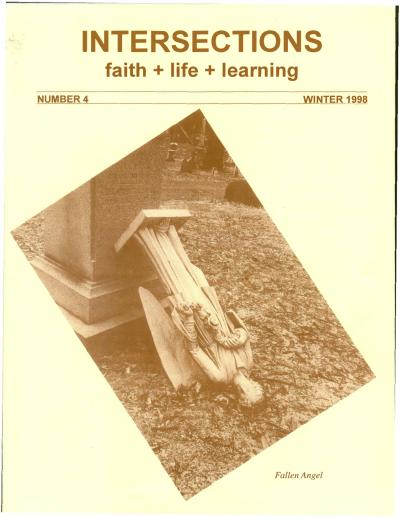 Article
What I Have Learned: Maybe Plato Was Right
Richard Ylvisaker
No. 4 · Winter 1998
Inaugurating the new “What I Have Learned” column, Ylvisaker reflects on a career of teaching philosophy at Luther College and offers four hard-won “preliminary examples” in which Plato turned out to be more right than fashionable criticism allowed: (1) communities are not necessarily better off by becoming more diverse—diversity needs a unity of purpose if it is to enrich rather than fragment; (2) politics, to be more than a struggle for power by competing interests, must rest on a moral basis that transcends those interests; (3) the much-derided body-soul dualism contains a measure of truth about the cognitive and moral limitations of embodied life; and, deepest of all, (4) reason itself depends on a community of discourse in which doctrinaire pronouncement gives way to disciplined inquiry. Athens and Jerusalem, he concludes, should meet at the college of the church.
-
 Article
Jonah: The Anti-Hero of Vocation
Martha E. Stortz
No. 45 · Spring 2017
In a chapel talk first given at Augsburg College’s Vocation 2.0 series in September 2016, Stortz reads the prophet Jonah as the great anti-hero of vocation — one who tries to outrun God’s call to the great city of Nineveh — and argues that, in a season of urban violence and divisive election-year rhetoric, the story is less about public calling than about being called by the publics in our midst.
-
 Reflection
Reflections on Lutheran Identity on Reformation Sunday
Thomas W. Martin
No. 19 · Summer 2004
Beginning with an “intellectual vertigo” experienced when his celebrant announced that “today the Church gathers to celebrate the Reformation,” Martin—a biblical scholar who has belonged to four Protestant denominations—asks how Lutherans should tell their own foundational myth. He argues that the Reformation was a mixed bag whose dark side includes a century of religious warfare and the killing of Anabaptists; that Luther himself is too mythic a figure to monopolize; and that distinguishing “constitutive” from “prophetic” reading (after James Sanders) opens the way to a Reformation Sunday told “together with” rather than “over and against” the rest of the Church—one that mixes repentance for the dark with celebration of the glory.
-
 Article
What is Required of You?: Higher Education Leadership in a Moral Key
Paul C. Pribbenow
No. 62 · Fall 2025
15 min audio
Drawing on Micah 6:8 and Stephen Carter’s “etiquette of democracy,” Pribbenow describes the three things Augsburg requires of every incoming student — show up, pay attention, and do the work — as a democratic social ethic that prepares students for engaged citizenship in a fractured public life.
-
 Editorial
From the Editor
Jason A. Mahn
No. 37 · Spring 2013
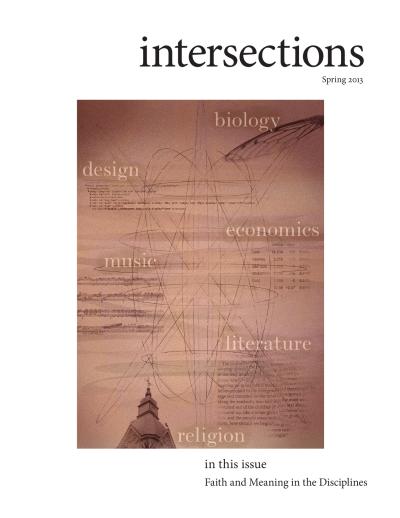
Mahn introduces the issue’s six essays as parallel attempts—from poetry, economics, choral music, biology, religion, and Lutheran higher education—to resist our culture’s fact-value split, and uses Augustana’s Fritiof Fryxell, a 1922 biology and English graduate who began teaching just as the Scopes Trial ignited, to illustrate how church-related colleges have long held faith and disciplinary inquiry together.
-
Article
What Does Ethical Leadership in a Changing World Require?
Kristina Frugé
No. 62 · Fall 2025
5 min audio
Frugé argues that ethical leadership in a changing — perhaps ending — world means cultivating trustworthy communities through patient, co-created relationship work, drawing on her experience stewarding the writing community behind Hungry for Hope: Letters to the Church from Young Adults.