I begin with the announced purpose of our gathering:
“This conference will promote discussion among individuals from institutions affiliated with a range of traditions on the significant topic of vocation. In view of the recent and on-going interest in the role of service in higher education—both as a part of and alongside conventional classrooms—and in view of many colleges’ stated mission to prepare their students for ‘lives of service’ (St. Olaf Mission Statement), careful reflection upon this topic is both timely and timeless… The organizers endeavor to extend ongoing discussions of the intersection of faith and learning by considering ways in which the call to serve is activated in the midst of higher education.”
I found this theme of vocation affirming, as for thirty years I have always made reference to it when discussing “education for justice and peace” with colleagues in Catholic higher education. In my own reflection in Called to Serve I wrote: “I think the concept of vocation, so richly expressed in essays in this book, may hold one of the keys to a renewal of civic responsibility among Christians.” I should have added “I hope so.”
I went on with a Catholic explanation:
“A pastoral strategy emphasizing lay vocation was widely discussed among Catholics before and during the Second Vatican Council but somehow was blurred in the post-conciliar church. I have attributed this to a combination of restorationist resurgence within the church and evangelical impulses arising from our post-immigrant, middle-class culture. For the former, vocation becomes once more formal service to the church’s internal life. For the latter, service to the larger community is overwhelmed by counter-cultural piety grounded in cultural alienation. Our common desire, Lutherans and Catholics, to find a third way between sectarianism and cultural surrender, requires us to resist segmentation inherent in these impulses and to explore affirmative ways of renewing ideas of stewardship, the common good, and vocation.”
JUSTICE AND PEACE
I want to suggest a few ways in which we might think about this theme, but first a bit of background about the place of justice and peace education in Catholic higher education.
1. The Catholic church in the last generation has developed a solid theological foundation for an integrated social Gospel. Its texts include the works of theologians across the globe, the pastoral statements of individual bishops and episcopal conferences, the many encyclicals of John Paul II, even the catechism of the Catholic church. The “option for the poor,” the insistence that “action on the behalf of justice” is integral to Christian life, the provision of a positive and economic and social role for government, trade unions and other popular organizations, and the affirmation of active non-violence, even among those who cling as well to just war categories, all these are now staples of Catholic self-understanding across the globe and across almost the entire, and conflicted, theological spectrum.
2. Nevertheless, Catholic social teaching remains “the Church’s best-kept secret.” I would argue that the church suffers today from a polarization about Catholic social teaching between evangelical radicals and conservative accomodationists. The first group, often heroic in their commitment to peace and social justice, ask in each situation, “what would Jesus do?” They speak easily of nonviolence and the option for the poor. They are at their best in questioning the integrity of the church and pricking the conscience of its members, from the pews to the chanceries. They carry on their fight most often with comfortable accomodationists who recognize few serious defects in American institutions or American policy. Solidly grounded in American experience and in modem social sciences, they have worked hard for the last twenty years to persuade the Vatican and the American hierarchy to be more appreciative of American political institutions, free market economic policies, and, until recently, cold war strategies of military deterrence and third world interventionism. Convinced that, however flawed, American ideals and institutions are the best available, they seem to spend far more energy fighting what they take to be threats from the left, at home and abroad, than proposing ways to resolve outstanding problems. Most of all they want to keep religion confined to the religious sphere of church, family, and personal life, and persuade bishops and popes to confine their remarks about politics and economics to general moral prescriptions and make specific recommendations only on matters of family, sexuality, and personal morality. For lay people grown weary of the sometimes “ain’t-it-awful” tone of preaching and teaching by social gospel enthusiasts, the comfortable accomodationists probably seem a reasonable alternative. The best-kept secret remains secret because it is presented by evangelical Catholics under a guise that makes it so demanding that it negated lay life, or, when presented by accoinodationists, it is so modest that it makes no real difference. Until a third way, at once demanding and responsible, emerges with greater clarity, the rich, vital body of Catholic social teaching, will likely remain too little known.
3. Catholic colleges and universities almost without exception incorporate themes of justice within their mission statements. Most remarkable perhaps are the twenty-eight Jesuit institutions that have made their own the language of the service of faith and promotion of justice, education of men and women for others, and the preferential option for the poor. All take great pride in their rich programs of community and public service, and along with their peers in higher education, they are moving rapidly into service-learning. Recognizing the need for deeper reflection, many institutions are experimenting with service retreats for spiritual formation. Worried about an exclusive emphasis on service inattentive to questions of justice, many colleges and universities are responding positively to Campus Compact’s calls for civic assessment and citizenship training as an intellectual and political framework for community service.
4. Catholic social teaching, while generally available, is by no means fully incorporated into curriculum. On Catholic college and university campuses, it remains a well-kept secret. The most significant academic expression of religious commitment, beyond courses in theology and religious studies, are courses in professional ethics. This is good, but not enough. For one thing, the ethics involved are usually personal and professional. They speak less about the institutional settings within which such decision-making takes place, and rarely address the politics of decision-making in business, law, medicine, or in society at large. Unavoidably, there is often a negative character to the discussion, as it usually gives more attention to avoiding evil than to doing good. One learns how to draw the line over which one cannot step without losing integrity. Even when drawn further, to do good, the good is usually personal, involving legal or medical assistance or efforts to hire minorities and women. Less is learned about how to transform sinful social situations, such as class-biased justice and medical system, so that it might become easier to be good, to use an old Catholic Worker phrase. Still less is heard about the organizational and political commitments that might be required to make justice a reality. A second problem is that ethics is often philosophical, not theological; it tends to separate value questions from meaning or faith questions. In the process, decision-makers (including professors and students) are abstracted from communities of meaning and value, churches, parties, movements. Detached from communities of meaning, dropped into structure which are simply given, the abstract person finds that justice is a matter of choosing the best available option. Goodness becomes just another art of the possible, in an age of shrinking possibilities. The world transforming goodness of a Gandhi, a John XXIII, or an Oscar Romero, in contrast, arises from faith, from powerful convictions about meaning; in the absence of serious reflection on such matters, that is on religion, one tends to adapt to changing historical circumstances. Perhaps that worked humanely when everyone believed that somehow things were always getting better. In light of the Holocaust and other human being-made tragedies, defeatist meanings (after all, what can I do?) easily fill the void left by the fragmentation of knowledge and the decline of public dialogue. The gap between the claims of education and the realities of culture enlarges, the chasm between sophisticated technical knowledge and helplessness in dealing with questions of public life becomes all but impossible.
5. Thus I would argue at our schools, and I suspect at many of yours, there are two significant gaps. One is the gap between institutional mission and available programs. This gap is a matter of will, of campus leadership, and of academic culture. The other gap is between the problems of society as widely understood (global economic disparities, environmental disintegration, post-Cold War violence) and available programs of action. This gap is political, a matter of developing organized efforts to confront, and resolve, the great issues confronting the human family. If we rest comfortably with the first gap, between institutional professions about citizenship and discipleship and available academic programs, we risk hypocrisy. If we rest comfortably with the second gap, between our analysis of the movement of history and available political options, we risk cynicism and irresponsibility.
6. There is also a wider concern about the intellectual content of faith amid contemporary forms of personal piety. Father Bryan Hehir, the architect of so much modem Catholic social teaching, worries about this:
“Whether it’s at Georgetown or Harvard or other places I have taught, I meet Catholic students who are profoundly pious, genuinely generous, and often, and often utterly lacking in any sense that there is an intellectual dimension of faith that should structure their life beyond their prayer and their generosity: a way of joining the fabric of the best of the empirical knowledge they have with a vision that is wider than empirical knowledge but not alien to it.”
Thus, there is a close connection between efforts to bring justice and peace education into the heart of the curriculum and simultaneous efforts to renew Catholic intellectual life and engage issues of religion and culture. The latter sometimes takes the form of interdisciplinary Catholic Studies centers or programs. There can be no useful Catholic contribution to public dialogue in the absence of Catholic intelligence. Justice and peace on and off campus, if it is to be serious, therefore begins not with students but with trustees, administrators, faculty, and professional staff. I suspect the same can be said for Lutherans, evangelicals, or other religious groups.
PASTORAL CARE, SOLIDARITY, AND VOCATION
I want to offer three broad comments on this situation that I hope will be of use. One has to do with the pastoral sources of the problem, the second with one key to a more effective response, the concept of solidarity, and the third with the need to be realistic in speaking of vocation and citizenship.
PASTORAL CARE
Perhaps the high point in recent years of Catholic engagement with American public life came with the publication of two pastoral letters in the 1980’s, one dealing with nuclear weapons, the other with the American economy. The first was widely discussed because of its careful moral assessment of nuclear deterrence at the height of the nuclear arms race. The second was widely discussed but received a less positive response, perhaps because it challenged important assumptions regarding our renewing economy. And neither made its way fully into the every day pastoral and educational ministries of the church.
One reason may be that in both pastoral letters the final, pastoral sections, were far less compelling than the theological and policy sections. The pastoral on nuclear weapons ended not with an appeal for civic education and political action but with vague pleas for moral reflection and prayer. The cutting edge of the pastoral challenge was conscientious objection (including the possibility of renouncing employment in defense work), important in itself but hardly adequate to the peace making imperatives arising from the letter. The 1986 economics letter, in its draft form, echoed Vatican II’s insistence on the lay vocation. But that theme narrowed in later drafts; replaced by counter-cultural calls for family life resistant to the perils of consumerism.
I think these problems arise in part from failure to think through the nature of the audience. Another set of comments would be needed to address working class minority and immigrant communities. Here I speak of the Catholic professional middle class. Just as Catholic colleges and universities, once marginal to American academic life, are now comparable in quality and approach to other private and public institutions of higher education, so many lay Catholics, descended from European immigrants, were once outsiders and are now insiders, once on the margins of American life, now at its centers. Like the schools, lay Catholics wrestle with professional, political, and religious obligations. As the schools are tempted to concentrate religious responsibilities in campus ministry and Catholic theology, lay people are tempted to confine religion to church, and leave its meaning to experts. And those who advocate a justice-seeking and peace-making vision for Catholic higher education may have placed too much emphasis on its religious justification, too little on its meaning for professional life, work, and for public life, citizenship.
The architects of contemporary Catholic education tried to address the new laity by building strong theology departments as part of their drive for academic excellence. They decided that they would no longer try to hold Catholics back from the dangers of secular, pluralistic America, but would accompany them on this new journey to the center of our culture. They dreamed of “bilingual Catholics”, making their personal appropriation of the Catholic tradition while learning to operate effectively in the marketplace and civic center. A new generation would enrich America because they were Catholics, and enrich the church because they were Americans. So far achievement of that dream has been limited, in part because theology itself took an academic, not a pastoral, turn. The way beyond those limits, I want to suggest, is to recall the church’s historic promise in the United States to accompany its people as they journeyed from Europe to America, from margins to mainstream.
Recently I heard a learned group discuss a phrase from a talk by Patricia Hample: “placing ourselves in the world to be of use.” It is an excellent phrase to think about as we discuss Christian education and vocation—placing ourselves in the world to be of use.
Placing ourselves in the world, in our case the American world: and what a world it is, alternately exciting and scary, in some ways Pope John Paul II’s “culture of death,” in other ways still the world’s great democratic experiment. Most of all it is now our world in ways it was not yet their world for our parents and grandparents. Its qualities are qualities we have helped to form, its future is in the hands of its people, among whom we must count ourselves. We are insiders now, not outsiders, and we bear a full share of responsibility for this world in which we live and work and in which our students are placing themselves. Others may turn away from that world, and place themselves in cultures of opposition, subcultural communities defined by their distance from and opposition to that world. We at St. Olaf and Holy Cross have made a different choice, to acknowledge that this world is ours, to accept responsibility for it, to exercise our responsibilities through research and teaching, to accompany the next generation as it places itself within our world.
Placing ourselves in the world to be of use. Of use. All Americans want to be useful, all of us want to believe that the work we do and the families we form and the lives we lead are useful, that they contribute to the common good. Some among us believe that beyond that hope is the need for decision: to face the world honestly, to assess its need and decide how we can appropriately, competently, be of use. That is what is meant by “faith and justice” and “men and women for others”—how to place ourselves in the world, to be of use to the human family, and especially to be of use to the poor. It is a matter of commitment, compassion, and, so important for us scholars and teachers, competence. We wish, then, to accompany, and empower, men and women as they place themselves in the world in ways which are genuinely useful, to themselves and their families, to our communities, local, national, global.
Fulfilling that vision is no easy matter. Middle class Americans tend to leave religion in church, while the pace of life often pushes conscience to the edges of awareness. The segmentation between academic, social and spiritual life, between theology and philosophy and the other disciplines and professional schools reflects, indeed perhaps sanctions, the segmentation of middle class culture. Many faculty and professional staff are devout, active in their parishes. As one report said of many Notre Dame faculty:
“Their faith is for them and other Christians on the faculty a private matter. Their beliefs and commitments bear the same relationship to Notre Dame as they would to any corporation that was their employer. The Christian life informs their personal relationships and conduct, but it is completely unconnected with their professional lives as teachers, scholars, and researchers.”
John XXIII got it right 30 years ago, “Indeed it happens too often that there is no proportion between scientific training and religious instruction: the former continues and is extended until it reaches higher degrees, while the latter remains at an elementary level. Ph.D.s at work settling for pabulum and platitudes at church.
The architects of Catholic higher education, like thousands of people in ministry today, inspired by Pope John and his Vatican Council, dreamed of bilingual Catholics, able to live their faith in the marketplace and civic center, and able to interpret their culture in terms of their faith. So far achievement of that dream has been limited, those limits evident in lay Catholic life, on campus and off. It is, first of all, a pastoral challenge.
SOLIDARITY
After surveying justice education, a Task Force of the American bishops headed by Archbishop James Roach, retired leader of the diocese of St. Paul, suggested that it might be a good idea to think through the basic foundations of Christian social teaching. For one thing, a century of Christian and Jewish social movements have had limited impact. For another there may be a need to widen our imaginations if we are to overcome the bonds created by our cultures’ extreme individualism. Jesuit David Hollenbach, for example, has suggested the need to reconsider the orientation of our best efforts in liberal arts education. Catholic education has always been a humanism, he suggests, an education grounded in an understanding of what it means to be human, and what are authentic human goods. Hollenbach insists that this humanism has always been a bit optimistic, focused on human potential and accomplishments, a bit embarrassed by human failings. At the end of this bloody century, however, we cannot affirm humanism without a recognition of evil.
The message of Catholic renewal, with its preoccupation with victims, violence, and injustice, is that we, all of us, need to be honest about our world and our vocation. Faith is not easy to affirm, justice is far from achieved. Many persons lack the resources to face harsh realities, and fatalism and self-destruction soon follow. Hollenbach poses the question: “The question of the university today is whether it has any grounds for its hope to uncover meaning that can sustain a human life and guide the vast energies of its scientific, political, economic, and cultural undertakings. Or is it simply a way of coping with life, filling the time between young adulthood and death with activity that is perhaps interesting but ultimately pointless?”
So there is no time and no space for the easy slogans of liberal arts education; humanism has to be tougher. “The challenge of Christian humanism remains central to the identity of the catholic universities,” Hollenbach writes. “But today that humanism must be a social humanism, a humanism with a deep appreciation not only for the heights to which human culture can rise but also to the depths of suffering to which societies can descend. There are strong currents in American life today that insulate both professors and students from experience of and reflection on these sufferings. A university that aspires both to be Catholic and to serve the common good must do more than include nods to the importance of social solidarity in its mission statement. It must translate this into teaching and research priorities, and actualize these priorities in day-to-day activities in classroom and library.”
In Christian terms there is no Easter without Good Friday. Human suffering is part of the equation. If you are looking for a specific difference for identity, it is not simply humanism, the goal of many of our fine American colleges, but this specifically Christian understanding that to be human means to face the reality of sin and fight against it with the weapons of love. So ours seeks to be a liberal education, to be sure, but one that faces reality without flinching. The slain Jesuit educators in El Salvador placed on the table are realities we would like to avoid. Having these questions constantly placed before our attention, incorporated into our professional work, would make us different.
Another word about solidarity, a word about ourselves as Body of Christ, and understanding of church less and less familiar to our increasingly evangelical people. There is a basic level of self-consciousness, an imagination of the meaning of life, at which the orientation to justice and peace, to full humanity, is grounded. It is a spiritual matter first of all. In America our imaginations are so profoundly individualistic that we can only think of being “for others” through some kind of enormous personal sacrifice, as if it were something other than the way to our fullest self-realization, as the great saints of our times tell us. But there is another way of imagining ourselves. Catholics call it solidarity, rooted in the doctrine of the mystical Body of Christ. The church is Christ in history; its members constitute His living presence, all the time, and not just when they are in church. And they do so as sacrament, signifying, and in some mysterious way already embodying, God’s intention for everybody: unity with one another in the very life of the living God, which is love. In the reality of ever-expanding interdependence is embedded the hope of a single human family. That aspiration, Pope John Paul II once told an audience of intellectuals gathered at Hiroshima, is no longer a “vain ideal” but “a moral imperative and a sacred duty.” Is that not an appropriate context for our continuing search to define our mission and identity, and to locate and appropriate understanding of vocation?
VOCATION
In my comments in Called to Serve, and in my earlier remarks, I referred to the concepts of vocation and citizenship as keys to the renewal of responsible liberal arts education and most assuredly of Christian liberal arts education. But I would be less than honest if I did not make clear, after years with so few significant achievements in this area, that I think we need to face directly the challenge that poses for us, as Christians and professionals and citizens, and not just teachers of young people.
First, in the world I come from, vocation is a real problem. When students leave Holy Cross, or St. Olaf’s, fired by deepened faith and awakened social conscience, where are they to go to find Christians like themselves, to find the kind of community of shared faith, mutual support, and common commitment they enjoyed on campus, or on a summer or overseas project. Will they find a community of conscience and commitment on the graduate or law school campus, in the workplace at 3M or Dow or Price Waterhouse? Will they find it in your congregation, or mine? Where will they turn when they are asked for the first time to share in a project of limited or negative social benefit? Will they find congregations of faith and friendship, and pastoral care appropriate not just to acts of mercy and justice but to a lifetime oriented toward service to the human family? To whom will they turn when they realize in their hearts the enormity of inequality and injustice, the massive, systemic irresponsibility of our emerging global marketplace? If they have married well and can turn to the beloved, God has been very good. But after a century of multiple social gospels, can we say that the piety and culture of our local churches nourishes courageous conscience and an informed ability to read experience in light of faith?
And of course I pose these questions in the perspective of commencement as students enter this complex world, but the question is really ours, isn’t it? Have we found such congregations of conscience and commitment? If we answer yes, need we not as why, then, are we so comfortable?
Citizenship is no easier. Reread Martin Luther King’s first book, and his last. The young minister schooled in Rauschenbusch and Neibuhr, in a social gospel of love disciplined by a clear analysis of power, confronting the realities of racism in Montgomery. Sadly he had only thirteen years. In his last book the commitment to loving service burns brighter than ever. The problems, seen now in what he calls the “world house,” are more complicated and intractable than he imagined in the days of the bus boycott. Power is now power with a capital P, as in Power and Principalities. And he is gravely worried, in part because the political options available in 1967 are so inadequate to the problem. His call to action is clear, but sober and modest.
So you and I issue our invitation to engaged citizenship. And we nod at one another and turn to do our civic duty. But where do we go, and what do we do? In this year’s presidential election? In the GOP or the DFL? In our trade union or professional group, the AAUP, or ABA? In the civil rights movement or the peace movement? Yes, there are Bread for the World and Habitat for Humanity and Greenpeace and thousands of International Non-Governmental Organizations. They help us do our duty, but do they touch our work, do they give direction and hope in our lives? Are they adequate to the level of our responsibility?
Paul Dovre asked us so beautifully last night to “turn into the west wind,” to take up the legacy of hope so alive in today’s anniversary celebration. You and I are here, following two, three, four generations of poor, immigrant, marginalized outsiders who chose the burdens of self-government and personal responsibility. In the end they gave us these gifts of material security, education, respect, access to power. And what is the quality of the political culture we are making by our choices every day? What is the feeling in our hearts, and the look on our face, when talk turns to the United Nations, to the Congress, to the presidential elections? And how do we feel, how do we really feel, about our fellow Americans? Can they be trusted with self-government? Can we? And, in the end, who is really responsible for the public life and global actions of this last, great, much-loved superpower?
Citizenship, indeed!
That is a terrible set of questions to conclude the opening speech of this happy conference. I really am sorry. I ask them not from cynical defeatism but from a version of the question we heard last night from that crusty old Norwegian a half century ago. Why did God give us such a wonderful vision of what our church, and our church’s colleges, might be—for me the vision of John XXIII and Vatican II—and so little wisdom about how to bring that vision to life in engaged and committed congregations and a vital, dynamic democratic civil society? We have great work to do, work of genuine importance. And in that work we truly need each other. From now on let us shape our struggle for integrity together, in genuine solidarity, in this our “world house.” Thank you for the invitation to be with you and enjoy, even for these few hours, an experience of solidarity and shared vocation. Our time together proves that many still want to turn to the west wind, and the Christian-inspired dream that formed this wonderful school still lives.
-
 Editorial
From the Publisher
Arne Selbyg
Selbyg explains that, while Intersections usually publishes papers from the annual Vocation of a Lutheran College conferences, this issue gathers presentations from a St. Olaf 125th-anniversary conference—a companion to the volume Called to Serve edited by Pamela Schwandt—because the theology and educational perspectives behind them apply to any Lutheran college and clarify what makes ELCA church-related colleges excellent institutions for students of any faith.
-
Editorial
From the Editor
Tom Christenson
Christenson recommends the St. Olaf 125th-anniversary volume Called to Serve—edited by Pamela Schwandt with Gary de Krey and L. DeAne Lagerquist—particularly Walter Sundberg’s “What Does It Mean To be Lutheran?” and Darrell Jodock’s “The Lutheran Tradition and the Liberal Arts College.” He notes that the volume’s biographical sketches of Lars Boe, F. Melius Christiansen, Ole Rolvaag, Emil Ellingson, Agnes Larson, John Berntsen, Arne Flaten, and Howard and Edna Hong show, against an outsourcing age, that the life of an institution like St. Olaf is the committed life of the people who work there.
-
Article
Faith, Understanding, and Action
Paul J. Dovre
Dovre frames the St. Olaf 125th anniversary—originally read as part of a presentation with the St. Olaf Cantorei and organist Paul Manz—around T.F. Gullixson’s story of an immigrant woman who “turned her face to the west wind” and the 1874 gathering at the Holden parsonage of B.J. Muus, Harold Thorson, O.K. Finseth, K.P. Haugen, and O.O. Osmondson. He weaves Anselm’s “faith seeks understanding,” Harold H. Ditmanson on the universal relevance of Christian faith, and the music of Venatius Honorius Fortunatas, John Rutter, Herbert Brokering, Ralph Vaughan Williams, and John Tavener into a meditation on faith as motive, understanding as modus, and action as consequence, against the “ill winds” of poverty, child homicide, AIDS, and consumer gluttony.
-
Article
Toward an Adequate Theology of Christian Higher Education
Robert Benne
Drawing on his forthcoming Eerdmans volume Quality With Soul—Thriving Ventures in Christian Higher Education, which studies St. Olaf, Valparaiso, Notre Dame, Baylor, Wheaton, and Calvin, Benne argues that these schools have kept their souls because a critical mass of boards, administrators, faculty, and students treat the Christian account as comprehensive, unsurpassable, and central. He critiques four inadequate theologies of Christian higher education—pietism, liberal theology (Whitehead, Henry Nelson Weiman, the “values” turn, and accommodation to diversity and multiculturalism), “First Article” approaches (including Merrill Cunninggim’s Methodist version and a Lutheran two-kingdoms quietism), and reactionary/triumphalist theology—and contrasts the Catholic (Notre Dame), Reformed (Calvin, Wheaton, Baylor), and Lutheran (St. Olaf, Valpo) ways of relating faith and learning, calling Lutherans to recover “Christ and culture in paradox” as serious extended conversation rather than as a lazy excuse.
-
Article
The Literature of Spiritual Reflection and Social Action
Shirley Hershey Showalter
Showalter, president of Goshen College, opens with Garrison Keillor’s “Singing with the Lutherans” and Walter Sundberg’s account of the Anabaptist “radical reformers” to locate Mennonite identity in a theology of suffering, humility, narrative, and song—tracing it through John S. Coffman’s 1904 “The Spirit of Progress,” Harold S. Bender’s 1944 “Anabaptist Vision,” John Howard Yoder’s The Politics of Jesus, and J. Lawrence Burkholder. She uses her Senior Seminar “Pedagogy of the Holy Spirit” reading of Viktor Frankl’s Man’s Search for Meaning, Madeleine L’Engle’s “Be a namer” and Walter Wink on the angels of institutions, and a Goshen Study-Service Term (SST) journal entry by student David Roth returning from Haiti—closing with two poems by Sarah Klassen—to argue for naming as the redemptive practice of church-related education.
-
Reflection
Vocation
Matt Peterson
In a chapel homily, St. Olaf student Matt Peterson quotes former St. Olaf professor Howard Hong’s 1955 Our Church and the World—“the tragedy is that we seem to have lost the full grasp of the Christian vocation”—to argue that vocation, from the Latin vocare, is centrally a call into daily communion with God and into continually becoming Christian, not the title of a successful career marked by GPA, win-loss records, honorary degrees, or net worth. Drawing on Anthony Bloom on prayer that must be lived, he indicts the dread of Monday, the “come hell or high water” demand for production, and the “faith community” that we take on faith.
-
 Article
Students in the Cloud: Creating Digital Citizens
Jose Marichal
No. 29 · Spring 2009
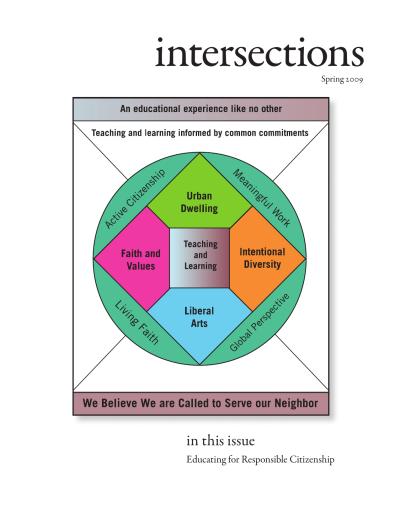
Marichal weighs the utopian and dystopian views of the “networked information economy,” drawing on Yochai Benkler, Manuel Castells, Henry Jenkins, Cass Sunstein, Robert Putnam, Nicholas Carr, and Andrew Keen to chart the promise and peril of life “in the cloud,” and proposes Aristotle’s intellectual virtue of phronesis—developed through Hubert Dreyfus’s five stages of skill acquisition—as the goal of digital citizenship for college faculty and their students.
-
 Article
Ethical Deliberation and the Biblical Text—A Lutheran Contribution to Reading the Bible
Ritva Williams
No. 22 · Spring 2006
Williams articulates a Lutheran “critical traditionalist hermeneutic”—a phrase borrowed from her Hebrew Bible professor Robert Polzin—that honors Scripture as queen while keeping Christ as its king, and tests it by critiquing Robert Gagnon’s use of Romans 1:18-32 in The Bible and Homosexual Practice. Drawing on Lazareth, Lotz, Philip Esler’s Conflict and Identity in Romans, Stanley Stowers’ Rereading Romans, and Ben Witherington III, she proposes an alternative reading in which Paul recites a Hellenistic-Jewish ethnic caricature in 1:18-32 only to overturn it in 2:1-16, making the passage a critique of self-righteous stereotyping rather than the foundation of a moral doctrine on same-sex intercourse.
-
 Editorial
Guest Editor
Madeleine Forell Marshall
No. 25 · Spring 2007
Marshall introduces the four papers in this issue from the 70th annual meeting of the Association of Lutheran College Faculties, held at California Lutheran University in October 2006 on the theme “Identity and Diversity in the Lutheran College.” She notes a geographic pattern—the two East Coast contributors (Balmer and Bailey) defend Christian liberal arts against perceived suspicion, while the two Westerners (Marichal and Brubaker) treat Lutheran identity as advantage and diversity as a Lutheran given—and announces the 2007 ALCF meeting at Newberry College on “Beyond ‘Whatever’: Values Based Learning in Lutheran Higher Education.”
-
 Article
Practicing Hope: The Charisms of Lutheran Higher Education
Martha E. Stortz
No. 32 · Spring 2010
Stortz names four charisms—theological gifts of identity rather than commodities—that Lutheran higher education brings to a culture of fear: semper reformanda as flexible, responsive institutions; the freedom of a Christian as simul justus et peccator critical inquiry that holds opposites in creative tension; regard for the other as “neighbor” rather than friend or alien; and the priesthood of all believers as a public, civic calling to know the poor. Drawing on Augustine, George Lindbeck, Patricia Killen, James Clifford, Earl Shorris, Carter Lindberg, and Augsburg’s Center for Global Education, she argues that immersion trips, neighbor-regard, and welfare reform witness that the gift Lutherans bring is hope grounded in Christ in you, the hope of glory.
-
 Article
The Power of Ritual Action and George Floyd Square
Mary Clare Tiede Hottinger
No. 57 · Spring 2023
A California Lutheran University senior examines how George Floyd Square in Minneapolis has been transformed into sacred space through ritual action, and considers what this site of remembrance, mourning, and ongoing struggle for justice can teach us about the power of ritual to unify and sustain community.
-
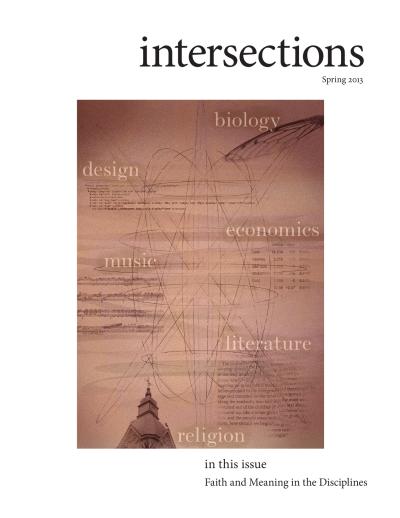 Editorial
From the Editor
Jason A. Mahn
No. 37 · Spring 2013
Mahn introduces the issue’s six essays as parallel attempts—from poetry, economics, choral music, biology, religion, and Lutheran higher education—to resist our culture’s fact-value split, and uses Augustana’s Fritiof Fryxell, a 1922 biology and English graduate who began teaching just as the Scopes Trial ignited, to illustrate how church-related colleges have long held faith and disciplinary inquiry together.