Where Disruption and Vocation Meet: One Path Toward Teaching Reproductive Justice in Challenging Times
Intersections No. 57 · Spring 2023
I was 18 years old the first time I stepped foot in an abortion clinic. A first-year math major at a small liberal arts college in rural Iowa, I did not get into one of my required math courses and so decided, smugly, that I would enroll in an “easier” alternative: Introduction to Women’s Studies. I’d been raised Catholic in a tiny Illinois town, attending confession, mass, and Sunday school weekly for as long as I could remember. Imagine my surprise when the professor said that we’d take several field trips to area organizations as part of the course and then would pick one to volunteer with for the rest of the term. By the time the sign-up sheet got around to my seat in the back corner of the classroom, there was only one organization left to volunteer with: a feminist women’s health clinic that also provided abortions.
My first day as a volunteer began with stuffing envelopes around a large table with other volunteers of all ages and backgrounds. Conversation topics ranged from folks’ upbringings to the university’s football schedule to one volunteer’s illegal abortion in the 1960s, provided by the Jane Collective.1 Everyone else seemed to know what the Jane Collective was, so I quietly checked out Laura Kaplan’s book, The Story of Jane: The Legendary Underground Feminist Abortion Service (1997), from the clinic’s library after my shift. I stayed up all night reading, simultaneously captivated by the story and confused about why I’d never heard about the Jane Collective before. I went to my next shift with a palpable hunger for more information about women’s health, rights, abortion, birth control, and sex education—topics I’d never been invited to consider– and spent hours after each shift in the clinic’s library devouring all the information I could.
I do not remember much about the rest of the Introduction to Women’s Studies course, except that it was more challenging than I expected and when the term was over, I dropped the math major, declared women’s studies and sociology majors, and continued volunteering at the clinic. Six years and two degrees later, I had worked as a pregnancy options counselor, pre-abortion educator, abortion support/hand-holder, and laboratory technician at several clinics in Iowa and Illinois. With my Master of Public Health degree fresh in hand, I looked back and realized that my vocational trajectory had changed drastically, all because I did not get into one math class the first semester of my first year of college. That recognition became a key moment as I stepped into the next phase of my career; I had found my calling after a disruption challenged me to step outside my comfort zone and try something new and unexpected.
“With my Master of Public Health degree fresh in hand, I looked back and realized that my vocational trajectory had changed drastically, all because I did not get into one math class the first semester of my first year of college.”
Flash forward 15 years. After working in the sexual and reproductive health fields, returning to graduate school, and integrating abortion care into my research, I’m now an associate professor of public health at Augustana College. I teach mostly in the core public health curriculum but felt called to develop a Reproductive Justice immersive term course in January 2020 after several years of campus events facilitated confusion and misinformation about abortion and reproduction. Reproductive Justice (RJ) is a framework developed by Black activists and scholars in 1994 after decades of exclusion from the white-dominated reproductive rights and health fields. It is defined as “the human right to maintain personal bodily autonomy, have children, not have children, and parent the children we have in safe and sustainable communities” (SisterSong, 2022). It does not focus solely on abortion and, like the ELCA Social Statement on Abortion (1991), demands discourse move beyond the reductive prochoice/prolife debate to examine systems of power and how the nuance of one’s lived experience shapes their reproductive choices.
I aimed to use the course as a disruption to the emotion-based campus activism around abortion and provide a structured space where students could examine the many issues of reproduction—abortion, adoption, birth, contraception, infertility, parenting, pregnancy, surrogacy, and sterilization—through the RJ lens. I drew from my own college experience and vocational journey to think about how I learned about abortion back when I knew nothing about it: from pregnant people, clinic workers, and first-person narratives. I utilized Augustana’s Five Faith Commitments (2015) to craft the course objectives, focusing on social justice.2 While I originally wanted the course to disrupt binary thinking about reproduction, external disruptions ended up shaping our class into an even more important place to process the intersection of rights, health, and justice.
I taught the first iteration of the RJ course in January 2020, and in several January and June terms since. The coronavirus was still a mystery illness in January 2020, and by June 2020 George Floyd’s murder sparked national mourning and outrage. The January 6th capitol attack occurred within the first few days of the 2021 term, and the most recent course in June 2022 saw the Dobbs decision overturn Roe v. Wade as we prepared for our final class meeting. We anticipated this outcome as a class, and discussed how much of the course content was suddenly out of date. We said our goodbyes only hours after the Dobbs decision became international news, and students scattered into the rest of their summer.
To plan for the June 2023 post-Roe version of my course, I reached out to past students and asked them to reflect on what it was like taking an RJ course during such challenging times, and what lessons they took with them. Many have graduated and gone into their various careers, while some are still students at Augustana. Three themes spanned their responses, including learning how to talk about complex topics, centering marginalized peoples’ experiences, and exploring the intersection of religion and reproductive justice.
Many students reported that this class was the first time they learned about reproductive topics in general, let alone discussed them with anyone else. G, a first year Geology major when he took the course in June 2022, shared,
“This course changed my perspective on how I talk about abortion, especially later abortions. I hadn't given the language I used and how I dismissed the idea a second thought, and I think I'm better at being less judgmental and more accurate now.”
Similarly, E, a senior Communications Sciences and Disorders major when she took the course in January 2021 explained,
“My knowledge and understanding of reproductive justice, feminism, abortion, and related topics grew exponentially because of this course. It granted me the ability to have informed and respectful conversations with peers and family, especially in this current political climate.”
The opportunity to think deeply about complex topics and discuss them with others helped students disrupt narrow understandings and foster more conversations. Many reported carrying this with them into graduate school, their careers, and community involvement, which is especially important when engaging with diverse colleagues and audiences.
In addition to talking about complex issues after the course, E described how the RJ framework helped her reflect on her activism:
“My perspective on feminism changed a lot. I learned about how white feminism is sometimes toxic to people of color and how I can do more to help all people with the ability to get pregnant and not just do things that look like they help everyone, but in reality only help white women.”
Meanwhile, G, who was in the course when Roe was overturned, connected the RJ theme of bodily autonomy to both abortion care and transgender health and rights:
“As a trans man who can get pregnant, I am concerned about the lack of consideration for trans people who can get pregnant. We face a lack of reproductive access, not only from being in an abortion desert3 or a state with an abortion ban, but from the fact that forcing a pregnancy in a place where abortion is banned effectively also forces someone to cease their medical transition to avoid being [legally] charged if the hormones affect the pregnancy.”
Both E and G captured the nuance necessary for understanding how lived experiences can shape reproductive choices, or lack thereof. These issues extend beyond the prochoice/prolife binary and invite a more reasoned examination of how faith can impact both knowledge about reproductive choices and how those choices are operationalized in real life. Students often shared personal stories during class, including how their religious upbringings shaped previous knowledge about reproductive issues. They overwhelmingly appreciated the ability to bring faith and religion into the conversation when they otherwise might avoid talking about it in other contexts. M was a junior Psychology and Communication Studies major when she took the course in January 2021. She noticed religion more in the application of abortion restrictions than how it was discussed on campus:
“Something that stuck with me was realizing how many hospitals restrict abortion, even some without explicit religious affiliations. Augie being a religiously affiliated institution had less of an impact on my learning about abortion than the Quad Cities being an abortion desert.”
A, a senior Biology major when she took the course in 2020, echoed M:
“I don’t believe that religion and reproductive justice are mutually exclusive. Religiously rooted beliefs can align with viewpoints focused on reproductive justice, so taking this course at a religiously affiliated college didn’t present any personal challenges.”
Several students expressed feeling supported by the course’s commitment to nurturing their curiosity rather than prescribing religion as the only lens to explore controversial issues. I noticed this as well. Students from all faith and secular backgrounds engaged with each other and guest speakers in thoughtful ways, even when disagreeing. They saw social justice, one of Augustana’s five faith commitments, as a natural fit with the RJ framework. Many reported feeling informed, empowered, and called to join social, racial, and reproductive justice causes during and after Augustana because of this course. It thus served its original purpose of disrupting campus conversations and unexpectedly grew to help students navigate other disruptions and become disruptors themselves.
I discovered my vocation amidst academic disruption more than 20 years ago; one missed course turned into a career-changing opportunity. For the past several years I have been responsible for guiding students through complex and often heavy content while they navigate disruptive social, political, and health events. Thankfully, teaching Reproductive Justice has not only helped me reflect on my vocational arc; it has also enabled students to use the disruptive nature of the early 2020s to deeply examine their personal convictions and professional goals. Whether discussing abortion care for trans people, questioning if parenting is a human right, or examining the intersection of racial justice and pregnancy outcomes, students are keenly aware that our course topics have real-life implications. As both an ELCA college that nurtures nuanced thinking and an institution located in an abortion desert, Augustana has been a unique setting for students—and me—to explore the changing shape of reproductive justice within and beyond the classroom. I look forward to checking in with these same students further down to road to see if the course had any lasting impact on their vocational journeys.
Endnotes
1. Interestingly, most of us grew up Catholic.
2. Details about my pedagogical approaches are discussed in Hann, 2023.
3. Abortion desert: “Cities with populations of over 100,000 where people must travel more than 100 miles to reach a clinic. This means people who need abortions may have to consider transportation, child care, time off work, and sometimes the money to stay overnight in a hotel when they seek out care” (ANSIRH, 2023). Augustana is in Rock Island, IL, part of the Greater Quad Cities region which has a population of over 450,000 people. The nearest abortion-providing clinic in Illinois is over 100 miles away. The nearest clinic geographically is 60 miles away in Iowa City, though Iowa has more restrictive abortion laws than Illinois and there is no reliable public transportation between Rock Island and Iowa City.
Works Cited
ANSIRH. (2023). Abortion deserts. https://www.ansirh.org/abortion/restrictions/abortion-deserts
Augustana College. (2015). Five Faith Commitments. https://www.augustana.edu/about-us/president/commitments
Evangelical Lutheran Church of America. (1991). A social statement on abortion. https://www.elca.org/faith/faith-and-society/social-statements/abortion
Hann, L.R. (2023). “How did I not know any of this?” Teaching Reproductive Justice in an Abortion Desert. Feminist Pedagogies (issue forthcoming).
Kaplan, L. (1997). The Story of Jane: The Legendary Underground Feminist Abortion Service (2nd ed.). Chicago, University of Chicago Press.
SisterSong. (2022). What is reproductive justice? https://www.sistersong.net/reproductive-justice.
-
 Editorial
From the Publisher: Introduction and Invitation
Lamont Anthony Wells
Wells introduces himself as the new Executive Director of NECU, succeeding Rev. Dr. Mark Wilhelm, and frames this Spring issue as a passionate response to the crises facing higher education amid threats to academic freedom and the well-being of educators.
-
Editorial
From the Editor: Vocation [in] Disruption
Colleen Windham-Hughes
Windham-Hughes introduces the issue’s theme — vocation amidst disruption — previews new features including contributor contact information, a study guide for So That All May Flourish, and invited pieces on reproductive rights, and shares results from the Fall survey of readers.
-
Institutional Focus
So That All May Flourish Study Guide
A chapter-by-chapter study guide to So That All May Flourish (Fortress Press 2023), a new volume by NECU authors that develops the central tenet of “Rooted and Open” and offers discussion questions for use in orientation programs, classes, workshops, task forces, and professional development settings.
-
Reflection
“Miracles are no longer required”—Life Writing as a Healing Tool
Barbara Reul
A music historian and cancer survivor chronicles how a uterine cancer diagnosis in the early months of the COVID-19 pandemic disrupted her vocation as a university professor, and how writing two open-access memoirs became an unexpected tool for healing body, mind, and soul.
-
Article
The Power of Ritual Action and George Floyd Square
Mary Clare Tiede Hottinger
A California Lutheran University senior examines how George Floyd Square in Minneapolis has been transformed into sacred space through ritual action, and considers what this site of remembrance, mourning, and ongoing struggle for justice can teach us about the power of ritual to unify and sustain community.
-
Reflection
Be Like Jesus: Flip Some Tables
Jessica Easter
Easter argues that the example of Jesus overturning the moneychangers’ tables in Matthew 21 calls Christians not to work within unjust systems but to disrupt them — and that this table-flipping must be done in community with others who share the vision of a world where all are seen, heard, and valued.
-
Article
Necessary Disruptions: Centering Vocation in the Common Good
Erin VanLaningham
VanLaningham previews the forthcoming NetVUE volume Called Beyond Our Selves: Vocation and the Common Good, arguing that vocation, common, and good all need to be disrupted and expanded so that students might arrive at a wider sense of individual purpose and collective well-being.
-
Article
The Duty to Teach and Restore Bodily Autonomy: Reflections from the Classroom
Cynthia Richards
Richards reflects on a Narrative Medicine course she taught at Wittenberg University in the wake of the Dobbs decision, in which students examined cultural “first recognitions” of the reproductive body and discovered that almost none had ever had a way of talking openly about their reproductive selves — an alienation she calls educators to address.
-
Article
Turning to a Reproductive Justice Framework for Inclusive Dialogue across Differences
Jenny M. James
James makes the case that a reproductive justice framework, rooted in the work of black feminist scholars and activists, gives educators tools to overhaul polarized pro-choice/pro-life conversations and to host inclusive dialogues across differences of race, sexuality, gender identity, and faith.
-
Article
A Reconsideration of the Political Approach to Abortion
Sophia Cruz Ponce
Cruz Ponce argues that the pro-life versus pro-choice binary distracts from the underlying social factors that lead to unwanted pregnancies, and proposes a reframed political approach focused on mandated sex education, free contraception, and crisis pregnancy centers that address the social, political, and economic barriers women face.
-
Article
Take Heart: Is Neutrality Really What We Need Right Now?
Abbylynn Helgevold
Helgevold, an ethicist at Wartburg College, argues that calls for faculty neutrality on abortion in the post-Roe classroom stifle the courageous conversations Lutheran higher education is uniquely positioned to host — conversations grounded in “Rooted and Open” and the ELCA’s 1991 Social Statement on Abortion.
-
Article
Views on Flourishing After the Age of Roe
Caryn Riswold, Mary J. Streufert
Riswold and Streufert reflect on the Radcliffe Institute’s January 2023 conference “The Age of Roe” and argue that the ELCA’s 1991 Social Statement on Abortion and its 2019 statement Faith, Sexism, and Justice offer Lutheran higher education a third way to approach reproductive justice grounded in serving the neighbor so that all may flourish.
-
 Article
SCAM-ing Service-Learning and Mission Trips: A Satirical Essay
Mark Wm. Radecke
No. 30 · Fall 2009
Radecke couches his research on best/worst practices in service-learning and short-term mission trips in a fictional Screwtape-style correspondence between Horatio Gumnut, CEO of “Spiritual Consultants and Mercenaries, Incorporated” (SCAM, Inc.), and Dwayne Pipe, an untenured professor seeking to sabotage a colleague’s Nicaragua mission trip — cataloging through indirection the disorienting dilemmas, commodification of the poor, exhaustion of reflective practice, and false noblesse oblige that derail such ventures, while pointing toward the genuine philoxenia, accompaniment, and structural awareness that mark a transformative experience.
-
 Institutional Focus
Pivoting to Imaginative Programming in the Midst of the Pandemic at Bethany College
Arminta Fox
No. 55 · Spring 2022
Fox recounts how Bethany College’s NetVUE Program Development Grant — originally designed around service-learning trips — was reimagined under COVID-19 into a guest-speaker model that tripled student participation and opened new vocational possibilities through the close, personal stories of alumni, alums-turned-volunteers, and community partners.
-
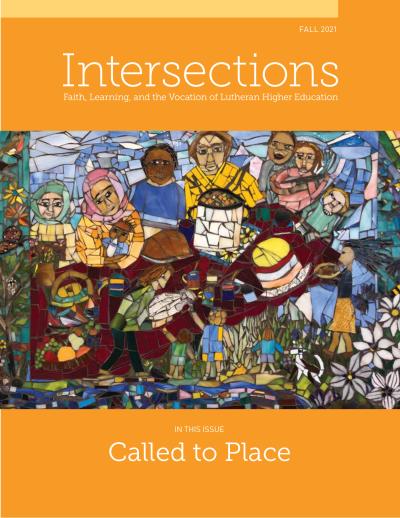 Article
Community-Building On Campus and Beyond
Krista E. Hughes
No. 54 · Fall 2021
Hughes describes Newberry College’s effort to build a “culture of community” that mirrors South Carolina’s demographics while reckoning with the institution’s founding ties to slavery — and names the challenges and promising city-college collaborations that shape this ongoing work.
-
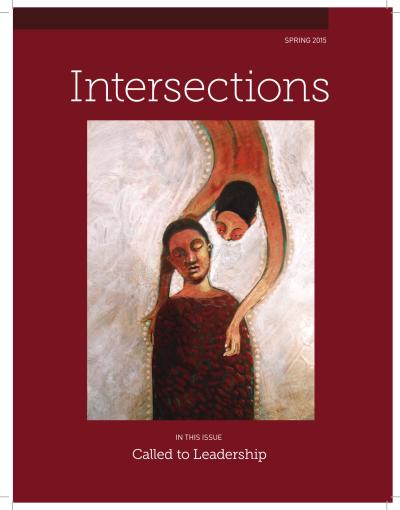 Article
The Dangers of "Vocation" for Students Thinking about Career
Carl Hughes
No. 41 · Spring 2015
Hughes warns that Lutherans too often use “vocation” as a theologically glorified synonym for a fulfilling career — a misuse that constricts God’s call to our jobs and excludes minimum-wage workers, caregivers, and others from the dignity of calling. Recovering Luther’s expansive understanding, he argues that vocation refers first to people, not professions, and must always be bigger than any one aspect of our lives.
-
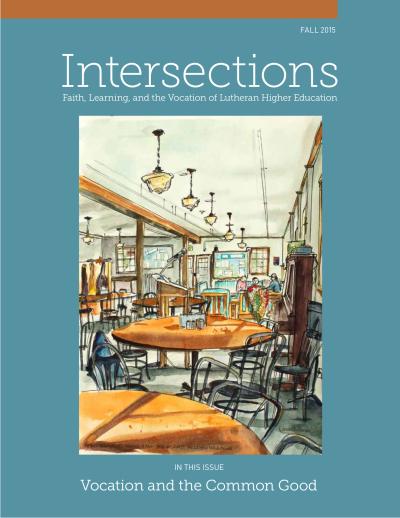 Article
Attentional Commons and the Common Good: Technology and Higher Education
Amy Weldon
No. 42 · Fall 2015
Weldon argues that the electronic devices our students (and we) reach for are designed to monetize attention and fragment the very capacities — tolerance for complexity, sustained focus, real conversation — that build lives of meaning and service to the common good. Drawing on Crawford, Lanier, Arendt, and Palmer, she sketches practical tech-mindfulness for the small-college classroom as a defense of the “attentional commons.”
-
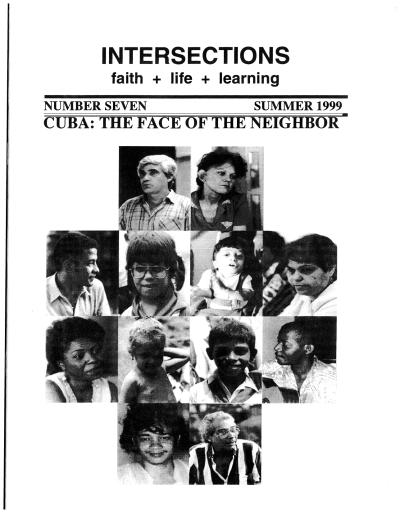 Article
The Face of the Neighbor: An Interview with Four Capital University Faculty About Their Recent Visit to Cuba
Brian Forry Wallace, Michael Yosha, Reg Dyck, Susan Narita
No. 7 · Summer 1999
Four Capital University faculty—political scientist Brian Wallace (returning to Cuba a third time after the 1994 boat lift), English professor Reg Dyck, ESL teacher Susan Narita, and political scientist Michael Yosha—recount their summer 1998 trip with Pastors for Peace, describing Cuban priorities of education, health care, and military (in that order), the cultural richness of Havana from sixteenth-century cloisters to Miramar, the Cuban Foreign Service’s vision of a Scandinavian-style democratic socialism, the counter-productive U.S. embargo (including its effect on kidney dialysis machines), Castro’s 1991 reconciliation with religious communities, and a recurrent image of a little girl named Marguerite singing at a school for amputee and terminally ill children. The interview was conducted by Capital senior Jessica Brown and Tom Christenson.