Of Fathers and Feminism: How One Lutheran Woman Came to a Vocation
Intersections No. 14 · Summer 2002
Why am I here?1
It’s a simple enough question on the face of it—only four words, each of one syllable. But what existential anxieties it can provoke. I don’t mean in the sense of why am I standing in front of you here today, at Valparaiso University, giving a talk related to the topic of the vocation of a Lutheran college. That’s an easy enough question to answer: because Arne Selbyg asked me to, on a suggestion from DeAne Lagerquist. No, I’m talking about the bigger implications of that question: Why am I here? And how did I get to be here, as the person that I am?—that is, as a Lutheran woman, a feminist biblical scholar, recently tenured2 and promoted by Susquehanna University, and, one month shy from turning forty.
I think it all goes back to Vacation Bible School when I was a kid. Now I liked Vacation Bible School (or VBS) a lot. Instead of stodgy hymns from the Lutheran Hymnal, we sang fun Jesus songs. Instead of enduring dry sermons on abstract theology, we listened to stories of fascinating and dramatic biblical characters—and then actively responded to them, asking questions, drawing pictures, dramatizing scenes. Plus, VBS had both snack time and recess. Recess in particular was not to be overlooked—not when Vacation Bible School occurred in June, which meant going outside to play. Not when this was Minnesota, where, having just come through the six months of a Minnesota winter—with all the cold, snow, ice, darkness thereby implied—recess outside was practically a synonym for heaven.
But when I was nine years old, Vacation Bible School ended for me in a quite tumultuous way. It happened on the last day, during the last hour, of the week’s activities. We had just had snacks, and were now playing dodge ball out on the playground, waiting for our parents to come by to pick us up. The ball got out of the circle close by to where I was standing. I ran to get it. Then, before I was even aware of it, an older boy was there too. He pushed me in trying to get to the ball, and I fell. As I did, I hit my forehead against the edge of the brick windowsill of one of the church windows. Suddenly, blood—my blood!—was pouring from my forehead. I screamed. Not from pain; it didn’t hurt. But, I had never seen so much blood before—and certainly not my blood. I was afraid that all the blood would drain from my head and I would die.3
It was a sign, a marker, perhaps even a warning, though I didn’t understand it so at the time. It enacted in a very blunt and visible way what I had never previously imagined possible—that the church could be, and indeed, was, a danger to me, a danger that could bring with it in the short term pain, fear, and the shedding of my blood, and, in the long term, permanent scarring. And it was a particularly troubling danger in that it could come so unexpectedly, appearing rudely and shockingly in the midst of fun and games, or, more benignly, even while just going about the humdrum routine of my life.
But even though it came to me so unexpectedly, this danger did not come to me without form: it was male. Remember: it was a BOY who pushed me into that brick windowsill and set me to bleeding and screaming. But just here is where the meaning of the event also starts to get complicated and confusing, for my savior that day was also a male. The janitor of the church—an older man—as soon as he saw me bleeding, quickly scooped me up in his arms, settled me quickly in the cab of his pickup truck, and sped me off to the clinic, where I was soon stitched up. Two polar opposites—the church as danger and the church as rescuer—and both were mediated through a male voice, a male face, a male presence, a male authority. Mixed messages. Always, in my life, the church has visited upon me mixed messages.
It goes as far back as my first life-memory. I couldn’t have been more than three years old. It was the end of a Sunday morning church service, and we were being ushered out. I was walking with my Dad, holding his hand. We must have made for a funny sight—Dad at six feet two inches in height, me at no more than two feet. We got to the back of the church, where the pastor was standing, and my Dad urged me to shake the pastor’s hand. But I couldn’t; indeed, I was appalled at the thought. Having seen the pastor on all those Sunday mornings, way up high in the pulpit, dressed in the same sort of white robes that I knew angels wore in heaven, and always expounding on God’s word—well, I had come to the conclusion that the pastor WAS God.4 And I knew, with perhaps the assurance of only the very young, that I was unworthy of shaking God’s hand. So even though I was normally an extremely gregarious and confident child—or so I’ve been told—I carefully but resolutely tucked my hand behind my back, and lowered my eyes to the floor. I wasn’t going to have anything to do with shaking God’s hand. It wasn’t that I didn’t want to; but I doubted, already at that age, my worthiness to do so.
That feeling of unworthiness has stayed with me. It resurfaced very vividly just a few years ago, when I participated in a spiritual exercise at a mid-week informal worship service for students at Susquehanna. Chris Thomforde, the chaplain at the time, made use of a strategy developed by Ignatius of Loyola, whereby we were to imagine ourselves into a biblical story.5 We all got quiet and comfortable, and then Chris started reading slowly and meditatively Mark 4:35–41—the story of Jesus and his disciples crossing the sea of Galilee at night and getting caught up in a fierce storm. Where did I place myself? At the beginning I hovered at the edges of the group of disciples. I WANTED to be a part of their group, but didn’t feel I actually had that right. Then, when Jesus and the disciples got into the boat, though I yearned quite intensely to go along, I could not really believe that Jesus wanted me, too, to come along with the rest of the group. It wasn’t until Jesus looked right straight at me, and issued me an invitation from himself directly, that I had the assurance of being wanted, and so had the confidence to actually climb into the boat. Once in the boat, though, I didn’t sit near him. While Jesus took a seat in the stern, I moved to a place halfway along the starboard side of the boat. It was the closest I dared get to him, even though I kept my eyes fixed on him the whole time, even as he fell asleep. When the storm came up, I clung madly to the side of the boat, water streaming into my eyes, while still focusing all my attention on Jesus as the disciples woke him up with their plea to take notice of the danger we were in. And, yes, at that point Jesus did calm the winds and the waves. I had perfect faith he would do so—even though my sense of unworthiness kept me always at some distance from him.
But where and how did I get this sense of unworthiness? After all, I grew up in a church that proclaimed, in those familiar words of John 3:16, that “God so loved the world that he gave his only Son, so that everyone who believes in him may not perish but may have eternal life.”6 I grew up in a Lutheran church that emphasized our being saved through God’s grace, that stressed our justification before God as a result of God’s own benevolent actions towards humanity. In the words of Romans 3:23–24—“since all have sinned and fall short of the glory of God, they are now justified by his grace as a gift, through the redemption that is in Christ Jesus.” Or, again, in the words of Romans 5:1—“since we are justified by faith, we have peace with God through our Lord Jesus Christ.”
I have heard such words countless times in my life, because, when I say I grew up in the Lutheran church, I mean that I was practically raised in, and by, the church. The Lutheran church was the social and cultural center of my life. Both of my parents, and all of my grandparents, were life-long members of the Lutheran Church. Within weeks of my birth I, too, was baptized into, and became a member of, the church. Practically all of my parents’ friends were members of the Lutheran church, and almost all of our family socializing was done within that context. The family’s weekly and yearly demarcation of time depended on the church: Sunday morning church and Sunday School, Wednesday evening Lenten services, once a month hotdish potlucks with the church’s Couples Club, Wednesday morning Release Time classes for us kids, Saturday morning confirmation class during the seventh and eighth grades, an abundance of Christmas time and Holy Week services (Holy Week, in particular, was a marathon—one service on Maundy Thursday, two each on both Good Friday and Easter Sunday—plus an Easter brunch and Sunday School). The Lutheran Church was a central definer of my life. It ordered my family’s time, our relationships, our ideas and values, our behaviors.
And yet, despite all that, I could never feel, or believe myself to be, fully a member of that church community. For the Lutheran church in which I grew up was a congregation of the Lutheran Church Missouri Synod. And in this church only men could be ordained, only men could preach or publicly read from scriptures, only men could preside at communion or assist in the distribution of the elements, only men could be members of the Board of Elders (the governing council of the church), only men could vote, and only men taught the adult Sunday school classes.7 Women had far fewer, and far less prestigious or public tasks: they taught the children’s Sunday school classes, played organ and sang in the choir, cleaned and prepared the altar paraments. The church had a male face, one that was omnipresent and dominant. But because this maleness was so Other to who I was as young and female, that face was also very remote and inaccessible to me.
The simultaneity of the church’s male face as both dominant and inaccessible, present and removed, was both exacerbated and reinforced by a family dynamic in which my father was pretty inaccessible to us kids, and yet, probably for that very reason, highly valued and very much at the center of our family’s life. Dad worked outside the home; and he had a job that he loved immensely. He always put in upwards of sixty hours a week—out of the house by eight in the morning, home shortly before six in the evening for supper, but then often enough going back out again after supper, working until ten or eleven at night. Saturdays were always work days; Sunday afternoons often were—except during football season when he cheered on the hapless Vikings.
When Dad was home, our life centered on him; we dropped whatever else we were doing and reoriented ourselves to him. For example, supper always had to be on the table at six—that’s when Dad expected it, and he only had about a half-hour window of time for eating before he needed to take off again. But the rarity of his presence also meant, for me, that any time I did have with him was especially cherished. Those times stand out vividly in my mind: 1) Dad teaching me to stand on my head when I was seven years old (I’m still a great head stander!); 2) fishing with him in Canada while on a family vacation, where I caught a four and a half pound Northern (the only fish anyone in our family would catch that week!); 3) spending a Sunday afternoon some time during my teen years holding an elevation stick so he could do some surveying.
Another time when I got to be with Dad was during church on Sunday morning. In this situation, I was helped immensely by being the oldest child. As my younger sisters started coming along, Mom’s attention and energy were focused on them. That left Dad and I to our own devices, so to speak. For me that meant having Dad to myself. And I remember clearly putting a lot of effort into manipulating the seating arrangements in the family pew so that I would be seated next to my father. But it wasn’t just about having exclusive time with my father, important as it was. It was also about the magic of reading. You see, although I’m not quite clear about when or how I was taught to read, I do know that my earliest reading memory goes back to those Sunday mornings in the pew sitting next to my Dad. He would trace, with his finger, the words of the hymns being sung. And as my eyes followed along, week by week, the lines on the page gradually made more and more sense. They became text; decipherable words that opened whole new worlds to me. Access to my father; access to the written word. I wonder, do I love to read so much because I see it as a gift given to me by my father? I certainly had—and still do have—a reputation in my family as being an inveterate bookworm. “That Karla, always with her nose in a book.” I can still hear the voices of my mother and my sisters saying that.
When I was growing up, our parents told us four kids—all daughters—that we could be whatever we wanted to be, and do whatever we wanted to do. And I remember Dad, even more so than Mom, being especially insistent about it. And so our parents bought us all the books we wanted; praised us for our A grades—as well as our C’s, as long as we had tried our hardest; sent us to all the summer camps—church, cheerleading, Girl Scout, music—to which we wanted to go; and sat through countless music recitals, athletic competitions, and dance-line performances. As we moved into our high school years, it was taken for granted that we would go to college. The only proviso was that we NOT go to the local teacher’s college (which was also the local party school)—our parents wanted more for us than that. They wanted us to see the world; to live up to our potential; to grasp life to its fullest.
But how was I to square that with a church that so clearly and blatantly limited the possibilities for women? And how was I to square that with the actual practices of our family? After all, although Mom taught us girls how to play piano, Dad never taught us how to hunt. And although us girls did plenty of chores around the house, they were mostly the so-called women’s tasks of dusting, vacuuming, folding clothes, and washing dishes. Dad was the only one in the family who mowed the lawn, shoveled snow off the driveway, or put gas in the car. And I wonder now, if we had had brothers, would they have done “Dad’s chores,” and also been taught how to hunt?8 Would traditional constructions of gender thereby have been more blatantly enacted in our family? And what then might have been the consequences for the ways in which us daughters thought about, and lived out, our lives?
But even without brothers, life was bringing with it too many contradictions. Although I wanted to believe my parents’ story that said I, as female, really could do anything and be anything that I wanted—I wasn’t actually seeing it happen in the world in which I lived. So I turned to books—because there I did find girls who lived expansive lives, ones with seemingly no imposed limits. Nancy Drew, Trixie Belden—these girls had adventures, they didn’t take no for an answer, and they did everything that the boys did. Even more, through their actions they helped fix some of the wrongs of the world, thereby earning the respect of all with whom they came into contact. They were my ideals. And yet, they were fictional, which was why I favored even more a series of biographies that told about the childhoods of famous American personages. And I especially loved those biographies that featured famous women. Again and again I read the stories of the growing up years of Helen Keller, Jane Addams, Betsey Ross, Eleanor Roosevelt, Sojourner Truth, Molly Pitcher, Annie Oakley.
But none of these stories interacted with religion in any meaningful way. And I think, given the centrality of the church in my life, stories that did not have a religious element to them could never be seen by me as entirely relevant or satisfactory. Unfortunately, I didn’t get such stories from the church; indeed, I received scarcely any stories at all from there, my church being much more interested in theology than in story. Sunday morning sermons were most often expositions of the second reading of the day, which was usually a passage from one of Paul’s epistles. Listening to such sermons fostered the sort of alienation and exhaustion that Kathleen Norris talks about when she first goes to church after years of being away. With words such as justification, reconciliation, crucifixion, and sanctification being bandied about—she’d go home after church and collapse into a three hour nap, feeling totally battered by the foreignness of the language and concepts.9 I, too, felt similarly dazed and confused. I might have found some relief in Sunday school classes, except here the opposite problem pertained: the classes had become rather insipid, not to say irrelevant—sure, there were stories, but how was I supposed to relate to, or care about, sheep-herding, tent-dwelling, donkey-riding, drawing water from a well, or fighting with sword and spear.
But confirmation class—THAT was the worst. Every Saturday morning during my seventh and eighth grade years, I reported to a dingy basement room in the church where, after reciting by memory assigned passages from the Bible and Luther’s catechism, I retired to a hard wooden chair and, along with my classmates, settled in for a two and a half hour lecture by our pastor on some aspect of the confessional doctrines of the Lutheran Church. During our one 15 minute break we all headed downtown to buy candy, hoping rather forlornly that it would sustain us for the last hour of that morning’s lecture. Not surprisingly, none of the information from those years has stayed with me—whether of the lectures or of the memorization passages.
And yet, I do have one positive memory of those years. One day, instead of returning from our confirmation candy-break to another lecture on doctrine, we came back and heard our pastor retell for us the story of the last seven days of Jesus Christ on earth. We were enthralled; transported outside of ourselves; bespelled. For a full hour, no one coughed, shifted in their chairs, or dropped a pencil. We scarcely even breathed. Imagine how impossible that was: for not less than twenty thirteen and fourteen year olds to be so enraptured. And yet, our pastor wove such magic with his words—we could see, hear, feel, almost smell and touch(!), the pains and passions of the people caught up in the events of that long-ago week in Jerusalem.
When I got home that day, I told my Mom about our pastor’s story-telling and the way in which it cast such a spell over us. Mom had also had occasion to hear him tell stories; she agreed that he was wonderful. Why, then, I asked, didn’t he tell stories more often? Why, for instance, did his sermons focus on Pauline theology, instead of at least some of the time expounding on the many rich and wonderful stories in the gospels and in the narrative sections of the Old Testament? Mom didn’t know.
When I was confirmed, someone gifted me with a Bible, a paraphrased, easy-to-read version known as The Way. One of its features was a chart laying out each biblical chapter according to the supposed timeline of [biblical] events as conceived by the book’s editors (thus, the book of Job appeared after the first 22 chapters of Genesis; Proverbs was read after 1 Kings 4; Jonah after 2 Kings 14:25; etc.). This chart appealed to my love of orderliness and lists, and I decided to use it as a guideline for delving into the stories—not the theology!—of the Bible. More, I wanted to see if I could actually succeed in reading the entire Bible.10
When I got to the books of Samuel and Kings, I took my love of lists and orderliness a step further, and constructed a chart listing the whole series of rulers of the respective kingdoms of Israel and Judah. Or rather, I attempted to graph out such a chart. It didn’t take me long to realize that the biblical text wasn’t entirely cogent in its listings of the kings, the number of years they reigned, or how their regnal years coordinated with the reigns of other kings. I gave up, leaving the chart uncompleted (though I still have it, as well as the Bible). Shortly thereafter I stopped my reading of the Bible entirely. But it wasn’t my inability to finish the chart that defeated me; rather, it was the fact that the stories I was reading were not my stories. What did I know of kings and governments, battles and priests? Nothing. So, although I had finally found some religious stories, I had not found religious stories in which women were present and active. My Bible reading had led me to the same end as the “truth” presented to me by the church—that there was no real place for me, as female, in the world of religion. Add to that the fact that by now I had years of hearing from my parents that I could be and do anything, even as they simultaneously held up to me as highly valued a religious realm in which the roles and status of women—merely because of the fact that they were women—were sharply curtailed. The contradictions were cutting too deep. I was beginning to feel, potentially at least, as if I had been slammed into a brick wall and was now left reeling from the shock and the blood.
So I rebelled. Quietly, though not literally. And if it was my version of teen rebellion, it was done in a very nice, covert, and—dare I say it?—Lutheran way. In my teen years I turned my attention and energies towards my school studies and activities. I barely tolerated church services; indeed, I only went because it was a parental condition placed on my being able to work at a pizza place late Saturday nights.11 I adamantly refused all efforts to interest me in church choir, the youth group, or bible studies. Later, when it came time for college, I applied to St. Olaf—a Lutheran school, to be sure, but the wrong sort of Lutheran school, affiliated to the American Lutheran Church and not the Missouri Synod. Besides, I applied primarily because of its music program, not its religious connections.
But St. Olaf became the place which nourished in me a rebellion that eventually became much more overt and articulated. When I foundered on music theory after only one semester, I found myself trying on, and taking off, a whole succession of other majors: English, Political Science, Theater, International Relations, Religion, History. As I wandered, though, I met professors willing to consider all questions—without prejudicing them in advance with a Bible bias. Critical inquiry, far from being seen as antithetical to religious beliefs, was seen as a potential reinforcement and even furtherance of them—even in religion classes. I was being introduced to a new sort of intellectual freedom. With it, I even read Ayn Rand my sophomore year, and, daringly, but briefly, declared myself an atheist (!).
St. Olaf also had another revelation for me: there, for the first time, I encountered a Lutheranism with a female face. Bruce Benson may have been the college’s chaplain, but Kristine Carlson was serving as chaplain intern. Classes where I learned the history of ideas were taught not only by Bill Poehlman, Eric Lund, and Jim Farrell, but also Joan Gunderson, Anne Groton, and Constance Gengenbach. And when I went to chapel, whether during weekdays or on Sunday mornings, I saw not only men, but also women, serving as lectors, preachers, and communion assistants.
It was especially this aspect of my St. Olaf experience that I used as a springboard from which to launch my ultimate rebellion against my parents, and the contradictory messages which they had enforced on me: I declared my intention of becoming a pastor. Here, I thought, was a real test for my parents. They had previously affirmed that I could do anything I wanted—except that in their system of belief no woman could have any leadership role at all in the church. How, then, would they receive the news that I had chosen a field of work that, because I was a woman, ran directly and forthrightly against the very heart of the beliefs and practices of their religion? My father, in particular, had always modeled the very high value he placed on work. So I was pressing the illogicalities of their message deep into my father’s home court. Would he now turn hypocrite and somehow try to deny me the right to find the same high value for myself in a vocation? But if he did not, would that mean that he, in effect, had been forced into a compromise of his religious beliefs?
As it turned out, my parents took the news of my becoming a pastor quite calmly. My Dad affirmed explicitly that I had the right to make my own decisions about my life and career. He admitted that he would be uncomfortable theologically with my being up in the pulpit preaching the Word of God; nevertheless, as my daughter, he would support my doing so, even if that meant sitting in a pew and listening to the sermons that I preached. Although he would never make the same decision as I was making, he trusted, believed in, and respected my abilities and my character as a thoughtful and mature person to make the right decision for myself.12
Well. With my parents’ acceptance of my supposedly radical career choice, the wind of my rebellion was let out of my sails. Thus, when I sat down to write my application essay for seminary, I was quite unable to do so: I simply could not articulate why I wanted to go to seminary. Going to seminary on the strength of rebelling against your parents probably isn’t a sufficiently strong, or good, motivation for doing so anyway. But I didn’t even have that anymore. In the end, I was likely saved from making a time-consuming and expensive mistake: my parents’ very willingness to accept the possibility of my becoming a pastor meant that I no longer needed to prove my independence from them by doing so. Though we weren’t aware of it at the time, the seminary, the church, my parents, and myself were all thereby saved from an immense amount of aggravation.
But what, then, was I to do with my life? My sisters and I agree that one of the more vexing legacies of our father was the very passion and enjoyment which Dad brought to, and derived from, his work: his close-up example for so many years meant that nothing less than that would do for us and our work.13
As it turns out, I began the journey towards answering that question in a rather prosaic way: while on a Sunday car trip to Winona, MN I suddenly thought, “I’ll do what Jim Fleming does!” Now Jim Fleming was an instructor I had had during a one-semester study abroad experience in the Middle East, which I done during my Junior Year at St. Olaf. Jim had taught us the historical geography of the land of Israel, a major piece of which involved taking us on tours of archaeological sites throughout Israel. My desire to do what Jim did thus meant becoming a biblical historian and/or archaeologist. It meant, I thought, being able to get in touch with the real-life stories of the people—men and women—who lived in, and wrote, the stories of the Bible. It thereby meant bringing together my love of story, my rootedness in Christianity, and my need to see, in the religious realm, the faces of women. Although I did not yet fully recognize it, this vocation would become the means by which I could find women, and specifically religious women, with whom I could, somehow, identify and relate to—though not necessarily in an unproblematic way. The fact that these religious women would be the women of the Bible was likely a consequence of my own Lutheran tradition’s stress on the Bible, coupled with my especial interest in the history of remote times, places, and peoples.
Almost immediately, I launched myself into a multi-year quest towards this vocational goal. I was woefully ignorant at the start—I thought such an enterprise meant pursuing a Ph.D. in History, which, had, in the end, been my major at St. Olaf. But no. I was told it meant a Ph.D. in Religion. On top of which, I needed to steel myself for multiple years of study of multiple languages, which had definitely not been my forte as an undergrad. In the next years, I studied Greek, French, and Hebrew, visited a number of graduate schools, and eventually applied, and was accepted, to Duke University’s graduate program in Religion.
One of Duke’s biggest appeals to me was the fact that it had a woman professor of biblical archaeology: Carol Meyers. In my investigations of graduate schools, I had already begun to realize how dominated the field was by men and by the male perspective; this certainly seemed a step in the wrong direction from the more inclusive perspective of my years at St. Olaf. Indeed, embedded in my first-year experiences at Duke in the classroom and library was a whole other educational experience whereby, through a veritable bombardment of words and actions, I was made to feel that my being a woman somehow made me “less”—less important, less qualified, less capable, less intellectual. Even with Carol as my main professor, I could not escape the message that my gender was a problem, or, at the least, an issue that somehow needed to be explained away or excused. Never before in my life had this message been made so blatant—or never before had I noticed it so. The Lutheran church in which I had grown up had, for the most part, simply ignored women—not simultaneously battered them with the message of their fundamental worthlessness. In any case, the church’s message had been for me, at least, partly counterbalanced by affirmative messages I had received from both my parents and my schooling. At Duke there was no real counterbalance… until my second year.
In the fall semester of my second year, at Carol Meyer’s suggestion, I took a graduate level seminar on the History of Feminist Thought. That course remains the very best, and most memorable, course I have ever taken—which is saying quite a lot given the approximately twenty-one years of full-time schooling I have had. Part of it was timing, of course; the class simply came along for me at the right time. Still, it was also in that course that I discovered, quite simply, that I was not alone. I met others who were troubled by the same sense of alienation that I had felt so much of my life, alienation springing from my identity as a woman and its problematic construction in our world. I was given a whole raft of questions, strategies, and angles of seeing by which I could evaluate, critique, even dismantle and rebuild, much of what I had previously learned, assumed, and thought. I was introduced to a whole community—of both women and men, from both the present and the past—who had felt and been motivated by some of the same angst that moved me. I was given the power of naming myself—as a feminist—and analyzing the world in which I moved in a way that made sense to me.
From that course sprang so much else. I went on to earn a graduate level Certificate in Women’s Studies. My dissertation was feminist in both its topic (biblical daughters) and its approach (an interdisciplinary feminist reading strategy making use of new historicism, anthropology, and deconstruction). My teaching since then has been strongly informed by a participatory, discussion-oriented mode which owes much to feminist pedagogy.14 And most of my research and writing has been feminist in terms of both its methodology and subject-matter. Fundamentally, I see the world with feminist eyes. My reading, my questions, my values, my interests are all strongly shaped and informed by a feminist stance and epistemology.
But even though feminism gave me the critical counterpoint which has substantially sustained and nurtured me for the last decade or so of my life—both intellectually and emotionally—it has not freed me from the toils of angst-filled meaning rooted in my childhood faith and family. I do not think we ever entirely escape, or free ourselves, from our childhood experiences and the formative influence they have on our lives. As Michel Tournier observes: “Childhood is given to us as ardent confusion, and the rest of life is not time enough to make sense of it or explain to ourselves what happened.”15
Thus, for me I continue to struggle over the church’s significance in my life, which especially means struggling with its legacy to me as a church with a male face—and the contradictions thereof. For whereas this male-faced church has long presented itself to me as a strong, meaningful, and active presence, it often has, too, and simultaneously, infused me with overwhelming feelings of estrangement and alienation. As for God, that Presence whom the church mediates, if it is not really the Monster God about which Kathleen Norris writes,15 it is at least a God whose presence, instinctively for me, calls up images of something remote, forbidding, stern, inaccessible. God, faith, religion are not easy things for me to trust, easy things for me to have faith in, because too often they have been Other to who I am as a woman; thus, I do not feel entirely safe in or with them.
And yet, I do continue to struggle. The Lutheran church of which I am a member in Pennsylvania belongs to a synod which has, in the past few years, experienced a shortage of pastors. One of its strategies to deal with that was to institute an Authorized Lay Worship Leaders Program, a training program for lay people who might, at the end of two years of all-day Saturday classes taken once a month, be authorized to lead worship in local Lutheran congregations. My pastor—a man, by the way—gently but insistently urged that I take part in it. In the end, I was both student and teacher in the program. (I enrolled as a student, but also stepped out of my student role to teach one of the Old Testament sessions). It seemed sometimes that with this program God was playing a big joke on (or with) me: after all that struggle so many years ago about whether I should go to seminary or not, I was here being given the opportunity to go to a sort of Cliff Notes’ version of a seminary. Then, too, I also felt in many ways like a kid who was being allowed to both have their cake and eat it. For with this program I would be able to do all the fun stuff of being a pastor (that is, preach and preside at worship), while avoiding all the un-fun stuff (that is, administration and meetings).
Two summers ago our class was formally authorized at our Synod Assembly to function as lay leaders of worship. In the midst of the congratulatory applause, though, I still remember seeing one male pastor out in the sea of chairs who looked very upset and ostentatiously was NOT applauding. Mixed in with the distressing feelings that were stirred up for me from seeing that was the memory of what had happened just the week before. I had received a special, anticipatory authorization by the bishop not only to preach at the Sunday morning worship of my church, but also to preside at communion. Despite some initial nervousness, I ended up feeling unbelievably comfortable and right in that role. And yet… I have also never told my parents of that experience, wherein as a non-ordained woman I distributed the communion elements.
Still, I also positively acknowledge how my childhood experience of faith, family, and father has resulted in so much of the impelling interests that have led me to where I am today: the love of story, the use of the Bible as a central lodestone of meaning, the intense yearning to see and connect with women—their pains, joys, and desires—knowing that they were shared by me and so knowing that, just as they did, I, too, might have an acknowledged place in the world. I do not think it’s accidental that I acceded so readily to Carol’s suggestion that I write a dissertation on biblical daughters—my own role as a daughter has been so formative in my life; I wanted to see what that role had meant for other women in a religious context—which meant, for me, examining the Bible’s portrayal of daughters. Nor do I think it’s happenstance that my first published article was a critical examination of the story of the concubine of Judges 19—a woman who is abused, gang-raped, murdered, and dismembered by the men of her community, including her husband. At the time of its writing, I was struggling through feelings of helplessness engendered both by a move to a new town and a first full-time job as a college professor, and a growing suspicion and panic that my marriage was in its death throes. More recently I wrote an article on the significance of names and naming in the biblical world, noting that names often express the fundamental character or destiny of a person, and that those who did the naming thereby were recognized as having both authority and discernment to correctly recognize who that person was and who they might become. Ironically, but perhaps fittingly, I found out from my Dad just a few months ago that it was he who named me—it seems that as a young schoolteacher he was much taken by the brightness and attractiveness of a high school co-ed named Karla. (By the way, I don’t think my Dad has ever shared with my Mom the reason for my name.) In any case, my scholarly writing about the world of the Bible and the world of women, even sometimes without my knowing it, and even as academic and properly footnoted as it has been, has also been deeply imbrocated in the events and experiences of my life, especially of the interplay between the male gaze of the church—both positive and negative—and the feminism from which I have derived the means to look back at, and critique, measure, and evaluate, that male gaze.16
Several months ago, in the midst of working on an earlier version of this paper, I received a phone call from my Mom. She asked what I was up to and I told her a bit about this paper. I then turned around and asked her if she remembered anything about the Vacation Bible School episode when I had hit my head and gotten stitches. She did indeed. This is what she remembered. She remembered getting a phone call from the vicar at the church whose first words were: “Don’t worry; it’s not serious.” And, on the strength of his words, she didn’t. She drove down to the clinic and was ushered into the examination room where I was waiting to be stitched up. And she was quite calm and collected during the whole time—even as we waited for almost an hour before a doctor came in to do the stitches.
What she had also been told by the vicar was that the accident occurred simply because I had run into the brick windowsill. In other words, in the version she had received, no boy had been responsible for my pain and blood; I had simply brought it upon myself. When I told Mom my version of what had happened, complete with the older boy pushing me into that brick windowsill, I was surprised by my Mom’s response. She tartly observed that well, of course they weren’t going to tell her the whole truth, because, if they did, the church might be opening itself up to a lawsuit; so they placed all the responsibility for the injury on to me. I could not recall my Mom ever before being so critical of “the fathers”; I had always generally seen her functioning as a sycophant for my father and the male authorities of the church. That day I felt the thrill of a secret, shared bond with my Mother, the forbidden salt taste of being on common ground with her in questioning and critiquing the central male figures in our lives.
But all that, I think, is a story for another time.
Thank you.17
Endnotes
1. The inspiration for opening my paper this way comes from Ernest Simmons. In his book, Lutheran Higher Education: An Introduction for Faculty, he begins with an anecdote arising from the question: Why are you here? In Ernie’s case, he recalls being asked the question by a college registrar at the start of his college career, and then notes the ways in which it both did, and did not, provoke existential anxieties in him. See Ernest L. Simmons, Lutheran Higher Education: An Introduction for Faculty (Minneapolis: Augsburg Fortress, 1998), pg. 1.
2. Tenure, in particular, is a funny thing. It is a supposed marker of achievement in academic life, but unlike so many others, it does not bring with it any new gains. As a friend of mine, Linda McMillin points out, all tenure means is that you get to continue doing what you have already been doing for the last six or more years—surely not an unmixed blessing. Not getting tenure can be devastating; but getting tenure can mean only more of the same—for endless years to come. I was amused to discover that bell hooks begins her book, Teaching to Transgress, with a similar experiential reflection. “In the weeks before the English Department at Oberlin College was about to decide whether or not I would be granted tenure, I was haunted by dreams of running away—of disappearing—yes, even of dying. These dreams were not a response to fear that I would not be granted tenure. They were a response to the reality that I would be granted tenure. I was afraid that I would be trapped in the academy forever.” bell hooks, Teaching to Transgress: Education as the Practice of Freedom. (New York: Routledge, 1994), p. 1.
3. Time magazine recently ran an article on the dangers of dodge ball, though none of the examples were remotely similar to the danger I faced. The letters to the editor that ran in response to it during the following weeks were divided about equally between those supporting and those opposing the article’s arguments. See Tamala M. Edwards (with reporting by Anne Moffet), “Scourge of the Playground It’s dodge ball, believe it or not. More schools are banning the childhood game, saying it’s too violent.” Time Vol 157, no. 20 (May 21, 2001), p. 68. And also Letters to the Editor in Time, 6-11-2001 and 7-2-2001.
4. Note that Richard Lischer, in his just published memoir of growing up, and then becoming a pastor, in the Lutheran Church, also recalls the high esteem in which he held his pastor as a young boy. But he didn’t take it quite as far as I did—seeing the pastor as God. See Richard Lischer, Open Secrets: A Spiritual Journey Through a Country Church (New York: Doubleday, 2001), pp. 21–22.
5. See Ignatius of Loyola, Meditations.
6. All Biblical translations come from the New Revised Standard Version.
7. This same situation tends still to pertain today. A recently-written history of the Lutheran Church-Missouri Synod (written from an “insider” perspective) argues that ongoing discussions about the leadership roles of women in the church are linked to issues about authority, with this latter being a still unresolved issue that goes back to the very beginnings of the church in the 19th century. See Mary Todd, Authority Vested: A Story of Identity and Change in the Lutheran Church-Missouri Synod (Grand Rapids, MI: Eerdmans, 2000). The issue of women’s place in this church (or lack thereof), also gives rise to a conflict between Richard Lischer and his congregation in the 1970’s. See Lischer, pp. 197–201.
8. I suspect so. Two years ago, when my oldest nephew turned thirteen, my Dad made a great deal of fuss about his first hunt: a gun was obtained and they went practicing on a shooting range, both as prelude to an actual hunting trip. (But the hunters were unsuccessful on that trip; no deer were shot.)
9. Norris writes: “When some ten years later I began going to church again because I felt I needed to, I wasn’t prepared for the pain. The services felt like word bombardment—agony for a poet—and often exhausted me so much I’d have to sleep for three or more hours afterward. Doctrinal language slammed many a door in my face, and I became frustrated when I couldn’t glimpse the Word behind the words. Ironically, it was the language about Jesus Christ, meant to be most inviting, that made me feel most left out. Sometimes I’d give up, deciding that I just wasn’t religious. This elicited an interesting comment from a pastor friend who said, ‘I know too many people who are so serious about religion they can’t even go to church.’” Kathleen Norris, Dakota: A Spiritual Geography (New York: Ticknor & Fields, 1993), p. 94.
10. In an earlier version of this section of the paper, I wrote about “giving myself permission” to read for myself the Bible. As I pondered the reasons for thinking that I needed permission, I realized that I had already imbibed too well the lesson that, as a girl, the world of religion had areas marked off to me. Thus, any religious initiatives that I took—even just reading the Bible without an intermediating interpreter—might lead to the transgressing of boundaries, the breaking down of barriers behind which I was NOT to go.
11. At this same time, my Dad took a similar position with one of my sisters. It turns out that she had an incredible aptitude for mathematics, so much so that she was left bored and frustrated by our limited high school math curriculum. Thus, she petitioned the school board to graduate early so that she could start taking calculus classes at a nearby college. Although today such a move is not at all unusual, at this time and place it had never been done before. She was required to make a formal appearance before the school board with our parents. At the hearing, Dad greatly surprised her by making the statement that, although he would never make the decision she was making, he had full confidence in her ability to make the right decision for herself, and so he fully supported her efforts to graduate early. (The request, by the way, was granted.)
12. Note that, among my sisters, I had it relatively easy. Once I decided on a career choice—just one year out of college—I did not deviate from it. Another sister, though, graduating with a major in Art History, went on to jobs in a museum gallery, an arts and crafts boutique, and at Cargill. Currently she works as an administrative coordinator for elderly people who work as volunteers. Just two weeks ago she told me she was out applying for jobs again. Another sister earned both a B.A. and an M.A. in math. She taught math, first at the high school level, then at the college level. Tiring of that, she got her private pilot’s license, then flirted with the idea of becoming a CPA or a meteorologist. She decided instead to learn how to “design space ships.” She’s currently finishing a B.S. degree in aerospace engineering at Embry-Riddle College in Prescott, AZ. The third sister took a somewhat different route: she’s married to a pastor, with whom she has six kids. She’s currently home-schooling the four youngest, while also serving as the church’s administrative assistant and organist.
13. Even in such stodgy and rote courses as Old Testament Introduction, I find myself organizing the material in such a way that it plays on themes of ambiguity, contradiction, and paradox. These may be good Lutheran themes (especially paradox), but for me they are especially pertinent because of their grounding in feminism.
14. Quoted in Jeffrey L. Staley, Reading with a Passion: Rhetoric, Autobiography, and the American West in the Gospel of John (New York: Continuum, 1995), p. 145, n. 122.
15. Norris encounters the Monster God through fundamentalism. She describes it as follows: “When I was very small my fundamentalist grandmother Norris, meaning well, told me about the personal experience I’d have with Jesus one day. She talked about Jesus coming and the world ending. It sounded a lot like a fairy tale when the prince comes, only scarier. Fundamentalism is about control more than grace, and in effect my grandmother implanted the seed of fundamentalism within me, a shadow in Jungian terms, that has been difficult to overcome… More insidiously, it imbedded in me an unconscious belief in a Monster God… Trust is something abused children lack, and children raised with a Monster God inside them have a hard time regaining it.” Norris, pp. 95–96.
16. What I am alluding to here, and what I think my writing is groping towards, is an outgrowth of reader-response criticism known as autobiographical criticism. For some recent works of such criticism in the field of biblical scholarship, see Ingrid Rosa Kitzberger, The Personal Voice in Biblical Interpretation (London & New York: Routledge, 1999); Janice Capel Anderson and Jeffrey L. Staley, eds., Taking It Personally: Autobiographical Criticism; Semeia 72 (Atlanta: Scholars Press, 1995); Danna Nolan Fewell, “Imagination, Method, and Murder: Un/Framing the Face of Post-Exilic Israel,” in Reading Bibles, Writing Bodies: Identity and The Book, ed. Timothy K. Beal and David M. Gunn (London & New York: Routledge, 1997), pp. 132–152; and Jeffrey L. Staley, Reading with a Passion.
17. I want to express my immense thanks to Linda McMillin. It was her work (and our talking about it) on an autobiographical piece of her own that eventually stimulated me into the writing of this article. See Linda McMillin, “Telling Old Tales About Something New: The Vocation of a Feminist and a Catholic Historian,” in Reconciling Feminism and Catholicism, ed. Sally B. and Ronald Ebest (South Bend: University of Notre Dame Press), forthcoming. The shape and thrust of this piece was also profoundly informed by Laurel Richardson, “Vespers,” in Fields of Play: Constructing an Academic Life (New Brunswick, NJ: Rutgers University Press, 1997), pp. 217–38. Finally, it was the members of the 2000 Lutheran Academy of Scholars who poked and prodded me into thinking more deeply about what it has meant, and means, to be Lutheran; then, too, they gave me some much needed encouragement in the early stages (and struggles over) this piece. I thank them.
-
 Editorial
From the Publisher
Arne Selbyg
Writing on behalf of the publisher, Sue Edison-Swift names vocation as one of the precious gifts Lutheran theology offers education, reflects on her first ELCA Vocation of a Lutheran College conference, and asks readers to gift future issues of Intersections with feedback—notes on what they read and skipped, and how they ended up with a copy.
-
Editorial
From the Editor
Tom Christenson
Christenson argues that whether or not the conversation is funded by the “Lilly lottery,” vocation should just be part of who we are and what we do at ELCA colleges, and proposes three low-cost conversations—among faculty (twenty dollars of wine, in vino veritas), with students throughout their four years, and with alumni—explaining why this issue is deliberately “fatter” than usual and inviting feedback on other single-topic issues.
-
Article
Vocational Discernment: A Comprehensive College Program
Darrell Jodock
Jodock, whose Gustavus Adolphus was one of twenty colleges to receive a Lilly “Theological Exploration of Vocation” grant in 2000, defines vocation not as occupation but as a self-understanding that nests the self in community. Reading Robert Putnam’s Bowling Alone on the collapse of secondary communities alongside Luther’s ethic of community benefit and five Lutheran principles (graciousness, Christian freedom, community, God active in the world, the theology of the cross), he walks through Gustavus’s three-level design—a definition of vocation open to other faith traditions, “middle principles” drawn from Sharon Parks’s Common Fire, and a long menu of programs coordinated by a new Center for Vocational Reflection—hoping that, in the language of Holocaust studies, graduates will be “resisters” and “rescuers” rather than bystanders.
-
Article
Renewing a Sense of Vocation at Lutheran Colleges and Universities: Insights from a Project at Valparaiso University
Marcia Bunge
Bunge, director of the process for writing Valparaiso’s nearly two-million-dollar Lilly grant on the Theological Exploration of Vocation, argues that contemporary culture’s reduction of vocation to either paid work or self-fulfillment requires Lutheran institutions to renew attention to a rich theological concept rooted in Luther’s expansion of vocation beyond the priesthood. She outlines eight low-cost “doorways”—caring adults, prayer, worship leadership, music and the arts, service, cross-cultural experience, church camps and wilderness, study and reflection—and describes Valparaiso’s two-program structure: a Campus-Wide Program weaving vocation into Freshman Core Courses and chapel life, and a Church Vocations Program for students considering full-time ministry. She closes with four troubling questions for any institution carrying out such a grant: what faith traditions can learn from one another, how to involve parents, whether faculty and staff have space to reflect on their own vocations, and whether daily institutional practices—family policies, treatment of low-paid staff, environmental responsibility, obligations to the wider community—actually reflect a commitment to love of neighbor.
-
Article
Martin Luther, Vocation, and Church Colleges: Nurturing Future Leaders for Faith and Community
Richard W. Rouse
Rouse, citing Arne Selbyg’s statistic that thirteen of sixteen newly elected ELCA bishops graduated from a Lutheran college (and 49 of 65 in the new Conference of Bishops), argues that ELCA colleges are training grounds for future church and community leaders because of Luther’s doctrine of the priesthood of all believers and his distinction between vocation and station—the basis of PLU’s motto “educating for lives of service, inquiry, leadership, and care.” He describes “Paths Unknown: Where is God Leading Me?” a Western Mission Cluster collaboration of California Lutheran, Luther Seminary, Pacific Lutheran Theological Seminary, PLU, and Trinity Lutheran College that used a dedicated web site (godleading.com), a January-February 2001 online virtual forum reaching over 300 participants in 40 states and Canada and Mexico, and one-day interactive video workshops featuring Trump’s play “Holy Odors,” and reports LECNA’s Reclaiming Lutheran Student Project findings on teaching, community, and faith integration at Lutheran schools.
-
Article
Holy Odors
John P. Trump
A one-act play by John P. Trump, premiered at Pacific Lutheran University, in which Maggie, a senior studying Reformation history in the library stacks, falls asleep over the Apology of Augsburg and dreams a 16th-century pickled-herring merchant—Herr Leonard Kopp, the man who smuggled Katie von Bora and eight other nuns out of the convent—into existence to argue that her call to archaeology (“digging up old bones”) is as holy as ordained ministry, with Luther’s joke that the church burns incense to insulate priests from the “holy odors” (not holy orders) of everyday life.
-
Reflection
Discerning Vocation: Personal Recollections
Tom Christenson
Christenson recalls growing up two blocks from Concordia College, Moorhead, where his father—known to students as “Doc”—was the steam engineer, and afternoon wanderings past walrus-moustached biologists, Harpo-Marx-haired theologians, and a math professor who wrote proofs with one hand and erased them with the other. He came to see the campus as “an asylum for child-like minds building towers of intellectual blocks and then knocking them down,” and traces his philosophical bent back to a high school physics teacher who, asked why Bernoulli’s principle was true, finally growled, “Christenson, you’re nothing but a damn philosopher.”
-
Book Review
Alister McGrath: Glimpsing the Divine: The Search for Meaning in the Universe
Don Braxton
Braxton reviews Alister McGrath’s Glimpsing the Divine (Eerdmans, 2002), commending its twelve articulate, lavishly photographed meditations as a fine introduction to Western spirituality but criticizing its conservative neo-Barthian confessionalism, its Eurocentric treatment of non-Western traditions as “taillights” to Christianity’s “headlights,” its one-sided host-guest engagement with the natural sciences, and its metaphysical dualism. In a section added for ministerial readers, he contrasts McGrath’s self-contained confessionalism with H. Richard Niebuhr’s call to respond to all things as if to God’s actions upon us, and argues that in an era of rival fundamentalisms exclusivity must become a thing of the past.
-
 Article
A God of Peace and Love? Reflections From a Biblical Scholar
Karla G. Bohmbach
No. 4 · Winter 1998
Bohmbach responds to Gregory Clark’s call to proclaim Jesus on Lutheran campuses with biblical-scholar reservations. Israel’s sacred texts also include the herem ban, the conquest narratives, and a God who fights for Israel; the Christian canon includes the apocalyptic violence of Revelation. To proclaim Jesus is therefore to proclaim a particular and contested figure within a tradition that has its own internal violence—not a generic God of peace and love. Bohmbach asks what it would mean for staff, administrators, and teachers on a college campus to take seriously the Jesus who made himself vulnerable to the violence of his world, even to the point of suffering for it, and whether Lutheran colleges are prepared for such a vocation.
-
Book Review
In Search of a Calling: The College's Role in Shaping Identity
Karla G. Bohmbach
No. 4 · Winter 1998
Bohmbach reviews Thomas O. Buford’s In Search of a Calling: The College’s Role in Shaping Identity (Mercer University Press, 1995), which diagnoses a meaning-crisis among college students and traces two historical aspects of “calling”: the biblical, communitarian aspect rooted in the Hebrew Bible and the practical, individualistic aspect rooted in the Renaissance. She praises Buford’s reconstruction of imago dei as imagination rather than copy of God’s rationality, his broad disciplinary range (biblical studies, theology, educational psychology, business management), and his identification of the tension between freedom and limitation as the field of calling. She is sharply critical, however, of his final chapter’s wariness of canon-revisionists and multiculturalists, his caricature of “special-interest groups,” and his presumption of a homogeneous student body—a presumption that, she argues, never matched American college reality and matches it less today.
-
 Book Review
Old and New Ideas of the Liberal Arts: A Review of Claiming Our Callings
David Crowe, Katie Hanson
No. 41 · Spring 2015
Crowe and Hanson review Claiming Our Callings: Toward a New Understanding of Vocation in the Liberal Arts (Oxford 2014), a collection of thirteen essays by St. Olaf faculty edited by Kaethe Schwehn and L. DeAne Lagerquist. They commend the book’s thoughtful, sincere engagement with consumerism, sustainability, Buddhist meditation, and Lutheran-Bonhoefferian theology — and recommend it for any liberal arts campus pulled between idealistic mission and career-minded pressure.
-
 Editorial
From the Editor
Jason A. Mahn
No. 37 · Spring 2013
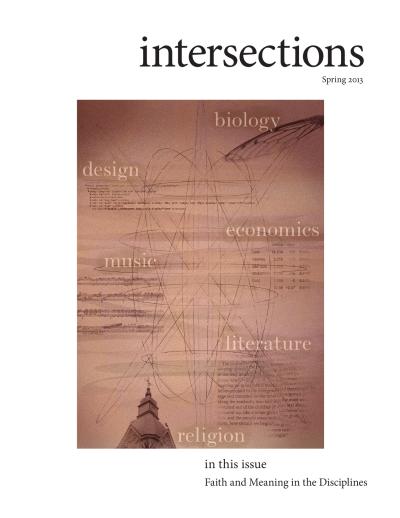
Mahn introduces the issue’s six essays as parallel attempts—from poetry, economics, choral music, biology, religion, and Lutheran higher education—to resist our culture’s fact-value split, and uses Augustana’s Fritiof Fryxell, a 1922 biology and English graduate who began teaching just as the Scopes Trial ignited, to illustrate how church-related colleges have long held faith and disciplinary inquiry together.
-
 Response
Response to Mark Wilhelm: Distinguishing Between Identity and Vocation
Andrew Tucker
No. 56 · Fall 2022
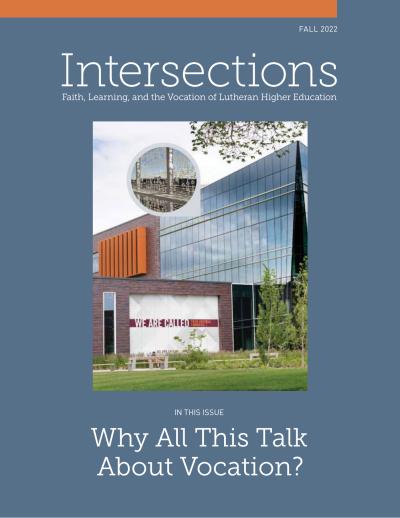
Tucker proposes that NECU’s next most faithful step is to faithfully and effectively differentiate vocations and identities — arguing that identity is who you are, vocation is what you do, and that recognizing the plurality of both helps Lutheran institutions name which work is theirs to take up and which is good work that belongs to someone else.
-
 Article
Ivory Tower or Holy Mountain? Faith and Academic Freedom
Nicholas Wolterstorff
No. 11 · Spring 2001
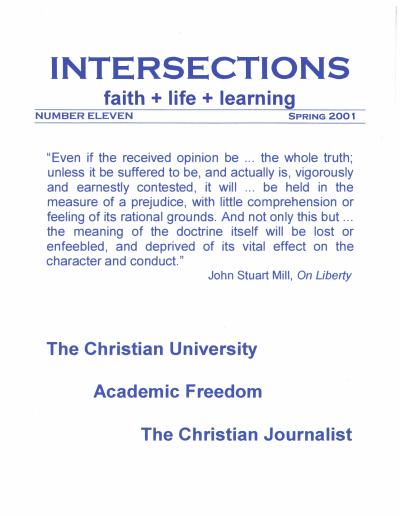
Wolterstorff defines infringement of academic freedom as impairing a faculty member’s standing on account of the ideological content of her position, argues that academic freedom (like free speech) is “duly qualified” rather than absolute, and offers eight considerations bearing on religiously based institutions: Weber’s differentiation of Wissenschaft, religious pluralism within a liberal polity, the vitality of American civil society, a decentralized educational system, the “holistic” character of much American religion, the post-Kuhnian collapse of classical foundationalism and of the “generically human” academy, the fact that ideas matter, and the personhood violated by infringement (the desecration of an image of God). He concludes that the private sector offers wider academic freedom than the public, that religious qualifications are not inherently inappropriate (any more than St. John’s Great Books commitment), but that religiously based colleges too often apply them unjustly—arbitrarily, secretly, without recourse—and that the AAUP’s best service is model codes of procedure.
-
 Reflection
Danya Tazyeen
Danya Tazyeen
No. 40 · Fall 2014
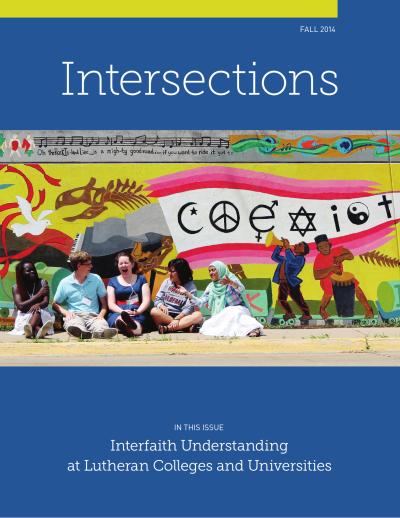
Tazyeen, a Pakistani-American Muslim student at Augustana College, reads Qur’an 49:13 — that God made us into peoples and tribes “that you may know one another” — as a charge to break down fear with open dialogue and to see one another as flawed and relatable fellow human beings.
-
 Institutional Focus
Interfaith Campus Organizing at California Lutheran University
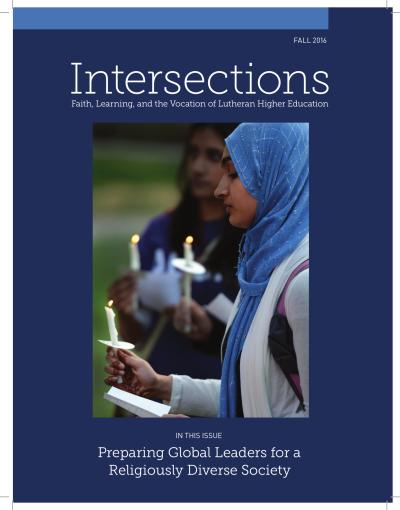
Allison Bermann, Mehak Sachdev
No. 44 · Fall 2016
California Lutheran University students Allison Bermann and Mehak Sachdev describe how interfaith participation at CLU grew from a grassroots movement into a sustained, integrated part of campus identity — with an intern program, Interfaith Allies, co-curricular events from Diwali dinners to Hunger Banquets, and a classroom practice of storytelling that opens the required Introduction to Christianity course to students of every faith and none.